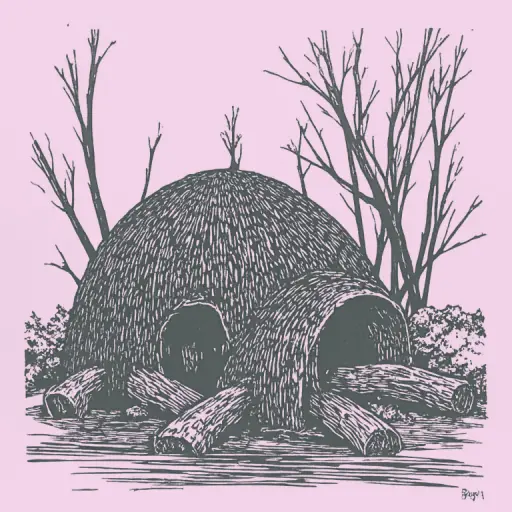
How to understand why beavers can stay underwater for so long
- 14 min read
- 73
Beavers are true engineers of the wild, whose lives are inextricably linked to the water element. Observing how skillfully these rodents build dams and hide in the depths of rivers, one inevitably wonders: what is the underwater life of beavers like? These amazing animals are capable of staying underwater for 5 to 15 minutes without a single breath of air, covering impressive distances in the process.
The secret to their endurance lies in their unique evolutionary "equipment." The beaver's adaptation to water includes a whole complex of anatomical and behavioral features:
- Physiological "gadgets": built-in valves in the nose and ears, as well as transparent eyelids that replace swimming goggles.
- Architectural genius: the sturdy beaver lodge and the hidden underwater burrow entrance, which protect the family from predators.
- Strategic planning: stockpiling branches underwater for long hibernation.
In this guide, we will detail how beavers swim underwater, how their bodies and engineering structures are organized, and how this knowledge can help you safely observe them in their natural habitat.
Step 1: Examining Beaver Anatomy and Physiology
To understand how a beaver manages to stay underwater for 5 to 15 minutes without a single breath of air, it is necessary to look into its "evolutionary arsenal." Nature has equipped this rodent with unique physiological gear, transforming an ordinary land mammal into a highly efficient living submarine. While a human feels like a stranger underwater, the beaver's body works like clockwork thanks to finely tuned adaptation mechanisms.
The secret to its endurance lies not only in lung capacity but also in the ability to redistribute blood flow, lower heart rate, and conserve oxygen reserves in the muscles. Let's examine in detail which external and internal adaptations allow the beaver to feel comfortable at depth and perform complex construction work in the aquatic environment.
Hermetic Valves and Transparent Eyelids-Goggles
When a beaver dives into the water, its body instantly reconfigures for autonomous operation. The first thing that happens upon diving is the automatic closing of special muscular sphincters. Valves in the nose and ears tightly seal the ear canals and nostrils, completely preventing water from entering the respiratory tract and ear canals. As soon as the animal surfaces, the valves open, allowing for a quick breath.
Equally amazing are the rodent's visual organs. To successfully perform underwater swimming in murky water and protect its eyes from floating debris and sharp splinters, the beaver uses transparent eyelids—the so-called nictitating membrane (third eyelid). These "built-in goggles" allow the animal to navigate excellently underwater while keeping the cornea irritation-free.
This anatomical "equipment" directly affects how long the beaver stays underwater (up to 15 minutes). It allows it not just to hide, but to actively work at depth: transporting building materials and maneuvering confidently in the dark.
Special Structure of Lungs and Jaws for Underwater Work
In addition to external "goggles" and valves, the beaver possesses unique internal engineering that allows it to stay underwater for 5 to 15 minutes.
Respiratory System and Oxygen Redistribution
The beaver's lungs and liver are enlarged, allowing it to store a greater amount of oxygenated blood. Upon diving, the rodent enters a mode of strict conservation:
- Bradycardia: the pulse slows down several times.
- Vasoconstriction: peripheral blood supply is shut off, and oxygen is directed only to vital organs—the brain and heart.
- High Myoglobin Levels: the beaver's muscles retain oxygen much more efficiently than the muscles of terrestrial mammals.
Unique Jaws: Working Without Risk of Drowning
The main secret to underwater construction work lies in the structure of the mouth cavity. The beaver's lips close behind its huge, continuously growing incisors. This creates a hermetic barrier: the mouth is isolated from the throat. Thanks to this anatomical feature, the beaver can calmly chew branches and transport building material underwater without risking drowning or swallowing water.
Step 2: Understanding the Architecture of Underwater Shelters
The amazing anatomical features of the beaver are only half of its success in mastering the aquatic environment. To fully protect itself and its offspring, this ingenious natural engineer creates complex hydraulic structures. Its building skills transform a simple stream into a secure fortress, where every detail adheres to the strict logic of survival.
The architecture of beaver shelters is astonishing in its thoughtfulness. Instead of simply adapting to existing conditions, beavers actively change the landscape to suit their needs. Let's examine exactly how these rodents design their lodges and regulate the aquatic environment, turning their homes into impregnable underwater castles.
Why the Entrance to the Lodge or Burrow is Always Underwater
The main secret to the safety of the beaver dwelling is its absolute inaccessibility to land predators. Whether the family builds a spacious lodge from branches or digs a complex system of burrows on a steep bank, the entrance to the burrow underwater always remains the only way in.
This architectural solution serves three vital functions:
- Absolute protection from predators. Large land predators (wolves, foxes, wolverines) are physically unable to penetrate the living chamber through the water. They cannot dig through the lodge's sturdy roof, cemented with hardened clay and silt.
- Stable microclimate. The underwater entrance reliably isolates the nesting chamber from drafts. Cold air from outside does not penetrate inside, allowing warmth to be maintained. The living area itself is always located above the water level, remaining dry and cozy.
- Freedom of movement under ice. In winter, when the water surface is covered by ice, the underwater entrance remains the only window to the outside world. Through it, beavers easily reach their submerged food reserves.
Underwater life dictates its own rules, and the hidden underwater entrance is a key element of their defense strategy.
The Role of the Dam in Maintaining a Stable Water Level
Building a dam is not just an expression of innate engineering instinct, but a critically important necessity for the survival of the entire beaver family. The main task of this hydraulic structure is to maintain a stable and sufficiently high water level in the created pond.
If the water level drops even by half a meter, the carefully camouflaged entrance to the burrow underwater or the lodge will be exposed. This will make the rodents easy prey for land predators such as wolves, foxes, or wolverines. The dam solves this problem, turning even the smallest stream into a deep and safe pond.
Furthermore, stable depth plays a crucial role in different seasons:
- Protection from winter freezing: Deep bodies of water never freeze to the bottom. This preserves space for underwater swimming beneath the ice.
- Preservation of food base: It is underwater, at sufficient depth, that beavers store their winter supply of branches. If the water level drops, the ice locks up the food, making it inaccessible.
By constantly monitoring the dam's condition and filling breaches with mud and clay, beavers ensure year-round safety and unimpeded access to food.
Step 3: Analyzing the Features of Winter Life Under the Ice
With the onset of cold weather and the formation of an ice crust on the water bodies, the beavers' life completely shifts to the sub-ice space. Lacking the ability to safely venture onto land, these amazing rodents do not hibernate but continue to lead an active life in their hidden winter dwelling.
Survival in such extreme conditions requires impeccable organization of life by the beaver family. To successfully survive under the ice, the animals use strategies proven by evolution: they prepare reliable food reserves in advance and maintain unique temperature conditions inside their habitat.
Creating Underwater Food Stores
In autumn, as the first frosts approach, beavers begin creating their famous winter stores. To feed the family during long cold months, they require a substantial underwater branch reserve—the volume of such a store can reach an incredible 70 cubic meters!
The process of setting up the underwater "pantry" is as follows:
- Raw Material Collection: Beavers fell aspen, willow, poplar, and birch, cut them into small fragments, and float them down the water to the lodge.
- Submerging and Securing: To prevent the branches from being swept away by the current or freezing into the ice, the animals tightly lay them on the bottom of the water body, directly in front of the entrance to the lodge or burrow. They literally push the lower branches into the mud, and pile the upper ones on top, creating a heavy, dense mound.
- Cold Preservation: The icy water acts as a natural refrigerator. The bark and buds preserve all nutrients, preventing rot and keeping them juicy until spring.
| Advantage of Underwater Storage | Description |
|---|---|
| Safety | Access to food is exclusively underwater, precluding encounters with land predators. |
| Energy Saving | The beaver does not need to expend energy warming its body in the frosty air. |
When the ice locks up the water body, beavers take short underwater swims from their warm dwelling to the store. They gnaw off a branch, drag it into the lodge, eat the bark, and use the cleaned wood for repairs or simply discard it.
Lodge Microclimate and Winter Ventilation
When the external water bodies are locked by ice, the beaver lodge turns into a true winter fortress. Inside this engineering masterpiece, an amazing microclimate is maintained. Even if a fierce frost of -30 °C rages outside, the temperature in the living chamber rarely drops below +2...+5 °C. If the entire beaver family is inside, the air can warm up to a comfortable +10 °C.
This thermal effect is achieved thanks to the rodents' unique construction technologies:
- Ice Crust: Walls made of branches, tightly coated with mud and clay, freeze upon the onset of cold. This turns the lodge into a solid, airtight monolith, inaccessible to predators.
- Dry Bedding: The floor of the living chamber, located above the water level, is covered by beavers with dry grass, leaves, and wood shavings, which retain heat excellently.
- Underwater Passage: The only exit leads directly into the water under the ice, completely eliminating drafts.
For breathing, the animals require a constant supply of oxygen. Beavers have ingeniously solved the ventilation problem: in the lodge dome itself, they leave a loose area of branches that is not covered with dirt. Through this "vent," warm, moist air escapes outside. In severe frosts, rising steam is clearly visible above the top of the inhabited lodge—this is the main evidence that hidden life is thriving inside.
Step 4: How to Learn to Detect Beaver Presence on the Water Body
Understanding how beavers arrange their hidden world under the ice and water inevitably sparks the desire to see the results of their labor firsthand. However, these mammals are predominantly crepuscular and skillfully avoid encounters with humans. To touch upon the mysteries of their habitat without disturbing the peace of the river builders, it is necessary to master basic tracking skills.
Observing beavers on the water body is a fascinating process that requires patience, extreme attentiveness, and knowledge of key markers of their activity. By learning to correctly "read" the shoreline, you can accurately determine the presence of these amazing wildlife engineers and plan your encounters with them in a way that is completely safe for both parties.
Recognizing Signs of Life and Alarm Signals
To detect the presence of beavers on the water body, it is not necessary to guard them for hours. These animals leave behind many obvious "calling cards." By learning to recognize them, you can accurately determine whether the local colony is active at the moment.
Main signs of beaver activity:
- Fresh gnawing. Pay attention to tree trunks near the water. Beavers leave characteristic conical cuts with traces of two broad incisors. If the wood is light and fresh, damp shavings lie on the ground—the builders are active.
- Stripped branches. Floating branches, completely stripped of bark, can often be seen in the water near the bank or near the dam. These are remnants of the rodents' recent meal.
- Beaver trails and burrows. In areas where the animals exit onto the bank, well-marked trampled paths form, gradually leading into the water. On damp soil, you can see prints of large five-toed hind paws with webbing and a wide track from the dragging tail.
- Sign mounds. Beavers mark the boundaries of their territory by constructing small piles of mud, leaves, and dirt, which they rub with a pungent musky secretion.
The main alarm signal:
If you approach too closely and disturb the animals' peace, the beaver will certainly warn its family. The main danger signal is a sharp, loud slap of the flat tail against the water, after which the animal instantly dives. This sound, resembling a gunshot or the fall of a heavy stone, travels hundreds of meters underwater and on the surface. Upon hearing it, all family members immediately hide in underwater shelters, and no one appears on the surface for the next 10–15 minutes.
Rules for Non-Contact Observation of Beavers
To see a beaver in its natural environment and observe its amazing underwater dives, it is necessary to follow strict camouflage rules. These rodents are extremely cautious, possess excellent hearing and smell, so any careless movement by a human will cause them to instantly hide in an underwater shelter.
Here are the key rules for successful and ethical non-contact observation:
- Choose the right time. Beavers are most active at twilight—at sunset and at sunrise. Arrive at your chosen spot an hour before sunset to have time to take up a position and "blend in" with the landscape before the animals start leaving their lodges.
- Consider the wind direction. Always position yourself so that the wind blows from the water toward you. If the airflow is coming from you toward the water, the beaver will instantly smell the human for dozens of meters and dive deep.
- Maintain absolute silence. Avoid rustling clothing, put phones on silent mode, and do not speak even in a whisper. Beavers react sensitively to any unnatural sounds on the bank.
- Use optics. Do not try to approach the lodge or dam closely. The best way to see details is to use binoculars with good light transmission or a telephoto lens. A distance of 30–50 meters is ideal for the animal's safety and your comfort.
- Do not use bright white light. If you are observing the animals in deep twilight, refrain from using powerful flashlights and flashes. Beavers are frightened by sudden bright light. For illumination, it is better to use a dim red light, to which rodent vision is less sensitive.
Patient and quiet waiting will reward you with a unique sight: you will be able to see firsthand how smoothly and silently a beaver dives underwater, tightly closing its ear flaps, and how long it can remain submerged while carrying out its engineering work.
Conclusion
The underwater life of beavers is an amazing example of evolutionary perfection, where every detail of the organism and behavior is subordinated to one goal: survival and prosperity in the aquatic environment. We have analyzed in detail that the ability of these rodents to stay underwater for up to 15 minutes and work actively underwater is not a coincidence, but the result of the complex operation of unique natural mechanisms.
Let's briefly summarize the key factors that make the beaver a true master of the waterways:
- Anatomical Equipment: Airtight valves in the nose and ears, transparent goggles (nictitating membrane) for perfect vision in murky water, and a special jaw structure that allows it to chew wood underwater without drowning.
- Engineering Genius: Building dams to control water levels and constructing lodges with exclusively underwater entrances, reliably protecting the family from land predators.
- Winter Strategy: Storing colossal underwater caches of branches and maintaining a unique microclimate in snow-covered dwellings under the ice.
Beavers are not just builders, but keystone species, so-called ecosystem engineers. By creating dams, they regulate the water balance, prevent river shallowing, and create new biotope habitats for hundreds of other species of fish, birds, and plants.
Understanding beaver biology and observing it carefully and non-contact in its natural environment allows us to touch upon the mysteries of the wild without disturbing its fragile balance. By preserving the habitats of these amazing animals, we make an invaluable contribution to maintaining the health and biodiversity of our entire planet.