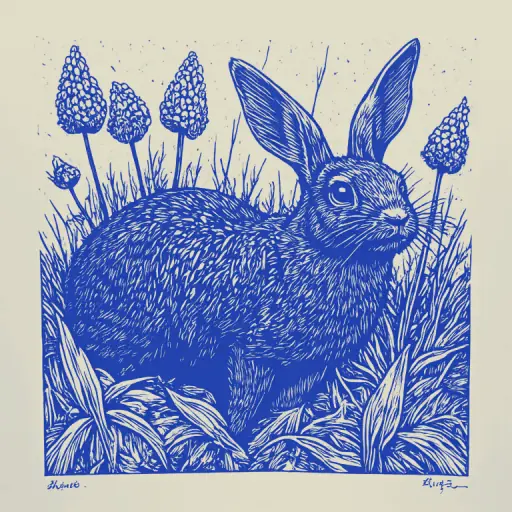
How a Beginner Hunter Can Track a Hare in Autumn and Correctly Locate Its Bedding Spot
- 16 min read
- 85
Autumn hare hunting is a classic of Russian shooting sports that requires from the hunter not only accuracy but also a deep understanding of nature. The pre-winter period, when the ground has shed its summer greenery but is not yet covered in snow, is called chernotrop. It is during this time that unique opportunities open up for taking the hare without a dog.
For a novice hunter, this season is a true test of observation. To return with a trophy, it is necessary to thoroughly study the hare's habits, learn to accurately determine its habitats, and find the hare's hidden resting spots. Depending on the landscape, you will have to track two main species: the cautious European hare (русак), which prefers open fields, and the secretive snowshoe hare (беляк), which chooses forest thickets.
In this guide, we will examine proven tactics: effective stalking hunting, the specifics of hunting in the 'uzerka' (a transitional zone) when the whitened animal reveals itself on dark ground, as well as the rules for choosing equipment and suitable shot for the hare.
Hare Habits and Habitats in Autumn: Differences Between the European Hare and the Snowshoe Hare
The success of autumn hunting during the chernotrop period directly depends on understanding the biology and habits of your potential prey. In the forests and fields of the central region live two closely related but completely different species in behavior—the European hare and the snowshoe hare. With the onset of cold weather and the start of leaf fall, their life rhythms are reorganized, forcing the animals to change their usual summer routes and seek new places for fattening up and daytime rest.
The main difference between them lies in their relationship to the landscape. If one prefers open spaces and relies on its fast legs, the other seeks refuge in dense forest strongholds, camouflaging itself among the branches. To avoid wasting energy on fruitless searches, it is crucial for the hunter to learn to distinguish their favorite autumn stations.
Where to Look for the European Hare: Fields, Arable Land, Harvest Stubble, and Ravine Slopes
The European hare is a typical inhabitant of open spaces. In autumn, its search should begin in agricultural areas.
The most promising places to find the European hare during the chernotrop period:
- Winter Crops and Harvest Stubble: In late autumn, the European hare actively feeds in fields with young wheat or rye. Look for it at the junction of plantings and harvested stubble, where shelter is easy to find.
- Arable Land: Avoid freshly plowed fields with large clods of earth—the European hare dislikes them. However, old, settled arable land with field boundaries and patches of weeds is an ideal resting spot.
- Ravine and Gully Slopes: In windy or rainy weather, European hares move from open fields to ravine slopes covered with dry grass. The animal may rest both near the upper edge and on the very bottom, sheltering from the wind.
- Field Edges and Abandoned Structures: Isolated bushes, piles of brushwood, drainage ditches, and even the edges of abandoned farms often serve as daytime resting places for the cautious European hare.
When traversing the areas, always move against the wind, carefully examining any irregularities in the terrain and the boundaries of elevation changes.
Snowshoe Hare Habitats: Forest Clearings, Thickets, and Swamp Edges
Unlike the European hare, the snowshoe hare is a typical forest dweller that avoids open spaces. In autumn, its search should be concentrated in the following characteristic locations:
- Forest Clearings and Burned Areas: Clearings from two or three years ago, overgrown with young aspen, willow, and birch, are particularly attractive. Here, the snowshoe hare finds abundant branchy food.
- Dense Thickets and Undergrowth: Young spruce forests, juniper thickets, and areas with dense undergrowth serve as ideal cover. During the period of intense leaf fall, the snowshoe hare often retreats into young coniferous stands, where the noise of falling leaves does not interfere as much with its sensitive hearing.
- Swamp Edges and Stream Floodplains: The boundaries of high bogs and the reed-covered banks of forest streams attract the animal with moisture-loving vegetation that remains green the longest.
- Blowdowns: The snowshoe hare loves to rest under fallen trees, especially under the tops of long-cut or fallen aspens.
How to Properly Find and Identify a Hare's Resting Spot
Understanding which areas the hare inhabits is only half the battle. The true skill of a chernotrop hunter is revealed in the ability to notice the resting spot—the animal's daytime resting place where it hides until dusk—in time. In autumn, when the leaves have fallen and the first snow has not yet fallen, the hare chooses its shelters with special care, striving to blend in as much as possible with the surrounding landscape.
To detect a resting spot without a dog, you must develop extreme observation skills and learn to literally scan the area. The hare rarely lies in a random open patch; its temporary refuge is always protected from the wind and camouflaged by natural obstacles. The success of the search depends on the ability to notice the slightest anomalies in the terrain: unnatural mounds of earth, flattened dry grass, or barely noticeable depressions that betray the presence of a hidden animal.
Searching for the European Hare's Resting Spot in Arable Land and Open Spaces
The European hare is a typical inhabitant of open spaces. In autumn, especially during the chernotrop period, its favorite place for daytime rest becomes the arable land, especially deep winter-plowed fields. Finding the European hare's resting spot here is a true art, requiring extreme observation.
When searching, focus on the following characteristic locations:
- Ridges of Furrows and Large Clods of Earth. The European hare rests on the leeward side of the earth mound. It digs a small hollow where it blends completely with the gray-brown soil.
- Boundaries of Mixed Areas. The junctions of arable land with winter crops, stubble, or weeds are ideal zones. The animal feeds on the greenery and goes to rest in the arable land, retreating 50–100 meters from the edge.
- Isolated Cover on Field Edges. Piles of dry grass, forgotten sheaves of straw, isolated bushes, or fallen branches at the edge of the field.
When moving through open areas, do so unhurriedly, in a zigzag pattern, always moving against the wind. Look closely at any small hills: often, the resting European hare is only betrayed by a dark ear tip or a glint of an eye.
Features of Snowshoe Hare Cover in Dense Undergrowth and Blowdowns
Unlike the European hare, which prefers open space, the snowshoe hare is a typical forest dweller. In autumn, especially during the period of intense leaf fall and during the chernotrop, its habits change sharply. The noise of falling leaves frightens the sensitive animal, so it retreats into the depths of the forest, choosing places where raindrops and rustling sounds disturb its sensitive hearing less.
In this period, the snowshoe hare's resting spots should be sought in the following characteristic locations:
- Fallen Trees and Blowdowns. The snowshoe hare loves to settle under the tops of long-fallen aspens, pines, or birches. The tree trunk provides reliable protection from behind, and the dense branches camouflage it from above.
- Dense Coniferous Undergrowth. Young spruce and fir forests are ideal shelter in damp weather. The dense needles retain moisture and effectively dampen sounds.
- Boundaries of Forest Swamps and Clearings. Here, the hare finds abundant food, resting in the dense riverside grass or under the roots of upturned stumps.
Approaching such spots, keep your rifle ready: the forest hare often lies in wait until the last moment and bolts from under your feet at the most unexpected moment.
Hunting Tactics in the Chernotrop and Uzerka Without a Dog
Hunting in the chernotrop is a special art that demands extreme concentration, observation, and endurance from the hunter. When the ground is not yet covered in snow, and the reliable hound is staying home, you must rely solely on your own strength, sharp vision, and knowledge of the animal's habits. In this transitional period of late autumn, when the daylight hours are rapidly shortening and nature is falling silent, the hares change their behavior and become incredibly cautious. The success of such a hunt without a dog is built on two pillars: the ability to notice the concealed animal, which has already begun changing its gray coat to the winter white attire, and the ability to approach it silently to shooting range. Let's examine the tactical maneuvers that will allow you to outwit the alert European hare or snowshoe hare in their autumn territory.
Hunting in the Uzerka: How to Spot the Whitened Hare on Dark Autumn Ground
Hunting in the uzerka is one of the most thrilling ways to take game in the chernotrop. It begins in late autumn when the snowshoe hare has already replaced its summer gray coat with a dazzling white one, and the first snow has not yet fallen. Against the backdrop of dark, damp earth, brown leaves, and withered grass, the whitened animal literally "glows," giving away its presence.
To detect the hare, use proven tactical methods:
- Look for color anomalies: Examine any light spots under bushes, fallen trunks, and spruce legs. The hare's resting spot is often betrayed by a white, round contour, which inexperienced hunters might mistake for a piece of birch bark, a package, or a clump of light clay.
- Look for dark details: The white fur masks the animal itself, but its black ear tips and dark, moist eyes give it away.
- Move in an arc: If you notice a suspicious white spot, do not head toward it directly. The hare's habits cause it to bolt from its spot when faced with a direct threat. Walk as if you are passing by, gradually closing the distance along a tangential trajectory.
Secrets of Silent Stalking and Approaching to Shooting Range
Approaching a hare spotted resting requires extreme caution. The main secret to successful stalking is never to approach the animal directly. Move in an arc, as if you are passing by. The hare watches the person carefully, and it will interpret a direct course as an immediate threat, instantly bolting from its spot.
Key rules for a silent approach:
- Direction of movement: Approach strictly against the wind or at an angle to it. This will mask your scent and dampen the inevitable rustle of footsteps.
- Stepping technique: Step softly, smoothly rolling your foot from heel to toe. Try to step on damp soil, moss, or green grass, avoiding dry twigs and rustling leaves.
- Eye control: Do not look the hare directly in the eyes—wild animals are excellent at sensing a fixed gaze. Direct your gaze slightly to the side, monitoring the target with your peripheral vision.
- Tactical pauses: If the hare becomes alert or raises its ears, immediately freeze mid-stride. Continue moving only when it calms down again.
Keep your rifle ready: the distance for a confident shot in the chernotrop is 25–35 meters, and there will be very little time to raise the rifle when the animal bolts.
Features of Approach Hunting in Various Autumn Weather
Autumn weather is changeable, and every whim of nature radically changes the hare's behavior. If it is extremely difficult to approach the alert animal to shooting range on a quiet, dry day, bad weather often plays into the hunter's favor. Rain, fog, and gusty wind dull the hare's vigilance, forcing it to hold its position more firmly and reducing its ability to hear human footsteps in time.
The success of active approach hunting in the chernotrop directly depends on the ability to adapt to current meteorological conditions. Understanding how wind and humidity affect the choice of resting spot for the European hare and snowshoe hare allows you to plan the route correctly and adjust the pace of movement, turning the caprices of autumn into your tactical advantage.
Searching for Hare in Wet, Rainy, and Windy Weather
Wet, rainy, and windy weather is ideal for approach hunting in the chernotrop. On such days, raindrops and gusts of wind create a constant background noise that disorients the alert animal and masks human footsteps.
- Snowshoe hare in heavy rain and leaf fall moves away from the depths of the deciduous forest. It is frightened by the rustling of falling leaves and drops, so it seeks shelter in young coniferous stands, under dense spruce legs, or on the edges of swamps.
- European hare in dampness avoids open, tilled fields, as wet soil sticks to its paws. In the rain, it is easier to find its resting spot in grassy borders, hayfields, ravine slopes, or in patches of weeds.
In bad weather, the hares lie down very "firmly," hoping for their invisibility, and often allow the hunter to approach shooting range.
Rules of Moving Against the Wind and Choosing the Optimal Walking Pace
Moving against the wind is the golden rule of active hunting in the chernotrop. A strong airflow not only carries human scents away from the animal in the opposite direction but also excellently muffles the rustle of footsteps, dry grass, and twigs. Try to plot your route strictly against the wind or at a slight angle to it (half-wind). If you neglect this rule, the alert hare will hear your approach from a hundred meters away and quietly leave its spot before you reach shooting range.
Choosing the walking pace is crucial for successfully flushing the animal:
- Jerky rhythm of movement. Never walk in a monotonous, even pace. Wild animals get used to monotonous noise and may miss you, continuing to lie tightly in cover.
- Tactics of tactical pauses. Take 15–25 slow, careful steps, and then stop completely for 5–10 seconds. The hare, concealed in its spot, carefully monitors the source of the noise. When the footsteps suddenly stop, the hare begins to panic, deciding it has been discovered, and loses its nerve—it bolts from its spot, exposing itself to a shot.
- Constant readiness. During every pause, keep your rifle ready and carefully survey the sector in front of you. It is often during the pause or on the first step after it that the hare bolts.
Equipment for the Beginner Hunter and Ammunition Selection
The success of active hunting in the chernotrop depends not only on the ability to read tracks and approach the resting spot correctly against the wind. Even the most precise tactics will be useless if the equipment fails at the decisive moment or if the shot is ineffective due to the wrong caliber.
Autumn weather is changeable, and multi-kilometer treks require maximum endurance and proper preparation from the hunter.
To ensure a sudden rise of a hare does not catch you off guard, you must prepare reliable gear in advance. Below, we will examine the key aspects of equipment preparation that will allow you to feel comfortable in the field and guarantee a confident shot at a startled animal.
Which Shot Size to Use for Autumn Hare Hunting
The choice of shot size for autumn hare hunting directly depends on the season and the shooting distance. In early autumn (September–October), when the European hare and the snowshoe hare do not yet have their dense winter undercoat, the optimal choice will be No. 3 or No. 2 shot. It provides excellent shot sharpness and sufficient pattern density at distances up to 35 meters.
Closer to the end of autumn (November), when the animal puts on its warm winter coat and the shooting distance increases due to the lack of foliage, it is better to switch to a larger shot size—No. 1 or even No. 0.
When hunting with a double-barreled shotgun, it is recommended to load the cartridges as follows:
- In the right (or lower) barrel with a choke, load No. 2 or No. 3 shot for the first, closer shot.
- In the left (or upper) barrel with a full choke, load No. 1 or No. 0 shot for a confident shot at the running animal.
Using too fine a shot late in autumn will result in wounding shots, while excessively large shot will reduce the density of the pattern, increasing the chance of a miss.
Selecting Clothing and Footwear for Walking Hunts in the Black Tropp
The accuracy of the shot depends on the correct choice of cartridges, but the overall success of a walking hunt in the black tropp is directly related to your mobility. Covering 20 kilometers in a day across soft cultivated fields or forest debris is a serious test, so the gear must be light, warm, and absolutely silent.
Clothing:
- Layering Principle: Use moisture-wicking synthetic thermal underwear, an intermediate insulating layer of fleece, and an outer windproof membrane jacket.
- Silence: The fabric must not rustle when coming into contact with branches and bushes, otherwise the sensitive snowshoe hare will hear your approach long before the confident shooting distance.
- Color Palette: Choose muted natural shades (olive, khaki, dry grass color) that help blend in with the fading autumn landscape.
Footwear:
- For dry weather and fields, light trekking boots with a membrane and reliable ankle support are ideal.
- For damp autumns and crossing marshy lowlands, EVA or high-quality rubber boots with a neoprene lining are indispensable. The sole must definitely have a deep tread for grip on wet clay.
Conclusion
Autumn hare hunting in the black tropp is a true test of endurance, observation, and patience. Success here is never accidental. It is built upon the ability to distinguish the habits of the European hare and the snowshoe hare, the capacity to notice hidden bedding areas, and the readiness to silently stalk a sensitive animal for hours in any weather.
Beginner hunters should remember three main rules:
- Patience and Attention. Do not try to cover the maximum distance quickly. Move at a steady pace, carefully examining every suspicious mound or bush.
- Error Analysis. Every missed rise or every miss is valuable experience that teaches you to better understand the psychology of game.
- Respect for the Hunting Grounds. Observe safety rules and harvest quotas to preserve the animal population for future seasons.
Practice, observe weather changes, and hone your hunting tactics both in the thicket and on approach. Over time, you will learn to read the autumn forest like an open book, and the trophies you harvest will be a deserved reward for your perseverance. No luck, no feathers!