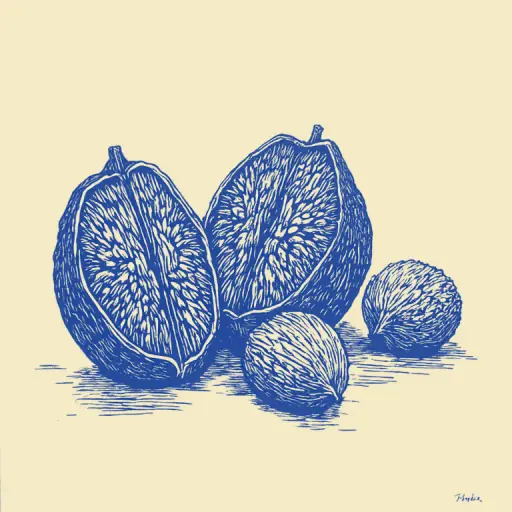
How Do Squirrels Crack Hard Nuts, and Exactly How?
- 8 min read
- 60
Each of us has observed a funny sight in the park: a fluffy creature skillfully takes a treat and in an instant manages to break through tough armor. But have you ever wondered exactly how squirrels crack hard hazelnuts, acorns, or walnuts without damaging their teeth? These small rodents possess a unique natural mechanism. Their sharp incisors and movable lower jaw work like a high-precision tool and a powerful wedge simultaneously. In this article, we will examine the amazing physics of this process, find out why a squirrel's teeth do not break from the super-strong shell, and how they find what is hidden under the snow. We have also prepared a practical guide that will make feeding squirrels in the park safe and beneficial.
Anatomy of the Super-Rodent: Why Squirrel Teeth Don't Break
To understand how the small creature manages to deal with the tough shell of a hazelnut or walnut without difficulty, it is necessary to look into its anatomy. Nature has endowed the squirrel with a unique "tool" that surpasses many industrial cutters in efficiency. The secret lies not just in the biting strength, but in the striking structure of the jaw apparatus and the teeth themselves, which are perfectly adapted to extreme loads and never wear out completely.
Unique Structure of Incisors and Their Continuous Growth
The secret to the incredible strength of a squirrel's teeth lies in their unique structure. The rodent's front teeth—incisors—grow continuously throughout its life, compensating for constant wear against the hard shell.
The strength of the incisors is ensured by the uneven density of the tissues:
- The front side is covered with super-strong enamel, enriched with minerals.
- The back side consists of softer dentin.
During chewing, the dentin wears down significantly faster than the enamel. As a result, the squirrel's teeth constantly self-sharpen, acquiring the shape of the sharpest chisel, ready for any load.
Movable Lower Jaw and Jaw Muscle Function
The secret to the squirrel's incredible biting power lies not only in the strength of the enamel but also in the unique anatomy of the jaw apparatus. The rodent's lower jaw consists of two independent halves, connected by an elastic ligament. Thanks to this, the squirrel can spread and shift its lower incisors.
When the creature drives its teeth into the shell of a hazelnut or walnut, powerful chewing muscles contract, pulling the jaw halves together. At this moment, the lower incisors spread apart, working like a living wedge. This anatomical lever allows it to crack the toughest shell with minimal effort, turning point pressure into a powerful tearing force.
Physics of the Process: Exactly How a Squirrel Cracks the Shell
The anatomical features of the squirrel's jaw are merely a tool that requires correct application. In practice, cracking a hard shell turns into a high-precision mechanical process. The rodent does not just randomly gnaw on a hazelnut or walnut, but uses the laws of physics, turning its incisors into effective tools.
Let's examine exactly how these little engineers apply point force to crack even the toughest protection of the fruit, and where they get such skills.
The Wedge Method: Technique for Splitting a Walnut in Half
The secret to cracking a hard walnut lies in exquisite biomechanics. The squirrel does not try to randomly gnaw the shell from all sides. Instead, it quickly finds the most vulnerable point—a small indentation at the base of the nut where it was attached to the branch.
The creature drives both lower incisors into that spot. At this moment, a unique natural mechanism is activated: the two halves of the squirrel's lower jaw are connected by an elastic muscle. By slightly pulling them at the base, the rodent forces the tips of the incisors to spread apart. The teeth work like an expanding mechanical wedge, and the tough shell is neatly split exactly in half, providing access to the nutritious kernel.
Learning and Instincts: How Young Squirrels Master Nut Cracking
Although the urge to gnaw is genetically ingrained in squirrels, the masterful use of the "wedge method" is the result of practice. Young rodents are born with the instinct to gnaw on everything, but their first attempts to crack a hard hazelnut or walnut are chaotic. They simply scrape the shell in random places, wasting a lot of energy.
Learning occurs through trial and error, as well as by imitating adult relatives. Over time, a young squirrel finds the vulnerable seams on the shell with its incisors and learns to correctly spread the halves of its lower jaw. Within a few months of life, the precision of the movements becomes automatic, turning an inexperienced creature into an effective nut-cracking master.
Foraging for Supplies: How a Squirrel Finds Buried Nuts in Winter
Hiding thousands of nuts over an area of several hectares is only half the battle. The real test for the squirrel begins in winter, when the forest floor is covered by a thick layer of snow, and the body requires a colossal amount of energy to survive. How does the tiny rodent manage to find its "caches" without error, without wasting precious energy on useless digging?
The secret lies in a striking combination of natural mechanisms. Squirrels do not simply rely on chance or blind luck; their body and cognitive abilities adapt in an amazing way to the harsh winter conditions.
Multisensory Search: The Role of Smell and Spatial Memory
In winter, squirrels find their hiding spots through a combination of phenomenal spatial memory and a sharp sense of smell. Before burying a nut, the rodent carefully licks it or rubs it against its muzzle, leaving a unique scent marker from gland secretions.
This multisensory approach includes:
- Mental mapping: Squirrels remember the location of landmarks (trees, large stones) around their caches very well.
- Highly sensitive sense of smell: A developed sense of smell allows the rodent to unerringly smell its own marked nut even under a 30-centimeter layer of snow and soil.
Thanks to this, the fluffy strategists easily find up to 90% of their supplies.
Features of Winter Behavior and Changes in Rodent Brain Volume
Winter survival requires extreme concentration and adaptation from rodents. While the brain volume of most small mammals decreases as the cold approaches to conserve energy, squirrels show the opposite process. During the autumn-winter period, the volume of their hippocampus—the part of the brain responsible for spatial memory and navigation—increases by about 15%. This natural neuroplasticity helps them find buried hazelnuts and acorns without error.
In addition to mental changes, behavior also transforms: in severe frosts, squirrels conserve heat to the maximum. They reduce their waking time to a few hours a day, spending the rest of the time in nests, tucked in with their tail like a blanket.
Practical Guide: What Can and Cannot Be Given to Squirrels
Understanding how squirrels survive in the wild and use their unique teeth helps us to care for them better during a personal encounter. The desire to treat a fluffy rodent in a city park or garden is natural, but our care must be safe. The wrong choice of treat can seriously harm the animal's health, depriving it of the ability to wear down its incisors or causing severe poisoning.
Let's find out which treats will be exclusively beneficial to squirrels and which foods should be permanently excluded from their diet.
Beneficial Types of Nuts and the Importance of Keeping the Shell
The best treat for forest rodents is nuts in their natural, tough casing. For feeding squirrels, the following are ideal:
- Hazelnuts and beechnuts—a classic choice that helps wear down constantly growing incisors.
- Walnuts (it is better to give them in the shell; they can be slightly cracked for young individuals).
- Pine nuts and acorns—a natural and nutritious diet.
Peeled kernels deprive the animal of the main thing—the need to work its jaws. The tough shell forces the squirrel to engage its unique teeth, preventing their excessive growth and maintaining oral health. Furthermore, whole nuts last longer in squirrel caches.
Dangerous Foods: Why Almonds and Peanuts Are Forbidden
In trying to please the fluffy rodents, many make dangerous mistakes by offering them almonds or peanuts.
- Almonds are strictly forbidden. They contain amygdalin, which is broken down in the squirrel's body, releasing cyanide. For a small animal, even a couple of these nuts is a deadly poison.
- Peanuts (which biologically belong to legumes) are also harmful. Raw peanuts contain trypsin inhibitors, which prevent protein absorption, and are often contaminated with mold that produces dangerous aflatoxin. Moreover, an abundance of peanuts disrupts the balance of calcium and phosphorus in the body.
Properly feeding squirrels is the key to their health and longevity in the wild.
Conclusion
The amazing abilities of squirrels—from the unique structure of their jaw to phenomenal memory—make them among the most adapted rodents on the planet. Understanding how squirrels crack nuts and find their winter supplies allows us to look at these familiar inhabitants of city parks in a new light.
When interacting with them, it is important to remember a few simple rules:
- Respect their nature: offer only safe treats, such as hazelnuts, walnuts in the shell, or acorns.
- Avoid dangerous foods: almonds, peanuts, and exotic fruits must remain strictly forbidden.
- Protect their teeth: offering nuts in the shell helps the animals wear down their constantly growing incisors and maintains their health.
Caring for fluffy neighbors begins with our awareness. May every walk in the park bring joy to you and benefit these little nut-cracking masters.