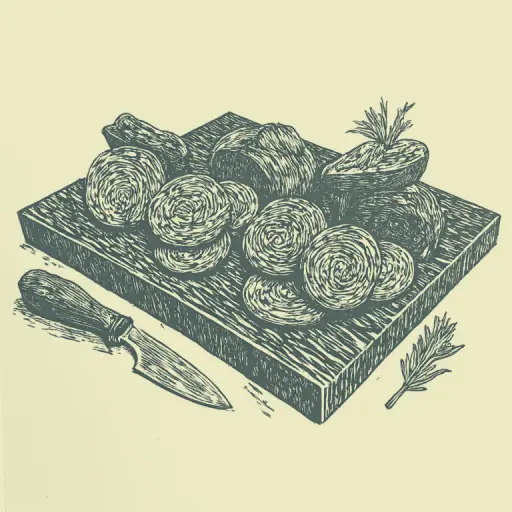
How to Assemble the Perfect Meat Platter for a Holiday Table?
- 8 min read
- 64
A beautifully presented meat platter is the calling card of any festive table. It not only instantly whets guests' appetites but also sets the tone for the entire evening, serving as an exquisite appetizer with wine or strong drinks. But how do you transform a simple cut of sausage and cured pork into a true culinary masterpiece worthy of restaurant presentation?
In this practical guide, we will cover all the subtleties of creating the perfect meat assortment: from correctly calculating portions and choosing delicacies to the secrets of thin slicing without a slicer and effective food art techniques.
Ingredient Selection: Balancing Flavors and Calculating Portions
Creating a flawless meat platter begins long before you pick up a knife. The secret to success lies in the harmonious combination of textures, aromas, and flavor profiles of the chosen delicacies. To ensure the appetizer not only pleases the eye but also fully satisfies the appetites of those gathered, it is important to maintain a balance between tender, spicy, and cured items, as well as accurately determining the required volume of products.
Types of Meat Delicacies for the Perfect Assortment
To create a harmonious meat platter, it is important to combine different textures and flavors. Assemble an assortment from four key groups of delicacies:
- Cured: exquisite ham, prosciutto, or spicy chorizo.
- Smoked and Semi-smoked: aromatic cervelat or smoked sausage for a rich flavor.
- Roasted: tender homemade pork loin or meat roulade.
- Delicacy: thinly sliced boiled tongue, which will add softness.
This variety will satisfy any guest preference.
How to Calculate the Amount of Meat Per Guest
To prevent the meat platter from emptying in the first half hour, but also from remaining untouched, use the proven formula for calculating weight per guest:
- For a classic gathering (where the meat platter is just one of many appetizers): 60–80 grams of delicacies per person.
- For a reception or wine evening (where the focus is specifically on cold appetizers): 100–120 grams.
Try to distribute this volume evenly among 4–5 chosen types of meat—approximately 15–20 grams of each variety per guest. If a cheese board is also planned for the table, the total meat allowance can be safely reduced by 15–20%.
Preparing Tools and Thin Slicing
The aesthetics of a meat platter directly depend on the quality of the slicing and the correct presentation. Even the most exquisite delicacies will lose their charm if sliced into thick, uneven pieces or served on unsuitable dishes. To create a restaurant-style presentation at home, it is important to properly prepare your workspace, choose a suitable serving base, and master a couple of simple knife techniques.
How to Thinly Slice Meat at Home Without a Slicer
To achieve translucent, restaurant-level slices without a professional slicer, use three simple chef hacks:
- Freeze the product. Place the pork loin, ham, or sausage in the freezer for 20–30 minutes before slicing. The meat will become firm, stop deforming under the blade, and allow for the thinnest possible cuts.
- Prepare the right knife. You will need a long, narrow, and perfectly sharpened knife (slicer or gastronomic). A dull or too thick blade will tear the fibers.
- One-motion technique. Do not saw the meat. Guide the knife smoothly, making one long pulling motion "towards you," applying slight pressure to the product.
Choosing the Base: Wooden Board, Stone, or Classic Plate
The choice of base sets the style of the entire presentation and affects the preservation of the products:
- Wooden board (made of oak or bamboo) is ideal for a rustic style and cozy home gatherings. Wood adds warmth to the presentation but requires careful care.
- Slate stone looks ultra-modern. Dark slate contrasts effectively with the bright shades of ham and salami, and it retains coolness for a long time, preventing fat from melting.
- Classic porcelain plate is a foolproof choice for a formal event, emphasizing elegant serving.
Step-by-Step Masterclass on Beautiful Arrangement
With the base chosen, the real culinary magic begins. Transforming a simple cut into a food art masterpiece is within everyone's reach—it does not require the skills of a professional chef. It is enough to master a few basic techniques for working with slices and understand the logic of their harmonious placement on the surface.
Rolling Techniques: Roses, Rolls, and Fan from Slices
Three basic techniques will help turn a simple cut into a gastronomic masterpiece:
- Roses: Fold the thin slices of salami in half, lay them down in an overlapping long strip, and carefully roll them into a tight cylinder.
- Rolls: Roll slices of ham or pork loin into a neat tube. For spiciness, you can insert a stick of hard cheese or a sprig of arugula inside.
- Fan: Fold slices of ham or smoked sausage like a light accordion and arrange them in a cascade, where each subsequent piece overlaps the previous one by a third.
Product Layout Schemes from Edges to Center
To make the meat platter look harmonious, adhere to the classic rule of assembly "from the outer edge to the center":
- Outer Ring. Arrange the largest and densest slices (such as fans of pork loin or ham) around the outer perimeter of the plate, directing them outwards with their wide side.
- Middle Row. Place brighter and smaller elements—salami rolls or waves of cured sausage—slightly overlapping the first layer.
- Centerpiece. Decorate the focal point with lush meat "roses" or leave a free space for a sauce dish, which will become the visual anchor of the entire arrangement.
Sauces and Gastronomic Accompaniment
Even the most exquisite meat cut will seem incomplete without the right accompaniment. Gastronomic accompaniment does not just decorate the platter; it performs an important function—it balances the saltiness of cured meat, emphasizes the spice of sausages, and refreshes the taste buds. Let's look at which sauces and light appetizers will turn your meat assortment into a true masterpiece.
Best Sauces: Dijon Mustard, Horseradish, and Berry Jams
A properly chosen sauce enhances the flavor of the meat delicacies and unites the components of the platter:
- Dijon mustard (especially grainy) is perfect for fatty cuts of meat, pork loin, and roasted pork, adding a pleasant texture and mild spiciness.
- Creamy horseradish is a classic companion for tender boiled tongue, roast beef, and homemade pork loin.
- Berry jams (lingonberry, cranberry, or fig preserves) create an exquisite sweet-sour contrast with salty cured delicacies such as ham, prosciutto, and ripe salami.
Serve sauces in small individual bowls, placing them directly on the meat board.
What to Complement the Platter With: Olives, Pickles, Cheeses, and Nuts
To balance the rich flavor of the meat delicacies, add contrasting textures and flavors to the platter:
- Olives and pickles: Choose large, fleshy varieties (such as Kalamata or giant green Halkidiki). Their pleasant acidity and saltiness perfectly complement the fat of the meat.
- Cheeses: Add a few pieces of hard Parmesan, a spicy blue cheese, or soft Brie. They will form a classic gastronomic tandem with ham and salami.
- Nuts: A handful of toasted almonds, walnuts, or pecans will add a pleasant crunch and fill in gaps on the plate.
Serving Rules and Common Assembly Mistakes
Even the most exquisite meat platter will lose its charm if served incorrectly. To ensure the delicacies retain their freshness, appetizing appearance, and fully reveal their rich aroma, it is important to strictly follow the preparation rules before serving. Let's review the final organizational touches and the common mistakes made when arranging a meat platter.
Temperature Regime and Assembly Time Before Guests Arrive
For the meat cut to fully reveal its flavor and aroma, maintain a temperature balance. Never serve delicacies directly from the refrigerator—coldness masks the subtle flavor nuances of ham, pork loin, and cured sausages.
- Assembly Time: Assemble the meat platter 1–2 hours before guests arrive. Wrap it in plastic wrap and place it in the refrigerator so the products do not stale.
- 20-Minute Rule: Take the platter out of the refrigerator 15–20 minutes before serving. At room temperature (around 18–20 °C), the fat in the meat will slightly soften, making the texture tender and the aroma maximally rich.
Main Mistakes When Decorating a Meat Platter
To ensure your meat assortment looks impeccable and retains its flavor, avoid the following critical errors:
- Too thick slicing. Slices thicker than 1.5 mm are difficult to chew and cannot be beautifully rolled into rolls or roses.
- Contact with moist products. Do not place olives, pickled gherkins, and sauces directly next to ham or salami—the delicacies will quickly become soggy.
- Overloading with greens. An abundance of dill and parsley visually cheapens the dish, turning it into a "salad."
- Staling. Slices left on the table without plastic wrap for more than 15–20 minutes lose their appetizing appearance and dry out.
Conclusion
Creating the perfect meat platter is an exciting creative process that combines gastronomy and aesthetics. By following simple rules for choosing high-quality delicacies, thin slicing, and harmoniously combining flavors, you can easily turn a simple appetizer into the main masterpiece of a holiday table. Experiment with presentation, trust your taste, and surprise your guests!