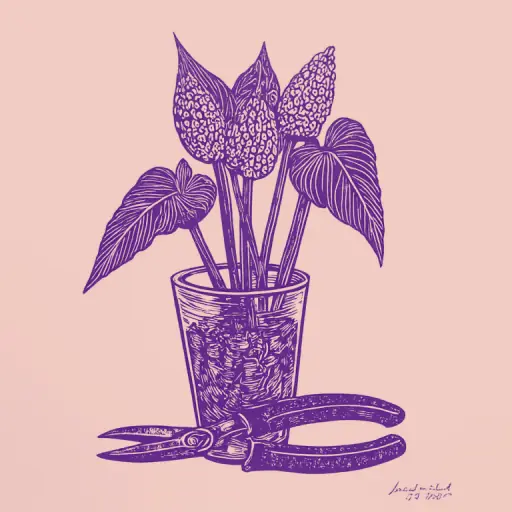
How to care for anthurium in a bouquet: everything for beginner florists
- 14 min read
- 79
Anturium, or "Man's Happiness," is not just a beautiful flower, but a true symbol of tropical luxury capable of transforming any interior. Its large, velvety, heart-shaped flowers amaze with their unusual shape and rich palette. If you have just purchased a bouquet or received one as a gift, it is important to understand: caring for cut anthurium differs from caring for a potted plant. Many beginners make mistakes that can drastically shorten the bouquet's lifespan. Our goal is to equip you with the knowledge to maximize the blooming period and enjoy the beauty of "Man's Happiness" for as long as possible.
In this practical guide, we will step-by-step cover all stages: from proper stem preparation and vase selection to daily care rituals. We will not just tell you what to do, but show you how to achieve a perfect look so that your anthurium remains fresh and lush, even though it is already cut.
Remember that proper care for cut anthurium requires attention to detail, especially regarding water and hygiene. By following our recommendations, you will turn a purchase into a true art of prolonging beauty.
First Steps: Preparing the Vase and Anthurium Stems for Water
When bringing an exquisite bouquet of anthuriums home, do not rush to place it in the first available container of water. The longevity of this exotic flower in cut form directly depends on how correctly you perform the initial preparation. The first few hours at home determine whether "Man's Happiness" will last a couple of days in the vase or delight you with its glossy beauty for up to four weeks.
To extend the life of cut flowers, it is important to focus on three key aspects: the correct technique for trimming dense stems, the selection and disinfection of the container, and observing safety precautions. Let's break down step-by-step how to prepare a safe and nutritious environment for your tropical guest.
Proper Stem Trimming Before Placing in Water
Preparing the cut anthurium for water is a critically important stage that directly affects how long and beautifully your bouquet will last. Improper handling of the stems can cause rapid wilting or even spoilage of the flower.
How to trim the stem correctly:
- Tool: Use sharp, clean, and preferably disinfected scissors or pruners. This prevents the transmission of bacteria and infections to the stem.
- Cutting Technique: The cut must be diagonal (at a 45-degree angle). A diagonal cut increases the surface area for water and nutrient absorption, allowing the flower to restore its water balance more quickly.
- Depth: Cut the stem to a length sufficient for immersion in water, but not too short. Ideally, the cut should look fresh and juicy.
- Treatment: After cutting, the stem can be briefly soaked in a solution containing a weak chlorine solution or a special preservative for cut flowers. This helps stop bacterial growth and prevents vessel clogging.
Important nuances:
- Do not cut at a right angle: A straight cut slows down the hydration process and can cause clogging of the vascular system.
- Do not use scissors that have been used on other plants: This can lead to pathogens entering the anthurium.
- Immediately after purchase: If you have just bought the bouquet, do not postpone trimming. Do it immediately to start the process.
Choosing a Suitable Vase and Preparing Quality Water
After you have properly trimmed the stems, you must provide them with ideal conditions to start their life in the vase. This concerns not only the water itself but also the container it will be in.
Choosing a suitable vase:
The vase must be large enough so that the stems are not crushed, but it should not be excessively large to avoid creating an excessive volume of water, which can become a source of rot. Vases made of ceramic or glass are ideal because they do not react with water and do not affect the chemical composition of the cut. It is important that the vase is clean and sterilized before use. You can rinse it with a potassium permanganate solution or simply wash it with hot water.
Preparing quality water:
Water is not just a medium; it is a key element that directly affects the flower's viability. Using regular tap water can be risky because it contains chlorine and heavy mineral impurities that can cause stem burns and slow down the hydration process.
- Ideal option: Use filtered or bottled water at room temperature. This guarantees minimal content of aggressive chemicals.
- Alternative: If filtered water is unavailable, leave the tap water in an open container for a day. This will allow the chlorine to evaporate, and the water will become more neutral.
Professional tip: To maximize the bouquet's life, consider using specialized nutrient solutions for cut flowers. They contain a balance of sugars (for nutrition), acids (to maintain pH), and stabilizers (to prevent bacterial growth). This is the most reliable way to ensure the anthurium starts in ideal conditions.
Safety When Working with the Flower: Why Anthurium Sap is Toxic
Before starting the care, it is important to know about the potential danger associated with anthurium. The sap of this plant contains substances called calcium oxalates. This is a natural defense mechanism that makes it inedible and potentially poisonous if swallowed in large quantities.
Therefore, when working with anthurium, especially when trimming stems or coming into contact with the sap, safety precautions must be observed:
- Gloves: Always wear gloves to avoid direct contact with the resinous sap. This is especially important for children and pets.
- Ventilation: Work in a well-ventilated area. This minimizes the risk of inhaling concentrated sap vapors.
- Disposal: Do not allow cut stems or sap residue to get on the skin or mucous membranes. Wash your hands thoroughly with soap immediately after working.
Remember that even minor damage or contact with the sap requires caution. Following these simple rules will not only protect you but also ensure a calmer and more pleasant process of caring for your "Man's Happiness."
Daily Care Rules for Cut Anthurium
After you have properly prepared the vase, trimmed the stems, and ensured the safety of working with the flower, the most responsible stage begins—maintaining the freshness of the anthurium. Caring for a cut bouquet differs from caring for a potted plant because we are working with stems already separated from the roots. For the anthurium "Man's Happiness" to retain its luxurious appearance longer, several simple but critically important rules must be followed. These recommendations will help you create the ideal microclimate for the bouquet, ensuring it has the maximum lifespan and retains its original freshness.
In the following sections, we will detail how to maintain optimal water balance, ensure the correct temperature regime, and create ideal air humidity. Remember that regular and attentive care is the key to ensuring your bouquet delights you for many weeks.
Regular Water Changes and Vase Hygiene
The foundation of a long-lasting cut anthurium is impeccable water cleanliness. Unlike many other flowers, the dense stem of this exotic plant is extremely sensitive to bacteria. Microorganisms multiply rapidly in stagnant water, forming slime that clogs the plant's vessels and leads to quick wilting.
To extend the life of the bouquet, observe strict hygiene rules:
- Daily Water Change. Change the water in the vase every 24–48 hours. Use soft, settled, or filtered room-temperature water. Cold tap water will cause the flower temperature shock.
- Vase Disinfection. Simply rinsing the container is not enough. With every water change, thoroughly wash the vase inside with a soapy sponge or baking soda to completely remove invisible bacterial residue from the walls.
- Cutting the Stem. Each time you place the flower in clean water, trim the stem by 0.5–1 cm with a sharp knife at a 45-degree angle. This will open fresh channels for unimpeded water absorption.
This simple ritual will prevent rot and allow the anthurium to maintain its pristine freshness for up to four weeks.
Optimal Temperature Regime and Lighting for the Bouquet
To preserve the lushness and freshness of the anthurium in the vase, it is necessary to create an ideal microclimate for it, as close as possible to tropical conditions. This applies not only to the plant itself but to the entire bouquet.
Lighting: Anthurium prefers bright, but diffused light. Direct sunlight can cause burns on the leaves and petals, so it is best to place the vase in a spot where it receives plenty of natural light but without direct sunbeams. An east or west-facing window protected by a light curtain is ideal. Avoid dark corners, as insufficient light will slow down metabolism and worsen the flower's appearance.
Temperature Regime: Temperature stability is the key to the bouquet's longevity. Sudden fluctuations (for example, from kitchen heat to hallway cold) are the main enemies of cut flowers. The optimal range for anthurium is from +20°C to +25°C. It is important to keep it away from heat sources (radiators, heaters) and drafts. A constant moderate temperature helps maintain turgor and freshness.
Air Humidity: Since the anthurium originates from tropical forests, it loves high humidity. Low humidity in heated rooms is one of the common causes of wilting. To compensate for this, use the following methods:
- Misting: Regularly mist the inflorescences and leaves with clean water. This not only increases the humidity around the flower but also helps prevent the accumulation of dust, which can clog the leaf stomata.
- Pebble Tray: Place the vase on a tray filled with moist expanded clay or gravel. This will create a localized effect of increased humidity without allowing water stagnation, which is critically important for the health of the vase and stems.
Adhering to these three parameters—light, heat, and humidity—will ensure the anthurium has the maximum lifespan in the vase and retains its original appearance.
Air Humidity and Inflorescence Misting Rules
Maintaining optimal humidity is one of the most critical aspects of caring for anthurium, especially when it is cut. Anthuriums, native to tropical forests, are accustomed to high humidity, and a sharp change can cause stress, which will affect flowering and the overall condition of the bouquet.
How to increase humidity for the bouquet:
- Misting: Misting the inflorescences should be done moderately, only on the hottest and driest days. Excessive misting can cause fungal spots or mold on the leaves. It is best to mist the surrounding vase and leaves, rather than the flowers themselves, to create the effect of moist tropical air.
- Moist Pebble Tray: Place the vase with the anthurium on a tray filled with moist expanded clay or gravel. This will not only prevent the base of the vase from drying out but also create a localized effect of increased humidity around the bouquet. It is important that the bottom of the vase does not touch the water, otherwise, the stems will begin to rot.
- Grouping: If you place the bouquet in a room with other humidity-loving plants, this will naturally increase the humidity level and will be the best solution.
Remember that air humidity affects not only the leaves but also the structure of the flower itself. By maintaining this microclimate, you will significantly extend the blooming period and keep the anthurium fresh and lush.
Frequently Asked Questions for Beginners and Error Prevention
We have thoroughly covered all stages of anthurium care: from proper stem preparation and vase selection to daily rules for maintaining an ideal microclimate. But what to do when unexpected situations arise? And how to avoid the most common mistakes that can drastically shorten the life of your bouquet? In this chapter, we have compiled answers to the most frequent questions from beginners, as well as created a checklist of typical errors to remember. Knowing these nuances will help you not only extend the life of the anthurium but also feel confident, like a true expert in home gardening.
Here we will discuss how to assess the cost of a cut flower and what to do with the anthurium after it has finished blooming. Furthermore, we will provide recommendations on preventing the most common mistakes so that your "male happiness" delights you for as long as possible.
How much does a cut anthurium cost and can the flower be rooted from the bouquet
The cost of a single cut anthurium stem in florists' shops usually ranges from 400 to 900 rubles. The price depends on the size of the spathe, the exoticness of the shade (unusual purple, green, or bi-color varieties cost more), and the region.
Beginners often have the temptation to attempt to root the anthurium from a gifted bouquet. Unfortunately, it is impossible to grow a full houseplant of "male happiness" from a cut flower.
Here is why it won't work:
- Lack of growth points: The stem in the bouquet is just a flower stalk. It does not have vegetative buds (nodes) from which leaves and new shoots could develop.
- Flower anatomy: For propagation of aroids, a section of the stem with aerial roots or dormant buds is required. The flower stalk does not possess these properties.
If you place a wilting flower stalk in water or substrate hoping to get roots, it will simply rot. To start a home anthurium, it is better to purchase a rooted cutting or a mature potted plant.
What to do if the flower spathe starts to darken or dry out
If you notice that the anthurium's decorative sheath (spathe) has started to darken, develop brown spots, or looks dry, it is a signal that the bouquet requires not just watering, but a comprehensive correction of the growing conditions. First, you must assess the cause of the wilting. Most often, this is related to a sharp drop in humidity or temperature stress.
What to do if the spathe darkens or dries:
- Check humidity: Anthuriums are very sensitive to dry air. If the bouquet is in a dry room (especially in winter due to heating), the spathe may begin to lose turgidity and darken. Solution: place the vase with the bouquet in the bathroom or near a source of humid air. You can use a humidifier or place the vase on a tray with moist expanded clay.
- Ensure stable temperature: Sharp temperature fluctuations (such as a draft or standing next to a radiator) shock cut flowers, which manifests as wilting. Keep the bouquet in a location with a uniform, moderate temperature (ideally 18–22°C).
- Review the water: If the spathe darkens, it may be a sign that the water in the vase has become too old or unsuitable. Always change the water, using soft, room-temperature, dechlorinated water. Adding a small amount of antiseptic (such as a chlorine-based vase cleaner) will help prevent the growth of bacteria that accelerate wilting.
- Visual correction: If the dark spots are small and do not affect the entire structure, they can be carefully removed with clean scissors by cutting off the damaged area. However, if the wilting is extensive, it is better to replace the flower so as not to spoil the overall appearance of the bouquet.
Typical Mistakes Made by Amateur Florists That Shorten the Bouquet's Life
Many beginners make the same mistakes that can significantly shorten the life of even the most lush anthurium bouquet. Remember that caring for a cut flower is different from caring for a potted plant, and this difference is often what causes confusion.
Main mistakes to avoid:
- Ignoring vase and water hygiene. The most common mistake is using old water or a vase with residue. Water where bacteria multiply can cause rapid stem wilting, regardless of how fresh the flowers were. Always use clean, cool water and regularly clean the vase.
- Improper stem trimming. If you simply put the bouquet in water without trimming the stems, you have not provided them with fresh access to water. Trimming at an angle (as described previously) is critical for maximum moisture absorption.
- Overwatering or misting. Although humidity is important, excessive misting of the bouquet can lead to mold growth on leaves and inflorescences. It is enough to maintain the humidity in the room, not
Conclusion
The elegant anthurium is rightfully considered one of the most durable and striking flowers for cutting. Despite its exotic status as 'man's happiness,' caring for it in a vase does not require professional florist skills. The main secret to its longevity lies in the regularity of simple hygiene procedures: clean water, timely stem trimming, and choosing the right spot in the room away from drafts and scorching sun.
By following these simple recommendations, you can extend the freshness of the bouquet to three or four weeks. May this bright tropical flower delight you with its impeccable glossy shine for as long as possible, filling your home with an atmosphere of celebration, comfort, and harmony!