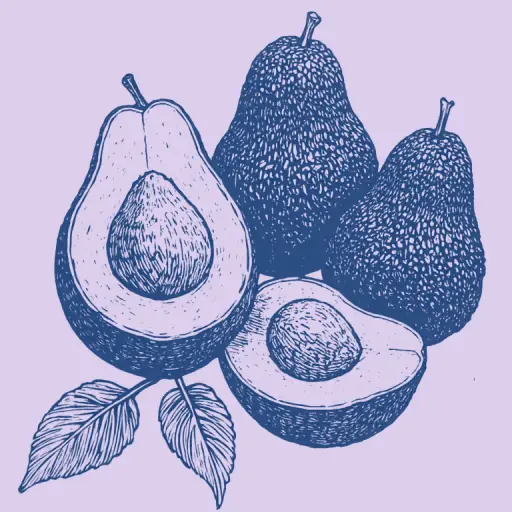
How to choose the perfect avocado and keep it fresh according to instructions
- 14 min read
- 77
Avocado, or "alligator pear," has long been an indispensable ingredient in our kitchens. We love it for its tender, buttery texture and health benefits, adding it to toasts, salads, and guacamole. However, buying this superfood often turns into a lottery: bringing the fruit home, we risk finding either a rock-hard fruit or dark spots and spoiled flesh inside.
How to infallibly determine the fruit's ripeness right at the counter? What to do if you get an unripe specimen, and how to speed up ripening at home? In this practical guide, we will cover all the subtleties of choosing the perfect avocado (including the popular Hass variety), learn how to check its softness by touch and the condition of the stem. You will learn how to extend the freshness of the fruit, protect a cut half from browning using lemon juice and plastic wrap, and in which cases freezing avocado is helpful. Our step-by-step instructions will help you forget about wasted food and spoiled breakfasts forever.
How to Choose a Ripe Avocado in the Store: Step-by-Step Inspection
Buying avocados in the supermarket often feels like a lottery: under the attractive green skin may hide either tender, creamy flesh or a hard, bitter fruit, or even worse, flesh darkened from overripeness. To avoid wasting money, it is important to master a simple algorithm for quick diagnosis right at the counter.
Professional chefs and experienced buyers never pick an "alligator pear" randomly. There is a clear sequence of steps that allows you to determine the avocado's ripeness without damaging its delicate texture. Let's look at the external signs and tactile markers you should pay attention to first to bring home the perfect ingredient for your toast or salad.
Visual and Tactile Test: Assessing Softness, Skin Color, and Fruit Weight
The first step to buying the perfect "alligator pear" is visual inspection and the correct tactile test.
1. Assessing Skin Color and Condition
The skin color depends directly on the variety. For example, the popular Hass variety darkens as it ripens, acquiring a deep purple-black hue. Other varieties (such as Forte) remain bright green even at peak ripeness. The main rule for any variety is the absence of dark spots, deep indentations, cracks, and white residue (mold).
2. Tactile Test (Softness to the Touch)
Never squeeze the fruit with your fingertips—this will damage the delicate flesh and leave dark spots on it. Instead, place the avocado in your palm and gently squeeze it with your whole hand:
- Rock-hard: The fruit is unripe and needs several days at room temperature.
- Slightly yields to pressure and returns to shape: Ideal fruit ripeness. The flesh will be tender and creamy.
- Too soft, deep indentations remain: The avocado is overripe and has likely started to darken inside.
3. Weight and Density
A ripe avocado should feel heavy for its size. A fruit that is too light often turns out to be dried out inside.
Secret Indicator: Checking Ripeness by Stem Condition and Variety
In addition to a general inspection, it is worth paying attention to details that reveal the true ripeness and quality of the fruit. These small signs will help you avoid buying poor-quality avocado.
1. Assessing Stem Condition:
- Ideal sign: The stem should be light brown, dry, and easily detach from the fruit. This indicates that the avocado is in the optimal ripening phase.
- Warning sign: If the stem is green, it may indicate that the fruit has not yet reached full maturity. If it is too dark, black, or covered in mold—it is better to decline the purchase.
2. Considering Variety Characteristics:
Remember that "avocado" is not a single product, but a whole group of varieties. Choosing the perfect fruit often depends on which variety you need:
- Hass Variety: The most popular and recognizable. It undergoes a natural coloring process: from dark green to a rich, almost black, velvety color. This is its ripeness indicator. If you buy Hass and it is still bright green, do not expect it to become perfectly black if storage conditions are not ideal.
- "Alligator Pear" Variety (or other green varieties): These varieties may remain bright green even when ripe. In this case, do not rely solely on color. The main criterion remains the tactile test: the fruit should be firm but yield slightly to light pressure, not be hard as a rock.
Expert Tip: Always check the avocado not only visually but also by touch. If the fruit seems too heavy for its size, it may indicate a high moisture content, which is not always a sign of ideal ripeness. The ideal weight is moderate, dense, but not heavy.
How to Ripen a Hard Avocado at Home
Often, the perfect ripe fruit is simply not available in the store, and you have to buy a hard "alligator pear." Don't be discouraged: ripening at home is a completely natural and controllable process. Moreover, buying an unripe avocado guarantees that there will be no hidden dark spots from transport impacts inside.
To turn a rock-hard fruit into a tender, buttery base for guacamole or toast, you just need to initiate the natural ripening mechanisms. There are several simple and safe culinary tricks that will help you quickly and without losing flavor quality to bring the avocado to perfect condition right in your kitchen.
Optimal Conditions for Room Temperature Ripening
If you bought a hard "alligator pear," don't panic. Ripening at home is a natural process that only requires the right microclimate.
The main rule is to maintain a room temperature between +18...+24 °C. Never put an unripe fruit in the refrigerator: cold blocks the production of enzymes responsible for softening the flesh. As a result, the fruit will remain hard but will start to darken and spoil inside.
For ideal ripening, place the fruit in a dry place, protected from direct sunlight. A closed kitchen shelf, a dark corner of the counter, or a deep fruit vase will work well. Direct sunlight can overheat the fruit, causing dry dark spots to appear on the skin.
An important nuance: do not wash the avocado before leaving it to ripen. Excess moisture on the rough skin promotes the development of mold and rot. Under these natural conditions, the hard fruit will reach ideal softness to the touch in about 3–5 days.
Quick Ripening Method: Using a Paper Bag with Activator Fruits
If you need to bring the alligator pear to the desired condition as quickly as possible, simple waiting on the shelf will not be enough. The best way to speed up ripening at home is to use a regular paper bag.
This method is based on the action of ethylene—a natural gas that stimulates fruit ripening. The avocado itself releases it slowly, but in a closed space, the gas concentration increases. To enhance the effect, add "neighbors" activators.
Step-by-step express ripening algorithm:
- Place the hard avocado in a sealed paper bag. Do not use plastic: condensation accumulates in it, causing the fruit to simply rot.
- Add a ripe banana, a red apple (pre-washed with hot water to remove protective wax), or a ripe tomato to the bag.
- Tightly seal the edges of the bag and leave it at room temperature in a dry place, protected from direct sunlight.
Thanks to this trick, even the hardest Hass variety will become soft to the touch and acquire a perfect creamy texture in just 24–48 hours instead of the usual five days. Regularly check the fruit's ripeness so you don't miss the perfect moment.
Storing Whole and Cut Avocado
When the avocado reaches its peak ripeness, the culinary clock starts ticking faster. The delicate, oily flesh is a perishable product: if you miss the moment, the perfect fruit will overripen or darken due to oxidation in the air. To prevent your culinary masterpieces from suffering and the valuable superfood from ending up in the trash, it is important to master the basic rules of temperature control and oxygen protection.
Depending on whether you plan to use the fruit whole over several days or want to save the remaining half after a morning toast, storage strategies will differ significantly. Let's look at proven culinary techniques that will help extend the life of ripe avocado without losing its flavor and texture.
How to Keep a Whole Ripe Fruit Fresh in the Refrigerator
When the avocado reaches its ideal state of ripeness (it is soft to the touch but retains firmness), the ripening process must be immediately slowed down. The best way to do this is to place the whole fruit in the refrigerator. Low temperatures halt the action of enzymes and ethylene release, allowing the fruit to remain in pristine condition for another 3–5 days.
Rules for storing a whole ripe avocado in the refrigerator:
- Freshness Zone: Place the fruit in a special vegetable and fruit drawer. This maintains an optimal humidity level that prevents the skin from wrinkling and the flesh from drying out.
- Odor Protection: The alligator pear easily absorbs foreign odors. To avoid this, place the fruit in a sealed zip-lock bag or plastic container after releasing excess air.
- Product Proximity: Keep the ripe fruit away from apples, bananas, and tomatoes. Even at low temperatures, they release ethylene, which can accelerate the ripening of the avocado and cause dark spots to appear.
- Temperature Regime: The optimal storage temperature is +4...+6 °C. Avoid placing the fruits flush against the back wall of the refrigerator to prevent them from freezing.
How to Prevent Cut Halves from Browning Using Lemon Juice and Plastic Wrap
As soon as you cut the avocado, the oxidation process begins: the enzyme polyphenol oxidase reacts with oxygen, causing the delicate green flesh to quickly take on an unsightly brown hue. To maintain the appetizing appearance and taste of the remaining half, it is necessary to maximally limit its contact with air.
Here is a proven culinary algorithm to help preserve the product:
- Leave the pit. Always store the half that still has the pit. It physically covers the central part of the fruit, preventing oxygen from reaching the most delicate flesh.
- Apply lemon juice. Generously drizzle the cut surface with freshly squeezed lemon or lime juice. The citric acid contained in them acts as a powerful natural antioxidant that effectively blocks the chemical reaction of browning. As an alternative, you can use high-quality apple cider vinegar or a thin layer of olive oil.
- Wrap tightly with plastic wrap. Wrap the half with plastic wrap "in contact"—so that the polyethylene literally adheres to the flesh, leaving no air bubbles underneath.
- Chill correctly. Place the wrapped avocado cut-side down in a small, airtight container and put it on a middle shelf in the refrigerator.
This simple method guarantees the preservation of freshness, bright color, and firm texture for 24–48 hours.
Freezing Avocado as a Method of Long-Term Storage
Freezing is the ideal way to extend the life of ripe avocado if you bought it in bulk or cannot use it in time. Unlike regular refrigeration, where the fruit wilts in a matter of days, the freezer can preserve its nutritional value, bright color, and delicate texture for several months. The main thing is to prepare the fruit correctly for exposure to low temperatures so that the flesh does not lose its flavor quality or turn into a watery mush after thawing.
Step-by-Step Instructions for Freezing Whole Slices and Avocado Puree
To freeze avocado and preserve its nutritional properties for a long time, it is important to prepare the fruit correctly. Freezing is an ideal way to save avocado for use in smoothies, sauces, or baking where texture is not critical. However, keep in mind that after thawing, the avocado may lose some of its original delicate texture, so it is better to use it for pureeing or blending.
Step-by-step instructions for freezing whole slices:
- Ingredient Selection: Use ripe, whole fruits that have no damage, bruises, or dark spots. Avocado that you planned to eat in the coming days is ideal.
- Preparation: Cut the avocado lengthwise around the pit and carefully remove the pits. Cut the halves into slices of equal size (about 1–2 cm). Try to keep the slices as clean as possible, free of skin.
- Arrangement: Lay the cut slices in a single layer on a suitable freezing tray or platter. This is critical so that the pieces do not stick together.
- Freezing: Place the tray in the freezer for several hours until the slices are completely frozen. After this, transfer the frozen slices to an airtight bag or container for long-term storage.
How to freeze avocado as puree:
If you need a large amount of avocado for baking or smoothies, it is best to prepare a puree. This is the simplest and most effective method:
- Mashing: Peel and cut the required amount of avocado. Blend the flesh with a blender until it reaches a smooth puree consistency.
- Portioning: Place the puree in small portions (a portion for 1–2 days) into special freezing containers or zip-lock bags.
- Packaging: Seal the containers or bags tightly, removing as much air as possible. This prevents spoilage and preserves the flavor.
Thawing rules and culinary ideas:
- Thawing: For slices, it is best to transfer frozen pieces to the refrigerator and thaw slowly, over 12–24 hours. If you need to use the avocado urgently, you can thaw it in cold water, but the texture may suffer.
- Usage: Frozen puree is ideal for smoothies where texture is not important. Frozen slices can be used to make guacamole or added to baking to give it a creamy base.
Rules for Thawing and Culinary Ideas for Using Frozen Fruit
Proper thawing is key to preserving the pleasant taste and tender green color of the avocado. To prevent the fruit from turning into a dark, watery mass, follow these simple rules:
- Slow Method (Best): Transfer a portion of frozen avocado from the freezer to the top shelf of the refrigerator for about 1–2 hours.
- Quick Method: If time is short, leave the sealed bag of avocado in a bowl of cold (but not warm!) water for 15–20 minutes.
- Heat Prohibition: Never use a microwave. Heating will destroy the healthy fats, and the flesh will acquire an unpleasant bitterness.
- Anti-Browning Protection: If you did not spray the fruit with lemon juice before freezing, do so immediately after removing it from the freezer.
Since the 'alligator pear' partially loses its firmness after thawing, it should not be used in classic salads. However, it is perfect for the following culinary solutions:
- Creamy Smoothies: Frozen cubes can be put into a blender without thawing. They will give the drink a silky texture.
- Guacamole and Spreads: Mashed flesh with spices makes an excellent base for morning toast.
- Healthy Sauces: Mix the puree with herbs, garlic, and yogurt for pasta dressing.
- Puree Soups: Add thawed avocado to cold gazpacho for creaminess.
- Healthy Baking: Use the puree as a substitute for butter in chocolate muffins or brownies.
Conclusion
In conclusion, we want to emphasize that avocado is not just a trendy ingredient for toast, but a true treasure trove of healthy fats, vitamins, and fiber. Knowing how to properly select and store this fruit is a culinary skill that will save you time and money and guarantee maximum enjoyment from every dish.
Key Rules to Remember:
- In-Store Selection: Always check the avocado by touch. The ideal fruit should be firm, yield slightly to pressure, but not be soft. Avoid fruits with dark spots, cuts, or a sticky film—these are signs of spoilage or chemical treatment.
- Ripening at Home: If the avocado is too hard, do not rush to wash it or put it in the refrigerator. The best place for it to ripen is at room temperature in a closed paper bag with a banana or apple. These fruits release ethylene, accelerating the process.
- Storage: Ripe avocado is best consumed within 1–3 days. If you need to extend the shelf life, use the refrigerator. Always treat cut halves with lemon juice and wrap them tightly in plastic wrap to prevent oxidation and browning.
- Freezing: For long-term storage and use in smoothies or sauces, freeze only ripe slices or puree. This will preserve the benefits and texture, and with proper thawing, it will become an ideal base for a healthy breakfast.
Remember that knowing these simple life hacks turns buying avocado from a lottery into a confident culinary ritual. By following these recommendations, you will always get a perfect, aromatic, and nutritious fruit that will be the star of your table.