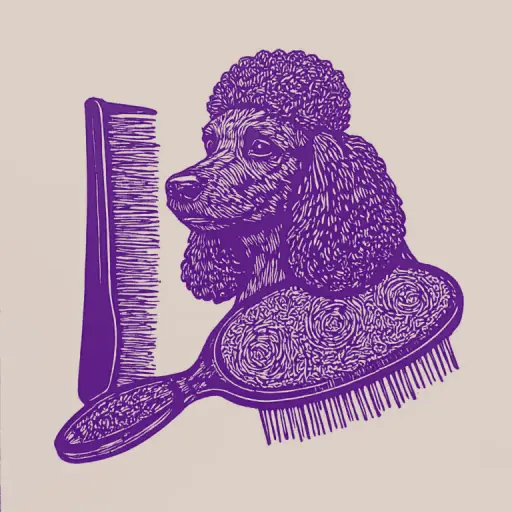
How to comb poodle mats without hurting the pet?
- 14 min read
- 63
The luxurious curly coat of a poodle is its main adornment, but at the same time, it is a constant source of worry for the owner. The unique hair structure of this breed is practically not prone to natural shedding: dead hairs do not fall onto the floor but get trapped in the curls, instantly forming dense mats. If the moment is missed, an harmless curl quickly turns into a hard felt, which tightens the pet's delicate skin, causing it constant discomfort and pain.
Many owners of toy, miniature, and royal poodles immediately reach for scissors when they see mats, making a mistake. In fact, the coat can be restored to impeccable condition without radical haircuts and, most importantly, absolutely painlessly for the dog. In this practical guide, we will cover how to correctly de-mat even the most complex tangles at home, what professional tools and sprays you will need, and how to turn the grooming procedure into a pleasant ritual for your beloved pet.
Tools and Cosmetics: Assembling the Anti-Mat Arsenal
Fighting mats in a poodle is not just mechanical brushing; it is a delicate process that requires the right equipment. Trying to de-mat dense curls with an ordinary household brush or "dry" will cause the pet severe pain and damage the structure of its unique coat. For the procedure to be painless and effective, you will need a professional arsenal consisting of specialized tools and softening cosmetics.
Properly chosen devices and products not only facilitate gliding but also preserve the health of the undercoat hair. Let's look at exactly which tools should be in your grooming kit and which cosmetic aids will help turn complex grooming into a safe and comfortable process for your dog.
Basic Tools (Slicker, Comb, De-matting Tool) and Their Selection
To effectively combat mats in a poodle, you will need three main tools. Each performs its own task while gently preserving the structure of the curly coat.
- Slicker Brush: Choose a model with long, thin, and resilient metal teeth without protective ball caps on the ends. The balls catch and tear the poodle's delicate undercoat, injuring the skin. A soft or medium stiffness cord is ideal.
- Metal Comb: A comb with long, sturdy teeth (about 3–4 cm) and a combined spacing (fine/wide teeth) is necessary. It serves as a final check: if the comb passes freely from the roots to the tips, there are no mats left.
- De-matting Tool: For poodles, a vertical (side) de-matting tool with rounded, sharply sharpened blades is best. It neatly cuts the dense felt along the hair growth, minimizing hair loss.
Special Sprays and Conditioners for Detangling
The dry coat of a poodle breaks easily and becomes highly static, so brushing mats "dry" is strictly forbidden—it will cause the dog severe pain. Special cosmetics create the necessary glide, smooth the hair cuticle, and make it elastic.
For effective tangle removal, you will need two types of products:
- Detangling Sprays. They contain light silicones and cosmetic oils. The spray is applied generously directly onto the knot before starting work. It coats the hairs, allowing them to literally slide past each other while brushing.
- Nourishing Dog Conditioners. Used during washing. Products with keratin, silk proteins, or argan oil deeply moisturize the curly coat, preventing the formation of new knots.
| Product Type | When to Apply | Main Effect |
|---|---|---|
| Detangling Spray | Before brushing (on dry or wet coat) | Instant glide, softening of the knot |
| Conditioner/Mask | During bathing (after shampoo) | Moisturization, elasticity, mat prevention |
Tip: After applying the spray, wait 2–3 minutes for the product to absorb and soften the hair structure, and only then begin to de-mat the knot by hand or with tools.
Step-by-Step Algorithm for Painless Brushing
When the arsenal of professional cosmetics and the right brushes is ready, the most critical moment arrives—the de-matting process itself. The main secret to painless poodle grooming lies in a strict sequence of actions and a complete lack of haste. Trying to immediately grab the slicker brush and start pulling the hair will only lead to pain, dog fright, and damaged hair structure.
To make the procedure comfortable for your pet, we will break it down into clear, logical steps. Moving from delicate manual preparation to careful work with professional tools, you can preserve every curl of the poodle's luxurious coat without stressing its nervous system.
Preparatory Stage and Preliminary Manual De-matting
Before picking up the brushes, it is necessary to prepare the poodle's coat and minimize discomfort. Start with delicate palpation: gently stroke the dog, locating problem areas. Mats most often form behind the ears, under the armpits, in the groin, and on the leg joints.
Preliminary de-matting algorithm:
- Product Application. Apply the detangling spray or diluted dog conditioner generously directly onto the tangled knot. Allow the cosmetic to absorb for 2–3 minutes to soften the hair structure and reduce friction.
- Base Fixation. Be sure to hold the hair at the roots with your fingers of one hand. This protects the poodle's delicate skin from tension and pain.
- Manual De-matting. With the fingers of the other hand, gently stretch the mat in different directions, moving from the edges toward the center. Try to divide one dense clump into several small, loose strands.
This gentle care of the curly coat at the initial stage will maintain the pet's trust and facilitate subsequent tool work.
Comb and Slicker Technique: From Tips to Roots
After the large knots have been preliminarily de-mated by hand, it is time to move on to detailed hair work with tools. The main rule for painless poodle brushing is always to move from the tips of the hair to the roots. If you start brushing immediately from the skin, the mat will instantly tighten into a dense, almost unresolvable knot, causing the dog severe pain.
Step-by-Step Technique:
- Securing the Strand. Firmly clamp the base of the strand being treated with your fingers right against the skin. This creates a barrier and protects the pet from uncomfortable tension when using tools.
- Working with the Slicker Brush. Work over the very edge of the tangled area using light, short, almost "patting" and brushing motions. Gradually, millimeter by millimeter, move up toward the dog's body. Never press the slicker brush deep into the coat or scratch the skin.
- Checking with the Metal Comb. Take the comb and gently run it through the combed area. If the teeth pass freely from the roots to the tips—the strand is completely undone. If the comb snags, return to the slicker brush.
This layered method preserves every hair and makes the procedure comfortable for the pet.
Complex Cases: How to Handle Severe Matting
Sometimes, despite all efforts, the poodle's fine undercoat clumps into a dense, monolithic shell resembling a real felted mat. This most often happens in hidden areas—behind the ears, in the groin, under the armpits, or in the creases of the paws after active walks in damp weather. Trying to undo such severe matting with a regular slicker brush or comb means causing the pet severe pain and seriously injuring its delicate skin.
In such critical situations, standard methods are ineffective, and the owner must resort to radical measures. The main thing here is to act with extreme caution so as not to hurt the dog, and to realistically assess the chances of saving the coat. Let's examine how to properly work with extreme mats and in which cases it is more humane to use scissors immediately.
Rules for Safe Use of a Mat Cutter
A mat cutter is a tool with sharp blades that can easily injure the poodle's delicate skin if used incorrectly. To ensure the procedure is safe, strictly follow these rules:
- Secure the Hair Base. Always clamp the base of the mat with your fingers right against the skin. This protects the dog from painful tension and prevents accidental cuts.
- Blade Direction. Position the mat cutter so that its rounded, safe tips face the skin, and the cutting edges run along the direction of hair growth.
- Smooth Movements. Do not try to force the tool through the mat. Make short, light slicing motions. Move from the base to the tips, as if "slicing" the clump into several thin strands.
- Extra Caution in Danger Zones. The skin in the groin, under the armpits, and behind the ears is very thin and forms folds. It is not recommended for beginners to use a mat cutter here—it is better to undo the knot by hand or carefully trim it.
Once the dense clump is separated into pieces, it can be easily combed with a metal comb.
When Untangling is Impossible: The Technique of Careful Trimming
When the mat is pressed tightly against the skin, any attempt to undo or cut it with a mat cutter will cause unbearable pain to the poodle. In such situations, the only humane option is careful trimming.
To safely remove the dead clump of hair, follow the vertical cutting technique:
- Use a Safe Tool. Take professional hairdressing scissors with rounded (blunt) tips. Never use household or manicure scissors.
- Create a Protective Barrier. Slide a metal comb between the poodle's skin and the base of the mat. The teeth of the comb will serve as a reliable shield that physically prevents the blade from touching the dog's body.
- Make Perpendicular Cuts. Never cut the mat parallel to the skin—this will guarantee epidermal injury. Direct the scissors' blades strictly vertically (from the skin to the hair tips), carefully slicing the dense clump into 2–3 pieces.
- Untangle the Remnants. After the vertical cuts, try to separate the divided strands with your fingers, and then gently comb them with a slicker brush.
If the hair has matted into a solid shell all over the body, do not torture the dog. In this case, the best solution is a complete sanitary clip by a professional groomer. The health of the skin and the pet's psyche are always more important than preserving coat length.
Critical Error Analysis: What Absolutely Not to Do
Even when equipped with the right tools, inexperienced owners often make critical mistakes that turn the grooming procedure into a real torment for the poodle. The desire to quickly rid the pet of matted hair often leads to the opposite effect: the mats tighten even further, and the dog begins to fear the comb in a panic.
To avoid harming the skin health and ruining the unique structure of curly hair, it is important to clearly understand which actions are strictly forbidden. Let's examine typical blunders that can negate all your efforts and injure your beloved pet.
Why You Cannot Wash a Poodle with Untangled Mats
Washing a poodle with untangled mats is the biggest mistake of novice owners, which turns light tangling into a monolithic felted mat. Poodle curly hair has a special structure: under the influence of warm water and detergents, the hair cuticles open up, and the hair itself swells.
When you start lathering and rubbing the dog, the hairs cling to each other even more strongly. A process analogous to wool felting occurs. After drying, these knots contract so tightly that they become impossible to undo painlessly—the only way out is complete clipping with clippers.
Furthermore, dense mats trap shampoo and conditioner residue. It is almost impossible to wash them out completely with water. The soapy environment trapped against the skin causes:
- Severe itching and irritation;
- Chemical burns to the skin;
- Development of moist dermatitis and fungal infections due to the greenhouse effect.
The Golden Rule of Poodle Grooming: First, complete brushing with a slicker brush and comb, and only then—a bath.
Errors in Skin Tension and Sharp Combing Movements
Moving from washing errors to mechanical work, it is crucial to understand the technique of movement. The most common mistake of beginners is trying to "force through" a mat with one sharp stroke. When the slicker brush or metal comb gets stuck in the hair, a sudden movement causes acute pain to the poodle. This leads to epidermal micro-trauma and develops a persistent fear of the comb in the dog.
The second critical error is the lack of skin fixation. If you pull on tangled hair without holding it at the base, the skin stretches along with the tool. This not only increases the pain but also raises the risk of injury: stretched skin is very easy to cut with a mat cutter or scratch with sharp comb teeth.
How to do it correctly:
- Always clamp the base of the strand with your free hand right against the skin, blocking tension.
- Make short, springy combing motions, moving from the tips toward the roots.
- Never pull the tool with force if it is stuck—gently pull it out and untangle that area with your fingers.
Prevention: How to Forget Mats on a Poodle Forever
Dealing with existing mats is always stressful for the dog and painstaking work for the owner. It is much easier to establish a proper care routine where the poodle's coat simply doesn't have time to knot up into dense masses. The specific structure of curly hair requires regular attention, but once you turn prevention into a habit, grooming will take only a few minutes.
The secret to a flawless coat lies in proper hygiene and drying technique. Let's break down the step-by-step care algorithm that will protect your pet from forming new mats and keep its coat healthy and resilient.
Proper Algorithm for Washing, Blow-Drying, and Straightening the Coat
Proper care of a poodle's coat during bathing is the foundation of mat prevention. Curly hair has a porous structure, so haphazard washing and air drying will inevitably lead to knot formation.
Washing and Drying Algorithm to Prevent Mats:
- Gentle Cleansing. Apply professional shampoo, pre-diluted with water, using gentle massaging motions along the direction of hair growth. Avoid chaotic rubbing or lathering the dog's coat.
- Cuticle Sealing. After rinsing the shampoo, be sure to apply a nourishing conditioner or a static-reducing mask. Leave it on for a few minutes and rinse thoroughly. This will make the hair slippery and elastic.
- Dabbing. Do not rub the poodle with a towel. Wrap the pet and gently blot the moisture using squeezing motions.
- Drying and Straightening. Use a hairdryer and a slicker brush. Direct the stream of warm air onto a single strand and simultaneously comb it with the slicker brush from the roots to the tips, straightening the curl. Work in sections until all the coat is dry and straight.
It is this straightened hair during drying that is less likely to tangle with itself, which eliminates the appearance of new mats.
Hygiene After Walks and Regular Brushing Frequency
Walks are the main source of "sudden" mats. The poodle's curly coat instantly collects burrs, twigs, and moisture, and the friction from harnesses and jumpsuits turns these areas into dense felt.
Hygiene After Every Walk:
- Inspection and Cleaning: Immediately upon returning home, inspect critical areas: armpits, groin, paws, and the area behind the ears. Manually remove large debris (twigs, plant seeds).
- Drying Wet Coat: If the dog gets wet, do not allow the coat to dry naturally. Blot it with a towel (do not rub!) and dry it with a hairdryer while simultaneously brushing with a slicker brush.
- Friction Protection: Clothing and harnesses are the coat's main enemies. After removing the jumpsuit, be sure to brush the contact areas with a metal comb.
Brushing Frequency:
- Daily: Quick inspection and brushing of high-risk areas (behind the ears, armpits, under the collar). This takes only 5 minutes but saves hours of difficult grooming.
- 2–3 Times Per Week: Full, deep grooming of the poodle. Thoroughly comb the entire body with a metal comb from roots to tips to detect hidden knots in time.
Conclusion
Caring for the poodle's unique curly coat is not just a mandatory hygiene procedure; it is a true expression of your love and concern for your pet's health. Painless removal of mats requires patience, meticulousness, and the right arsenal from the owner: a quality slicker brush, a metal comb, and a special moisturizing spray. The main secret to a beautiful, mat-free coat lies in regularity. By dedicating only 10–15 minutes a day to brushing and following the proper washing and blow-drying algorithm, you will forget about dense felt and stress for your dog forever.
If the situation seems too advanced, do not hesitate to consult professional groomers. Remember that your poodle's comfort and health must always come first. Gradually accustom your pet to the tools, reward it with treats, and then joint coat care will transform from an unpleasant chore into a pleasant ritual that strengthens your bond. A well-groomed, shiny, and mat-free coat is the best reward for your efforts and the main sign of a happy, healthy dog.