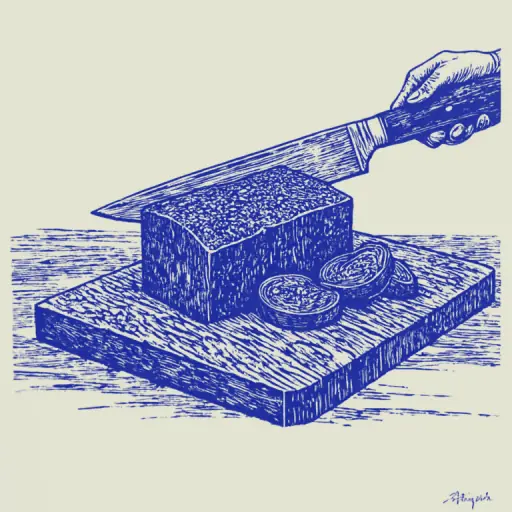
How to Cut Meat for Stewing According to Culinary Art Rules
- 8 min read
- 57
Stewing is the ideal way to transform even tough cuts into the most tender culinary creation. However, the secret to a melt-in-your-mouth dish lies not only in spices or simmering time but also in proper preliminary cutting. Mistakes at this stage can turn juicy beef or pork into dry, tough fibers.
In this guide, we will cover the golden rules for preparing meat for stewing: from choosing a sharp knife and trimming the piece of membranes to the subtleties of cutting across the grain and selecting the ideal piece size for goulash or ragout.
Preparation Stage: Choosing Tools and Cleaning the Meat
Before dropping the first piece into a hot pan or cauldron, it is necessary to properly prepare the workspace and the product itself. The secret to perfect stewed meat lies not only in the sauce recipe but also in meticulous preliminary work. At this stage, it is critically important to pay attention to two things: quality tools and thorough trimming of the meat cut. Without this, even the most expensive beef or pork risks turning into tough, unevenly cooked fibers.
Choosing and Preparing the Ideal Cutting Knife
For perfect meat cutting, you will need the right tool. The best choice is a heavy European chef's knife or slicer with a blade length of 20–25 cm. The wide blade allows for even, confident movements without a 'sawing' effect.
The main rule is that the knife must be razor sharp. A dull blade crushes muscle fibers and literally squeezes out precious juices, causing the meat to lose juiciness and become tough during stewing. Before starting work, be sure to sharpen the blade on a whetstone or sharpening stone. A clean, even cut is the guarantee that the juicy meat will retain all its moisture inside each piece.
Removing Membranes, Sinews, and Excess Fat Before Stewing
Before starting to cut, be sure to trim the meat. Tough tendons and dense silvery membranes (fascia) will not soften during stewing; they will only contract, making the pieces tough and deformed.
To clean, gently lift the edge of the membrane with the tip of a sharp knife, directing the blade slightly upward (toward the membrane) so as not to cut valuable flesh, and slice it off with a smooth motion.
Regarding fat, balance is important here:
- Coarse external fat is better to trim off so that the gravy is not excessively greasy.
- Thin layers of internal fat should be left—they will melt during the long simmering process and ensure juiciness.
The Main Rule of Tenderness: Why It Is Important to Cut Across the Grain
The direction of the knife when butchering determines how tender and juicy the finished dish will be. The main secret of professional chefs is simple: meat is always cut across the grain. When we cut across the long muscle fibers, we artificially shorten them. During stewing, these shortened fibers soften more easily, absorb the sauce faster, and do not turn into tough 'rubber.' The correct cut guarantees that even dense pieces of beef will literally melt in your mouth.
How to Correctly Determine the Direction of Muscle Fibers
To correctly determine the direction of the muscle fibers, carefully examine the piece of meat in good light. The fibers look like parallel longitudinal lines or 'threads' running across the entire surface of the cut.
Use two simple methods:
- Visual method. Fibers are best visible on fresh or slightly frozen meat. They resemble the longitudinal pattern on wood. The direction of these 'strips' is the direction of the fibers.
- Tactile method. Run your finger along the piece. If the surface feels smooth, you are running your finger along the fibers. If you feel slight resistance and roughness, you are moving across them.
When cutting, always place the knife blade strictly perpendicular (at a 90-degree angle) to these lines. This guarantees that the fibers will become short during stewing, and the finished dish will be soft and tender.
Difference in Cutting Beef and Pork for Stewing
Beef and pork differ radically in the density and structure of their muscle tissue, so the approach to cutting them also differs:
- Beef: Has tough, long, and clearly defined fibers. It must be cut strictly across the grain. If this rule is violated, the beef will lose its juice and become 'rubbery' during stewing, no matter how long you simmer it.
- Pork: Possesses a more tender and loose texture with thin fibers and fat layers. The cutting direction is less critical here, but for lean cuts (tenderloin, pork loin, shoulder), a cross-cut is still mandatory. Fatty pieces (neck, leg) forgive minor deviations from the rules, but for ideal tenderness, it is best to stick to the classic method.
Size and Shape: Cutting Meat for a Specific Dish
Understanding the fiber structure is only half the battle. For beef or pork to be truly juicy, it is crucial to correctly select the cutting geometry for the specific recipe. The size of each piece directly determines the rate of heat treatment and how well the meat retains its juice during stewing. Each dish requires its own standard to balance the doneness of the meat and vegetables.
Ideal Piece Size for Classic Goulash and Azu
The geometry of the cut differs fundamentally for classic Hungarian goulash and Tatar azu, dictated by culinary traditions:
- Goulash: The meat is cut into neat cubes of approximately 3x3 cm (maximum 4x4 cm). This volume allows the beef or pork to remain juicy inside, gradually saturating with sauce during long stewing.
- Azu: For this dish, a stick-cut is traditionally used. The meat is sliced into elongated pieces measuring 4–5 cm in length and about 1 cm thick. This shape perfectly complements the strips of pickled cucumbers and potatoes.
Adhering to these standards guarantees a uniform texture and an aesthetically pleasing finished dish.
Large Cuts for Vegetable Ragout and Long Simmering
Vegetable ragout and long-simmering dishes (such as khashlama or classic pot roast) require large cuts. The optimal piece size is 4–5 cm (about the size of a large chicken egg).
During long thermal processing, small pieces quickly release all their juice, dry out, and turn into fibers. A large piece, however, retains juiciness inside, and the collagen contained within it slowly melts, making the meat tender. Furthermore, a large cut allows the meat to cook simultaneously with large-cut vegetables (potatoes, carrots) without losing its shape during hours of simmering.
Typical Mistakes When Cutting Meat for Stewing
Even after choosing the ideal cut and deciding on the recipe, it is easy to ruin the dish during preparation. Incorrect butchering negates all culinary effort, turning juicy beef or pork into tough, dry fibers.
Home cooks most often make two critical mistakes related to cutting geometry. These directly affect the juiciness and evenness of the finished dish. Let's examine these blunders so that your stewed meat always melts in your mouth.
Too Small Pieces and Loss of Meat Juice
The desire to speed up the cooking process and cut the meat as finely as possible is one of the main mistakes of novice cooks. With excessive mincing (e.g., less than 2-3 cm), the surface area of each piece increases critically. During initial searing or stewing, such meat instantly loses all its internal juice, which simply evaporates before it can seal inside.
As a result, instead of a tender and juicy dish, you will get tough, dry, and fibrous pieces that even long simmering in sauce cannot save. To preserve juiciness, it is recommended to cut beef and pork for stewing into medium cubes—optimally from 3 to 5 cm.
Uneven Cut Size and Cooking Problems
Uneven cutting is the enemy of a perfect stewed dish. When pieces of different sizes enter the pot, they cook at different rates. Small pieces manage to fully break down and lose their shape, while large ones remain tough inside.
To avoid this problem, strive for maximum uniformity:
- Calibration: Cut the meat into identical cubes (e.g., strictly 3 cm for goulash).
- Sorting: If perfect uniformity cannot be achieved, add the larger pieces to the pot a couple of minutes before the smaller ones.
Uniform size guarantees that all the meat reaches perfect tenderness at the same time, retaining the juiciness of every piece.
Conclusion
Proper meat cutting is not just a technical step; it is the true foundation of the juiciness and tenderness of your future dish. By following the basic rules of culinary art—using only a sharp knife, thoroughly removing tough membranes, cutting pieces strictly across the muscle fibers, and precisely matching their size to the specific recipe—you guarantee a flawless result.
Now that you have mastered all the subtleties of preparing beef and pork for stewing, your homemade goulash, azu, and ragout will always turn out incredibly soft, juicy, and aromatic. Apply this knowledge in practice, experiment with sauces, and delight your loved ones with culinary masterpieces!