How to Declutter Your Home Step-by-Step and Achieve Perfect Order
- 14 min read
- 77
Our home is a mirror of our inner state. When rooms are overloaded with items that have been gathering dust for years, we subconsciously experience constant stress and mental fatigue. Getting rid of excess is not just a hygienic procedure; it is a powerful tool for rebooting one's entire life.
By freeing up physical space from unnecessary things, we achieve amazing results:
- Reduced anxiety levels: Visual clutter no longer irritates the psyche.
- Time savings: Far less energy is spent on cleaning and searching for necessary items.
- Inflow of new energy: Space is freed up for new hobbies, plans, and comfortable rest.
Every item thrown away or given away is a step toward inner freedom and minimalist interior design. Starting this journey can be difficult due to emotional attachment to objects, but the result will exceed all expectations.
Psychological Barriers: How to Overcome the Fear of Letting Go of Things
Recognizing the benefits of order is only the first step. The main difficulty on the path to a clean home lies not in a lack of free time, but in our minds. Every item in the apartment subtly accumulates emotional ties, memories, or fears about an uncertain future. This is why regular cleaning often turns into a torturous internal struggle.
To break this vicious cycle, it is necessary to deal with the mental traps that make us keep broken equipment, unworn clothes, and piles of old magazines for years. Let's examine the main psychological barriers and master simple techniques that will help you let go of the past without guilt or anxiety.
Overcoming Hoarding Syndrome and the "It Might Come in Handy" Mentality
The "it might come in handy" mentality is the main anchor that prevents us from getting rid of junk in time and conducting effective home decluttering. Psychologists call this a manifestation of hoarding syndrome, rooted in the fear of scarcity and loss of control. To defeat this mental trap, use three practical techniques:
- The "20/20" Rule: If unnecessary items can be bought in an emergency in less than 20 minutes and for less than 2000 rubles, let them go without regret.
- Relevance Test: If an item has not been used in the last year, you no longer need it. The only exception is seasonal inventory, but even its quantity should be optimized.
- Rental Fee: Imagine that every item is "paying" you for the space it occupies. Is a broken appliance or old clothing worth the space they take away from your comfort?
Realizing that your home is a living space, not a free warehouse for storing outdated items, helps take the first and most difficult step toward order.
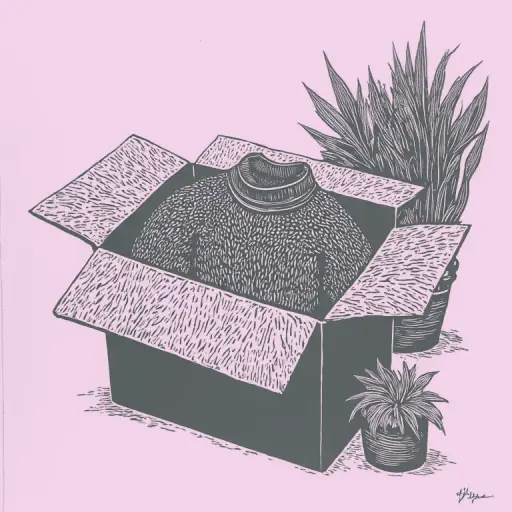
Temporary Storage Technique: How the "Quarantine Box" Works
This method is an ideal compromise for those who find it difficult to make a final decision right now. The "quarantine box" reduces anxiety by creating a safe distance between you and your belongings.
The algorithm for working with this technique is simple:
- Choose an opaque box. It is important that you do not see its contents every day.
- Place questionable items inside. Put in clothes, kitchen utensils, or souvenirs that cause doubt, such as "what if I need it."
- Set a deadline. Write the assembly date and the "opening" date on the box—usually 3 to 6 months is enough.
- Hide it from sight. Put the box on a high shelf, in a pantry, or in a closet.
If you do not think about the contents or take out a specific item within the set period, it means you truly do not need it. Now you can confidently donate or dispose of the box without even looking inside, so as not to provoke a new wave of pity.
Step-by-Step Algorithm: Where to Start Decluttering Your Apartment
Once the psychological barriers are behind you and the "quarantine boxes" are ready to be filled, the main practical question arises: how to approach the clutter without giving up halfway? Chaotic attempts to clean everywhere at once usually only lead to more mess and a drop in energy. For decluttering to bring joy rather than stress, a clear systematic plan is needed.
There are two proven global approaches to tidying up that have proven effective. You can move gradually, freeing up individual zones step by step, or you can stage a global revolution using the category method. Let's examine these tactics in detail so you can choose the ideal algorithm for your home.
Express Cleaning Method: Zoning the Space and Starting Gradually
The main mistake of beginners is trying to sort out the entire apartment in one weekend. This guarantees a drop in energy and an unfinished task. The express cleaning method offers an ecological alternative: a gradual start through strict space zoning.
Instead of attacking the entire room, divide your living space into microzones. A microzone is not an entire room, but one specific, local object:
- one shelf in the wardrobe;
- a drawer in the desk;
- a shoe rack in the entryway;
- a first-aid kit or cosmetic bag.
Dedicate exactly 15 minutes a day to the task and set a timer. As soon as the signal sounds, stop immediately, even if you want to continue. This psychological trick helps develop the habit of regular decluttering without self-inflicted pressure. By moving in small steps, you will subtly get rid of the unnecessary and prepare the foundation for larger changes.
Marie Kondo's Japanese System (KonMari): Sorting Items by Category
Unlike the traditional approach, where cleaning proceeds room by room, the Japanese KonMari method proposes a revolutionary principle: sort items strictly by category. If you are sorting clothes, gather them from absolutely all wardrobes, boxes, and rooms into one large pile on the floor. Only then can you realize the true scale of your possessions and get rid of the junk.
Marie Kondo recommends adhering to a strict sequence, moving from emotionally simple items to complex ones:
- Clothes and shoes — the easiest stage for training resolve.
- Books — keep only those you genuinely plan to read or reread.
- Documents — ruthlessly throw away old receipts, appliance manuals, and expired bills.
- Miscellaneous (Komono) — cosmetics, kitchen utensils, stationery, wires, and small items.
- Sentimental items — photos, letters, and mementos (these are sorted last, once the skill of letting go is honed).
The main selection criterion is: does the item spark joy (spark joy). Pick up the item: if you feel an inner resonance and warmth, keep it. If not—sincerely thank the item for its service and let it go without hesitation.
Where to Put Unnecessary Things: Ecological and Useful Solutions
When mountains of sorted clothes, books, and dishes finally grow in the middle of a room, the main temptation arises—to simply stuff everything into huge black bags and take it to the dumpsters. However, this approach often causes guilt and prevents the decluttering from being completed. It is much easier to let go of things when you know for certain that they will benefit someone else or be recycled without harming the environment.
Eco-friendly decluttering is not just about getting rid of junk; it is about the rational redistribution of resources. Instead of filling up city landfills, we can give items a second life. There are two main ways to solve this problem: donating them to those in need, and selling quality items, which can help recoup some of the money spent.
Where to donate clothes and shoes for charity and recycling
Eco-friendly decluttering is a way to give items a second life and clean the house without guilt. For clothes and shoes to truly be useful, divide them into two categories: wearable and requiring recycling.
Where to send items in good condition:
- Charity foundations and projects. Large organizations, such as the "Second Breath" foundation, the "Good Things" project, or "Thank You!," accept clean clothing. They distribute it among those in need or sell it in charity shops.
- Social centers and shelters. Local social service centers, homeless shelters, and churches are always in need of seasonal men's and women's clothing, as well as shoes without heels.
- Animal shelters. Old bedding, towels, and blankets can be donated here—they will be useful for bedding.
Where to donate textiles for recycling (rag):
- Specialized containers. Look for textile collection boxes in shopping centers in your city. Items with defects are sorted there and sent to factories where they are ground into regenerative fiber.
Important: Before donating, be sure to wash the items, check the pockets, and tie pairs of shoes with laces so they don't get lost during transport.
How to profitably and quickly sell old items on online flea markets
Selling items on online platforms (such as Avito or Yula) is a great way to get some of your money back and free up space. To make a deal happen quickly and profitably, follow these simple rules:
- Pre-sale preparation. Dust the item, wash the clothes, and wipe down the electronics. A presentable appearance increases the chances of a sale.
- Quality photos. Take 3–5 clear pictures in daylight against a neutral background. Honestly show any defects—this will prevent unnecessary questions.
- Honest and detailed description. State the brand, exact measurements, condition, and reason for selling.
- Reasonable pricing. Study similar listings. To sell an item faster, set the price 10–15% below the average market price.
Be polite in correspondence and respond promptly to inquiries—buyers appreciate good service.
What to do if relatives hoard junk: eco-friendly negotiations
Tidying up your own closet is achievable, but what if the main source of clutter in the house is close relatives? Attempts to forcibly throw away someone else's things or cause a scene over another "just in case" box usually only lead to resentment and stubborn defensiveness. When a family member shows a tendency to hoard, standard decluttering methods do not work. A delicate, almost diplomatic approach is needed here.
Eco-friendly negotiations are the art of finding a compromise between your desire for cleanliness and the psychological comfort of your loved ones. It is important to understand that behind every item for them is not just dust, but a feeling of security or warm memories. Let's explore how to gently guide the family boat toward minimalism while preserving peace and harmony in the home.
How to tactfully help relatives get rid of unnecessary items
Attempts to forcibly throw away someone else's things always lead to conflict and only worsen the hoarder syndrome. To help a loved one let go of clutter, it is important to change your position from critic to ally.
Use the following tactful techniques:
- Exclude the word "junk." Refer to items as "keepsakes," "supplies," or "collection." This will lower the level of defensive reaction.
- Shift the focus to safety and care. Instead of complaining, "I can't walk through your boxes," say: "I'm worried you might trip. Let's clear the path for your convenience."
- Suggest charity. Older people find it easier to get rid of unnecessary things if they know the items will be useful. Suggest donating clothes to those in need or giving books to a local library.
- Ask leading questions. Instead of commanding, "Throw this away," ask: "When was the last time you used this item?" or "Will this item help you feel more comfortable today?"
Remember: the right to the final decision must always remain with the owner of the items. Your task is to gently nudge them toward a decision, not to make it for them.
Joint cleaning: involving the family without pressure or conflict
Moving from conversation to action requires delicacy. To prevent joint cleaning from turning into a family scandal, turn it into an exciting game or a project with clear and transparent rules.
- The "15-Minute Blitz" method: Set a timer. Suggest that each family member find and put away exactly 10 unnecessary items during this time. The time limit reduces psychological stress and the element of routine.
- Respecting personal boundaries: Never make decisions for others. Divide areas of responsibility: let the child decide the fate of their toys, and the partner decide on their tools. Your role in their areas is only to help sort, not to criticize the choice.
- Celebrating the result: Make the end of the cleaning a pleasant event. Order favorite food or have a family movie night in the clutter-free living room. This will reinforce a positive association with the process.
The main thing is to move at a pace comfortable for everyone, without trying to clean the entire house in one day.
How to prevent re-cluttering and maintain results
Tidying up and getting rid of accumulated items is only half the battle. The most difficult challenge in home management begins the day after the general cleaning, when the temptation arises to fill the newly cleared shelves with new purchases. Without changing daily habits and mindset, any home risks quickly returning to its original state of chaos.
To ensure your efforts are not in vain, it is important to implement simple but effective rules for controlling the inflow of items. A systematic approach to space organization will help you forget about endless exhausting cleanings forever and turn maintaining order into an easy, automatic process.
The "one purchase for one old item" rule (or the "one in, one out" principle) is the most reliable barrier against spontaneous shopping and re-cluttering. Its essence is simple: as soon as you bring a new item into the house, a similar old item must leave it.
To make this method work smoothly, use simple techniques:
- Hanger Limit. Purchase a fixed number of quality clothing hangers. If you want to hang up a new dress or shirt, you will have to choose and remove something from the closet that you no longer wear.
- Category Rule. Bought a new frying pan? The old one with a scratched coating goes to the recycling bin. Acquired a new cream? Throw away the one whose expiration date is approaching.
- Pre-Purchase Pause. Before paying for an item, clearly ask yourself: "What specific item in my house am I willing to get rid of for this new thing?" If there is no candidate for removal, it is better to postpone the purchase.
This approach helps shift the focus from mindless consumption to conscious choice and maintains the ideal balance of items in your space.
Steps to Minimalism in Interior Design and Regular Preventive Habits
Transitioning to minimalist interior design is not about creating a sterile void, but about freeing up space for life and breathing. To solidify the results of home decluttering and prevent returning to chaos, implement several simple but effective habits:
- Clear Surface Rule. Tables, nightstands, and kitchen countertops should remain clear. Leave no more than three aesthetic or frequently used items visible. This instantly reduces visual noise.
- Priority on Closed Storage. Try to put small items, chargers, and cosmetics away in cabinets, drawers, or sleek organizers.
- Evening Five-Minute Tidy. Dedicate just 5 minutes before bed to putting away items scattered throughout the day. This prevents the avalanche accumulation of mess.
- Seasonal Audit. Every three months, conduct a quick review of one area (e.g., the wardrobe or the first-aid kit).
This regular prevention helps you notice the first signs of clutter in time and get rid of unnecessary items before things start controlling your life.
Conclusion: The Path to Free Space and Harmony in the Home
The path to a clean and harmonious home is not a one-time sprint with trash bags, but a deep process of rethinking your relationship with the material world. By freeing shelves from clutter accumulated over the years, we are not just tidying up visually, but also creating physical and mental space for new events, fresh ideas, and happy moments. Every item you decide to let go of frees up not only space in the closet but also your inner energy.
Remember that your home is a personal sanctuary, a quiet haven for rest, connecting with loved ones, and inspiration, not a warehouse for storing forgotten pasts. The decluttering process helps you realize that happiness requires far fewer things than we think.
Key Guidelines on the Path to Harmony:
- Mindfulness: Value free space more than full shelves.
- Lightness: Let go of things without guilt, thanking them for their service.
- Regularity: Maintain order with small but consistent steps.
Start this journey today with one small step—tidy one desk drawer or gather a bag of unwanted clothes for charity. You will be surprised how quickly the long-awaited peace and harmony in your life will settle in, following the cleanliness of your rooms.