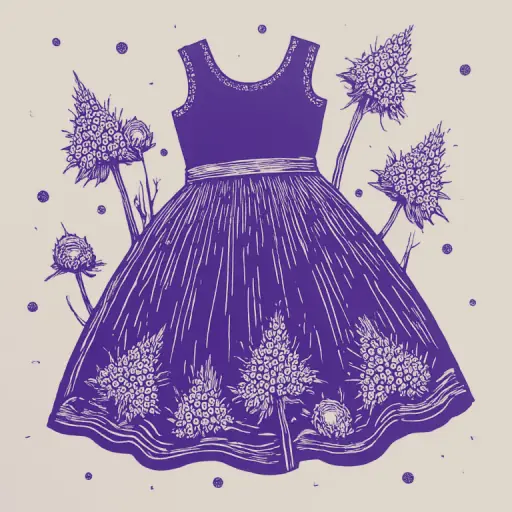
How to decorate a children's dress with flowers to make it festive and original?
- 14 min read
- 62
Every festive occasion in a little princess's life—whether it's kindergarten graduation, a children's party, or a birthday—requires a special outfit. But what to do when store-bought variations look monotonous and a simple basic dress is too plain? A wonderful way to create a unique festive outfit is by decorating the girl's dress with handmade flowers.
Floral decoration on clothing instantly transforms even the simplest cut, lending it delicacy, volume, and a spring mood. With fabric flowers, airy satin ribbons, delicate lace trim, beads, and felt, you can create a true design masterpiece. The process of adorning a child's outfit with flowers is not only a budget saver but also an exciting shared creative project with the child.
In this guide, we show in detail how to decorate a child's dress with flowers, which materials are suitable for the toddler's safety, and how to securely fasten the elements so they can withstand active festive play.
Preparing the Work: Selecting Materials and Tools
The creation of a festive outfit for a little princess is a fascinating creative process that begins long before the first stitch. For the craft decoration to look professional, neat, and above all, durable, the workspace must be carefully prepared and the foundation for the future flowers must be chosen correctly. Because children's clothing requires a special approach: the materials must not only be beautiful but also absolutely safe for the child's sensitive skin.
In this section, we examine the most important criteria for selecting textiles and trimmings that will help you create a durable and comfortable decoration. The right selection of tools not only facilitates your work but also guarantees that the finished piece will withstand all active play and festive occasions.
Which Flowers are Best for Decorating Children's Clothing?
When selecting floral decoration for a child's dress, it is important to maintain a balance between beauty, practicality, and safety. Children's clothing is worn intensively, so the decorations must be soft, light, and durable.
Here are the best flower options for a child's outfit:
- Voluminous Fabric Flowers (Organza, Chiffon, Satin). They look airy and festive, are nearly weightless, and do not hinder the child's movements.
- Felt Appliqués. Soft felt retains its shape well, does not fade at the edges, and feels pleasant. This is the best choice for everyday and semi-formal dresses.
- Crocheted Flowers from Cotton Yarn. They are ideal for knitted garments and give the outfit a cozy and delicate look.
- Lace Details. Ready-made lace motifs are easy to sew on; they are flat and do not bother the girl during active play.
Important: Avoid flowers with stiff wire frames and excessive sharp decorations that could scratch the child's sensitive skin.
Safe and Practical Materials: Satin, Organza, Felt, and Trimmings
For a durable and safe decoration, it is important to choose the right base. Each material has unique properties:
- Satin and Satins. They possess an elegant sheen and hold their shape well after thermal treatment (melting the edges). Ideal for making classic roses and multi-layered petals.
- Organza. A light, semi-transparent fabric that gives flowers airiness and volume. It does not weigh down even the finest dress.
- Felt. A soft, tactilely pleasant material whose edges do not fray. This is the best choice for simple appliqués and crafting together with the child.
Trimmings and Safety:
For the centers of the flowers, use sewn-on half-beads, large beads, or sequins. Avoid sharp metal parts. If the decoration is meant to be removable, prepare high-quality button plackets or special, secure safety pins with a clasp.
Instructions: Making Flowers Yourself
Once the ideal materials have been selected and prepared, the most exciting phase begins—the magic of transforming simple scraps of fabric and ribbons into exquisite decoration. Making flowers yourself not only allows you to decorate the child's dress but also to infuse it with warmth and make the outfit truly exclusive. You do not need complicated professional tools: most techniques are simple, safe, and accessible even for beginners.
Two practical instructions await us, helping you transform the clothing. First, we will go step-by-step through making delicate, airy buds from organza and satin ribbons that can add festive volume to the dress. Then, we switch to cozy felt appliqués—this moldable material is perfect for crafting together with the child.
Airy Flowers from Organza and Satin Ribbons Step by Step
It is very easy to make delicate, floating flowers from fabric yourself. This guide helps you create a voluminous decoration that transforms a simple child's dress into a festive outfit.
You will need: Organza, satin ribbons, a candle, needle and thread, and beads for the center.
Step-by-Step Instructions:
- Cutouts: Cut 5–6 circles of different diameters from the organza (from 5 to 9 cm). Perfect accuracy is not necessary—a slight asymmetry gives the petals a natural look.
- Melting: Briefly pass the edges of each circle over the flame of the candle. The organza begins to melt and forms beautiful, petal-like folds.
- Leaves from Ribbons: Cut two pieces of green satin ribbon (each 8 cm) and fold them into loops that you attach at the bottom with a few stitches.
- Assembly: Layer the organza circles on top of each other (from largest to smallest) and place the leaves from the ribbon underneath.
- Center Decoration: Sew all the layers together in the middle. Decorate the center with a large bead or a sequin to cover the seams.
This airy flower is ready to adorn the bodice or the belt of the dress!
For the work, you will need: colorful felt with a thickness of 1–1.5 mm, scissors, mouline thread, beads, and a safety pin.
Simple step-by-step process:
- Prepare the template. Draw simple silhouettes on paper: five-petal shapes in various sizes, circles for the centers, and leaves. The child can transfer them onto the felt using soap.
- Cut out. Let the child cut out the simple pieces while you prepare the more complex parts.
- Assemble. Layer the pieces on top of each other: leaf, large flower, small flower.
- Decorate. Attach the layers and sew a bright bead or a button in the center.
The finished appliqué can be easily sewn onto the child's dress using a slip stitch. This jointly created festive outfit will be a favorite piece!
Techniques for Securely Attaching Flowers to a Child's Dress
Crafting a beautiful flower yourself is only half the battle. When it comes to children's clothing, practicality and safety come first: little troublemakers are constantly moving, so the decoration must hold perfectly. An insecurely attached element can not only ruin the festive look of the dress in the middle of a celebration but also cause discomfort to the child.
To ensure the decoration withstands active play and subsequent washing, it is important to choose the right attachment technique. There are both non-removable methods and mobile variations that allow the outfit to be easily changed. Let's go over the basic methods for attaching the blossoms while preserving the dress's aesthetic and guaranteeing comfort for the little princess.
How to Attach Artificial Flowers and Decorations: Sewing versus Gluing
The choice of attachment method determines not only the look of the dress but also the child's safety and the longevity of the entire outfit. Let's compare two main methods: sewing and gluing.
Sewing with Thread (Hand Stitching)
This is the most reliable and safest method for children's clothing.
- Advantages: The decoration holds firmly, withstands active play and multiple washes. If necessary, the flowers can be easily unstitched to wash the dress or renew the design.
- Disadvantages: Requires time and care.
- Tip: Use strong, reinforced, or monofilament threads (invisible threads) and sew the flower onto a dense base—either the petal base or a felt backing.
Using Glue (Hot Glue Gun, Fabric Glue)
A quick but tricky method.
- Advantages: Immediate fixation, excellent for rigid elements and felt.
- Disadvantages: Hot glue can melt delicate satin or organza. After washing, the glue often loses its properties, and hardened drops can scratch the child's sensitive skin.
Conclusion: Glue is only permissible for quick decorations on non-washable parts (e.g., a removable belt) or ribbons. For the dress itself, always choose the safe sewing method.
Creating Removable Decorations: Flowers on Safety Pins, Buttons, and Ribbon Straps
Removable decoration is the ideal solution for a festive child's dress. It allows the garment to be easily washed without fear of damaging the delicate petals, while effortlessly transforming an everyday dress into a festive gown.
We examine three reliable methods for creating mobile embellishments:
- Flower Brooches on Safety Pins. Use special pins with a locking mechanism (carabiner) for children's clothing. Compress the base of the flower from the back with a felt circle and sew the pin firmly to it. This decoration looks great on the shoulder or bodice.
- Sewn-on Buttons. This is the safest option for active children. One part of the button (ideally plastic, matching the fabric color) is attached to the dress, and the other part to the base of the flower. The decoration can be easily removed in a second before washing.
- Flower Decoration on a Ribbon Strap. Attach a large flower or a composition of several blossoms to a wide satin or grosgrain ribbon. This strap is tied around the waist at the back with a beautiful bow. This method completely prevents damage to the dress's delicate fabric and contact of fittings with the child's skin.
Ideas for Festive Decorations for Different Occasions
Once the reliable attachment methods are decided, one can move on to the most enjoyable step: designing a unique festive look. Every event in the little fashion lover's life requires its own stylistic solution. Whether it is a delicate spring festival in kindergarten, a formal prom, or a family birthday—the right floral decoration can instantly transform even the simplest basic dress.
The secret to a harmonious outfit lies in the details and the ability to combine different textures. We show how to quickly transform everyday clothing into a ball gown and how to complement textile flowers decoratively with other elements to achieve a truly exclusive piece.
How to Quickly Embellish a Simple Dress for a Holiday or Prom
Transforming a simple everyday dress into a luxurious festive dress for a kindergarten party or prom is possible in just one evening. Express DIY decoration does not require a complete redesign of the garment—it is enough to set the accents correctly.
Here are three quick and effective methods for transformation:
- Removable Flower Belt. Take a wide satin ribbon in the color of the dress or in a contrasting tone. Attach a lush composition of finished fabric flowers in the center. This belt instantly transforms the silhouette and can be easily removed before washing.
- Asymmetrical Shoulder Decoration. Attach a small boutonnière of fabric roses or delicate organza to a shoulder seam. This gives the dress a refined look.
- Flower Scatter on the Bodice. If the dress has a plain top, sew small flower appliqués onto the neckline.
For maximum effect, choose light materials that do not weigh down the child's dress and do not hinder the girl's free movement and dancing.
Combining Flowers with Lace, Beads, Sequins, and Tulle
To transform an ordinary floral decoration into a true work of art, use harmonious combinations with other materials. This adds texture and festive sparkle to the outfit.
- Delicate Lace. Use lace elements as a base for large fabric flowers. Perforated vines or a collar peeking out from under the blossoms instantly make the child's dress elegant and vintage.
- Sparkling Beads and Sequins. Decorate the centers of the flowers with large beads or a scattering of beads. Sequins sewn on by hand around the flowers beautifully catch the light in motion, imitating magical dewdrops.
- Airy Tulle. Small ruffles or "tulle skirts" under each flower give the composition volume. The decoration of the dress is particularly impressive when a lush tulle veil gently transitions into the flower appliqué on the bodice.
Experiment with textures, but remember balance: Shiny elements should accentuate the beauty of the flowers made from satin ribbons, not overshadow them.
Useful Tips and Care for the Decorated Dress
Creating a magnificent outfit with voluminous flowers, lace, and beads is only half the battle. To ensure the little princess feels comfortable throughout the entire celebration and that the carefully crafted decoration does not lose its original state after the first active day, it is important to observe some practical details.
In this final part of our guide, we illuminate how to maintain the balance between aesthetics and child comfort, and offer tips for the gentle care of the delicate elements. The right approach to the details ensures that the festive dress remains in perfect condition for future occasions or photoshoots.
Common Mistakes: How Not to Overload the Outfit and Preserve the Child's Comfort
When creating a festive ensemble, one can easily become immersed in the creative process and forget that the child will be actively walking, dancing, and playing in this dress. To ensure the result brings only joy, it is important to avoid typical decoration mistakes:
- Excessive Decoration Weight. Large flowers made of dense felt or elements richly embroidered with heavy beads can pull down the delicate fabric of the dress (especially fine knit or tulle). This leads to a distortion of the silhouette and the constant slipping of the straps.
- Prickly Elements on the Inside. Always check the inside of the garment. Knots, stiff monofilaments, remnants of hot glue, or metallic needle bases must not come into contact with the girl's skin. Cover attachment points with a soft backing of non-woven interfacing or fine cotton.
- Inappropriate Placement. Avoid attaching voluminous flowers in the armpit area, at the back waist (it will be uncomfortable for the child to sit), or too low on the hem where one can easily step on the decoration.
- Material Imbalance. Heavy appliqués are not suitable for feather-light organza or silk. For light fabrics, choose airy flowers made from satin ribbons, and save felt for sturdy cotton dresses.
Remember the main rule: The comfort and freedom of movement of the little fashion icon are always more important than the most complicated and ornate decoration.
Washing Instructions and Gentle Storage of the Dress with Voluminous Floral Decoration
For the festive ensemble to delight the little fashion icon not just for one season, it must be properly cared for. Voluminous decoration made of satin, organza, or felt requires gentle handling, as normal machine washing can irreparably ruin the careful handiwork.
Washing and Drying Instructions:
- Removable Elements: If flowers are attached with buttons, needles, or a belt, be sure to remove them before washing. The decoration itself can easily be refreshed with a damp cloth or carefully rinsed by hand.
- Hand Washing: If the decoration is sewn on firmly, wash the dress only by hand in cold water (not above 30 °C) using a liquid detergent for sensitive textiles. Avoid friction at the flower attachment points.
- Gentle Spinning: Do not wring the garment out. Gently blot the dress dry with a terry cloth towel to remove excess moisture.
- Drying: Dry the dress stretched out on a horizontal surface. As long as the petals are damp, gently reshape them with your fingers back to their original form.
Ironing and Storage:
- Steaming: Never iron voluminous flowers with an iron—they instantly lose their fullness. Use a handheld steamer and keep it at a distance of 10–15 cm from the fabric.
- Storage: Store the dress on soft shoulder pads in a vertical position. Use a breathable cover made of non-woven material and do not hang the ensemble directly next to other garments so that the petals do not become wrinkled.
Conclusion
Decorating a child's dress with flowers by hand is not only a practical way to transform an everyday item into a luxurious party dress but also a wonderful creative adventure. By creating unique decorations from airy organza, bright satin ribbons, or cozy felt, you put warmth, care, and love into your work. Such an exclusive ensemble is guaranteed to make the young fashion icon stand out at every party, prom, or family event, giving her the feeling of a real fairy tale and the certainty of her uniqueness.
Do not hesitate to experiment with materials and techniques: boldly combine voluminous fabric flowers with delicate lace trim, shimmering beads, sequins, or airy tulle. Be sure to involve the little wearer of the dress in the design of the decoration. Joint crafting not only promotes the child's fine motor skills and aesthetic taste but also provides invaluable moments of exchange that will be remembered for a lifetime.
May the creation of the floral decoration be a source of inspiration and joy for you. Remember that true beauty lies in the details, and things made with heart always possess a special charm. We wish you creative success, easy work, and the most beautiful, unforgettable children's parties!