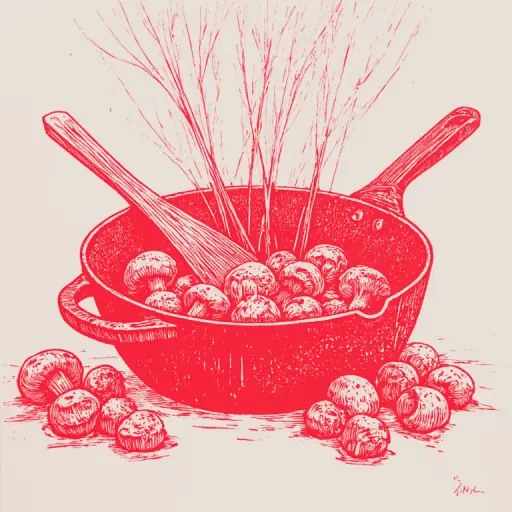
How to Evaporate Excess Liquid from a Frying Pan Faster When Meat or Mushrooms Release a Lot of Juice?
- 8 min read
- 65
Familiar situation: you wanted to achieve a appetizing browned crust on a juicy steak or fry mushrooms to a golden color, but instead, the pan instantly filled with bubbling liquid. Excessive juice release turns frying into mere stewing, depriving the food of texture and rich flavor. How to quickly remove excess water from the pan without overcooking the dish itself?
In this article, we will examine effective culinary techniques and simple laws of physics that will help speed up moisture evaporation during frying. You will learn how proper heat adjustment, an open lid, and evaporation surface area will save your dinner, as well as what to do in emergencies.
Physics in the Kitchen: Basic Rules for Fast Moisture Evaporation
Understanding simple laws of physics turns the chaotic struggle with excess moisture into a controlled culinary process. To quickly rid the pan of released juice and restore an appetizing crust to the food, it is necessary to create ideal conditions for water to transition from a liquid state to a gaseous one. The speed of this process directly depends on temperature, the surface area exposed to air, and steam circulation. Let's examine the basic rules that will help you instantly dry the pan without losing the juiciness of the ingredients.
Why You Must Completely Remove the Lid and Increase the Heat
When the pan is covered with a lid, the evaporating moisture condenses on its inner surface and drips back down. A sauna effect is created: the food simmers or boils in its own juices instead of frying. To quickly remove excess moisture, the lid must be completely removed, allowing the steam a clear path out.
Simultaneously, you must increase the heat. High temperature accelerates the transition of water from a liquid state to a gaseous one. High heat forces water molecules to move faster and leave the pan more actively, saving the meat or mushrooms from unwanted stewing.
How Evaporation Area and Stirring with a Wooden Spatula Speed Up the Process
The wider the cookware, the more water molecules can leave its surface simultaneously. By distributing the food in a thin layer across the entire surface of the pan, you multiply the rate of evaporation.
Regularly stirring with a wooden spatula works in two ways:
- It breaks down the vapor boundary layer that accumulates directly above the food and hinders further evaporation.
- It lifts hot liquid from the bottom to the surface, accelerating heat exchange.
The wooden spatula gently moves the ingredients without damaging their structure or cooling the pan, unlike a metal one.
Step-by-Step Guide for Juicy Foods: Mushrooms and Meat
Understanding the physics of the process is only half the battle. In practice, different foods behave completely differently: mushrooms instantly release accumulated moisture, while meat, at the wrong temperature, begins to stew in its own juices instead of developing an appetizing crust.
To avoid ruining the texture and preserving maximum flavor, it is important to apply an individual approach to each ingredient. Let's examine the step-by-step algorithms for these popular, yet very temperamental, ingredients.
How to Quickly Evaporate Water from Mushrooms While Frying
Mushrooms are over 90% water, so when frying, they often instantly release a lot of juice. To quickly return the process to frying rather than stewing, perform three simple steps:
- Turn on maximum heat and keep the lid open. High temperature is the main factor for fast evaporation.
- Move the mushrooms to the edges of the pan, freeing up the center. All excess liquid will drain into the middle, where the heat is most intense, and evaporate in minutes.
- Do not salt the dish at this stage. Salt draws out residual moisture from the mushroom pores. Only salt the mushrooms when the pan is dry and the browning process begins.
What to Do If Meat Releases a Lot of Juice: Preserving Tenderness
If the meat in the pan suddenly 'floats' in its own juices, hesitation will turn it into a tough 'sole.' To maintain the product's tenderness, follow this algorithm:
- Temporarily remove the meat from the pan. Use a slotted spoon to transfer the pieces to a warm bowl. If left to boil in the released broth, the meat fibers will contract and become dry.
- Turn on maximum heat. Leave the lid open. High temperature will cause the excess moisture to evaporate in 2–3 minutes, turning the juice into a concentrated sauce.
- Return the meat. As soon as only a thick glaze and oil remain at the bottom of the pan, return the pieces and quickly fry them until they have a browned crust.
Emergency Measures: When Evaporation Takes Too Long
Sometimes classic evaporation over high heat turns into a race against time, threatening to overcook the food. If you don't have extra minutes and there is still too much juice in the pan, you have to act decisively. In such situations, emergency culinary techniques come to the rescue. We will examine two radical but effective methods: instantly removing excess moisture mechanically and using proven quick thickeners that will turn watery broth into a rich sauce in seconds.
Can You Just Manually Drain Excess Liquid from the Pan
Draining the released juice manually is the fastest way to stop unwanted stewing and return the food to frying mode. However, remember the compromise: along with the liquid, you irretrievably lose concentrated flavor, soluble proteins, and spices.
If you decide on this emergency measure, follow three rules:
- Do not drain everything to the last drop: leave a thin layer of moisture at the bottom so the food does not instantly burn on the hot pan.
- Save the drained broth: do not pour it down the drain. This juice can be separately reduced in a saucepan with a piece of butter or wine, turning it into a rich sauce.
- Use a slotted spoon: gently hold the meat or mushrooms to avoid getting burned by hot steam when tilting the pan.
This method works excellently with mushrooms, but for delicate meat, it should only be used in extreme cases where the volume of released moisture threatens to completely ruin the dish's texture.
How to Quickly Thicken Remaining Sauce Using Culinary Additives
If you do not want to drain the valuable meat or mushroom juice, turn it into a rich sauce using quick thickeners. This will save the dish from drying out and preserve all the flavor.
- Starch suspension: Dissolve 1 teaspoon of cornstarch or potato starch in 1–2 tablespoons of cold water. Pour the mixture in a thin stream into the boiling juice while constantly stirring with a wooden spatula. The sauce will thicken in just 30–40 seconds.
- Flour paste (Beurre manié): Mix soft butter and flour in equal proportions until a uniform paste is formed. Add a small piece of this mixture to the pan. The butter will melt, and the flour will distribute evenly without lumps, instantly binding the excess moisture.
- Ice butter: Remove the pan from the heat and stir in a couple of cubes of very cold butter. This French technique ('mounting' the sauce) will make the liquid juice velvety, glossy, and moderately thick.
Preventing Excess Moisture: How to Fry Correctly in the Future
Saving a dish during cooking is a useful skill, but it is much easier to prevent the formation of a 'swamp' in the pan in the first place. The correct frying technique allows juices to seal inside the food, preserving its texture and saving you from the need to urgently evaporate water. This only requires adjusting the preliminary preparation of the ingredients and changing the approach to the thermal processing itself.
Ingredient Preparation: Pre-drying the Food
The main enemy of a golden crust is surface moisture. When it enters hot oil, it instantly turns into steam, lowering the surface temperature and initiating the stewing process instead of frying.
To prevent juice release, use three simple techniques:
- Use paper towels: Always thoroughly pat dry meat, fish, or poultry before frying. The surface of the ingredients must become completely matte and dry.
- Do not wash mushrooms with water: Mushrooms instantly absorb moisture like a sponge. Instead of washing, clean them with a dry brush or wipe them lightly with a damp napkin.
- Control salting time: Do not salt meat 10–15 minutes before cooking, as salt will draw cellular juice out. Salt the products immediately before putting them in the pan.
The Rule of Portion Frying and Pan Temperature Control
The main mistake when frying is filling the entire surface of the pan. When there is too much food, the surface temperature instantly drops, and instead of sealing, stewing begins in its own juices.
Follow two simple rules:
- Fry in portions: place the meat or mushrooms in a single layer, leaving free space between the pieces.
- Control the heat: the pan must be hot. Before adding food, check it with a drop of water—it should roll like a ball, not just sizzle.
Conclusion
Knowing how to control moisture in the pan is a basic culinary skill that separates ordinary stewing from creating a perfect golden crust. Understanding simple physical principles, timely heat increase, and proper ingredient preparation will help you easily deal with excess juice. Experiment with temperature, do not overload the pan, and your meat and mushroom dishes will always be impeccable!