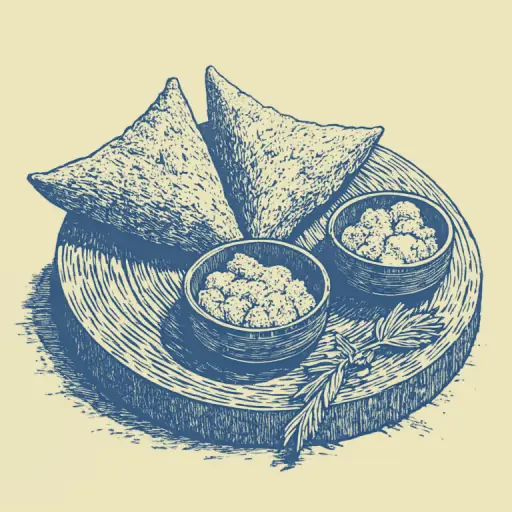
How to Fold Lavash with Cottage Cheese into Triangles: Step-by-Step Guide
- 8 min read
- 58
Looking for an idea for a quick, healthy, and incredibly delicious breakfast? Lavash triangles with cottage cheese are the perfect solution for those who value their time and watch their figure. This crispy snack is prepared in minutes, and the variety of fillings—from sweet with berries to savory with herbs and cheese—allows for daily experimentation.
However, the main difficulty often lies in the shaping: how to fold the lavash so that the delicate cottage cheese mixture does not leak out during frying, and the dough itself does not tear? In this guide, we will break down the step-by-step technique for creating perfect, sealed triangles.
Preparing the Base: Cutting Lavash and Maintaining Its Elasticity
The secret to perfect triangles lies not only in the filling but also in the proper preparation of the base. Thin Armenian lavash is a delicate material: with the slightest mistake, it can crack, depriving the dish of a neat appearance and seal. To ensure the pockets are even and the cottage cheese does not leak out during frying, it is important to cut the sheet correctly and take care of its softness.
How to Properly Cut Lavash into Strips of the Right Size
To ensure the triangles are neat and the cottage cheese filling does not spill out, it is important to prepare the base correctly:
- Tool Selection: Use sharp kitchen scissors instead of a knife. They cut the thin dough perfectly evenly without stretching or tearing the edges.
- Optimal Dimensions: Cut the lavash into long, lengthwise strips. The ideal proportions for easy folding are:
- Width: 8–10 cm (determines the size of the future pastry);
- Length: 25–30 cm (this is enough for 3–4 folds to securely seal the cottage cheese).
If the lavash sheet is standard (large), first cut it in half, and then divide each part lengthwise into 3 equal strips.
What to Do If Lavash Tears and Dries While Folding
A dry and brittle lavash is the main enemy of beautiful triangles. If the sheet starts to crack when bending, simple culinary tricks can restore its elasticity:
- Water Spray: Lightly spray the strips with clean water from a spray bottle or quickly wipe them with damp hands.
- Steam Bath: Hold the lavash over steam for a few seconds or heat it in the microwave (10–15 seconds) wrapped in a damp paper towel.
- Damp Cover: During the process, always cover the already cut strips with a slightly damp cloth. This protects them from drying out.
Step-by-Step Guide: Folding Lavash into a Triangle
Folding lavash into a triangle is a simple but careful process. The correct geometry of the pocket not only gives the dish an aesthetic appearance but also guarantees that the juicy cottage cheese mixture remains inside during frying or baking.
By mastering the basic algorithm, you can form neat, individual pockets in just a few seconds. Let's break down how to turn a simple strip of dough into a sealed and beautiful triangle, avoiding common beginner mistakes.
Classic Diagonal Folding Technique
The classic diagonal folding method is the most reliable way to seal the cottage cheese inside.
- First Fold: Take a prepared strip of lavash about 10 cm wide. Place one tablespoon of cottage cheese filling on one end, slightly away from the edge.
- Forming the Angle: Fold the free corner of the lavash diagonally, covering the filling. You should get a neat triangle, and its edge should align with the side of the strip.
- Sequential Rolling: Continue rolling this triangle along the strip—first forward, then sideways, strictly repeating its shape. Usually, 3–4 such turns are required.
- Securing: Neatly tuck the remaining free end of the lavash inside the last fold, like into a pocket.
How to Distribute Filling Correctly to Avoid Gaps
To ensure the triangles are neat and the filling does not clump into one dense mass, follow these simple rules for distribution:
- Dosage: For one 10 cm wide strip of lavash, it is enough to place 1–1.5 tablespoons of cottage cheese mixture.
- Shaping: Place the filling on the edge of the strip not as a mound, but immediately giving it a triangular shape. Be sure to leave about 1 cm clearance from the edges of the lavash.
- Compacting: After making the first diagonal fold, gently press the lavash with your palm. This helps the cottage cheese evenly fill the first sharp corner.
- Final Leveling: After the triangle is completely rolled, gently press it again from above with the flat side of your palm. The filling will distribute throughout the entire volume, and you will not have any "empty" spots of dry dough.
How to Seal Edges and Prepare the Perfect Filling
Even a perfectly folded triangle can lose its shape if the filling is too liquid and the lavash edges open up during heating. To prevent this, it is important to pay attention to two key details: the correct texture of the cottage cheese mixture and the secure fixing of the seams. In this section, we will cover simple culinary techniques that help securely "glue" the lavash before thermal processing, and determine how to properly balance the moisture content for sweet and savory triangle variations.
Sealing Secrets: Using Yolk or Egg White
To guarantee that the cottage cheese filling does not leak out during heating, use simple culinary techniques to seal the seams:
- Egg Yolk: Lightly whisk the yolk and brush the inner side of the last free corner of the lavash with it before the final fold. When heated, the protein and yolk will instantly coagulate, acting as a reliable pastry glue.
- Egg Batter: Whisk a whole egg with a couple of tablespoons of milk. Before putting it on the pan, dip the triangle entirely into this mixture. The batter will not only seal micro-cracks but also provide a appetizing golden crust.
Consistency of Cottage Cheese Filling for Sweet and Savory Triangles
The ideal consistency of the cottage cheese filling is the key to preventing the lavash from becoming soggy during rolling and the filling from leaking out during frying. The cottage cheese should be moderately dry (optimally 5–9% fat). If it is too moist, squeeze it through cheesecloth beforehand.
- For Sweet Triangles: Add one yolk or a spoonful of thick sour cream to the cottage cheese for binding. Add sugar or syrup immediately before shaping so that the cottage cheese does not have time to release juice.
- For Savory Triangles: Mix the cottage cheese with grated cheese (suluguni, feta, or mozzarella) and fresh herbs. The melted cheese will act as an excellent binding component inside the pocket.
Methods of Thermal Processing for Finished Triangles
At this stage, our lavash triangles with delicate cottage cheese filling are completely formed, securely sealed, and ready for the final touch. It is the correct thermal processing that will transform the soft preparation into an appetizing dish with a crispy crust and warm, gooey filling inside.
Depending on your culinary preferences and dietary goals, you can choose one of two classic methods to cook the dish. Each one gives the lavash a special textural contrast and reveals the taste of the cottage cheese in its own way.
Frying in a Pan for a Crispy Crust
Pan-frying is the fastest way to achieve an appetizing crispy crust. To make the lavash triangles with cottage cheese perfect, follow these simple rules:
- Oil Selection. For sweet fillings, use butter—it will give a delicate buttery aroma. For savory pockets with cottage cheese and herbs, vegetable oil is suitable.
- Correct Placement. Always place the preparations on the pan seam-side down. This instantly "seals" the lavash and prevents the filling from falling out.
- Temperature Control. Fry over medium heat for 1.5–2 minutes on each side.
If you prefer maximum crispiness, fry the lavash dry or with minimal oil. To achieve a more tender texture, quickly dip each triangle in egg batter before placing it on the pan.
Diet Option: Baking Triangles in the Oven
Baking in the oven is the ideal choice for healthy eating advocates (PP). This method allows you to get an appetizing crispy crust without using excess vegetable oil.
- Preparation: Line a baking sheet with high-quality parchment paper.
- Placement: Place the lavash triangles free-edge (seam) down. This ensures that the cottage cheese filling does not leak out during heating.
- Glazing: For a beautiful golden color, lightly brush the surface of the preparations with beaten egg, yolk, or a thin layer of sour cream.
- Baking: Place the baking sheet in an oven preheated to 180 °C for 10–15 minutes.
The lavash will become pleasantly crispy, and the cottage cheese inside will be fully heated and acquire a tender texture.
Conclusion
Making lavash triangles with cottage cheese is a quick and incredibly convenient way to treat yourself and loved ones to a healthy breakfast or a hearty snack. By mastering the simple diagonal folding technique, you can endlessly experiment with fillings: from sweet dessert variations to savory combinations with cheese and fresh herbs.
Serve the finished dish hot, while the crust is delightfully crispy, topped with a spoonful of cool sour cream, fragrant honey, or your favorite sauce. Enjoy your meal!