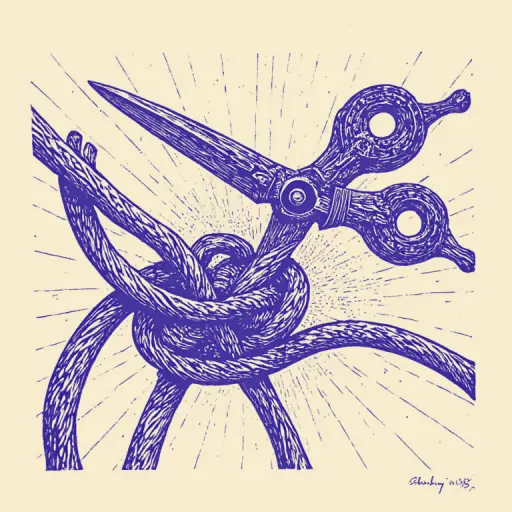
How to Forget Your Twin Flame: A Step-by-Step Guide to Healthy Separation
- 17 min read
- 68
Encountering someone we consider our twin flame turns life upside down. It feels like you haven't just found the perfect partner, but literally your "other half of the soul." But what do you do if this cosmic connection turns into a source of unending emotional pain, and the twin flame separation stage drags on, destroying your identity?
Many ask themselves: why is it so painful to break up with a twin flame, and can one even forget this person? Earth psychology explains this unbearable pull as a powerful energetic attachment and a hormonal storm, while esotericism views it as a karmic knot created for spiritual growth. In trying to sever these bonds, we often encounter withdrawal syndrome, confusing a true spiritual connection with codependent relationships.
This guide will help you navigate the breakup healthily, distinguish true soul evolution from destructive dependency, and reclaim your wholeness.
Step 1: Diagnosing the Connection — True Twin Flame or Toxic Codependency
Before proceeding with practices of letting go and healing, you must honestly answer yourself one fundamental question: what exactly have you encountered? The human psyche is structured such that in moments of deep emotional pain, we tend to idealize a partner and imbue a destructive relationship with a higher cosmic meaning. It seems to us that unbearable longing and suffering are mandatory signs of meeting one's "other half of the soul," when in reality, it might be a classic psychological trap.
Diagnosing the connection is the first and most important step toward liberation. Without a sober analysis of the situation, any attempts to sever the threads will only intensify internal resistance. Let's take off the rose-tinted glasses of esoteric illusions and determine where the line lies between a rare spiritual phenomenon and a dependency dangerous to your personality.
How to Distinguish a Spiritual Twin from Psychological Dependency and Traumatic Attachment
Many people who have experienced intense connections tend to confuse a deep spiritual bond with emotional dependency. It is critically important to learn how to draw the line between a "fated encounter" and a "psychological trap." Here are several key diagnostic questions that will help you understand the nature of your relationship:
- Focusing on "We" instead of "I": If in the relationship you constantly feel like a "half" and cannot make decisions without your partner's approval, this is a sign of codependency. A healthy connection expands you, whereas codependency shrinks your personal "Self" into the framework of another person.
- Emotional Rollercoasters and Rescuing: If the relationship is constantly accompanied by periods of euphoria alternating with deep anxiety, guilt, or panic (the so-called "rollercoaster"), and you constantly feel the need to "save" your partner or be "saved," this often indicates traumatic attachment. A true spiritual union should be a source of stable, albeit deep, support.
- Lack of Personal Boundaries: In a healthy union, personal boundaries are maintained and respected. In codependent relationships, boundaries are blurred: you don't know where you end and the other person begins. This can manifest as constant intrusion into personal space, emotional pressure, or the inability to spend time alone without feeling anxious.
- Idealization and Projections: Beware of romanticizing. A twin flame is not a guarantee of perfect happiness. If you see in your partner not a person, but an ideal image that fills all your inner voids, you are most likely in a stage of projection. This is not a connection, but an emotional "substitute" for your inner resource.
Remember: your task is not to find a "half," but to become a whole person. A true connection always begins with you.
The Danger of Romanticizing Destructive Relationships Under the Guise of a Higher Cosmic Connection
Romanticizing destructive behavior is the main trap of the twin flame concept. When a partner systematically ignores your boundaries, disappears without explanation (the so-called "runner"), or subjects you to emotional abuse, the esoteric template offers a dangerous justification: "This isn't toxicity; it's just the painful alignment of souls and a karmic lesson."
Using cosmic labels blocks the instinct for self-preservation. Instead of leaving a destructive relationship, a woman endures pain for years, believing in the predestination of suffering. It is important to remember: a true spiritual connection leads to expansion and peace, not exhaustion. If the "twin flame" destroys your psyche, deprives you of sleep and self-belief—you are facing classic traumatic attachment disguised as a higher union. By naming things as they are, you take the first step toward liberation.
Step 2: Healthily Severing Energetic Bonds and Karmic Knots
Awareness of illusions is the first step toward healing. However, intellectual understanding of codependency alone is not enough: a colossal volume of energy continues to circulate between you and your twin flame on the subtle plane. This invisible connection makes you repeatedly return to thoughts of your partner, experience phantom pains, and literally feel their emotions physically.
To stop the exhausting drain of energy, it is necessary to move to practice and healthily conclude the karmic contract. Healthily means without anger and without trying to "uproot" what was part of your life. We will examine proven mental techniques and meditative practices that will help gently weaken energetic attachments and untie karmic knots, returning wholeness to you.
Practical Meditations and Mental Techniques for Weakening Energetic Attachments
The energetic connection with a "twin flame" is not just emotional attachment; it is a complex, often karmically conditioned, system of knots that keeps you stuck in the past. To begin the process of letting go, you must work on the level of the subconscious and energy. Remember: the goal is not to "erase" the person from memory, but to redirect the energy you gave them back to yourself.
Practical Meditations for Weakening Attachments:
- "Severing the Threads" Meditation: Find a quiet place. Sit comfortably and imagine that your connection with your partner consists of thin, glowing threads. Visualize yourself, using your inner light or pure will, carefully but decisively cutting these threads. Do not burn them, but simply let them go, allowing them to dissolve into space. During this, it is important not to feel guilt or pain, but to feel neutral, calm acceptance of the separation.
- "Energy Return" Visualization: Imagine that you are the center of your own Universe. Every time a thought of your partner comes to mind, imagine that this thought is a stream of energy that you gently "return" to your personal energy center. This trains the brain and subconscious to perceive their presence as an internal resource, not an external need.
Mental Techniques and Knot Work:
- 'I Am a Whole Circle' Technique: When an intense urge to contact or recall idealized moments arises, stop. Mentally draw a protective, radiant circle around yourself. Inside the circle, you are the sole center. Repeat the mantra: "I am whole, I am independent, my strength comes from within." This helps restore the sense of personal integrity that is often lost in codependent relationships.
- Radical Forgiveness as an Act of Liberation: In this context, forgiveness is not excusing the partner's actions, but an act of liberating yourself from the emotional burden of resentment and guilt. Forgive yourself for believing the myth of the "soulmate," and forgive them for not being able to provide you with stability. This concludes the karmic script that held you in an emotional knot.
The Method of Radical Forgiveness as a Way to Complete a Karmic Script
The method of radical forgiveness is a powerful tool that allows you to exit the victim role and finally close a prolonged karmic script. Unlike ordinary forgiveness, here you are not trying to "understand and justify" the offender through force. You change your entire perspective on the situation: your partner caused you pain not out of selfishness, but because their soul agreed to play the role of a harsh trigger for your spiritual awakening.
To untie this karmic knot, use the following practice:
- Emotional Discharge: Write a therapeutic letter to your partner (do not send it). Express all anger, resentment, and unjustified expectations without censorship.
- Searching for the Hidden Lesson: Ask yourself: "What internal deficiencies and traumas (fear of rejection, codependency, self-loathing) did this breakup highlight?"
- Acknowledging the Value of the Experience: Realize that the pain was merely a catalyst for your development.
- The Formula of Liberation: Mentally or aloud state: "I acknowledge that this experience was necessary for my soul. Our karmic contract is complete. I forgive you, I let you go with peace, and I take my energy back."
This method ecologically dismantles mental attachments, transforming emotional pain into a resource for your personal evolution.
Step 3: Psychological Work with Emotional Pain and Withdrawal Syndrome
Closing the karmic contract on a subtle level is a crucial foundation, but our earthly ego and nervous system react to the severance much more slowly. On the physical and psychological levels, breaking up with a twin flame triggers a powerful "withdrawal syndrome," comparable to severe chemical addiction. The brain, accustomed to extreme dopamine swings, demands its usual "dose" of emotion, plunging you into a state of deep mourning.
At this stage, it is important to temporarily shift the focus from esotericism to classical therapy and gentle self-help. To get through this period without self-destruction, you must acknowledge the legitimacy of your pain and consistently restructure the perception patterns that keep you trapped in the past.
How to Cope with Acute Emotional Pain and Longing After a Twin Flame Separation
Experiencing a breakup with a "twin flame" is not just losing a partner; it is losing a part of yourself that you unconsciously identified with this person. Therefore, acute longing and emotional pain are a normal, albeit incredibly intense, reaction that must be acknowledged, not suppressed. It is important to understand that this pain is not a sign of weakness, but evidence of the depth of the experience and how much you were ready for transformation.
How to Work with Acute Longing: Psychological Techniques
- Acknowledgment and Validation of Emotions: Do not try to "forget" or "skip over" the pain. Allow yourself to grieve. Cry, get angry, feel lost—these are all stages of the process. Keeping a "Breakup Journal" can be a useful tool: record not only memories but also the emotions those memories evoke. This helps separate real memory from emotional projection.
- "I-Statement" Technique: When a wave of idealization washes over you, instead of thinking, "He was perfect, and I will never find anyone like him," rephrase it as: "I feel lost because I invested too many hopes in this relationship, and that hurts." The focus shifts from blame to your own emotional state.
- Physical "Grounding": Emotional pain often causes panic and a feeling of detachment from reality. Use physical practices: long walks, yoga, mindfulness meditations. Focus on the sensations in your body (the weight of your feet, contact with the ground) to bring yourself back to the "here and now." This is the fastest way to interrupt the cycle of past memories.
Overcoming Idealization: Returning to Reality
Idealizing a partner is a psychological defense mechanism that helps cope with emptiness. We only remember the bright moments, filtering out conflicts, disappointments, and flaws. To counteract this, you must consciously "remember the bad." Create a list of 5-10 things that upset you in the relationship, or moments when you felt unheard. Reading this list during moments of nostalgia helps restore emotional balance and see the full picture, not just through rose-colored glasses.
Rejecting Illusions and Partner Idealization: Returning to Reality
Idealization is the main barrier to healing. When we grant a partner the status of a "divine half," we tend to excuse their coldness, ignoring, and even emotional abuse. To return to reality, perform the written practice of "Dismantling Projections":
- Separate Image from Facts: Write your spiritual expectations in the left column ("he senses me from a distance"), and the dry facts in the right column ("he hasn't called me in three weeks and blocked me on social media").
- Acknowledge Their Humanity: Your partner is not a cosmic guide, but an ordinary person with their own traumas, weaknesses, and selfishness.
- Claim Your Projections: What you admired in him (depth, strength, unconditional love) is a reflection of your own potential. Reclaim these qualities for yourself.
Debunking the myth of the "single perfect" partner returns control of your life to you and frees you from mental captivity.
Step 4: Redirecting Energy and Focusing on Self-Development
When the veil of idealization lifts, you discover a huge volume of released energy that was previously spent maintaining the mental connection and endless longing. This moment is the turning point of your healing. Instead of directing this powerful resource back into the void of the past, it is time to bring it back to yourself. Redirecting focus onto your own life is not just a way to distract yourself; it is the only ecological path to transform the pain of separation into fuel for personal evolution and achieving true independence.
Reclaiming Personal Resources: How to Channel Breakup Pain into Spiritual Growth and Creativity
Redirecting energy is not just distraction; it is an active process of restructuring your inner landscape. When we become accustomed to directing all emotional energy toward maintaining a connection with another person, we deplete our personal resources. The task now is to reclaim that resource by recognizing that you are a self-sufficient, whole world.
How to do this in practice?
- Restoring the "Self" through Hobbies and Mastery: Return to the activities you put aside for the relationship. This could be painting, learning a language, sports, or cooking. It is important that this is an activity that requires concentration and gives you a sense of mastery. Success in something new strengthens self-esteem based on your achievements, not on the partner's presence.
- Physical Activity as Catharsis: Intense physical exercise (running, yoga, dancing) is a powerful way to "burn off" excess hormonal levels and the emotional tension associated with a breakup. Physical exhaustion helps shift the focus from mental pain to the bodily sensation of strength.
- Creating an "Energy Anchor": Identify a place or ritual that will symbolize your independence. This could be a corner in your home where you meditate, or a morning walk in a specific location. Regularly visiting this place helps the brain and subconscious cement a new, independent routine.
Remember: every time the impulse arises to write or check their status, consciously interrupt that cycle and direct that energy toward your "Anchor." This is the beginning of reclaiming your personal resource.
Restoring Personal Boundaries and Strengthening Independence
Restoring personal boundaries is not an act of pushing away, but an act of self-preservation. When we are in codependent relationships, our boundaries dissolve, and we begin to accept others' emotional needs as our own. To strengthen your independence, you must learn to say "no" without guilt and clearly define what is acceptable and what is not for you.
Practical steps for restoring boundaries:
- Identifying the "Comfort Zone": Determine which emotional patterns or actions of your partner make you feel drained or guilty. These are your "violated boundaries."
- Establishing an "Emotional Buffer": Before reacting to your partner's emotional "rollercoaster," pause. Tell yourself: "I have the right to my feelings, and I am not obligated to be responsible for your emotional state." This pause is your new protective barrier.
- Creating a "Self-Contract": This is an internal promise to yourself that you will put your needs first. For example: "I will dedicate at least 30 minutes a day solely to my recovery, without distraction from external circumstances."
Remember: your worth is not determined by the intensity of the connection or the presence of another person. Strengthening independence is returning to yourself, to your unique, whole self.
Step 5: Reinterpreting Experience and Integrating the Spiritual Lesson
After we have learned to restore personal boundaries and direct energy toward self-growth, the most difficult stage arrives—integration. This does not mean you must "erase" memories of your partner. On the contrary, the task is to reinterpret this experience, recognizing it as part of your unique journey. Understanding that the connection does not disappear but transforms is the key to achieving inner wholeness.
Why It Is Impossible to Completely "Erase" the Twin Flame from Memory and How to Live With It
The attempt to completely erase the twin flame from memory is like trying to unsee your own reflection. This connection is not an ordinary romance; it is a powerful catalyst for your spiritual evolution, leaving an indelible mark on the psyche.
To live with this ecologically, it is important to change the strategy:
- Stop the struggle: Accept these memories as part of your personal history, without trying to forcibly suppress them.
- Transform the energy: Direct the residual mental connection into creativity, career, or self-knowledge.
- Reclaim your projections: Realize that all the wonderful qualities you saw in your partner are facets of your own soul that require unfolding.
Achieving Inner Wholeness Without the Need for Another Person's Physical Presence
Achieving wholeness is realizing that the partner was merely a mirror that illuminated your own hidden strength and love. You do not need their physical presence to feel fulfilled.
To regain your autonomy, use the following steps:
- Integrating Projections: Write down the qualities you admired in your partner and begin consciously developing them within yourself.
- Grounding Practice: Shift the focus from external searching to the internal source. Every time you feel longing, mentally return your energy to the area of your heart.
You are already a complete and self-sufficient universe, not a half that needs completion.
Conclusion: Letting Go as the Highest Act of Love for Yourself and Your Soul
Remember that the process of letting go is not an act of forgetting, but an act of acknowledging and accepting. You are not trying to erase someone from your memory as if it were a bad memory. On the contrary, you are integrating this experience into your personal mythology, transforming it from a source of pain into a source of wisdom. The twin flame was the most powerful mirror, showing you which parts of yourself need healing, which boundaries need to be established, and what potential lies within you.
Your task now is to shift the focus from "How do I forget them?" to "What did I gain from this experience to become a better version of myself?" This is the highest act of love: love for your future, whole soul, which does not need validation of its worth through another person.
How to practice letting go at the level of being:
- The "I Am a Complete Circle" Practice: Visualize yourself as a full, self-sufficient circle. At the center of this circle is your Self. Around you are all the experienced relationships, including the twin flame. Recognize that these relationships were only a part of your journey, but they do not define your shape. You are a circle that has always been and always will be whole.
- Gratitude for the Lesson: Instead of mourning what was lost, make a list of the lessons you learned through this union (e.g., "I learned to set boundaries," "I understood my need for creativity," "I learned to trust myself"). This shifts energy from passive victimhood to active learning.
- Living in the Present Moment: When memories or intense longing surface, do not fight them. Simply note: "This is a memory. It has passed. I am safe now." This trains your nervous system not to react to emotional triggers, but to observe them from the outside, like clouds.
Remember: you do not "forget" the flame; you grow from it. And this growth is the most beautiful and most authentic act of self-love.