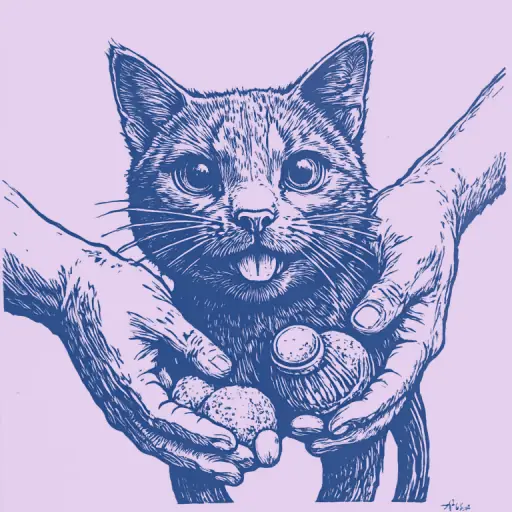
How to Give a Cat Medicine Painlessly and Quickly When It Resists
- 15 min read
- 74
Every cat owner will eventually face the need to give their pet a pill—whether it's routine deworming or a course of treatment prescribed by a veterinarian. In practice, this simple procedure often turns into a real ordeal involving screams, scratches, and spat-out medicine. Cats possess incredible flexibility, sharp claws, and an innate distrust of attempts to make them swallow something.
However, medical procedures should not turn into mutual stress and undermine the trust between you and your beloved pet. There are proven veterinary methods and tricks that allow you to administer medication quickly, safely, and painlessly even to the most difficult animal.
In this guide, we will thoroughly examine how to properly prepare the medication, safely restrain a resistant cat, stimulate the swallowing reflex, and use modern auxiliary tools, such as a pill dispenser.
Preparation for the Procedure and Medication Check
The success of the entire procedure depends 90% on how well you prepare before even interacting with the pet. Cats have phenomenal intuition and instantly pick up on our nervousness, the rustling of packaging, or unusual fuss. If you act chaotically, the animal will sense something is wrong and hide under the sofa long before you even take out the medicine.
Before starting the restraint, you must carefully study the medication instructions and prepare the substance itself. At this stage, it is important to consider the physiological aspects of feline perception and pharmacology rules so as not to reduce the effectiveness of the treatment or provoke panic in the pet.
Can I crush the pill and mix it with wet food?
The first thought that comes to the owner of a difficult cat is to crush the pill into powder and mix it into wet food. However, this simple approach is not always appropriate.
Before picking up the mortar and pestle, be sure to check the medication instructions. Crushing medications is strictly forbidden in the following cases:
- Enteric coating. It protects the active ingredient from being destroyed by stomach acid. By destroying it, you make the treatment ineffective.
- Bitter taste. Most pills are very bitter. Mixing the powder with food will ruin the taste of the entire portion. The cat will refuse the food, and the bitterness will cause excessive salivation.
- Capsules and sustained-release forms. Crushing them leads to dangerous overdose due to overly rapid absorption.
If the medication is not bitter and the instructions allow crushing (which is often the case with deworming), mix the powder only with a teaspoon of favorite paste so that the pet is guaranteed to eat the entire dose.
Secret Preparation: Why You Shouldn't Open the Blister Near a Cat
Cats have phenomenal hearing and instantly remember cause-and-effect relationships. The characteristic dry click of foil or the rustling sound of a pill being squeezed out of a blister pack is an immediate alarm signal to the pet. If the cat has had a negative experience with medication before, these sounds will trigger a 'fight or flight' response even before you approach it. The animal will preemptively hide under the sofa or prepare for defense, which will negate any attempts to conduct the procedure calmly.
To avoid unnecessary stress, follow the simple rule of 'secrecy':
- Prepare the medicine in another room. Close the door to the kitchen or bathroom so the cat does not see your manipulations.
- Take out the pill in advance. Remove the medication from the blister pack and prepare the syringe with water or the pill dispenser in silence.
- Remain calm. Cats are excellent at reading body language and facial expressions. Act naturally, as if you were just going to pet your beloved pet.
Only when the pill is ready and you are completely calm should you call the cat or gently approach it.
Safely Restraining a Resistant Cat
Even with the most discreet preparation, a sensitive pet might suspect something is wrong based on your facial expressions, movements, or change in voice. If the cat has had a negative treatment experience before, its natural reaction will be to try to run away, hide, or actively defend itself with claws and teeth. In such a situation, trying to give the pill 'on the fly' is useless and dangerous: you risk not only losing the medicine but also injuring the animal or seriously hurting yourself.
Proper restraint is the foundation of the entire procedure's safety. Its main goal is to gently but securely limit the movement of the cat's paws and body, minimizing its stress level. Let's look at proven veterinary practice methods that will help you maintain complete control without causing pain to the pet.
The Wrapping Method: How to Properly Wrap a Cat in a Towel
The 'cat burrito' method is the most reliable way to restrain a cat that is actively resisting and scratching. Proper wrapping blocks the animal's paws, protecting you from sharp claws, while not causing pain to the pet.
Step-by-step algorithm on how to properly wrap a cat in a towel:
- Prepare the towel. Take a thick, medium-sized terry cloth towel and lay it out on a table or another flat surface.
- Place the cat. Place the pet in the center of the towel, about 15 centimeters from the top edge.
- Secure the paws. Drape one edge of the towel over the cat's back, wrapping it tightly around the neck (without constricting the throat) to securely block the front paws.
- Wrap the second edge. Tightly pull the opposite side of the towel over, wrapping the entire body of the animal.
- Fold the bottom. Fold the free bottom edge under the hind legs to prevent the cat from backing away.
This gentle restraint allows only the head to remain exposed, completely safeguarding your hands from scratches during the procedure.
Protecting the Owner's Hands When Working with an Aggressive Pet
Even if the cat's body is securely wrapped in a towel, its teeth remain the main source of danger. To protect your hands from bites and deep scratches, follow these safety rules:
- Thick gloves. Use thin leather or work gloves. They will protect the skin while maintaining the minimal finger sensitivity needed to hold the pill.
- Long-sleeved clothing. Wear a thick sweatshirt or a denim jacket. This will protect your forearms if the cat accidentally frees a paw.
- Correct anatomical grip. Hold the cat's head from above, securing the cheekbones with your fingers behind the ears. Never bring your fingers toward the mouth from the front—only insert them from the side, behind the canines, where there are no teeth.
- Using auxiliary tools. To avoid putting your fingers deep into an aggressive animal's mouth, use a pill dispenser (piller).
These precautions will allow you to act confidently and calmly, which will also be conveyed to your pet.
Step-by-Step Classic Method (Insertion into the Root of the Tongue)
Once the fluffy patient is securely restrained and your hands are protected, the most critical moment arrives—the direct administration of the medication. The classic method, based on the anatomical features of the cat's throat, is considered the most reliable and hygienic. Its essence is to place the medicine in an area from which the cat physically cannot spit it out.
This method requires the owner to be calm, precise in movements, and knowledgeable about the animal's physiology. You will not need to force the pill down—it is enough to properly engage the pet's natural reflexes. Let's break down step-by-step how to perform this procedure quickly, painlessly, and on the first try.
How to Properly Open the Mouth and Place the Tablet
For the classic medication administration method to work on the first attempt, it is important to correctly utilize the cat's anatomical features. Act calmly and confidently according to the following algorithm:
- Secure the head from above. Cup the cat's head with your palm from above so that your thumb and index finger rest on the corners of the mouth (in the cheek area), and your palm gently supports the back of the head.
- Tilt the nose up. Gently tilt the pet's head back so that its nose is looking toward the ceiling. In this position, the cat's lower jaw relaxes physiologically.
- Open the mouth slightly. With your free hand, holding the tablet between your thumb and index finger, gently press your middle finger on the chin or lower incisors, pulling the jaw down. Do not push your fingers between the teeth.
- Place the tablet on the root of the tongue. With a quick and precise movement, place the medicine strictly in the center on the very root of the tongue. If you place the tablet closer to the tip, the cat will instantly spit it out.
How to Stimulate the Swallowing Reflex and Give Water from a Syringe Without a Needle
After the tablet is on the root of the tongue, immediately and gently close the cat's mouth and keep it closed. Do not allow the pet to open its mouth until it makes a swallowing movement.
To stimulate the swallowing reflex, use proven techniques:
- Stroke the throat: Use soft, downward strokes with your fingers along the cat's neck in the esophageal area.
- Blow into the nose: A light, short puff of air into the nostril will cause the cat to reflexively lick and swallow.
As soon as you notice the characteristic swallowing movement, be sure to give the cat water to wash down the medicine. This prevents the dry tablet from sticking to the esophageal walls and eliminates the risk of esophagitis.
For this, prepare a syringe without a needle beforehand with 2–3 ml of room-temperature clean water. Gently insert the tip of the syringe into the toothless edge of the jaw (the corner of the mouth) on the side. Slowly, in small portions, pour in the water, allowing the cat to calmly swallow the liquid. Do not press the plunger too sharply so that the pet does not choke.
Using a Pill Popper and Camouflage Tricks
Even if you have perfectly mastered the classic method of administering medicine to the root of the tongue, some pets continue to resist desperately, turning every procedure into a real ordeal. In such cases, modern veterinary devices and proven tricks come to the rescue, allowing you to minimize direct contact with the animal's teeth and reduce its stress level.
Alternative approaches are divided into two directions: technological and camouflage. Using a special pill popper will protect your fingers from bites, and correctly camouflaging the medicine in favorite treats or pâtés will allow the cat to swallow the tablet voluntarily, without even noticing the trick. Below, we will detail both methods.
How to Properly Use a Pill Popper Without Injury
A pill popper (or pilfer) is an indispensable tool for owners of stubborn cats. It resembles a syringe with a soft rubber tip that securely holds the medicine and protects your fingers from the pet's sharp teeth.
To perform the procedure safely and without injury, follow this simple algorithm:
- Device Preparation. Place the tablet in the rubber tip of the pilfer. If the design allows, fill the body with a little drinking water—this will facilitate swallowing the dry medication.
- Positioning. Secure the cat in a comfortable position. With your left hand, gently tilt its head back and open its mouth slightly by lightly pressing your fingers on the toothless edge of the jaw.
- Insertion. With a quick but smooth movement, insert the soft tip of the pilfer into the mouth, directing it strictly toward the root of the tongue. Avoid sudden movements to prevent damaging the delicate palate and larynx.
- Release. Press the plunger to release the tablet (and water), and immediately remove the tool.
- Stimulation. Close the pet's mouth and gently stroke its throat from top to bottom to provoke the natural swallowing reflex.
Important: Before each use, check that the removable rubber tip is firmly attached to the plastic body so that the cat does not accidentally swallow it along with the medicine.
Camouflaging the Tablet in Special Treats and Pâtés
If you want to completely avoid coercion, the best solution is to camouflage the medicine. The modern veterinary industry offers an excellent tool—special treats for hiding pills (so-called 'pockets' or pill pockets). These are soft meat pads with an indentation inside. You simply place the tablet inside, pinch the edges with your fingers, and the treat turns into an appetizing meat ball that the cat eats voluntarily.
If you do not have special pockets on hand, use regular pâté or wet food with a strong aroma (such as salmon or liver):
- Take a teaspoon of pâté and form a small ball.
- Hide the tablet (whole or quartered) strictly in the center of the ball.
- Ensure that the medicine is completely covered by the food and does not smell on the outside.
- Give the cat an empty piece of pâté first to 'warm up,' and then the ball with the surprise.
Important: This method is only suitable for non-bitter tablets that do not cause immediate rejection if accidentally chewed.
What to Do After Medication Intake and How to Handle Complications
Even if you have perfectly mastered the technique of administering the medicine or successfully camouflaged it in a treat, the procedure does not always go smoothly. The cat's body may react to the stress and the bitter taste of the medicine in unexpected ways—from instantly spitting out the tablet to excessive salivation resembling foam. At this moment, it is important for the owner not to panic, but to act calmly and gently toward the pet.
Successful medication intake is only half the battle. To minimize psychological trauma and establish a neutral attitude toward treatment in the cat, it is necessary to conclude the procedure correctly. Let's break down how to quickly handle physiological difficulties and help your beloved pet quickly restore its emotional balance after the stress.
What to do if a cat foams at the mouth or spits out a pill
Excessive drooling, resembling white foam, often frightens owners. In reality, this is a natural physiological reaction of the cat's body to the bitterness of the medication. The cat is trying to "wash away" the unpleasant taste from its sensitive receptors.
What to do if foaming occurs:
- Do not panic. This is not a sign of poisoning or allergic shock, but merely a reaction to the taste.
- Wipe the face. Gently remove the foam with a damp paper towel or napkin.
- Rinse the mouth. Give the cat a little clean water from a syringe without a needle. Direct the stream strictly into the corner of the mouth so the pet does not choke. The water will quickly wash away the remnants of the bitter medicine.
What to do if the pill is spat out:
- Check integrity. If the pill flew out practically dry and intact, wipe it and try giving it again, preferably hidden in a treat or gelatin capsule.
- Assess dosage. If the medicine has partially dissolved in the mouth, do not give a new pill immediately—this could cause a dangerous overdose. In this situation, contact a veterinarian to adjust the treatment plan.
Stress Reduction, Treat Reinforcement, and Follow-up Monitoring
As soon as the procedure is successfully completed, your main task is to minimize negative associations for the pet. Immediately after the cat swallows the medication, gently free it from the towel and allow it to recover. Do not forcibly restrain the animal if it wants to leave and hide in a safe place.
Treat Reinforcement
Even if the cat actively resisted, be sure to reinforce the end of the procedure with a pleasant moment. Offer it a favorite treat:
- A liquid treat stick (it excellently washes away residual bitter taste in the mouth);
- A small portion of aromatic wet food or pâté;
- A special malt paste or vitamins that your pet loves.
Follow-up Monitoring
For the next 30–60 minutes, observe the animal carefully:
- Check hiding spots: Cats are capable of skillfully holding a pill in their cheek and spitting it out under the couch a few minutes later. Check places where the pet might have hidden.
- Ensure water access: Make sure the cat drinks, as a dry pill can stick to the esophageal walls and cause irritation.
- Monitor reaction: Ensure there is no vomiting, lethargy, or signs of allergy.
A gentle tone, lack of fuss, and a tasty reward will help the cat forget the unpleasant incident more quickly.
Conclusion
Giving a cat a pill is a task that requires not so much physical strength as patience, composure, and the correct technique. Remember that your pet resists not out of malice, but due to a natural fear of an unknown intervention. Using gentle restraint with a towel, special tools like a pill dispenser, or tricks to mask the medicine in a favorite pâté allows stress to be minimized for both the animal and you.
The main secret to success lies in your own confidence. Cats are incredibly sensitive to the slightest changes in their owner's behavior: if you are calm, composed, and act decisively, the pet will endure the procedure much more easily. Never punish the cat for trying to escape, and always conclude the process with a pleasant ritual—a portion of favorite wet food, affection, or play. This will help the animal develop a neutral attitude toward treatment in the future.
If, despite all efforts, you cannot give the medicine at home, or if it causes the cat dangerous levels of stress, be sure to consult a veterinarian. A specialist can help select an alternative form of the drug—such as a suspension, topical drops, or injections. Caring for your pet's health is a path of trust, where even medical procedures can proceed quickly, safely, and painlessly.