How to Greet in Thailand: A Complete Guide to Thai Etiquette
- 24 min read
- 61
Thailand is often called the "Land of Smiles," but beneath this outward ease lies a deep, centuries-old system of social etiquette. In Thai society, a greeting is not merely a formal exchange of routine words; it is a crucial social marker. The way you greet someone instantly communicates to locals your level of respect for their culture, traditions, and social boundaries.
For a foreign traveler, understanding the basics of Thai greeting etiquette is the key that unlocks the door to genuine hospitality. Thais are incredibly friendly, but they are also very sensitive to displays of politeness. When a tourist uses the traditional greeting instead of the familiar Western handshake or a casual nod, it makes a tremendous impression. It shows that you have come not just as a consumer of tourist services, but as a guest who respects the home into which they have been invited.
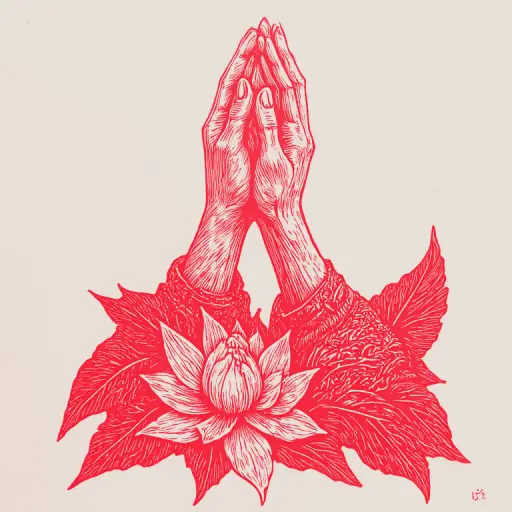
The traditional greeting—Wai—involves pressing the palms together at chest or face level with a slight bow. This gesture replaces the tactile contact we are accustomed to. In Thai culture, the head is considered the most sacred part of the body, and the feet are the "lowest" and dirtiest, so physical contact upon first meeting (especially touching the head or patting the shoulder) is strictly taboo. The Wai allows respect to be expressed from a safe and respectful distance.
Knowing the rules of greeting gives the traveler several important advantages:
- Quick Rapport: Thais value the efforts of foreigners who try to speak their language and use their gestures. This instantly breaks the ice in conversation.
- Communication Safety: You are guaranteed to avoid awkward situations and accidental offense to the locals.
- Deep Immersion: You will begin to notice the subtle social connections and hierarchy that are invisible to the average tourist.
Understanding the philosophy behind this gesture is the first step toward a comfortable and safe journey through the kingdom.
Section 1. Fundamentals of Thai Greeting: Understanding Wai and Its Meaning
The traditional gesture, Wai, is much more than just a substitute for a familiar handshake. It is the visual embodiment of Thai philosophy of respect, hierarchy, and hospitality, rooted in deep antiquity. For a traveler, understanding this gesture becomes a kind of "key" that opens the door to the genuine goodwill of the local people.
In this section, we will explore the inner essence of the Wai, learn how to properly place the palms at different heights, and discover why this elegant gesture differs fundamentally from the Western greetings or the bows of other Asian cultures we are used to.
1.1. What is Wai? History and Meaning of the Gesture
The Wai gesture (ไหว้) is much more than just an equivalent to a Western "hello" or "goodbye." For any Thai person, it is a sacred ritual, a visual manifestation of respect, gratitude, apology, and recognition of the interlocutor's social status. Externally, it resembles palms pressed together at chest or face level, accompanied by a slight bow. However, behind this external simplicity lie centuries of history and deep philosophy.
Historical Roots: From Protection to Respect
The origins of the Wai date back to ancient times and are closely linked to Indian culture and Buddhism (specifically, the Sanskrit gesture anjali-mudra). Initially, this movement had a very practical, defensive meaning. By pressing the palms together in front of oneself, a person demonstrated openness and friendliness:
- Absence of Weapons: By showing both palms, the traveler proved that they held no sword or knife.
- Peaceful Intentions: Unlike the Western handshake, which requires physical contact, the Thai greeting allowed for the maintenance of a safe distance, which was important in ancient times.
With the spread of Buddhism in Southeast Asia, the gesture transformed. The joined palms came to symbolize the lotus bud—a sacred flower in Buddhist tradition, representing the purity of thought, the genesis of wisdom, and spiritual awakening.
Symbolic Meaning Today
In modern Thailand, the Wai remains the primary non-verbal tool of communication. Thai culture often seems mysterious to tourists precisely because of the abundance of such nuances. The Wai is used in various contexts:
- Greeting and Farewell: A basic expression of politeness upon meeting and parting.
- Gratitude: A way to say "thank you" for a service or a gift.
- Apology: A sincere acknowledgment of one's mistake.
- Religious Reverence: Expressing respect for monks, temples, Buddha images, and the royal family.
Understanding this gesture is the first step toward mastering the rules of conduct in Thailand and showing the locals that you value their traditions.
1.2. How to Perform Wai Correctly: Step-by-Step Instructions (From Chest Level to High Greeting)
Performing the Wai is not just a mechanical folding of the hands; it is a smooth, almost meditative movement. To ensure your greeting looks natural and respectful, it is important to master the basic technique and understand how the height of the hands relates to the status of the person you are greeting.
Step 1. Pressing the Palms Together ("Phanom Mu")
Join your palms together at chest level. The fingers should be pressed tightly against each other and pointed upwards. Do not press the palms flat, as in a Western prayer—make them slightly rounded, as if resembling an unopened lotus bud. Keep your elbows close to your body, not spread out to the sides.
Step 2. Choosing the Height Level (Three Classic Wais)
Thai etiquette has three main hand height levels, each expressing a different degree of reverence:
- First Level (For equals, colleagues, and friends): Raise your joined palms to face level so that the tips of your thumbs touch your chin, and the tips of your index fingers touch the tip of your nose. Make a slight, barely noticeable nod of the head.
- Second Level (For elders, teachers, superiors, and parents): Raise the palms higher. The tips of the thumbs should touch the tip of the nose, and the index fingers should touch the point between the eyebrows. The head nod should be deeper and more expressive.
- Third Level (For monks, Buddha images, and members of the royal family): This is the highest gesture. The thumbs press against the point between the eyebrows, and the index fingers touch the forehead at the hairline. The greeting is accompanied by a deep bow from the waist.
Crucial Rule: The Head Goes to the Hands
The biggest mistake novice tourists make is simply raising their hands to their face while keeping their neck straight. In Thai culture, it is the head that bows toward the hands. The lower you bow your head, the more respect you show the person you are greeting.
1.3. Differences from Western and Other Asian Greetings (Comparison with Handshake and Bow)
To truly appreciate the depth of the Thai greeting, it is useful to compare it with the rituals of communication we are accustomed to. The Wai is not just an exotic analogue to a handshake or a bow; it is a unique marker of social distance and respect.
Wai vs. Western Handshake: Distance and Tactility
Western greeting traditions are built on physical contact. A handshake symbolizes openness, equality, and trust. In Thailand, the attitude toward personal space and the body is completely different:
- Non-contact: The Wai completely excludes physical touching. This makes it maximally comfortable and hygienic in a tropical climate.
- Hierarchy instead of equality: While a handshake defaults to leveling the participants, the Wai always emphasizes differences in age, status, and social standing.
- Sacredness of boundaries: In Thai culture, the head is considered sacred, and touching another person's body without a close relationship is frowned upon. The Wai allows one to express friendliness while maintaining a respectful distance.
Wai vs. Japanese Bow: Focus on Hands, Not Body Lean
Travelers often confuse the Wai with traditional East Asian bows (Japan, Korea). However, there is a fundamental difference between them:
- Hand Position: In a Japanese bow (ojigi), the hands are held at the sides or clasped in front of the hips. In the Thai Wai, the palms are key, held together like a boat shape near the face or chest.
- Body Movement: Japanese people bow with their torso, bending at the waist at a strict angle. Thais, however, only perform a slight nod of the head toward the palms, without bending their back.
Wai vs. Indian Namaste: Social Stratification
Historically, the Wai descends from the Indian "Namaste." But while in India this gesture expresses recognition of the divine within a person and is performed mainly at chest level, in Thailand it has evolved into a strict social scale. The height to which the hands are raised in the Wai directly depends on the status of the person being greeted.
Understanding these differences will prevent you from awkwardly reaching out to shake hands where non-contact reverence is expected, or from bending into a deep bow.
Section 2. The Art of Reciprocity: Who and How to Respond to a Wai
Understanding the mechanics of the Wai gesture is only half the battle. In real life, Thai etiquette transforms into a subtle social game where it is critically important to know not only how to initiate a greeting but also how to respond to it correctly. In Thailand, an inappropriate or ignored gesture can put both parties in an awkward position, so the art of reciprocity requires special attention. For a foreigner, there are many pitfalls here. Should you return a Wai to a street vendor, how should you react to a child's greeting, and when is a simple warm smile much more appropriate than a complex ritual? Let's examine practical scenarios that will help you feel confident in any daily situation.
2.1. Responding to a Wai: Rules of Reciprocal Greeting (To Whom and With What)
The art of Thai greeting is built upon a strict social hierarchy. The main rule of reciprocity states: the younger or lower-status person always initiates the wai gesture first, and the elder responds to it. However, there are several important nuances for foreign tourists here, knowledge of which will help avoid awkward situations and show your respect for the local culture.
When to Respond to a Gesture?
If you are greeted by someone of equal age, social standing, or a colleague, you must reciprocate their wai gesture. Ignoring a greeting in this case is considered rude. The return gesture is performed quickly, with palms folded at chest level and a slight nod of the head.
When NOT to Return a Wai?
This is the most common mistake tourists make when learning Thai behavioral rules. A clear rule exists in Thai etiquette: the customer is always higher in status than the service staff.
- In hotels, restaurants, and shops: Porters, waiters, taxi drivers, and vendors are obliged to greet you with a wai. You do not need to return the gesture. The correct and polite response in this situation is a sincere smile and a slight nod of the head. If you return a wai to a hotel employee, it will put them in an awkward position because it disrupts the social balance.
- Children: If a Thai child greets you with a wai, simply smile back at them. Adults never return the gesture to children.
Special Cases: Monks and Elderly People
Buddhist monks hold the highest rank in the Thai social hierarchy. Monks never return the wai gesture to ordinary people (laypeople), regardless of their age or status. When meeting a monk or a very elderly person, you should be the one to fold your hands in greeting first. In return, you will receive a benevolent nod or a verbal blessing.
For convenience, remember this simple cheat sheet to help you navigate your travels quickly:
| Who is greeting you | Should you respond with a Wai? | Correct Response |
|---|---|---|
| Staff (hotels, restaurants, shops) | No | Smile, nod of the head, polite "Sawasdee" |
| Children and teenagers | No | Friendly smile or nod |
| Peers, colleagues, equals in status | Yes | Reciprocal Wai at chest level |
| Elderly people | Yes (better to initiate yourself) | Reciprocal Wai (or initiate) |
| Buddhist monks | Yes (always initiate) | High Wai (thumbs near the eyebrows) |
2.2. Non-verbal Alternatives: When a Smile or Nod is Enough?
The transition from the strict etiquette of the Wai gesture to more casual forms of communication in Thailand happens naturally. Thailand is not called the "Land of Smiles" for nothing. Here, a sincere smile and a slight nod of the head are not just expressions of friendliness, but a complete communication tool that replaces the complex Wai ritual in certain situations.
For a foreign tourist, knowing when to replace a Wai with a smile is a way to avoid awkwardness and show respect for the local hierarchy. There are several typical scenarios where non-verbal alternatives are more than sufficient:
- Service Industry and Staff. When you enter a hotel, restaurant, spa, or get into a taxi, staff often greet you with a Wai gesture. Since you are the customer, your status in this situation is conditionally higher. Returning a Wai from your side might embarrass the staff. The most correct and polite gesture here is a warm smile and a slight nod of the head.
- Children and Youth. In Thai culture, elders never initiate a Wai to juniors, and they rarely return the gesture. If a Thai child politely greets you, respond with a friendly smile. This emphasizes your adult status and will be perceived as completely natural.
- Everyday Situations and Busy Hands. If you are holding bags of groceries, a glass of a cold drink, or a phone, do not try to awkwardly press your palms together. Thais are very practical people. In such a situation, a smile and a nod will show your politeness without unnecessary fuss.
- Fleeting Encounters on the Street. When passing street vendors, tuk-tuk drivers, or simply making eye contact with passersby, a quick exchange of smiles is enough. This creates an atmosphere of mutual friendliness without escalating to a formal level of communication.
Remember that the Thai smile ("Yim") is a universal language. By using it along with a slight nod of the head, you convey your respect and openness to the locals while remaining within the bounds of proper etiquette.
2.3. Levels of Respect in Responses: Matching Status to Reply (For Personal Use)
Understanding the social hierarchy is key to using the Wai correctly. In Thailand, a person's status determines not only how you greet them but also exactly how you should respond to their greeting. For a tourist, it is important not to get confused by the subtleties of Thai subordination. Here is a simple practical guide on how to match the status of the person you are addressing with your response:
- Monks: Monks occupy the highest rank in Thai society. If you wish to show reverence to a monk, your Wai should be as deep as possible (thumbs touching the glabella). It is important to remember: monks never return the Wai of laypeople. They may only nod slightly or bless you with a look.
- Elders and High-Status Individuals (Teachers, Officials): If an elder greets you, respond with a respectful gesture: bring your clasped palms up so that the tips of your thumbs touch the tip of your nose, and your index fingers touch the glabella, while giving a noticeable bow.
- Peers (Same Age, New Acquaintances): The standard "friendly" Wai is used here. The thumbs are pressed against the chin, and the index fingers are against the tip of the nose. This is the ideal balance of politeness without excessive subservience.
- Service Staff and Children: As we mentioned, you do not need to respond to waiters, taxi drivers, or children with a physical Wai gesture. If you return a Wai to them, it will put them in an awkward position, disrupting the social balance. A sincere smile and a slight nod of the head are sufficient.
Quick Status Cheat Sheet
| Status of Person Addressed | Your Response Gesture | Finger Position |
|---|---|---|
| Monks | Deep Bow | Thumbs at the glabella |
| Elders / High Status | Respectful Wai with Bow | Thumbs at the tip of the nose |
| Peers (Colleagues, Same Age) | Standard Wai | Thumbs at the chin |
| Juniors / Staff | Smile and Nod of Head | No hand gesture |
How to quickly determine status? In Thailand, age almost always takes priority. If you are facing someone clearly older than you, they automatically deserve a higher level of respect. In ambiguous situations where status is difficult to determine, it is best to show a little more politeness and use the standard chin-level Wai. The main rule for a foreigner is not to rush. Thais perfectly understand that you are a guest and will appreciate the effort to follow their traditions, even if the height of your palms doesn't perfectly match the ideal.
Section 3. Language and Culture: Greeting Formulations and Context
The Wai gesture is only half of a Thai greeting. To truly win over locals and show respect for their culture, non-verbal communication must be supported by the correct words. The Thai language is surprisingly melodic, and politeness is built into its grammar. Even a couple of simple phrases, spoken with the correct intonation, can instantly break the ice and turn you from an ordinary tourist into a welcome guest.
In this section, we will explore the verbal side of Thai etiquette. You will learn how to correctly pronounce basic greetings depending on your gender, which polite phrases can help start a pleasant conversation, and how not to get confused about their context during your travels.
3.1. Key Phrases: Learning Thai Greetings (Sawadee and Gender Variations)
When uttering the traditional Thai greeting, you are not just showing courtesy; you are literally wishing the person well. Interestingly, the familiar word "Sawadee" (สวัสดี) appeared in Thai usage relatively recently—in the 1930s. It derives from the Sanskrit word "svasti," which means "prosperity," "safety," or "happiness."
The main secret of Thai verbal etiquette lies in the final polite particles. Unlike in European languages where the form of address depends on the speaker's gender, in Thai, the choice of polite ending depends solely on your own gender:
- If you are male, you must add the particle "khrap" (ครับ) at the end of any phrase. In spoken language, the 'r' is often dropped, so the soft "krap" or "kap" sounds absolutely normal and natural.
- If you are female, your universal polite particle will be "kha" (ค่ะ). To sound soft and friendly, Thai women slightly elongate this sound at the end.
Thus, the universal greeting "Hello" sounds like this:
- For men: Sawadee-khrap (สวัสดีครับ)
- For women: Sawadee-kha (สวัสดีค่ะ)
If you forget to add these particles, your greeting will sound too abrupt, dry, and even rude—like a command or familiarity.
To help you feel confident in any situation, we have prepared a useful table of basic greeting phrases:
| Thai Phrase | Transcription | Translation | When to Use |
| :--- | :--- | :--- |
| สวัสดี ครับ / ค่ะ | Sawadee-khrap / -kha | Hello | Universally, at any time of day |
| หวัดดี ครับ / ค่ะ | Watdee-khrap / -kha | Hi | Informal, with peers and friends |
| คุณสบายดีไหม ครับ / ค่ะ | Khun sabai dee mai khrap / -kha | How are you? | Polite question upon meeting |
| สบายดี ครับ / ค่ะ | Sabai dee khrap / -kha | I am fine, thank you | Response to "How are you?" |
Useful Pronunciation Tip:
Thai is a tonal language, and incorrect intonation can change the meaning of a word. However, foreigners are easily forgiven for pronunciation mistakes. The main rule for beginners is to pronounce "Sawasdee" with a light emphasis on the final syllable "dee," making it sing-song. Your sincere smile while saying these words will compensate for any tonal inaccuracies and instantly win over the locals.
Synchronizing words and gestures is another important skill. You must say "Sawasdee krap" or "Sawasdee ka" simultaneously with the bow and the hand gesture of the Wai. Start saying the phrase the moment your palms rise to your chest or face, and finish it as you exit the bow. This creates a harmonious and complete image of a polite guest.
It is also worth remembering the informal abbreviation. Among close friends or young people, the full "Sawasdee" is often shortened to the concise "Waddee" (หวัดดี). But be careful: do not use it when speaking with hotel staff, taxi drivers, or older people—this violates Thai etiquette.
3.2. Talking About Yourself: Optional but Useful Phrases to Start a Dialogue (e.g., Compliments)
Knowing how to pronounce a basic greeting is a great first step, but to truly win over the locals, you should do the next thing. Thais are incredibly open, friendly, and curious. When a foreign tourist tries to say a few words in their native language, it instantly elicits a genuine smile and breaks down any communication barriers.
Let's break down several simple but very effective phrases that will help you introduce yourself, maintain a short conversation, and give a pleasant compliment to your interlocutor.
How to Introduce Yourself and Ask How Someone Is
It is best to start an introduction after the traditional greeting with your own name. Note that the personal pronouns "I" in Thai differ depending on the speaker's gender:
- Men say: Phom chue... (My name is...)
- Women say: Chan chue... (My name is...)
After that, it is appropriate to ask the interlocutor how they are feeling. The classic question "How are you?" sounds like "Khun sabai dee mai?". In response, you will most likely hear "Sabai dee" (I am fine). If this question is asked to you, politely reply: "Sabai dee krap/ka, khop khun" (I am fine, thank you).
Useful Phrases for Light Conversation
Here is a convenient table of phrases that will help you express appreciation for the country and its culture:
| Phrase in Russian | Pronunciation (Transliteration) | How it is written in Thai |
|---|---|---|
| My name is... (for men) | Phom chue [Name] krap | ผมชื่อ... ครับ |
| My name is... (for women) | Chan chue [Name] ka | ฉันชื่อ... ค่ะ |
| How are you? | Khun sabai dee mai? | คุณสบายดีไหม |
| I like Thailand (male) | Phom chob Muang Thai | ผมชอบเมืองไทย |
| I like Thailand (female) | Chan chob Muang Thai | ฉันชอบเมืองไทย |
| Very delicious! | Aroi mak! | อร่อยมาก |
The Power of Sincere Compliments
Thais are very patriotic and proud of their homeland, so the phrase "Phom/Chan chob Muang Thai" (I like Thailand) is an absolute hit. Say it to a taxi driver or a shop owner, and you will see their face break into a happy smile.
If you want to compliment someone's appearance, use the following words:
- Suay (สวย) — beautiful. To say "very beautiful," add the word mak (very) — "Suay mak!". This is a great way to compliment a friendly guesthouse owner or a fruit vendor.
- Lho (หล่อ) — handsome (for men). Accordingly, "Lho mak!" translates to "very handsome."
Thai cuisine deserves special attention. Food is a cult and the main reason for pride for the locals. If you are dining at a local cafe or buying food from a street vendor, be sure to tell the cook: "Aroi mak krap/ka!" (Very delicious!). This is not just politeness, but the highest form of recognition of their skill, which guarantees you the best service on your next visit.
Do not be afraid of making tonal mistakes. Even if your pronunciation is far from perfect, Thais will understand the context thanks to your facial expressions and friendly demeanor. The main thing is to speak softly, smile, and not forget the polite particles.
3.3. When and To Whom to Speak
Choosing the right moment and recipient for a greeting is half the battle in Thai etiquette. Thai society is permeated by an invisible but strict hierarchy based on age, social status, and spiritual standing. To ensure your words always hit the mark and only elicit genuine smiles, it is important to understand to whom and in what situations to address certain phrases.
To Whom to Address Greetings and Courtesy Phrases
- Service Staff (hotels, restaurants, taxis): In tourist areas, you will almost always be greeted first. Administrators, waiters, and drivers often accompany the greeting with a Wai gesture. As a guest (a person with a formally higher status in this situation), you are not obligated to return the Wai gesture. It is enough to smile warmly, nod slightly, and politely say the universal "Sawasdee krap" (for men) or "Sawasdee ka" (for women).
- Older People and Respected Members of Society: If you are speaking with an elderly Thai person, a guesthouse owner, or a guide, take the initiative. A polite verbal greeting from your side will show that you are familiar with the rules of respecting elders.
- Buddhist Monks: This is the highest level of social hierarchy. Monks are always greeted first (both verbally and with a Wai gesture). Remember the important rule: monks never return the Wai gesture to laypeople, including tourists. This is not a sign of arrogance, but a strict religious rule.
- Children and Youth: There is no need to use complex polite constructions or Wai to children. For communicating with them, the informal "Waddee" or just a friendly smile is perfect.
When It Is Appropriate to Use Compliments and Phrases About Yourself
The phrases about loving Thailand or compliments ("Suay" — beautiful, "Lho" — handsome) that you have learned require the correct context:
- During Casual Conversation: You should not bombard your interlocutor with phrases about how much you love the country immediately after meeting. The ideal moment for the phrase "Phom/Chan chob Muang Thai" is when the local resident asks you if you like Thailand. This will sound natural and sincere.
- At Street Vendors and Markets: If you are buying street food, be sure to tell the cook "Aroi krap/ka" (Delicious) when you try the dish. This is the best compliment to their skill, which will instantly make you a favorite customer.
- In Official Institutions: When dealing with immigration or police officers, limit yourself to the standard polite "Sawasdee." In such places, excessive emotion or attempts to joke in Thai can be misinterpreted. It is better to switch immediately to clear English.
By observing these simple contextual rules, you can easily integrate into the local environment, avoiding awkward situations and presenting yourself as a cultured and respectful traveler.
Conclusion: More Than Just Greetings. A Checklist for Full Understanding of Thai Etiquette
Having mastered the art of Thai greetings and learned basic phrases, you have taken a crucial step toward understanding the "Land of Smiles." However, Thai etiquette is a deep philosophy that governs not only how you greet people but also how you behave in daily life. To ensure your trip leaves only pleasant memories and that locals see you as a respectful guest, we have prepared a final checklist of rules of conduct in Thailand.
Politeness Checklist: Rules of Conduct in Thailand
Observe the Hierarchy of Body Parts (Head and Feet). In Thai culture, the head is considered the sacred part of the body where the soul resides, and the feet are considered the lowest and dirtiest.
- Never touch a Thai person's head (even if it is a friendly gesture or a desire to ruffle a child's hair).
- Do not point at people, objects, or, especially, images of the Buddha and members of the royal family with your feet.
- Try not to step over people who are sitting or lying on the floor, as well as over food and books.
Show Absolute Respect for the Monarchy. The royal family commands boundless reverence in Thailand.
- Never joke about or criticize the royal dynasty (strict criminal liability is enforced for this).
- If the national anthem begins to play in a public place, be sure to stand up and remain still with the locals.
- Treat Thai money with care—it features the portrait of the King. Do not step on a rolling coin with the sole of your shoe.
Visit Temples Properly. Buddhism is the foundation of Thai society, requiring adherence to strict rules.
- Always remove your shoes before entering residential areas and sacred temple halls.
- Dress modestly: shoulders and knees must be covered for both women and men. Beachwear is appropriate only on the beach.
- Women are strictly forbidden from touching Buddhist monks or handing them things directly.
Maintain Calmness ("Jai Yen"). The concept of a "cool heart" (Jai Yen) is highly valued in Thailand.
- Raising your voice, shouting, or showing intense anger is perceived as a loss of self-control and a sign of poor upbringing.
- Resolve any disputes with a gentle smile and a calm tone—this will help settle the conflict much faster.
Thailand is not called the "Land of Smiles" for nothing. Locals are incredibly lenient with foreigners and easily forgive minor slip-ups if they see your sincere desire to show respect. Use the knowledge you have gained, smile more often, and your trip will become truly harmonious and unforgettable!