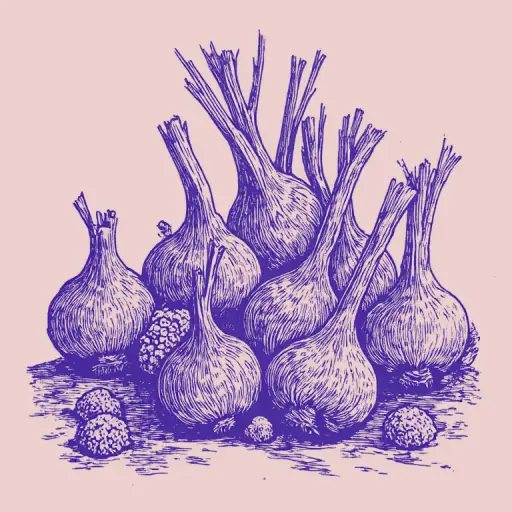
How to Grow Sweet Jalta Onions in the Urals and Achieve a Rich Harvest
- 15 min read
- 78
The legendary Jalta (Crimean) onion is the dream of many gardeners. It is valued for its characteristic flattened shape, juicy, thick scales, and surprisingly sweet taste without any spiciness. Traditionally, it is believed that this delicious red salad onion can only thrive under the hot Crimean sun on special Taurian soils. Under the harsh conditions of the Urals, with its short summer and unpredictable weather, it seems like an impossible task to cultivate the southern guest: there is a high risk of obtaining small, hard, and bitter bulbs.
However, Ural gardeners have proven: it is absolutely possible to grow true Crimean sweet onions in the Middle and Southern Urals! The secret to success lies in the correct sowing from seed over seedlings, strict adherence to planting deadlines, and special care that compensates for the lack of warmth. In this practical guide, we will go through the entire technology step by step: from sowing the seeds to harvesting the juicy yield that will amaze your loved ones.
Seed Preparation and Determining Sowing Deadlines in the Urals
The cultivation of this demanding southern guest under the harsh conditions of the Urals is an ambitious but entirely achievable task. The main secret to success lies in a proper start. Since the growing season for the Jalta onion is quite long, a full sweet bulb can only be obtained in the short and unpredictable Ural summer via seedlings.
The foundation for a rich harvest consists of two crucial factors: the precise determination of the sowing date and the professional pretreatment of the seed mass.
Sowing Deadlines for Seedlings in the Ural Climate
The cultivation of the heat-loving Jalta onion in the Urals depends directly on the accuracy of the sowing time calculation. The growing season for this Crimean guest averages 130–150 days. For the onions to fully ripen and develop sweetness before the autumn frosts, direct sowing into the soil in the Urals is categorically not permissible—only via seedlings.
The optimal age of the seedlings before transplanting to the final location is 50–60 days after germination. They usually require another 10–12 days to produce the first cotyledons. Based on this, the sowing deadlines are calculated:
- Southern Urals: Sowing takes place in the first decade of March (from March 1st to 10th). Transplanting into the soil is planned for mid-May.
- Middle Urals: Seeds are sown in mid-March (from March 10th to 20th). The seedlings are transplanted into the open ground or unheated greenhouses at the end of May, once the risk of frost has passed.
Sowing too early (in February) without high-quality lighting leads to the seedlings becoming spindly and weak, while sowing too late (in April) prevents the onion from developing under the conditions of the short Ural summer.
Sorting, Disinfecting, and Soaking the Seeds
The correct preparation of the seeds (seed mass) is the guarantee for good germination of the demanding Jalta onion in the cool climate of the Urals. The process consists of three consecutive steps:
- Sorting. Soak the seeds in a 3% solution of table salt (30 g per 1 liter of water) for 10–15 minutes. You can safely discard the floating impurities, and rinse the sunken, complete seeds with clear warm water.
- Disinfection. To protect future seedlings from root rot and fungal diseases, soak the seeds for 20–30 minutes in a dark pink solution of potassium permanganate or in an organic fungicide solution (e.g., "Fitosporin-M").
- Soaking and Stimulating. The essential oils on the seed surface delay germination. Soak them for 18–20 hours in warm water (+20…+22 °C), changing the water every 4–5 hours. To accelerate germination, add a growth stimulant ("Epin" or "Cirkon") to the last portion of water.
After treatment, lightly dry the seeds on a paper towel until they are dusty and immediately begin sowing.
Growing Robust Seedlings Indoors
Achieving robust and viable seedlings is the foundation of success when growing the demanding Crimean guest under the harsh Ural conditions. Since the growing season for the Jalta onion is long, the future juiciness and sweetness of its scales are determined during the home phase. Our main task now is to compensate for the lack of southern sun and create a microclimate as comfortable as possible for the germinating seeds. This requires not only preparing a balanced soil mixture but also strictly controlling the growth conditions of the young plants. A proper start protects the still-weak seedlings from spindling and diseases and guarantees an excellent survival rate during subsequent transplanting into the soil.
Preparing the Growing Medium and Sowing Rules
Normal purchased soil is unsuitable for the demanding Jalta onion—it requires a nutrient-rich, loose, and nearly neutral soil mixture. To replicate conditions similar to those of Crimean carbonate soils, prepare the substrate yourself:
- Peat moss – 1 part;
- High-quality compost – 1 part;
- Wood ash – 2–3 tablespoons per bucket of mixture (it lowers the acidity and enriches the soil with potassium);
- Sifted river sand – 0.5 part (for aeration).
Mix the components thoroughly and disinfect the mixture by pouring it over with a strong potassium permanganate solution or Fitosporin.
Sowing Rules:
- Fill the seedling pots (at least 10–12 cm high) with the finished substrate, compact it slightly, and moisten it with warm water.
- Make furrows with a depth of 1 cm, spaced 3–4 cm apart.
- Distribute the prepared seeds with a spacing of 1–1.5 cm.
- Cover the furrows with a thin layer of compost or pure sand and gently press them down with your fingers.
- Spray the seeds with a spray bottle, cover the container with film or glass, and place it in a warm place with a temperature of +20…+25 °C until the first cotyledons appear.
Temperature Regimes, Watering, and Thinning Seedlings
For achieving robust Jalta onion seedlings in the Urals, adherence to temperature fluctuations is crucial. Immediately after the first cotyledons appear, remove the film and drastically lower the room temperature to +12…+15 °C during the day and +10…+12 °C at night. This trick stops the thin shoots from wilting for 5–7 days. Afterward, maintain a moderate warmth of +18…+20 °C.
Watering must be precise. Overwatering under the cool Ural conditions immediately leads to the development of "black stem." Use only settled warm water (+20…+22 °C) and water the seedlings strictly at the root with a syringe or pipette.
Is thinning necessary?
The root system of the Crimean sweet onion is very sensitive. The classic thinning by exposing the roots should be replaced by careful thinning, maintaining a distance of 1.5–2 cm between the seedlings. If the sowing was done in a common container, transplant the seedlings at the stage of 1–2 true leaves by careful potting, trying not to damage the soil clump.
Transplanting Seedlings into Open Field or Greenhouse
The relocation of the vigorous Jaltinian onion seedling to its final location is one of the most critical steps. Given the unpredictable Ural climate, where frosts can still return in May, it is extremely important to choose the right time and prepare a protected spot for this "southern transplant." To ensure that the flat violet onions become juicy and sweet and avoid the characteristic bitterness, artificial conditions resembling the rocky Crimean slopes must be created.
The success of the relocation depends on two components: the correct structure of the bed and the careful acclimatization of the delicate seedlings to the open air or greenhouse conditions. Let us examine how to prepare the Ural soil and carry out the planting without stress for the plants.
Requirements for Ural Soil and Bed Preparation
This Crimean onion is accustomed to the Taurian slate soils, which retain heat excellently during the day. The cold and acidic loamy soils of the Urals are the exact opposite. For the salad-like violet onion to grow juicy and sweet, the soil structure must be artificially adjusted.
Soil Requirements:
- Acidity: Strictly neutral or slightly alkaline (pH 6.5–7.5). Acidic Ural soils must definitely be limed with dolomite flour, chalk, or wood ash.
- Drainage: The soil must be loose and light. To imitate rocky Crimean soils, it is useful to mix coarse river sand into the substrate.
- Precursors: It is best to plant the onion after green manure, tomatoes, cabbage, or potatoes.
Bed Preparation:
- In Autumn: Loosen the bed to a depth of 35 cm, carefully remove weeds, and incorporate compost (up to 5–6 kg per m²).
- In Spring: Form raised beds – under Ural conditions, they warm up significantly faster. Two weeks before planting, fertilize the soil with potassium monophosphate to stimulate root growth.
Planting Scheme and Acclimatization Rules
The relocation of delicate Crimean onion seedlings to the harsh conditions of the Urals requires mandatory hardening. 10–12 days before planting (usually mid or late May, when the risk of frost below -3 °C has passed), begin to place the boxes outdoors. First, let them stand in a wind-protected area for 2–3 hours, and then gradually extend the time until full daylight.
The acclimatized seedlings should be planted on a cloudy day according to the following scheme:
- Spacing between rows: 25–30 cm.
- Spacing between plants: 10–12 cm (approximately 35 plants per m²).
- Planting depth: 3–4 cm.
It is very important not to bury the growing point (heart) too deep. The flat Jaltinian onion must form almost on the soil surface – this way it receives the most heat from the soil and the sparse Ural sun.
Water the seedlings thoroughly before planting, carefully separate the seedlings, and water the bed immediately after planting with warm water.
Care Secrets: How to Balance the Climate and Avoid Bitterness
Planting the seedlings into the soil is only half the battle. The greatest secret of the famous Crimean delicacy lies in its unmistakable sweet taste without any hint of sharpness. Under Ural conditions, where the sun is not so generous and the summer can be capricious and cool, the Jaltinian onion can easily lose its variety quality and become bitter. To prevent this, the plant must artificially create conditions similar to those of the south.
The secret to success lies in the fine balance of moisture and nutrients. On the Ural loamy soils, unlike the rocky Crimean soils, the onion requires a special agrotechnical approach. By adjusting the care, we can deceive nature and maintain juicy, sweet onions even in a harsh climate.
Regular Watering with Warm Water as a Guarantee of Sweetness
The main secret to the famous sweetness and juiciness of the Jaltinian onion lies in the abundance of moisture. Under the unpredictable Ural summer conditions, even slight water shortage or the use of cold well water immediately triggers the production of protective essential oils, causing the juicy bulbs to become very bitter.
To balance the whims of the climate and achieve a delicate dessert flavor, adhere to the following watering rules:
- Temperature Regime. Use only settled water that has been warmed in the sun to +20…+22 °C. Watering with cold water causes a temperature shock in the heat-loving crop, stops growth, and triggers bitterness.
- Regularity and Moderation. The soil under the onion must be constantly moist, but not waterlogged. During dry periods, water the beds every 2–3 days. Water strictly between the rows and try not to wash away the soil at the base of the onions.
- Aeration. On the day after watering, superficial loosening must be performed. This destroys the soil crust and ensures oxygen supply to the roots.
Watering is completely stopped three weeks before harvest. This trick stimulates the transport of nutrients from the leaves into the bulb and significantly increases the storage life of the crop.
Fertilization Regimen with Organic and Mineral Fertilizers
To compensate for the lack of mineral-rich Crimean slate soils in the Urals, the Jaltinian onion requires a regular and balanced nutrition system. Fertilization occurs every two weeks, strictly alternating between organic and mineral complexes.
- First Phase (Active Leaf Growth): 10–14 days after transplanting the seedlings, the focus is on nitrogen-rich organic fertilization. Use cow manure slurry (at a ratio of 1:5) or chicken manure (1:10). This helps the plant quickly build a strong green mass.
- Second Phase (Bulb Formation): In the middle of the growing season (June – early July), nitrogen is completely eliminated, as the bulb would otherwise become loose, bitter, and poorly storable. During this time, the focus shifts to phosphorus-potassium fertilizers. Potassium monophosphate (15 g per 10 l of water) or a mixture of superphosphate (40 g) and potassium chloride (20 g) yields excellent results.
Since Ural soils often tend toward acidification, you must use wood ash. Spreading ash (1 cup per m²) on the beds before watering not only lowers the pH but also supplies the soil with natural potassium, which is responsible for sugar accumulation in the scales.
Harvesting and Proper Storage of the Jaltinian Onion
Growing juicy and sweet Jaltinian onions in the unpredictable Ural climate is only half the battle. It is equally important to harvest them on time and prepare them correctly for storage. Since this sweet variety is characterized by increased juiciness and thick scales, it is extremely sensitive to excess moisture and early autumn frosts, which can occur suddenly in the Urals.
To ensure your efforts are not in vain and that the flat violet heads retain their distinctive dessert flavor, the harvesting technique must be strictly followed. Even the smallest mistake in this phase can lead to the rapid spoilage of the tender flesh. Let us examine how to correctly determine if the onion is ready for harvest under the conditions of a short northern summer, and how to dry it properly for long-term storage.
Harvest Times and Onion Ripeness in the Urals
Determining the correct harvest time for Jaltinian onions in the Urals is a critical step in preserving their unique flavor qualities. Due to the long growing season (about 150 days) and the changeable climate, this period usually falls in mid to late August, rarely in early September (with greenhouse cultivation). Harvesting must not be delayed until the autumn frosts and persistent rains: excessive soil moisture leads to the rotting of the juicy base.
The ripeness of the Crimean sweet onion can be determined by the following characteristic features:
- Leaf Fall. The leaves yellow, dry out, and fall onto the bed soil in 60–70% of the plants.
- Neck Softening. The false stem at the base thins out, loses its elasticity, and closes, interrupting water supply to the bulb.
- Scale Coloring. The outer scales take on the characteristic violet or dark red color of the variety, and the upper 'sheath' begins to dry.
If cold August rains set in in the Urals, do not wait for the complete fall of the foliage. Gently loosen the bulbs with a fork and bring them under a shelter to dry, protecting the delicate harvest from rot.
Drying Technology and Storage Properties of Juicy Onions
Jaltinian onions are characterized by increased juiciness and a delicate scale structure, making drying in the Urals a critical step. Due to the unpredictable Ural weather and high humidity at the end of summer, drying the harvested crop outdoors is risky.
Correct Drying Technology:
- First Step: Immediately after harvest, spread the bulbs in a single layer under a shelter, on a veranda, or in a well-ventilated attic space. Avoid direct sunlight to prevent scorching the sensitive skin.
- Duration: The drying process takes 10 to 14 days. The most important indicator of readiness is the completely dry, thin neck of the bulb and the crisp outer scale.
- Trimming: Only after complete drying should the roots be carefully trimmed back by 1 cm, and the false stem cut down to 3–5 cm (if no bundling is planned).
Storage Properties:
Remember that red onions are considered salad varieties and are not long-lasting—a maximum of 3–4 months (usually until December).
- 'Bundled' Method: The traditional braiding into bunches is ideal. The hanging heads ventilate excellently, preventing the formation of rot and mold.
- Alternative: Storage in burlap socks or special nets in a hanging state.
- Conditions: Optimal temperature: +10…+15 °C at 50–60% humidity. Juicy onions rot quickly in a damp cellar, and they dry out in an overly hot apartment.
Conclusion
Cultivating the temperamental and heat-loving Jaltinian onions under the unpredictable conditions of the Urals is a real challenge for the gardener, but it is a completely achievable task. As practice shows, it is entirely possible to harvest juicy, flat violet heads with this famous dessert flavor even in northern latitudes. The most important thing is to strictly adhere to the proven cultivation techniques and compensate for the lack of southern sun through proper care.
To succeed, the Ural gardener must consider four pillars of success:
- Early sowing of seeds into seedlings in late winter.
- Sowing in loose, well-drained, and organically rich soil in the sunniest spot.
- Rich and regular watering exclusively with warm water to avoid bitterness.
- Careful drying and correct storage of the juicy bulbs.
Do not hesitate to experiment in your plots! A little patience, care, and adherence to our recommendations will allow you to achieve a magnificent harvest of sweet Crimean onions that will make all your neighbors envious.