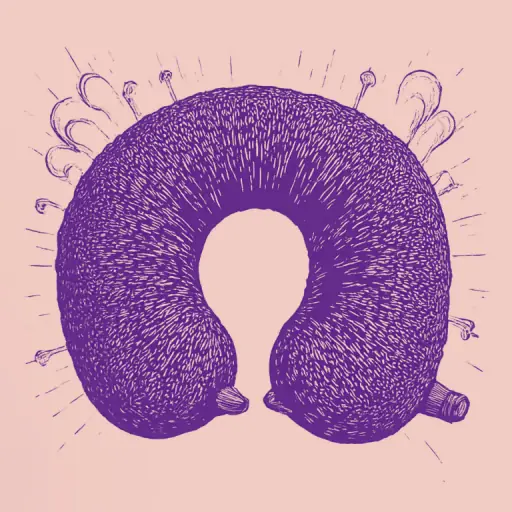
How to Inflate an Airplane Pillow Correctly and Quickly So It Doesn't Deflate
- 8 min read
- 57
A long-haul flight in economy class is a serious test for the neck and back. A compact inflatable neck pillow easily fits in carry-on luggage and can turn an uncomfortable seat into a cozy resting spot. However, in practice, passengers often face difficulties: the inflation valve is stiff and it's not possible to quickly inflate by mouth the new accessory, or the travel pillow treacherously deflates right during the flight, and the fully inflated inflatable headrest is almost about to burst when the cabin pressure changes.
In this guide, we will cover how to properly prepare a travel accessory or leg pillow for the plane for the flight, how to deal with temperamental valves, and why safety regulations prohibit inflating them during takeoff and landing.
Types of Travel Pillow Valves and Their Features
Comfort during the flight directly depends on how quickly and correctly you can prepare your inflatable headrest for use. The main element of any travel pillow, responsible for airtightness and ease of inflation, is its valve. There are several types of these closures, and understanding their construction will save you unnecessary effort and prevent damage to the accessory onboard.
How the Inflation Valve and Other Closure Types Work
Most classic travel pillows are equipped with an inflation valve (nipple). Inside it is a protective rubber barrier (diaphragm) that prevents air from escaping, even if the outer cap is open. To inflate such an inflatable headrest by mouth, you need to slightly press the base of the 'nipple' with your fingers or teeth—this will open the diaphragm slightly to allow air passage.
Modern and more expensive models often use wide valves with a reverse flap or built-in manual pumps. In wide valves, air is held by a silicone baffle, and to deflate instantly, you just need to press a button inside or completely pull out the stopper.
What to Do If a New Pillow Valve Has No Through Hole
Sometimes, after unpacking a new travel pillow, you find that air won't pass in at all. This is a common problem with budget models—a factory defect where the protective diaphragm inside the inflation valve remains completely sealed.
Before taking drastic measures, try pressing the base of the 'nipple' hard with your fingers or teeth—perhaps the silicone barrier simply stuck together during transport. If that doesn't help, you will need a regular toothpick, a straightened paperclip, or a sewing needle. Carefully insert the tool into the valve opening and gently press to puncture the thin factory membrane. Be extremely careful not to puncture the outer wall of the air chamber. After this, the inflatable neck pillow will be easy to inflate by mouth.
Step-by-Step Guide: How to Quickly Inflate a Pillow by Mouth
Inflating a travel headrest by mouth is the most accessible way to prepare the accessory for use right in the airplane seat. You won't need pumps or extra devices that just take up space in your carry-on. However, to avoid wasting energy and feeling dizzy during this process, it is important to follow a simple sequence of actions and know a few physiological tricks.
Should You Clamp the Pillow Nipple While Inflating
Yes, it is absolutely necessary to clamp the travel pillow's 'nipple' (inflation valve) when inflating by mouth. Most classic models have a simple protective valve inside—a rubber barrier that prevents immediate air release. If you just blow into the opening, the air will meet resistance and won't get inside.
To inflate such an inflatable headrest quickly and without extra effort, follow this simple algorithm:
- Slightly squeeze the valve base with your fingers or gently pinch it with your teeth right at the seam with the pillow material. This will open the internal diaphragm.
- Take a deep exhale, directing the air freely inside.
- Release the valve before removing your mouth to lock the air inside.
Without this simple trick, it is almost impossible to inflate a classic travel accessory.
Life Hacks for Quick Inflation Without Extra Effort
To inflate a travel headrest in a couple of seconds and avoid dizziness, use proven travel life hacks:
- Warm the Valve: If the pillow is new or has been in cold carry-on luggage for a long time, rub the plastic 'nipple' between your palms for 10–15 seconds. Warm plastic becomes elastic, and the internal protective membrane opens much more easily.
- Breathe with Your Diaphragm: Take deep breaths into your stomach, not your chest. A strong but smooth exhale allows you to fully fill a standard inflatable neck pillow in just 3–4 breaths.
- Smooth Out Wrinkles: Before inflating the accessory by mouth, fully unfold it. If the item is twisted, the internal resistance of the walls will hinder air passage.
The Effect of Cabin Pressure on Inflatable Accessories
Flight physics dictates its own rules, which even experienced travelers often forget. When the plane gains altitude, the atmospheric pressure in the cabin decreases, and the air inside any sealed accessory begins to expand. If you ignore this factor, your favorite travel headrest or inflatable leg pillow can turn into a rigid 'rock' or even burst at the seams during the flight.
Why You Shouldn't Inflate the Pillow to 100% Before Takeoff
The main mistake of novice travelers is inflating the travel pillow to the maximum in the airport terminal or immediately after sitting down in the seat. Gaining altitude is accompanied by a drop in atmospheric pressure in the airplane cabin. According to the laws of physics, the air inside a sealed inflatable headrest begins to expand.
If you inflate the accessory to 100% on the ground, during the flight it will turn into a rigid, 'rock-like' roll that will press heavily on your neck and might simply burst at the seams.
The Golden Rule of the Experienced Tourist:
- Before takeoff, fill the pillow with air to a maximum of 60–70% (it should remain soft and pliable);
- It is better to adjust the elasticity to the ideal state after the airliner has reached cruising altitude.
Rules for Using Leg Pillows During Altitude Gain
Using an inflatable leg pillow on the plane requires even greater caution than with a headrest. Due to the large volume of air, the pressure difference during altitude gain can simply tear the accessory at the seams.
Key Safety Rules:
- Only After Altitude Gain: It is strictly forbidden to inflate and place a leg pillow during takeoff and landing. It must not block evacuation routes or interfere with other passengers.
- Under-inflate Air: Inflate the pouf to a maximum of 70–80%. The remaining free volume will compensate for the air expansion as cabin pressure changes.
What to Do If the Pillow Deflates, and Airline Rules
Even the highest quality travel pillow can present an unpleasant surprise by starting to slowly deflate in the middle of a night flight. This not only deprives you of comfort but also forces you to constantly focus on pumping air. To restore a good night's sleep, it is important to quickly determine the cause of the leak and fix it without violating strict aviation safety rules. Let's find out how to save your inflatable headrest in flight and what airline regulations require.
How to Find and Fix an Air Leak in the Valve
If the travel pillow starts deflating during the flight, the problem is most often in the inflation valve. To quickly find a leak onboard, apply a little water or a damp wipe to the valve and gently squeeze the inflatable headrest—the appearance of bubbles will indicate the defect location.
How to Fix the Problem On Site:
- Cleaning: Often, the valve does not close tightly due to dust particles or microfibers getting in. Thoroughly wipe it with a damp cloth.
- Sealing: If air is escaping through a seam, a piece of adhesive bandage or tape from a travel first-aid kit can temporarily seal it.
- Deep Seating: Ensure that the protective cap is fully and firmly pushed into the body of the pillow.
When It Is Permitted by Safety Rules to Inflate Accessories Onboard
Aviation safety rules strictly regulate the use of inflatable accessories onboard:
- Takeoff and Landing: It is strictly forbidden to use large accessories, such as a leg pillow for the plane or children's mattresses, during these phases of flight. In case of an emergency, they will block passage. They must be completely deflated and stored in carry-on luggage.
- Cruising Flight: Inflating a neck pillow or headrest is recommended only after reaching altitude, once the 'Fasten Seatbelt' sign is off.
Remember that flight attendants have the right to ask you to remove any inflatable accessory if it obstructs free access to the aisle.
Conclusion
A properly prepared travel pillow is the key to comfortable sleep during the flight and feeling great after landing. Remember the simple rules: do not inflate the accessory completely before takeoff, account for cabin pressure changes, and take good care of the inflation valve. A high-quality inflatable headrest that easily fits in carry-on luggage will make even the longest flight pleasant. Have a safe journey and a soft landing!