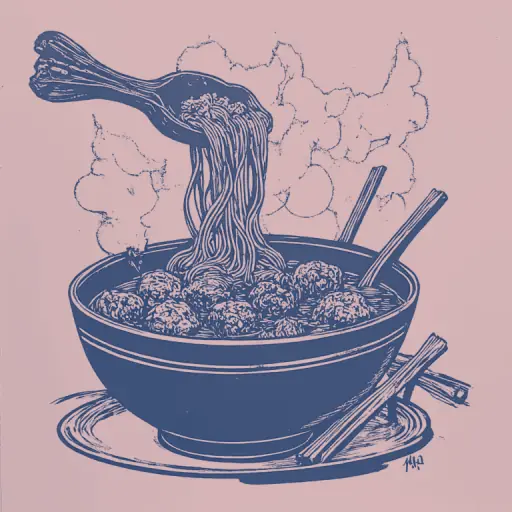
How to Make Homemade Lamb Lagman According to a Classic Recipe
- 15 min read
- 65
Lagman is not just a hearty Central Asian dish; it is a true culinary legend that combines the warming comfort of a rich soup with the substance of a main course. The heart of classic lagman is rightfully considered to be succulent lamb, which, during slow simmering, imparts all its deep flavor and unique aroma to the broth.
Preparing homemade lagman is a mesmerizing ritual. When the cauldron is heating up in the kitchen and a spicy scent of cumin, coriander, and garlic fills the house, the whole family instantly gathers in anticipation of the meal. The main charm of this masterpiece lies in the contrast of textures: the resilient, hand-pulled homemade noodles connect with the thick, rich vegetable sauce—vadzha.
By making lamb lagman with your own hands, you are not just feeding your loved ones a hearty meal; you are giving them an unforgettable gastronomic journey. This dish is guaranteed to be the star of your table!
I. Preparing Ingredients and Dish Basics: Your Checklist for Perfect Lagman
The secret to flawless Central Asian lagman lies in the harmony of textures and the balance of flavors. For the dish to be truly authentic, ingredient preparation must become a conscious ritual. There are no minor details here: every component, from a succulent piece of meat to the finest vegetable julienne, contributes to the future symphony of aromas.
Before lighting the fire under the cauldron, we will gather our culinary arsenal. The correct choice of base will determine the richness of the sauce (vadzha), and precise cutting will allow the vegetables to retain their shape during simmering, releasing maximum juice into the broth. Let's break down how to prepare these basic elements for a perfect start.
1. Choosing and Preparing the Meat (Answer to the question: Which cut of lamb is best to choose and how to prepare it)
The foundation of amazing lagman is the correctly chosen meat. For the classic Central Asian dish, lamb is ideal. To ensure the sauce (vadzha) is rich and aromatic, choose the following cuts:
- Shoulder or neck — contain a moderate amount of fat and connective tissue, which keeps the meat juicy and tender during simmering.
- Hind leg (shank) — an excellent option if you prefer leaner meat.
- Ribs or shank — be sure to add some meat on the bone. It is the bones that give that deep, rich broth when fried.
Meat Preparation:
- Thoroughly wash the lamb and pat dry with paper towels.
- Trim the piece of tough tendons and excess membranes. Do not cut off all the fat—it is necessary for juiciness.
- Cut the meat into small cubes (about 1.5–2 cm) or thin strips across the grain.
- Separate the bones and set them aside—they will go into the cauldron first to create the aromatic base.
2. Preparing the Vegetable Base (How to properly shred and process onion, pepper, radish, and other vegetables)
The secret to the perfect vadzha (the vegetable-meat base of lagman) lies in uniform cutting. All vegetables must be cut into neat julienne strips or small cubes, proportionate to the meat pieces. This ensures they cook simultaneously and that the dish looks aesthetically pleasing.
- Green radish (Margelan radish): Peel and cut into thin julienne strips. If the radish is excessively bitter, soak it in cold, salted water for 10 minutes, then drain in a colander.
- Bell pepper: Use colorful fruits for vibrancy. Remove seeds and membranes, and cut into medium-thickness strips.
- Onion: Slice into thin half-rings. It should almost dissolve into the sauce, giving it its sweetness.
- Carrot: Cut exclusively by hand into thin julienne strips. Using a grater is forbidden, as it will turn the carrot into mush during simmering.
- Tomatoes: Blanch in boiling water, peel, and cut into cubes. They will give the sauce the necessary acidity and juiciness.
After preparing the vegetable base, place the ingredients in separate bowls—they will be added to the cauldron strictly in sequence.
II. The Simmering Stage: Perfect Broth and Rich Aroma
Once all ingredients are prepared and placed in bowls, the real culinary magic begins. Preparing the sauce (vadzha) is the heart of lagman. It is at this stage that the depth of flavor, the density of the broth, and that unique aroma that will draw everyone in the house to the kitchen are established. For this, we need heavy, thick-bottomed cookware—ideally a cast-iron cauldron on the stove or a deep saucepan capable of maintaining a stable, high heat.
The secret to the perfect vadzha lies in the strict sequence and temperature control. We are not just boiling meat with vegetables; we are gradually unlocking the potential of each product, causing their juices to caramelize and merge into a single harmony. Let's break down step-by-step how to turn succulent lamb and fresh vegetables into a rich, thick, and incredibly aromatic sauce.
1. Searing and Sautéing (Step-by-step instructions for searing lamb and onion for depth of flavor)
For creating the deep, rich flavor of the lagman base—the vadzha—the correct sequence and temperature control of searing are crucial.
- Heating the cauldron. Place the cauldron on the stove over high heat. Heat 3–4 tablespoons of vegetable oil or render finely chopped suet (remove the scraps later). The fat should be almost smoking.
- Searing the lamb. Carefully lower the paper-towel-dried pieces of lamb into the hot oil. Sear the meat over high heat, without reducing the flame, for 7–10 minutes. Our goal is to quickly 'seal' the juices inside, achieving an appetizing browned crust, rather than stewing the meat in its own juices.
- Sautéing the onion. As soon as the lamb is covered with a golden crust, add the half-ring sliced onion. Stir constantly, frying it with the meat for another 5–7 minutes. The onion should become soft, translucent, and take on a caramelized hue—this is what will give the future broth a beautiful amber color and a sweet aroma.
2. Adding Vegetables and Spices (Secrets to blending aromas: using radish, bell pepper, garlic, and cumin)
Add the julienned green radish and carrots to the seared meat and onion. It is the green radish that gives the vadzha its characteristic piquant sharpness and juiciness. Sauté the vegetables for 5–7 minutes over medium heat, stirring constantly.
Next, add the bell pepper and ripe tomatoes to the cauldron. This is where the magic of aromas happens. Add the key spices:
- Cumin: Be sure to crush a pinch between your fingers before adding to release the essential oils.
- Coriander: Ground or lightly crushed, it perfectly enhances the flavor of the lamb.
- Garlic: Finely chop 3–4 cloves and add half now, and the second half at the very end of the simmering process.
Pour boiling water into the cauldron until the water completely covers the vegetables and meat. Reduce the heat to a minimum, cover with a lid, and let it simmer for 30–40 minutes. The vadzha should simmer slowly, absorbing the juices.
III. Making Noodles Yourself: A Complete Guide to Kneading and Stretching
Making homemade noodles is the true heart of classic Lagman, transforming a hearty Asian dish into an authentic culinary masterpiece. It is the elastic, hand-made thread of dough that distinguishes traditional Central Asian Lagman from a regular soup with store-bought pasta. The process requires patience and an understanding of dough physics, but the result will exceed all expectations.
In this section, we will cover how to turn simple ingredients into an elastic base that will not break when stretched. You will learn the secrets to proper kneading and master the mesmerizing technique of pulling the strands, which gives the noodles their unique texture.
1. Dough Preparation: Ingredients and Kneading Process (Ensuring the Correct Dough Consistency)
Making real homemade noodles for Lagman begins with proper kneading. We need a dense yet elastic dough that can withstand subsequent stretching without tearing.
Ingredients for the perfect dough:
- Wheat flour (high-grade with high protein/gluten) — 500 g
- Water (room temperature) — 200–220 ml
- Chicken egg — 1 pc.
- Salt — 1 tsp.
Step-by-step kneading process:
- Preparing the liquid base: Dissolve the salt in the water, add the egg, and lightly whisk the mixture with a fork.
- Combining components: Sift the flour into a mound in a deep bowl, make a well in the center, and pour in the liquid mixture.
- Initial kneading: Start gathering the flour from the edges toward the center. The dough should become very stiff. If the mass crumbles, add just one tablespoon of water.
- Intensive kneading: Transfer the mass to a table and knead thoroughly by hand for at least 10–15 minutes. The dough must become absolutely uniform, smooth, and elastic.
- Resting: Round the dough, wrap it in plastic wrap, and leave it at room temperature for 30–40 minutes. This step is critical for relaxing the gluten.
2. Stretching Technique: From Ball to Perfect Strand (Detailed Step-by-Step Guide to Rolling, Shaping, and Pulling Noodles)
Pulling noodles is a true culinary art that requires patience and precision. Follow this step-by-step guide to achieve perfect elastic strands:
- Dividing and Shaping: Divide the rested dough into small pieces the size of a large walnut. Roll a smooth ball from each piece, and then roll it out with your palms on a work surface into a rope about 1–1.5 cm thick.
- Oiling: Generously brush each rope with vegetable oil. Arrange them in a spiral on a flat plate, cover with plastic wrap, and let them 'rest' for another 10–15 minutes. This makes the gluten maximally pliable.
- Initial Pulling: Take one rope by its ends and begin to gently stretch it from the center to the edges, passing it between your fingers. It should become about twice as thin.
- Final Pulling and Tapping: Gather the noodles into loose loops on the fingers of both hands. Gently tap the middle section of the noodles against a wooden cutting board while smoothly spreading your hands apart. Under its own weight and from the vibration, the dough will stretch into the thinnest, strongest strands.
Immediately place the finished noodles on a flour-dusted surface before cooking.
IV. Assembly and Final Cooking: Combining All Elements
We are on the home stretch: the aromatic meat vadzha is simmering in the cauldron, and the tender homemade noodles are waiting their turn. Assembling Lagman is a true culinary art that requires precision and correct timing. To ensure the dish retains its perfect texture and the noodles do not become mushy, all final processes must happen almost simultaneously.
In this part, we will combine all the prepared elements into a single masterpiece of Central Asian cuisine. We must coordinate the cooking of the dough and the serving of the rich meat sauce so that every guest receives a piping hot, incredibly aromatic portion of real homemade Lagman.
1. Cooking Components: Parallel Process (How to Cook Noodles and Broth at the Optimal Time)
The secret to perfect Lagman is impeccable timing. The homemade noodles and the rich meat sauce (vadzha) must meet hot, so their preparation is completed in parallel.
Step 1. Preparing the Vadzha
While you are finishing the meat base in the cauldron, reduce the heat to a minimum. The vadzha should simmer barely, maintaining temperature without overcooking the vegetables. The bell peppers and radishes should remain slightly crunchy.
Step 2. Cooking Homemade Noodles
- Take a large pot (at least 4–5 liters), pour in water, and salt generously (about 1 tbsp of salt per liter). The noodles need space, otherwise, they will stick together.
- Bring the water to a rolling boil.
- Drop the freshly pulled noodles into the boiling water. Gently stir with a wooden spoon or chopsticks to separate the strands.
- Cook for exactly 2–3 minutes after they float. Homemade dough cooks instantly and must remain elastic.
Step 3. Finishing
Drain the noodles in a colander. To prevent them from sticking, rinse them with hot water or drizzle with a few drops of vegetable oil and shake.
Never leave the noodles in water! Now everything is ready for assembly.
2. Combining Ingredients: Step-by-Step Lagman Assembly (The Process of Combining Broth, Vegetables, and Noodles in the Dish)
Proper Lagman assembly is an art that determines not only the aesthetic presentation but also the flavor balance in every spoonful. To let the dish shine, follow a strict sequence of steps:
- Preparing the Serving Ware. Lagman is traditionally served in deep bowls—kosha. Before assembly, rinse them with boiling water to ensure that the cold clay or porcelain does not draw heat away from the hot ingredients.
- Reviving the Noodles. If the pulled homemade noodles have cooled, restore their elasticity. Briefly dip a portion of the noodles in the boiling water in the colander for only 10–15 seconds, let the water drain completely, and place them on the bottom of a warm kosa. The noodles should fill the bowl about half to two-thirds full.
- Adding the Thick Base. On top of the noodles, place a generous portion of the thick vadzha—juicy pieces of braised lamb and bright vegetables (bell peppers, radish, tomatoes).
- Pouring the Aromatic Broth. Carefully ladle the rich, hot broth from the bottom of the cauldron and pour it over the noodles and vegetables so that the liquid slightly covers the ingredients.
The dish is ready for the final touch—garnishing with fresh herbs and garlic.
V. Serving and Variations: From First Course to Culinary Masterpiece
When the hot noodles and aromatic vadzha finally combine in a deep bowl, the most creative stage begins. Lagman is not just a hearty meal; it is a culinary presentation where every detail matters: from the serving temperature to the final garnish of fresh herbs. Proper presentation can transform an ordinary home gathering into an atmospheric Eastern dinner.
Furthermore, the classic recipe is not a rigid dogma, but a living tradition. Depending on the season, the availability of rare ingredients, or kitchen equipment, you can always adapt the dish to your capabilities while preserving its unique character and rich flavor.
1. The Art of Presentation: Serving Tips and Herbs (How to Serve Lagman: On a Noodle Bed, Tips for Garnishing)
Serving lagman is a true ritual that transforms a hearty home-cooked meal into a festive treat. Traditionally, lagman is served in deep individual bowls, or kasas. This allows the heat to be retained for as long as possible and lets the rich aroma of all components unfold.
The "Bed" Rule:
Never mix the noodles and the sauce (vadzha) in a large pot in advance. Assembly happens immediately before serving:
- Rinse the cooked homemade noodles with hot water or broth to warm them up, and arrange them on the bottom of the bowl in a neat mound.
- Generously top with pieces of tender lamb and stewed vegetables.
- Pour the rich broth over the dish so that it almost completely covers the noodles.
The Final Touch — Herbs and Toppings:
- Fresh Herbs: Finely chop cilantro, dill, and green onions. Cilantro is an essential element of Central Asian cuisine, perfectly enhancing the flavor of the lamb. Optionally, add a little purple basil (rahdan).
- Garlic Accent: Mix minced garlic with a pinch of hot paprika and sprinkle it over the dish.
- Accompaniments: Serve the lagman piping hot, offering guests table vinegar or hot lazu spice in separate bowls.
2. Recipe Adaptation Tips (What to Substitute for Green Radish? Options: Multi-cooker vs. Cauldron)
Moving from classic presentation to practical culinary routines, it is important to know how to adapt the recipe to the ingredients and cooking equipment you have available.
What to Substitute for Green Radish?
Green (Margelan) radish gives the vadzha its characteristic juiciness and light piquancy. If it is not available, use the following alternatives:
- Daikon — the most accessible and texturally similar option, possessing a milder flavor.
- Kohlrabi — will retain a pleasant crunch and add a light sweet note.
- Black or White Radish — before adding, soak the sliced radish in cold water for 10–15 minutes to remove excessive sharpness and bitterness.
Cauldron vs. Multi-cooker: Which to Choose?
- Traditional Cauldron is indispensable for achieving authentic flavor. The high temperature and thick cast iron walls allow the juices inside the lamb to seal quickly and the vegetables to sauté correctly while retaining their texture.
- Multi-cooker significantly simplifies the process. The "Stew" mode guarantees that even tougher lamb becomes tender and melts in your mouth. To prevent the vegetables from turning into mush, add them 15–20 minutes before the program ends.
Conclusion: Useful Tips and FAQs (Storage, Leftovers, Dish Variation)
Making homemade lamb lagman is a true culinary art that brings loved ones together around a table. To make your cooking experience as successful as possible, pay attention to several important nuances of storing and serving the finished dish.
How to Store Lagman Properly?
The main rule is never to combine the noodles and the meat sauce (vadzha) in advance unless you plan to eat it all at once.
- Noodles: Brush the boiled noodles with a small amount of vegetable oil, transfer them to an airtight container, and store them in the refrigerator for 2–3 days. Before serving, simply rinse them with boiling water.
- Vadzha: The meat sauce with vegetables stores well in the refrigerator for 3–4 days. Moreover, on the second day, it steeps and becomes even more aromatic and rich.
Frequently Asked Questions (FAQ):
- Can lagman be frozen? You can freeze the prepared vadzha (freezer storage life — up to 2 months). Homemade noodles are not recommended for freezing, as they lose their elastic texture after thawing.
- Is lagman a first or second course? It is a versatile dish. By adjusting the amount of broth during assembly, you can serve it as a thick, rich soup or as a hearty second course with plenty of sauce.
Experiment with spices, hone your noodle pulling skill, and may your homemade lagman always turn out perfect!