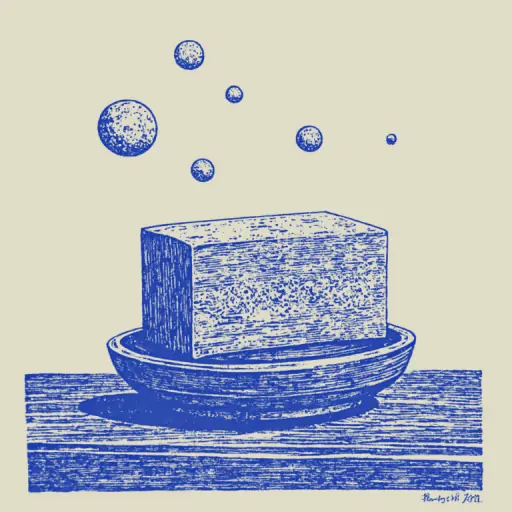
How to Make Natural Soap from Fat Following Instructions and Recipe
- 14 min read
- 67
Soap making from scratch is not just an engaging hobby, but also a practical way to maintain an ecological, zero-waste household. The use of animal fats, such as pork lard or beef tallow, dates back to ancient times. Today, this method is experiencing a new peak in popularity among zero-waste advocates, dacha owners, and farmers.
Animal fats are an accessible and budget-friendly raw material that gives the finished soap excellent hardness, a soft creamy lather, and great conditioning properties. Unlike expensive exotic oils, lard often remains in excess after culinary processing, and its useful utilization helps save significantly.
In this guide, we will thoroughly examine how to turn ordinary fat into gentle and safe soap. You will learn how to properly prepare and clean the raw material from foreign odors, how to calculate the proportions of alkali (sodium hydroxide) and water, and master the step-by-step technology of cold process soap making at home.
Preparing Raw Materials and Cleaning Fat at Home
The quality of homemade soap directly depends on the purity of the initial raw material. Animal fat—whether pork lard or beef tallow—serves as an excellent base for hard, conditioning soap with a creamy lather. However, culinary scraps, fat trimmings, or uncleaned fat often contain impurities, salt, and a specific odor that can spoil the finished batch.
Before calculating the alkali and mixing the ingredients, the raw material must be properly prepared. The cleaning process does not require complex equipment, but it does require care. Let's look at how to turn ordinary fat surpluses into an ideal, neutral base for soap making.
How to Properly Melt and Clean Pork or Beef Fat from Impurities and Odor
Quality cleaning (refining) is the key to ensuring that the finished soap does not have an unpleasant food odor. The best method for home use is wet rendering using salt and water.
Step-by-step cleaning algorithm:
- Preparation: Cut the raw beef fat or pork lard into small cubes or run it through a meat grinder. The smaller the fraction, the faster and more completely the lard will render.
- Boiling with Water: Place the raw material in a deep pot and cover it with water in a 1:1 ratio. Add regular table salt (1 tablespoon per 1 kg of fat)—it will help 'draw out' residual protein and blood.
- Simmering: Bring the mixture to a boil over low heat. Simmer for about 1–1.5 hours, stirring occasionally. The fat should melt completely, and the cracklings should turn golden.
- Filtering: Strain the hot mass through three layers of cheesecloth into a clean container, separating the solid residue.
- Cooling: Let the mixture cool, then place it in the refrigerator overnight. The fat will solidify on the surface as a dense white slab, and the dirty water with impurities will remain at the bottom.
- Final Processing: Remove the solidified fat disc and scrape off the loose bottom layer that was in contact with the water using a knife.
If the initial raw material had a strong odor, repeat the boiling procedure with clean water one more time. The resulting clean lard is ready for soap making.
Features of Using Old or Salted Lard for Soap Making
Old or salted lard is an excellent material for ecological household soap in the zero-waste concept, but such raw material requires mandatory preliminary treatment.
Working with salted lard
The excess salt in the fat interferes with the saponification process and can make the finished soap brittle and crumbly. To desalinate, perform the following steps:
- Melt the salted lard and mix it with an equal amount of clean water.
- Bring the mixture to a boil, boil for 10–15 minutes, and let it cool.
- After solidification, remove the top clean layer of fat, and drain the salty water from below. Repeat the process if necessary.
Using old (rancid) fat
Old fat has a high content of free fatty acids. Because of this, the reaction with alkali proceeds very quickly, and the soap mass can instantly harden (enter the 'trace' stage).
To neutralize the rancid odor, boil the fat with the addition of baking soda (1 teaspoon per 1 kg of fat) or activated charcoal, and then filter thoroughly. Soap made from such raw material is ideal for washing and cleaning, so the superfat (conditioning oils) in the recipe should be minimized (0–2%).
Safety Precautions and Equipment for Work
Once the animal fat is completely cleaned of impurities and free of foreign odors, the most critical stage begins—preparation for the chemical saponification process. Turning lard or beef tallow into gentle homemade soap is impossible without using sodium hydroxide (caustic soda). This active substance requires the utmost respect and caution.
Before starting calculations and mixing ingredients, you must transform your workspace into a safe mini-laboratory. The correct choice of cookware, tools, and personal protective equipment is not just a guarantee of comfortable work, but also a guarantee of your health. Let's look at how to protect yourself when working with alkali and what equipment you need to prepare in advance.
Safety Rules When Working with Caustic Soda (Alkali)
Working with caustic soda (sodium hydroxide) requires extreme concentration. It is a strong alkali capable of causing severe chemical burns upon direct contact.
Key safety rules when preparing the solution:
- 'Alkali into Water' Rule: Always pour dry sodium hydroxide crystals into the liquid (preferably use ice water or ice) in small portions. If you pour dry alkali into water, a vigorous reaction with boiling and splashing of dangerous chemicals will occur.
- Respiratory Protection: During the dissolution of the soda, significant heating and the release of pungent vapors occur. Work exclusively under a fume hood, outdoors, or by an open window, always wearing a respirator.
- Emergency Measures: If alkali gets on the skin, immediately rinse it with large amounts of cool running water. To neutralize splashes on work surfaces (but not on skin!), keep a weak solution of citric acid or white vinegar ready.
- Safe Environment: Remove food items from the work area. Completely exclude children and pets during the process.
Necessary Tools, Cookware, and Protective Gear
For safe and comfortable work, you will need to assemble a special set of equipment. It is strictly forbidden to use kitchen utensils that you will later use to prepare food.
Protective Gear:
- Goggles: Close-fitting construction or laboratory goggles for reliable eye protection against accidental splashes of alkaline solution.
- Respirator: Mask with protection against gases and aerosols (FFP2 or FFP3 class) to prevent inhaling caustic vapors when diluting soda.
- Gloves: Durable nitrile or thick household latex gloves.
- Clothing: A thick apron and long-sleeved clothing made of natural fabrics.
Utensils and Tools:
- Mixing Containers: Made of heat-resistant plastic (PP 5 marking), stainless steel, or heat-resistant glass. Aluminum cookware must not be used under any circumstances, as the alkali destroys this metal by releasing hydrogen.
- Scale: Accurate digital kitchen scale with a 0.1 g increment for weighing alkali and acids.
- Immersion Blender: An indispensable tool for quickly mixing fats with alkali to the trace stage. Dedicate a separate appliance for hobby use.
- Thermometer: Infrared (pyrometer) or digital immersion thermometer for monitoring phase temperatures.
- Spatulas and Molds: Silicone spatulas for cleaning the sides of the containers and silicone molds for pouring the finished mass.
Calculating Proportions and Formulating the Soap Recipe
Once the protective gear is ready and the tools are within reach, it is time for precise calculations. Soap making from lard is not just a craft; it is applied chemistry. To turn pork lard or beef fat into a soft, well-foaming soap, it is necessary to strictly adhere to the proportions. An excess of alkali will make the product dangerous for the skin, while a deficiency will prevent the mass from saponifying correctly.
To create a balanced bar with a pleasant texture and caring properties, we need accurate formulas. We will learn to determine the amount of water, calculate the correct percentage of superfat (free fats for skin softening), and use modern tools that will protect you from errors and help you create the perfect recipe.
How to Use a Soap Calculator for Calculating Alkali, Water, and Superfat
A soap calculator is an indispensable online tool that protects soap makers from chemical errors. Since every fat has its unique saponification value, calculating the exact amount of alkali by hand is extremely difficult.
To create a recipe, follow these steps:
- Select Alkali: For hard soap made from fat, choose sodium hydroxide (NaOH).
- Enter Fat Weight: Enter the exact weight of the prepared pork lard or beef fat in grams.
- Set Water: Set the water percentage in the range of 30–33% of the total oil weight.
- Determine Superfat: For a gentle toilet soap, set the superfat to 5–8% (these are free oils that will protect the skin from dryness). If you are making laundry soap, 1–3% is sufficient.
The calculator will automatically calculate the weight of caustic soda and water. Never round values "by eye"—accuracy to the tenths of a gram guarantees the safety of the finished product.
Basic Balanced Recipe for Homemade Soap from Lard or Tallow Fat
To create a soft, hard, and economical soap from scratch, the classic recipe based on pork lard or beef fat is ideal. Animal fats make the bar hard, durable, and provide a soft, creamy lather that is gentle on the skin.
Basic Toilet Soap Recipe (5% Superfat):
- Purified Fat (lard or tallow fat): 500 g
- Water (distilled): 165 g
- Sodium Hydroxide (NaOH): 67 g (for pork lard) or 68 g (for beef fat)
Basic Laundry Soap Recipe (1% Superfat):
- Purified Fat: 500 g
- Water: 165 g
- Sodium Hydroxide (NaOH): 70 g
This composition guarantees the production of snow-white soap without foreign odors. If you want to increase lathering, you can replace 10% of the fat with coconut oil, recalculating the alkali on the calculator.
Step-by-Step Instructions for Cold Process Soap Making
With precise calculations and prepared ingredients in hand, we move on to the most captivating stage—the direct creation of cold process soap. This method is valued by soap makers for the simplicity of process control and the ability to produce a delicate, caring product. Unlike the hot process, here we do not subject the mass to prolonged heat treatment, which allows us to maximally preserve the beneficial properties of the animal fat. The entire process requires extreme concentration, carefulness, and strict adherence to temperature control. We will sequentially go through all the steps: from safely combining the components to achieving a stable emulsion and pouring the finished mass into molds.
Preparing the Alkali Solution and Mixing It with the Prepared Fat
Preparing the alkali solution is the most critical stage, requiring strict adherence to safety procedures.
- Dissolving the Alkali. Weigh the ice-cold water and sodium hydroxide (caustic soda) on a precise scale. Remember the golden rule of soap making: always pour the alkali into the water, and never the reverse, to avoid instantaneous boiling and splashing. Do this in portions, stirring gently with a heat-resistant spatula. The solution will heat up significantly, so the container can be placed in an ice bath.
- Preparing the Fats. Melt the pork lard or beef fat until it is liquid. The optimal temperature for the fat phase during mixing is 38–43 °C.
- Combining Phases. Measure the temperature of both liquids with a non-contact thermometer—the difference between them should not exceed 2–3 degrees. Slowly pour the alkali solution into the prepared fat through a fine plastic or stainless steel sieve. This prevents undissolved caustic particles from entering the future soap. Gently stir the mass with a spoon before starting the blender.
Bringing the Soap Mass to Trace, Adding Additives, and Pouring into Molds
After combining the alkali solution and fats, the most critical stage begins—bringing the mass to 'trace.'
Take the immersion blender and lower it into the container at an angle to release excess air. Mix the mass in short bursts of 2–5 seconds, alternating with gentle stirring using the turned-off appliance. Animal fats, such as pork lard or beef fat, react quickly, so emulsification occurs dynamically. Trace is achieved when the stream dripping from the blender leaves a distinct mark on the soap batter surface that does not immediately sink.
As soon as a light trace appears, it is time to add additives:
- Superfat: conditioning oils (e.g., olive or shea butter) for skin softening.
- Fragrances: natural essential oils.
- Textural Components: ground coffee, oatmeal, or cosmetic clay.
Quickly stir the mass with a spatula until homogeneous and pour it into the prepared silicone or wooden molds. Gently tap the mold on the table several times to release air bubbles and level the surface.
Curing Stage and Soap Storage Rules
After the soap batter has been carefully poured into the molds and wrapped to undergo the gel stage, one of the most exciting and patient-demanding stages begins—curing. Unlike industrial soap, natural product made from pork lard or beef tallow, prepared using the cold process, is not ready for use immediately after hardening. Hidden chemical processes continue inside the bar: the saponification reaction completes, excess moisture evaporates, and the soap's structure becomes denser and softer for the skin. Proper management of this stage directly affects the quality of the final product. If rushed, the soap will quickly become soggy in the soap dish or, more dangerously, may cause skin irritation. Let's examine how to properly cure this period and create optimal storage conditions for your homemade masterpiece.
How long should rendered animal fat soap cure
Curing soap made using the cold process from animal fat (pork lard or beef tallow) is a mandatory stage that lasts from 4 to 6 weeks. Although animal fats provide the soap with quick hardness, the chemical saponification reaction and the evaporation of excess moisture require time.
Here are the main guidelines for curing time depending on the method of cooking:
- Cold process: 4–6 weeks. During this time, the free alkali (sodium hydroxide) is completely neutralized, and the soap structure becomes soft for the skin and produces a dense, creamy lather.
- Hot process: 1–2 weeks. This soap is ready for use immediately after cooling, but a short drying period is necessary so that the bar becomes harder and does not wash away too quickly.
If you used old or salted lard, increase the curing time for cold process soap to 6–8 weeks. This guarantees the product's softness and the complete completion of all chemical processes.
How to properly store homemade soap and monitor its pH level
Proper storage and pH control are the final, yet critically important, steps in making soap from animal fat. Since pork lard and beef fat are prone to rancidity in high humidity, cured bars must be protected from moisture.
Storage Rules:
- Ventilation: Store the soap in a dry, cool, and well-ventilated place. Avoid airtight plastic containers and cling film—the soap must "breathe." It is best to wrap the bars in parchment paper or place them in a cardboard box.
- Light Protection: Direct sunlight accelerates fat oxidation, so keep your stock in a dark cupboard.
pH Level Control:
Before first use, be sure to check the soap's safety:
- Indicator Strips (pH Test): Wet the bar with water, rub it until foam forms, and apply a litmus strip. Safe, cured handmade soap has a pH level between 8–10.
- Phenolphthalein Test: Drop a drop of alcoholic phenolphthalein solution onto a fresh cut of the bar. If the soap turns bright magenta, the free alkali has not yet been neutralized, and it cannot be used. The absence of color confirms the product's safety.
Conclusion
Making natural soap from animal fat is not just an enjoyable creative hobby, but also a practical step toward an ecological, zero-waste lifestyle. Using pork lard or beef tallow allows you to utilize excess farm products beneficially, turning them into a soft, delicate skin care product or a high-quality household soap for washing and cleaning.
By mastering the basic raw material purification technology, precise ratio calculation using a soap calculator, and the rules for safe handling of caustic soda, you will discover limitless creative potential. You can enrich the soap batter with nourishing oils, natural scrubs like ground coffee or oatmeal, and create unique aromatic compositions using essential oils.
Homemade soap making from scratch brings us back to the origins of artisanal craftsmanship, combining ancient traditions with modern safety standards. May every bar you create delight you with its delicate creamy lather, impeccable quality, and the awareness that this beneficial product was made by your own hands.