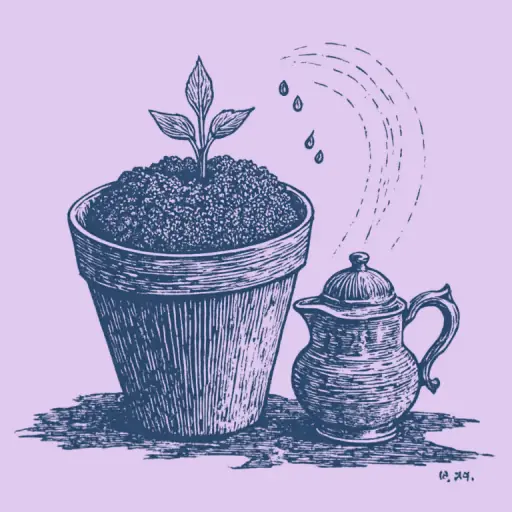
How to Plant a Ficus from Seeds Indoors for Healthy Germination
- 15 min read
- 58
Growing Ficus from Seeds Indoors is an exciting challenge for every dedicated plant enthusiast. While most plant lovers prefer simple cuttings, true connoisseurs find special pleasure in watching a majestic Benjamin, Sacred, or Microcarpa ficus emerge from a tiny seed.
This method requires patience and care, as seed germination directly depends on maintaining the correct temperature, humidity, and proper care. However, a tree grown from scratch possesses a unique energy, increased adaptability to your apartment's microclimate, and is ideally suited for bonsai formation.
In this practical guide, we will detail every step: from choosing a quality peat substrate and preparing the seeds to creating the ideal greenhouse and transplanting young seedlings. You will learn all the secrets to avoiding mold and achieving healthy, strong sprouts.
Preparation for Planting: Choosing Time and Seeds
Successful ficus cultivation from seeds begins long before the first pot is filled with soil. This delicate process requires strategic planning from the gardener, as the viability of future seedlings directly depends on external factors and the quality of the source material. Mistakes at the start—such as sowing in an unsuitable season or buying old seeds—can negate all subsequent efforts in greenhouse care.
To minimize risks and ensure maximum germination, it is necessary to synchronize planting with the natural biological rhythms of plants and approach the selection of planting material carefully. Let's examine which period of the year offers the highest chance of success and how to correctly navigate the diversity of ficus species when purchasing seeds.
Favorable Time of Year for Growing Ficus Indoors
Choosing the right time to sow is one of the main secrets to successfully growing ficus from seeds. The ideal period to start this process is early spring (from late February to April).
During this time of year, the natural biological rhythms of plants begin, and the increasing daylight hours help young seedlings develop actively. Spring sun provides soft, diffused light that stimulates photosynthesis without the risk of scorching delicate sprouts.
If you plan to sow in other seasons, it is important to consider the following features:
- Summer: Sowing is possible, but it requires constant humidity control. On hot days, the substrate in the greenhouse can dry out in a matter of hours, which will kill the germinating seeds.
- Autumn and Winter: The most difficult period. Without using powerful grow lights for supplemental lighting and setting up artificial bottom heating, seedlings will quickly stretch, weaken, and die from lack of sunlight.
Criteria for Choosing Quality Planting Material and Ficus Species
The success of growing ficus directly depends on the quality of the seeds. The main criterion when purchasing is freshness. Ficus seeds quickly lose viability, so always check the packaging date: the ideal option is a harvest from the current or last year. Purchase planting material only from reputable producers in specialized garden centers.
The following species are best suited for indoor growing from seeds:
- Benjamin Ficus (Ficus benjamina) — a classic choice. Seedlings develop actively, and the flexible shoots of young plants are excellent for subsequent trunk weaving.
- Sacred Ficus (Ficus religiosa) — attracts attention with large, heart-shaped leaves featuring an elegant 'dripping' tip. It has good germination energy.
- Microcarpa Ficus (Ficus microcarpa) — ideal for creating miniature bonsai trees. Over time, characteristic thickened roots form from the seeds.
By choosing high-quality seeds of the appropriate species, you can move on to preparing the necessary tools and substrate.
Equipment and Soil Mixture Preparation
Successful germination of ficus seeds directly depends on the comfortable conditions you create for them right from the start. Even the highest quality planting material will die if placed in heavy, unbreathable soil or in a container without proper air circulation. This is why preparing the correct equipment and substrate is the foundation that determines the germination rate.
To create the ideal microenvironment, we will need not only high-quality components for the soil mixture but also properly selected planting containers and delicate watering tools. Let's detail how to prepare this 'birth home' for future seedlings to minimize the risks of soil acidification and mold formation.
Soil Requirements: Creating the Ideal Peat Substrate
For the successful germination of ficus seeds (whether Benjamin, Sacred, or Microcarpa), a maximally light, loose, and breathable substrate is required. Heavy garden soil will kill delicate sprouts, so a high-quality peat substrate serves as the ideal base. It retains moisture well but does not allow it to stagnate around the roots.
Recipe for the Ideal Sowing Soil Mixture:
- Sphagnum Peat Moss — 2 parts (ensures looseness and optimal slightly acidic pH of 5.5–6.5);
- Leafy Soil (pre-sifted) — 1 part (source of light nutrients);
- Perlite or coarse sand — 1 part (necessary for ideal aeration and preventing compaction).
Before use, the prepared mixture must be disinfected to protect future seedlings from mold and fungal diseases. To do this, bake the substrate in an oven at 80–90 °C for 30 minutes or thoroughly pour it with a Phytosporin solution. Clean, moderately moist soil guarantees high seed germination.
Choosing Containers with Drainage Holes and Watering Tools
For successful ficus seed germination, choosing the right container is crucial. You will need a wide, shallow plastic container or a special seedling tray about 5–7 cm high. Using deep pots at the sowing stage is risky: excess soil that has not been utilized by roots quickly acidifies, which is detrimental to delicate sprouts.
The main requirement for the planting tray is the presence of numerous drainage holes at the bottom. Ficus plants are extremely sensitive to waterlogging, which triggers mold and seed rot. Be sure to place a thin layer of fine expanded clay or perlite (about 1 cm) at the bottom of the container to drain excess water.
To gently moisten the substrate, prepare the following tools:
- Fine mist sprayer — the main tool for watering. It allows for even irrigation of the soil without washing away or burying the small seeds.
- Medical syringe (without needle) or pipette — useful for careful spot watering at the root level when the first sprouts appear and water droplets on the leaves become undesirable.
This equipment will help maintain the optimal humidity balance inside the future greenhouse without the risk of overwatering.
Step-by-Step Guide to Sowing Ficus Seeds
Once the ideal peat substrate is mixed, and the containers with drainage holes are disinfected and filled, the most exciting moment arrives—the actual planting. Growing ficus from seed requires surgical precision, as the fine planting material can easily be lost at the initial stage.
The success of germination depends on the correct sequence of actions. To awaken the life force of Benjamin or sacred ficus seeds, it is necessary to strictly follow the technology for their preparation and embedding in the soil. Let's break down step-by-step how to properly prepare the seeds for sowing and distribute them in the mini-greenhouse to achieve maximum germination rate.
Pre-soaking Seeds in Growth Stimulants (Epin, Circone)
Ficus seeds (especially popular varieties like Benjamin or sacred ficus) have a hard coat, which can cause their natural germination to be delayed for months. To increase the germination rate and awaken the embryo's life force, an obligatory soaking in a growth stimulant solution is performed before sowing.
Two proven preparations are ideal for this procedure:
- Epin-Extra — a powerful adaptogen. The solution is prepared by calculating 1–2 drops of the preparation per 100 ml of lukewarm (about +30 °C) settled water. The seeds are soaked for 12–18 hours.
- Circone — an effective germination stimulant. It is sufficient to dissolve 1 drop of the agent in 150 ml of water. The soaking time for the seeds is 8–12 hours.
The soaking technology is simple: wrap the seeds in a moist cotton pad or gauze, thoroughly soaked in the prepared solution, and place them in a warm place (+22...25 °C). Make sure the fabric does not dry out. Immediately after the procedure is finished, the seeds are ready for sowing.
Seed Distribution Rules: Should They Be Covered with Soil?
After the seeds have absorbed moisture, the most responsible stage begins—their placement on the soil. The main mistake of beginners at this stage is burying them too deeply in the soil.
Should ficus seeds be covered with soil?
The answer is categorical: no, ficus seeds (especially the popular Benjamin ficus) should not be covered with a layer of soil. The seeds of most ficus species are light-sensitive—for successful awakening and high germination, they vitally need scattered light. If they are covered even with a half-centimeter layer of soil, they will simply rot in the dark.
The correct distribution algorithm is as follows:
- Marking: Using a toothpick or tweezers, carefully spread the moist seeds on the surface of the moist peat substrate at a distance of 1.5–2 cm from each other.
- Fixing: Gently press each seed to the soil with the flat side of a spoon or a clean finger. This ensures the necessary contact with the moist soil but keeps the seeds in the light.
- Moistening: Carefully spray the sowing with a fine mist sprayer to finally fix them in place, preventing them from sinking or shifting.
Creating Conditions for Germination and Greenhouse Care
After the ficus seeds are carefully spread on the surface of the moist substrate, the most responsible stage begins—creating a stable microclimate. Ordinary room conditions are not suitable for delicate tropical seedlings, so constructing a mini-greenhouse becomes an essential step.
Inside this closed space, a delicate balance of temperature, humidity, and light must be maintained. Any sharp fluctuation in parameters or stagnant air can destroy the nascent life, so caring for the improvised greenhouse will require your daily attention and care.
Ensuring Heat and Light: Organizing Bottom Heating and Scattered Lighting
For ficus seeds to germinate successfully, they need to recreate the conditions of a humid tropics. The key factor here is stable heat. The optimal temperature for the germination of most species, including Benjamin ficus, is +22…+25 °C.
Ordinary room heat is often insufficient, especially if the container is on a windowsill. The best solution is to organize bottom heating. This can be done using:
- A special electric mat for seedlings.
- Placing the greenhouse on a warm stand above a radiator (be sure to place a wooden board or styrofoam underneath to prevent the soil from overheating).
Light is the second most important catalyst for growth. Ficus require bright, but strictly scattered light for 12–14 hours a day. Direct sunlight is dangerous: under the film, it will instantly create a oven effect, and the seeds will simply burn. If natural light is insufficient, be sure to install a grow light above the greenhouse at a distance of 20–30 cm.
Ventilation and Spray Watering Regime: Fighting Mold
For the successful germination of ficus seeds inside the greenhouse, it is necessary to maintain a strict balance of humidity. Excess moisture with stagnant air is the main reason the soil in the container molds.
Watering Rules:
- Use only a fine mist sprayer. Stream watering will wash away the light peat substrate and excessively bury the seeds.
- Spray the soil with lukewarm settled or filtered water (about +25 °C) only as the top layer dries. The soil should remain moderately moist, but not waterlogged.
Ventilation Regime:
- Open the greenhouse for 10–15 minutes every morning and evening.
- Be sure to wipe the lid or film dry of any accumulated condensation. Large drops falling onto the substrate create foci of overwatering and provoke rot.
Fighting Mold:
If a white film appears on the soil, carefully remove it with a toothpick and treat the surface with a solution of "Fitosporin-M" or a weak pink solution of potassium permanganate. Increase the ventilation time to 20–30 minutes and temporarily stop spraying until the top layer of the soil dries slightly.
Germination Timing and Rules for First Transplanting
The moment the first green sprouts appear on the surface of the substrate is a real reward for patience and meticulous care. After the greenhouse is set up and the ventilation regime is established, the most exciting stage of waiting begins. Young ficus seedlings look incredibly fragile at first, and the gardener's task is not only to wait for their mass germination but also to prepare the plants in time for independent life in individual pots.
The successful development of seedlings depends on how smoothly you adapt them to the dry room air and how carefully you carry out their first "relocation." In this chapter, we will examine the timing of germination for different types of ficus seeds and how to correctly perform the delicate procedure of transplanting without damaging the sensitive root system of young plants.
The first green shoots of the ficus usually appear around 10–30 days after sowing. Germination time directly depends on the freshness of the seeds and maintaining a stable temperature between +22…+25 °C. For example, Benjamin ficus seeds, with bottom heating, may sprout in just two weeks, whereas sacred or Bengal ficus sometimes require waiting up to 1.5–2 months for germination.
As soon as you notice the first sprouts, the most crucial stage begins—their gradual adaptation to dry room air. Suddenly removing the mini-greenhouse will harm the delicate seedlings. Follow this scheme:
- First week: Open the film or glass twice a day for 10–15 minutes for ventilation and to remove condensation.
- Second week: Increase the duration of air baths to 30–40 minutes in the morning and evening.
- Third week: Leave the mini-greenhouse open for several hours, carefully observing the turgor of the leaves. If the sprouts begin to wilt, immediately cover them again and spray the air around them with a fine mist sprayer.
Only remove the protective dome completely when the seedlings have strengthened and the first pair of true leaves has developed. During this period, it is critically important to protect the young ficuses from drafts and direct sunlight, providing them with soft, diffused light.
Step-by-Step Transplanting of Seedlings and Subsequent Care for Young Ficus Plants
Transplanting ficus seedlings is a delicate process that requires extreme care. This procedure begins when the young plants have formed 2–3 true (not cotyledonary) leaves. Usually, by this time, the seedlings are about 5–10 cm tall.
Step-by-Step Transplanting Algorithm:
- Container Preparation. Prepare an individual pot of 100–150 ml for each seedling. Drainage holes at the bottom are mandatory to prevent moisture stagnation and root rot. Place a thin layer of fine expanded clay (perlite) at the bottom.
- Soil Preparation. Use a light, nutrient-rich peat substrate mixed with perlite or vermiculite for looseness.
- Seedling Extraction. A couple of hours before transplanting, moisten the soil in the communal mini-greenhouse. Using a wooden spatula or toothpick, gently lift the sprout along with the soil clump, taking care not to damage the fine roots.
- Planting. Make a depression in the new pot, place the seedling's root there, gently straighten it, and cover it with soil up to the level of the cotyledonary leaves. Lightly compact the soil with your fingers.
- Watering. Carefully moisten the soil around the stem with warm, settled water from a sprayer or syringe.
Subsequent Care for Young Ficus Plants:
- Lighting: Place the pots in a warm location where abundant diffused light is provided. Direct sunlight can burn the delicate leaves.
- Temperature Regime: Maintain a stable temperature between +22…+25 °C. Protect young Benjamin ficuses and other varieties from drafts and sudden temperature changes.
- Watering and Humidity: Water moderately, as the top layer of soil dries. For the first 7–10 days after transplanting, you can keep the plants under a light, transparent dome for softer adaptation.
- Fertilization: The first application of complex fertilizer for ornamental foliage plants should not occur earlier than 14–20 days after transplanting, using half the recommended concentration.
Conclusion
Growing a ficus from seed is an exciting but patient process. Remember that success depends not only on quality seeds and ideal substrate but also on strictly adhering to the care conditions at every stage.
Key Takeaways for Beginners:
- Patience is your main tool. The process from sowing to obtaining a full sapling takes several months to a year. Do not expect instant results, and be prepared for regular, attentive care.
- Microclimate Control. The most common mistakes beginners make relate to overwatering and insufficient ventilation. Always monitor the humidity level in the mini-greenhouse to prevent mold and rot. The ideal balance is constant, but not excessive, humidity, and good air circulation.
- Gradual Care. Repotting and transplanting are not one-time actions. Young ficuses need gradual adaptation to larger soil volumes and harsher conditions. Always move to the next stage when the plant has achieved sufficient stability.
- Light and Heat are the basis of life. Ensuring stable warmth (optimally 22–25°C) and bright, yet diffused, light is critical. Bottom heating and proper lighting mimic natural conditions and significantly increase germination rates.
Tips for Long-Term Success:
- Monitoring: Regularly inspect the seedlings for signs of pests or diseases. Early detection of a problem allows for quick action.
- Growth Support: As the saplings grow, they will need balanced nutrition. Use complex fertilizers suitable for young ornamental foliage plants, observing the dosage to avoid burning the delicate roots.
- Acclimatization: When the ficus reaches a size that allows it to live outside the mini-greenhouse conditions, do not forget gradual acclimatization. This will help it become strong and resistant to temperature fluctuations and indoor conditions.
By following these step-by-step recommendations, you will not just plant a ficus, but create ideal conditions for its healthy and lush growth, turning seeds into a beautiful, sturdy houseplant.