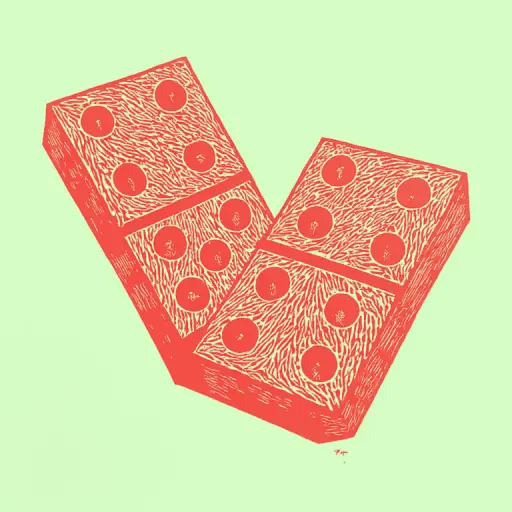
How to Play Dominoes: Detailed Instructions for Players
- 25 min read
- 57
Dominoes is one of the most popular and accessible board games in the world, with a history dating back to ancient China. At first glance, the rules seem elementary: match the dots on the tiles and build a chain. However, beneath this outward simplicity lies a deep tactical layer. Experienced players know that dominoes is not just a random draw of tiles, but a true mathematical duel where every move must be calculated several steps ahead.
Many beginners make a typical mistake—laying down tiles chaotically, focusing only on having a matching number in hand. In reality, how, where, and in what sequence you place your tiles on the table determines the entire pattern of the game. Proper placement allows you to fully control the flow of the game, block opponents' moves, effectively support your teammate, and exit difficult situations in time, preventing or, conversely, provoking a 'fish.'
In this practical guide, we will thoroughly examine the art of playing dominoes with an emphasis on the mechanics and strategy of tile placement. You will learn:
- How to properly organize the starting deal and use the reserve ("bazar");
- The rules for matching numbers and how to correctly place doubles on the playing field;
- What tactics to use to read opponents and effectively interact in a pair;
- How scoring is calculated in the classic version, "Kozel," and "Sea Kozel."
Whether you want to play a game with friends for the first time or aim to raise your skill level for confident victories, this step-by-step instruction will help you turn a random set of tiles into a well-calculated winning combination. Let's move on to the basic rules and game preparation.
Basic Rules and Preparation: How to Start and Lay Down the First Tiles Correctly
Any successful game of dominoes does not begin with randomly throwing tiles onto the table, but with strict adherence to preparation rituals. Before building complex tactical combinations and blocking opponents, it is necessary to master the foundation: how to correctly distribute the tiles, determine the leader for the first move, and by what laws to connect the numerical values on the playing field.
Understanding these basic mechanics transforms a random set of tiles in your hand into a controlled tool for victory. Let's break down step-by-step what the classic confrontation at the gaming table begins with and what unwritten preparation rules experienced masters follow.
Tile Dealing and Reserve Organization ("Bazar")
Before making the first move, it is necessary to properly prepare the playing field and distribute the tiles among the participants. A standard classic domino set always has exactly 28 tiles (also called stones or pieces).
The preparation process begins with thorough shuffling. All tiles are placed face down (dots down) on the table and shuffled with chaotic circular movements. In friendly games, this action is usually performed by the person who lost the previous round, or the players do it together.
After the tiles are shuffled, the dealing stage begins. The number of tiles players take privately is strictly regulated and depends on the number of participants:
- When playing two-player each participant takes 7 tiles. This ensures high dynamism and allows for deeper calculation of the opponent's moves.
- When playing three or four players players are dealt 5 tiles. The smaller number of starting tiles is compensated for by the unpredictability of the opponents' moves.
| Number of Players | Tiles in Hand | Tiles in "Bazar" |
|---|---|---|
| 2 players | 7 pcs. | 14 pcs. |
| 3 players | 5 pcs. | 13 pcs. |
| 4 players | 5 pcs. | 8 pcs. |
Players choose their tiles in turn, one by one or all at once, but always blindly. The received tiles are placed on the edge in front of them, hiding their denomination from the opponents.
All undrawn tiles remain on the table face down, forming a closed reserve. In the Russian-language tradition, this area is called the "bazar." The "bazar" is a key tactical element. When a player does not have a tile with the required number of dots to continue the chain on their turn, they must "go to the bazar"—drawing tiles from the reserve one by one until they find a suitable one. If the reserve is empty, the player must pass their turn, which often brings them closer to defeat.
First Move Rules: How to Determine Who Goes First
So, the tiles are distributed, and the "bazar" is securely hidden from the players' sight. The decisive moment arrives—determining who will make the first move. In dominoes, this step is strictly regulated to prevent any disputes at the gaming table.
The Smallest Double Rule
In the vast majority of game variations (including classic dominoes and the popular "Kozel"), the right to the first move in the very first game belongs to the holder of the smallest double:
- 1-1 Double — the classic starting tile. If someone has it in hand, that player must lay it down first.
- 0-0 Double ("blank-blank") is used for starting extremely rarely. It is usually held back because at the end of the game, it can bring either benefit or penalty points.
- If no one has a 1-1 double, players check their hands for other doubles in ascending order: 2-2, 3-3, and so on.
What to Do If There Are No Doubles?
The situation where none of the participants receive any doubles happens rarely, but the rules provide for this scenario. In this case, the first move is made by the player who has the tile with the lowest total score in hand (e.g., 0-1 or 0-2).
First Move in Subsequent Rounds (Cons)
When the first game is finished and the tiles are shuffled again, the rules for the first move change:
- The Winner Goes First: In the classic variant, the right to start a new round (con) goes to the player (or team) that won the previous round.
- Starting with a Large Double: In some companies and rules (for example, in "Sea Kozel"), subsequent games are traditionally started with a large double, such as 6-6, to immediately intensify the competition.
Having determined the first player, the players proceed to build the chain. For this, it is important to understand exactly how the tiles must touch each other.
The Connection Principle: Rules for Connecting Numbers and Double Placement Features
The basic principle of playing dominoes is extremely simple, but it requires extreme attention: tiles are laid on the playing table in a chain, touching the halves with the same number of dots. If there is a three on the open end of the chain, only a tile with a three on one of its halves can be attached to it (for example, 3-5 or 3-1).
Rule of 'Number to Number' Connection
In each turn, the player must continue one of the open ends of the laid line. Connection occurs according to the following rules:
- Exact Match: You place a tile end-to-end. The numbers on the touching halves must be absolutely identical (e.g., six to six, 'blank' to 'blank').
- Two Directions: In classic dominoes and the game 'Goat,' the chain grows in two directions from the starting tile. Players can choose which of the two open ends is most advantageous for them to continue in their turn.
- Chain Rotation: If the chain of tiles hits the edge of the table, it can be rotated by 90 degrees. This is a purely technical maneuver that does not change the rules for matching numbers but saves playing space.
Features of Placing Doubles
Doubles (tiles with the same number of dots on both halves, e.g., 2-2 or 5-5) hold a special position in the game:
- Cross Placement: Unlike regular tiles, which are laid along the line of movement, doubles are always placed across (perpendicular to) the playing chain. This is done for visual convenience and to emphasize the tile's status.
- Double Connection Rule: To lay down a double (e.g., 4-4), there must already be a four on one of the open ends of the chain. You place the double against the end of the four using its long side.
- Subsequent Play from a Double: The next player who wishes to continue the chain after a double must attach their tile (with a four) to the opposite long side of that double, continuing the line's movement in the original direction.
Understanding these simple geometric rules eliminates confusion at the table and allows players to focus on the tactical planning of their moves.
Gameplay and Strategic Tile Placement Techniques
You have mastered the basics: you know how to correctly connect tiles and how to organize your turn. But dominoes are not just a set of rules; above all, it is a strategy. To become a true master of the game, you must learn not just to play, but to think several moves ahead. Gameplay in dominoes requires not only knowledge of the rules but also the ability to read partners, anticipate opponents' moves, and, most importantly, manage the pace of the game.
In this section, we move from mechanically laying tiles to true tactical thinking. We will examine how to properly support a partner, when to draw tiles from the 'bazar,' and how to use the so-called 'fish' not as a dead end, but as a tool for victory. Understanding these techniques will transform you from a novice into a confident player capable of winning even in the most complex matches.
Tactical Moves: How to Properly Support a Partner and Read Opponents
Partnership play in dominoes is not just about taking turns laying tiles; it is a true silent duel where victory depends on the ability to understand your partner and calculate the opponents' steps. Since verbal communication and signaling are forbidden, the main source of information becomes the playing field.
Reading Opponents: Analyzing First Moves
Careful observation of opponents' actions allows you to uncover their cards by the middle of the game:
- Analyzing the Entry: Pay attention to which specific tile the opponent starts the game with. Usually, the first move is made with the strongest 'suit' (the number the player has the most of).
- Pauses and Hesitation: If an opponent thinks for a long time before moving, they have several options in hand. Remember these numbers—in the future, this will help you block their strengths.
- Forced Pass or Draw from the 'Bazar': This is the clearest signal. If an opponent cannot make a move on a certain number, it means they do not have that digit. Use this knowledge to artificially keep that end of the chain closed to them.
How to Properly Support a Partner
Interaction in a pair is built on mutual support and maintaining leading positions:
- Do Not Block Your Partner's 'Entry': If your partner started the game, for example, with sixes, try to keep that end open. Do not cover it with your tiles unless you have a critical need to get rid of a large double.
- The 'Two New Cards' Method: If a rare tile (one that hasn't been played much) is laid on one end of the chain, try to place a 'new' number on the other end as well. By the law of probability, your partner will have at least one of these values, allowing them to continue the attack.
- Changing the Leader: If you take the initiative during the game, your partner must instantly readjust. Now, their task is to protect your laid numbers and prevent opponents from taking the lead.
Tactical Table: Reaction to Actions at the Table
| Situation on the Table | Your Tactical Action |
|---|---|
| Partner started with a high number | Support this number; do not cover it with other values |
| Opponent passed on 'fives' | Try to place 'fives' on both ends of the chain, blocking them |
| You have heavy doubles in hand (5-5, 6-6) | Discard them at the first safe opportunity to avoid accumulating points |
Knowing when to yield the initiative to your partner or, conversely, to firmly block a dangerous opponent's move is the foundation of mastery in dominoes.
Actions When Lacking the Necessary Tile and Rules for Accessing the 'Bazar'
The situation where you do not have a suitable tile in hand is not the end of the game, but rather a tactical challenge. In dominoes, as in any strategy, the ability to act in an unfavorable position defines the player's skill. Before panicking, you must recall how the 'bazar' (or 'reserve') system works.
Rules for Accessing the 'Bazar'
The 'bazar' is the general reserve of tiles that have not been used in the current round. It serves as a kind of 'insurance' for the players. If you cannot make a move because the combination you need (e.g., 3-5) is not on the table, you have the right to draw from the 'bazar.'
Step-by-Step Instructions:
- Check the Table: First, you must ensure that there is truly no tile on the table that could serve as the basis for your move. If a move is possible, you are obligated to make it.
- Accessing the Reserve: If the table is 'closed' to you, you take tiles from the general reserve ('bazar').
- Tile Selection: Choose a tile that not only allows you to make a move but also maximally complicates the game for the opponents. Ideally, this tile should be a double or have unpopular dots (e.g., 1-6 or 2-6).
- Limitations: It is important to remember that the 'bazar' is not infinite. If it runs out, and you still cannot play, this may signal a point count or the end of the round, depending on the adopted rules.
Strategic Use of the 'Bazar'
Turning to the "bazar" is not just a necessity, but an opportunity. Experienced players use this mechanism to:
- Blocking: You can "take" a tile from the reserve that is critically important for your direct opponent's move, thereby forcing them to change tactics or spend a turn searching for an alternative.
- Pacing Control: If you know your opponent only has one or two tiles in hand, you can play a double from the "bazar" that will force them to use their only move, thus reducing their tile supply.
- Maintaining Initiative: If you feel the game is slowing down and all players are starting to "stagnate," using a tile from the "bazar" allows you to maintain momentum and keep your opponents on edge.
Remember: the goal is not just to play, but to force opponents out of the game or make them use their most valuable tiles under unfavorable conditions. Skillful use of the "bazar" is a sign of a true domino strategist.
Blocking the Game: How the "Fish" Works and How to Use It to Win
A situation where the game reaches a dead end is called "fish" in Russian-speaking tradition. This is a unique tactical moment: players still have tiles in hand, the "bazar" might be empty, but continuing to lay tiles is impossible. This happens because both ends of the playing chain have matching numbers, and all seven tiles with that value have already been played on the table.
"Fish" is not just a random end to a game, but a powerful strategic weapon. Experienced players use blocking consciously to end the round prematurely in their favor.
How to Correctly Calculate and Make a "Fish"
To successfully block the game, you must complete three sequential steps:
- Keep track of played tiles. In a standard domino set, every number (from 0 to 6) appears exactly on 7 tiles. If you see that 6 tiles with sixes are already on the table, and the seventh is in your hand, you have complete control over that number sequence.
- Count the points in your hand. The main rule of "fish": when blocking, the player (or team) with the fewest points remaining in hand wins. If you have "heavy" tiles in hand (e.g., 6-6, 6-5, 5-5), you absolutely cannot make a "fish"—you are guaranteed to lose. Conversely, if you have "empty" or small tiles left (1-1, 1-2, 2-0), blocking is your best chance to win.
- Make the decisive move. Play a tile so that the same number appears on both open ends, all combinations of which have already been played out of the game.
Strategic Tricks in Blocking
- Draining the Opponent: Before making a "fish," try to force opponents to make several moves from the "bazar." The more tiles they draw, the higher their point total will be in the final count.
- Controlling Doubles: Remember that doubles are the hardest to get rid of. If you see a large double stuck in an opponent's hand (e.g., 5-5 or 6-6), creating a "fish" will bring easy winning points to your team.
- Team Play (Two Against Two): If you are playing in a pair, evaluate not only your own strength. If your partner has been actively getting rid of large tiles, and the opponents have passed, confidently go for the block.
Knowing when to "cook a fish" distinguishes a domino master from a novice. This maneuver turns a defensive position into a crushing victory.
Scoring and Specifics of Popular Game Variations
Knowing when to block the game or make a strong tactical move is only half the battle. To win consistently at dominoes, you must thoroughly understand the final phase of the game: the rules for scoring and the specifics of a particular game variation. After all, the value of the tiles remaining in hand and the final tile-laying strategy depend on the chosen format.
In this part of the guide, we will examine how to correctly assess "empty" tiles and doubles during scoring, what the key differences are between the classic "Goat" and its more aggressive "Sea" version, and point out typical tactical mistakes made by beginners that prevent them from getting rid of heavy tiles in time.
How to Score Correctly: The Value of Empty Tiles (0-0) and Doubles
Scoring is not just a formality, but a key element of strategy that allows a player to make informed decisions in critical moments. Understanding the value of each tile, especially the "empty" tile (0-0) and doubles, can be the deciding factor in victory.
🔢 Detailed Breakdown of Tile Value
In most popular domino variations (especially in the "Goat" variant), scoring is based on the remaining tiles in the players' hands when the game stops ("fish") or when one of the players lays down all their tiles.
- "Empty" Tile (0-0): This is the most tricky tile. In most rules, it has a nominal value of 25 points. However, in some variations, it may be valued at 0 points, making it both a "salvation" and a "curse" depending on the situation. Always clarify the scoring rules in the specific company.
- Regular Tiles: Points are awarded based on the sum of the pips on both halves of the tile. For example, a 2-5 tile will bring 7 points, and a 6-1 will bring 7 points. The more pips, the higher the potential "damage" to the opponent.
- Doubles: Doubles (e.g., 4-4) always have a higher value than regular tiles with the same total pip count (e.g., 3-5). Their high cost makes them key elements of strategy.
🏆 Strategic Use of Scoring Knowledge
Knowing the scoring rules allows you not only to count but also to plan your moves:
- Controlling Doubles: If you see that an opponent has many doubles, try to get rid of them as quickly as possible. This will reduce their potential "damage" in case of a "fish" or round completion.
- "Stalling" the Game: If you have many tiles in hand with a high total point value but cannot play them, try to slow down the game so that the opponent is forced to play and reveal their tiles. This will give you more information about their reserves.
- Assessing the "Empty" Tile: If you understand that in the current game the "empty" tile might be valued at 0 points (as in some "Goat" variations), do not keep it in reserve unless it is the only way to continue the move. Use it only when necessary for survival in the round.
⚠️ Typical Tactical Mistakes of Beginners
- Ignoring Doubles: Beginners often underestimate the value of doubles, playing them too early when they could be used for blocking or gaining an advantage at the end of the game. Remember that a double is not just a tile; it is a potential "bomb score."
- Panic During "Fish": When the game reaches a deadlock, do not panic. Calmly count the remaining tiles. Your goal is not just to play, but to minimize your final score.
- Lack of Rule Knowledge: The most common mistake is ignoring which specific domino variant is being used. The scoring rules in "Kozel" can differ drastically from those in "Sea Kozel." Always clarify these nuances before starting a game.
Differences in Tile Laying Rules: Classic, "Kozel," and "Sea Kozel"
Understanding that dominoes are not just a set of rules, but an entire spectrum of variations, is critically important for any player. Classic dominoes, which you probably know, are just a starting point. To become a truly experienced player, you must understand the popular variants, as each one changes not only the game mechanics but also the very philosophy of scoring.
Classic vs. Variations: What You Need to Know
Classic Dominoes is the basic, universal format where the goal is usually to be the first to get rid of all tiles. However, as soon as you master this base, you will have to face more specific rules that drastically change the tactics.
"Kozel" (or "Kozol") is perhaps the most common and strategically deep variant in the Russian-speaking segment. Unlike classic play, where the first to empty their tiles wins, in "Kozel," the game often transitions into a scoring phase. As soon as one player is free of tiles, the game does not stop. Instead, the other players begin counting points equal to the sum of the pips on their remaining tiles. This forces players to be extremely cautious, as even a "blank" (0-0) can become a decisive factor if it remains with an opponent.
"Sea Kozel" is a more dynamic and sometimes more aggressive variant. It complicates the tactics, requiring players not only to watch who finishes first but also to constantly calculate potential losses. In some regional rules, "Sea Kozel" may have additional restrictions on play or special rules for doubles, which requires careful study of the specific company's rules.
Key Differences in Game Mechanics
| Aspect | Classic | "Kozel" | "Sea Kozel" |
|---|---|---|---|
| Game Goal | To be the first to get rid of all tiles. | To get rid of tiles, but the main goal is to minimize the points on your hand at the end of the round. | A combination of getting rid of tiles and strategic scoring. |
| Round End | Laying down the last tile. | Counting the points on the opponents' remaining tiles. | Depends on specific rules, but always includes an element of scoring. |
| Strategic Focus | Getting rid of tiles as quickly as possible. | Controlling which tiles remain with the opponents. | Dynamic management of play and constant calculation of potential points. |
Expert Tip: Regardless of which domino variant you are playing, always remember the principle of "score control." If you know the game will transition into a scoring phase, your main task is not just to play, but to lay down tiles so that your remaining "tail" is as "cheap" as possible for your opponents, or conversely, so that your own remainder is minimal.
Typical Tactical Mistakes of Beginners When Laying Tiles
Understanding the difference in scoring rules is only the first step to mastery. In practice, the outcome of a game is often decided not by random tiles, but by tactical decisions. Beginners, even after learning the rules, regularly make repetitive mistakes when placing tiles on the table.
Here are the main tactical blunders to avoid:
- Hoarding Heavy Doubles. The most common mistake is holding onto doubles like 6-6, 5-5, or 4-4 until the last moment, hoping to place them advantageously. In "Kozel" or classic dominoes, this is a direct path to defeat. If an opponent unexpectedly closes the game or calls "fish," these heavy tiles will bring you a huge amount of penalty points. Get rid of large doubles at the first safe opportunity.
- Untimely "Fish." Beginners often block the game (make "fish") simply because they have the opportunity. This is a gross error. Before placing a blocking tile, you must roughly estimate the points in your hand. If you or your partner have a higher sum of remaining points than the opponents, you are gifting them a round victory with your own hands.
- Ignoring Partner Play. In a partnership game (2 vs 2), beginners often play selfishly, thinking only about their own tiles. If you block a move that was clearly developing your partner's play, or prevent them from discarding large tiles, you are playing against your own team. Pay close attention to the denominations your ally is asking for, and support them.
- Revealing Weaknesses (Deficits). If you do not have a certain number in your hand (for example, threes), you cannot show this to your opponents too early. Experienced players will quickly calculate your deficit and begin to intentionally "trap" the game by placing threes on both ends of the playing line, forcing you to endlessly play on the "bazar."
- Unsystematic Tile Discarding. Playing the first tile that fits by value is a path to a quick loss. Every tile placement must have a goal: either to open a path for your strong suits (which you have many of in your hand) or to block the opponents' moves.
By avoiding these basic mistakes and analyzing every move, you will quickly move from the category of beginners to the rank of confident tacticians capable of controlling any game.
Conclusion
Congratulations! You have gone from a beginner to a confident player who understands not only the basic rules but also the subtleties of strategy. However, as in any workshop, even experienced players have room to hone their skills and understand the nuances. This section is your final checklist to help you not just play, but win, turning dominoes from a simple pastime into a true art of tactical planning.
Key Takeaways to Remember
- Don't Chase the 'Discard': The main goal in dominoes is not to get rid of all your tiles at any cost. The winner is the one who leaves their opponents in a 'pinch' or forces them to take expensive tiles from the 'bazaar.'
- Resource Management: Always evaluate not only what you hold but also what remains in the 'bazaar.' Remember that the 'bazaar' is your shared resource, and its depletion can be a decisive tactical move.
- Teamwork (if playing in pairs): In a pair game, never play a tile that is the only double for your partner unless it is absolutely necessary. Always try to 'block' your partner's tile only as a last resort when there is no other way.
- Risk Assessment: Before making a move, ask yourself: 'Which move will most severely hinder the opponent's next 2-3 turns?' Often, this is not the most obvious move, but the one that blocks a key number.
How to Avoid Typical Traps
- The 'Too Easy Move' Trap: If you see that your opponent needs a 5, and you have 5-1 and 5-5, do not play 5-1. Keep 5-5 to create the illusion that you cannot play a 5, making them think you don't control that number. This will distract them and give you time to maneuver.
- The 'Double Bait' Trap: If you have several doubles and you know your opponent needs a specific number, do not play the most 'expensive' double. It is better to play a lower-value double that blocks the combination they need. This will force them to waste a turn on a less advantageous move for them.
- Don't Ignore the 'Blanks' (0-0): Remember that a 'blank' is not just a 'zero' tile. It can be the perfect 'stopper' to fill a turn when all other options are blocked, or it can be used to create a false picture, making the opponent think you don't control any number.
Summary: Your Winning Game Plan
- Observe: In the first few turns, dedicate 80% of your attention to observing your opponents. Remember which numbers they frequently play and which they ignore. This will give you an idea of their 'weak spots.'
- Plan 3 Turns Ahead: Don't just think about your next move. Imagine that you make a move, the opponent responds, and you make the next move. If you see that the game will stall in two turns and you won't be able to finish, make a move that maximally hinders the opponent's ability to escape that situation.
- Save Doubles: If you are unsure about the outcome of the round, it is better to save doubles that could be decisive at the end of the game than to play them now and lose their strategic value.
Remember that dominoes are not just a set of rules, but a game of psychology. The ability to read your opponent, remain calm, and make measured decisions at a critical moment is what separates a master from a novice. We wish you only victories and enjoyable time at the gaming table!