How to Play the Sun Card Game by All the Rules?
- 14 min read
- 28
The card game "Solnyshko" (also known in many companies as "Romashka") is a wonderful folk entertainment that is perfect for family evenings and friendly gatherings. If you are tired of the classic "Durak," this game will be an excellent alternative. It attracts with its simplicity, dynamism, and the fact that both adults and children can play it with equal enthusiasm.
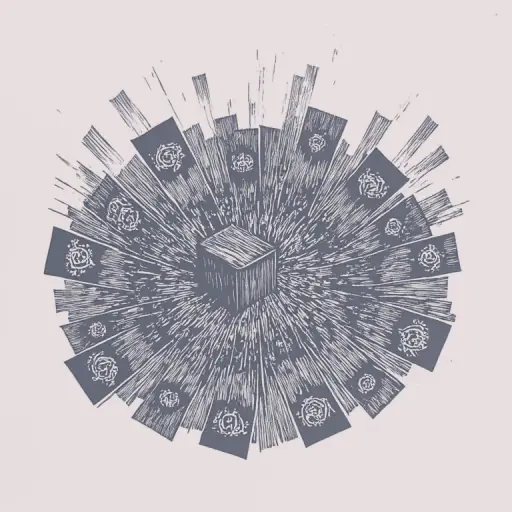
The main feature of "Solnyshko" is its unusual layout: before the start of the game, the cards are laid out in a circle face down, forming peculiar "rays." The game rules are quite flexible. There is both a classic tactical variant, where the trump suit is important, and a simplified children's version focused on speed and reaction.
Regardless of how many players gather at the table, the game guarantees lots of fun. During the game, participants take turns clockwise, trying to discard cards into the beaten pile and not end up with all the losers. In this guide, we will thoroughly examine all the nuances: from deck preparation to comparing "Solnyshko" with similar games, such as "Krugly Durak."
Game Preparation: Choosing the Deck and Card Layout
Before diving into the exciting gameplay of "Solnyshko," it is necessary to properly prepare the playing area and decide on the equipment. Unlike complex strategy games, preparation here takes only a few minutes, but it is precisely this that determines the dynamics of the entire game.
At this stage, it is important to consider the number of participants, as this directly affects the choice of the appropriate deck. Furthermore, the game's calling card is its unique circular layout, which gave the entertainment its name. Let's look at these basic steps in more detail.
Number of Players and Deck Requirements
For playing "Solnyshko," you do not need complex equipment—a standard deck of cards and good company are enough.
Number of Participants
The game is incredibly flexible. The minimum number of players is 2 people, making it an excellent option for a friendly duel. However, the ideal composition is from 3 to 6 participants. If you gather more people, the game's dynamics may decrease, and the cards will run out too quickly.
Deck Requirements
The choice of deck directly depends on the size of your group:
- 36-card deck (from six to ace) — the classic option, ideal for a group of up to 4 people.
- 52-card deck (from two to ace) — an excellent choice for a large group of 5 people or more.
| Number of Players | Recommended Deck | Card Ranking |
|---|---|---|
| 2–4 players | 36 cards | 6 to Ace |
| 5 or more players | 52 cards | 2 to Ace |
Before starting the game, be sure to remove any jokers from the deck, if present, as they are not used in classic "Solnyshko."
How to Properly Lay Out Cards "Solnyshko" Style
The process of laying out the cards is what gives the game its recognizable name. There are two main ways to form the "sun" on the table, depending on the variant of rules you choose:
Classic Layout ("Rayed"):
- Thoroughly shuffle the deck.
- Lay out 8 cards face up in a circle, imitating the diverging rays of the sun.
- Place the remaining deck (the stock) in the very center of this circle, face down.
- Flip over the bottom card of the deck and place it across the center—it will determine the trump suit for the entire game.
Circular Layout ("Closed Sun"):
- Carefully distribute all the cards from the deck in a circle face down, so that they slightly overlap each other, forming a solid ring.
- Leave an empty space in the center of this improvised sun to form the discard pile.
Proper table preparation ensures convenience: each participant should be able to easily reach any "ray" or sector of the circle without disrupting the overall layout structure.
Classic Rules and Step-by-Step Gameplay
When the cards are laid out in a whimsical circle, the most interesting part begins—the active confrontation. The classic rules of "Solnyshko" combine elements of traditional "Durak" and dynamic trick-taking games, making the gameplay unpredictable and exciting. Here, not only luck in drawing cards matters, but also the ability to make a timely tactical decision: to beat a card on the table or to take it for yourself. In this section, we will thoroughly examine the step-by-step algorithm of the game. You will learn how to make moves clockwise, interact with the laid-out "sun," and use trumps for defense so as not to be the sole loser with a full hand of cards.
Turn Order, Taking, and Beating Cards
The gameplay in classic "Solnyshko" is based on the sequential actions of the participants, and the turn passes clockwise.
On their turn, the active player draws the top card from the closed deck and tries to beat (cover) one of the open cards lying in the circle ("rays" of our sun).
The rules for beating are standard:
- A card in the circle can be covered by a higher card of the same suit.
- Any non-trump card can be beaten by a trump card.
- A trump card in the circle can only be covered by a higher trump.
If the player successfully beats a card, they place their card on top of it, forming a pile, and the turn passes to the next participant.
If the drawn card does not match any of the cards on the table for beating, the player must take it into their hand. Depending on the agreement, the penalty may also be to take the entire pile of cards from the chosen "ray." The empty spot in the circle is immediately filled with a new card from the deck to maintain the shape of the "sun."
Determining the Trump and Ending the Game
In the classic variant of "Solnyshko," the determination of the trump suit happens directly during the initial layout. After the circle of open cards (usually 8 or 9 cards) is formed on the table, the dealer takes the next card from the deck. They place it face up in the very center of the improvised "sun." The suit of this card is declared the trump suit for the entire current round. The remaining closed stack of cards is placed across it, from which players will draw cards during the game.
The game ends when the cards in the general deck and in the "sun" are completely exhausted. Players continue to play the remaining cards in their hands according to standard rules.
The winner is the one who gets rid of all their cards first. The game continues until only one participant remains at the table with cards in hand—that person is declared the loser. In alternative rule variants, where players take beaten cards as "tricks," the winner is the one who has collected the largest number of cards by the end of the game.
Popular Variants of "Solnyshko"
Having mastered the classic rules, the determination of the trump suit, and the card-taking mechanics, you will discover the amazing diversity of folk interpretations of this game. "Solnyshko" is an incredibly flexible card game. Depending on the age of the participants and the desired pace of the game, the basic gameplay easily transforms, becoming either a contest of attention or a deep tactical confrontation.
Different modifications allow the rules to be adapted for both the youngest players and experienced lovers of board battles. Let's look at the most popular alternative versions that will help diversify your family evenings, and also examine the subtle differences between this game and its closest card "relatives."
Speed and Reaction Children's Variant
The children's variant of "Solnyshko" differs radically from the classic version. Here, not tactical planning, but extreme concentration, speed, and lightning-fast reaction comes to the forefront. This modification is ideally suited for family evenings with children aged five to six.
Rules and Gameplay:
- Layout: All cards from the deck (usually 36 sheets) are laid out on the table in a circle, face down, forming a closed "sun." The center of the circle is left empty.
- Finding the Starting Card: Participants take turns drawing one card from any spot in the "sun" and revealing it. The goal in the first stage is to find the six.
- Building the Chain: As soon as one of the players draws the six, they must place it in the center of the circle as quickly as possible. From this moment, a dynamic race begins. Players continue to take turns drawing cards, but the goal changes—they must lay down cards strictly in ascending order: 7, 8, 9, 10, Jack, Queen, King, and Ace.
- Speed Factor: If the card of the required rank is in the player's hand, their task is to react instantly and discard it into the center, beating their opponents.
The participant who is the slowest and places the last ace, or who is left with cards in hand when the entire "sun" has been cleared, loses.
Differences Between "Solnyshko," "Romashka," and "Kruglyi Durak"
The names of folk card games are often confused, leading to arguments at the gaming table. Let's clarify how classic "Solnyshko" differs from "Romashka" and "Kruglyi Durak," as each of these amusements has its own unique mechanics.
- "Solnyshko" vs. "Romashka": In some circles, these names are used as synonyms due to the circular card layout. However, in traditional "Romashka," players draw cards in turn and place them in the center. If the suit of the drawn card matches the suit of the previous card, the player takes the entire stack. In "Solnyshko," the rules are closer to "Durak" (Fool): there are trumps, cards must be beaten, and the circular layout serves as a closed draw pile.
- "Solnyshko" vs. "Kruglyi Durak": In "Kruglyi Durak," the gameplay proceeds strictly in a circle—each subsequent player must beat the previous player's card, which often leads to chaos at the table. In "Solnyshko," the classic dueling mechanic of "attacker-defender" is preserved, and the circular layout only serves as an original way to draw cards.
For clarity, let's compare the key parameters of the games in a table:
| Parameter | "Solnyshko" | "Romashka" | "Kruglyi Durak" |
|---|---|---|---|
| Deck Layout | Circle of face-down cards | Circle ("petals") | Standard stack or fan |
| Main Mechanic | Card combat + draw from circle | Discard by suit and stack collection | Beating in a circle chain |
| Presence of Trump | Yes | No | Yes |
| Game Goal | Get rid of cards | Get rid of cards | Not to be the "Fool" |
Understanding these differences will help you quickly agree on the rules before starting a game and avoid disagreements.
Game Strategy and Common Beginner Mistakes
Although the rules of "Solnyshko" seem simple and rely heavily on chance, experienced players know that victory here depends on more than just luck. The ability to analyze the situation on the table, hold onto strong cards at the right time, and calculate opponents' moves transforms this dynamic amusement into a real tactical duel.
To consistently remain without cards by the end of the game and avoid collecting a penalty stack, it is necessary to master the basic principles of game discipline. Below, we will examine key tactical maneuvers that will help you seize the initiative, as well as discuss typical blunders that prevent beginners from succeeding.
How to Properly Plan Moves for Victory
Although "Solnyshko" is often perceived as a simple family game, experienced players know that victory here is rarely accidental. To consistently beat opponents, it is necessary to adhere to several tactical rules.
- Save your trump cards. The main mistake of beginners is immediately defending with high trumps. Try to save them for the final stage of the game, when the cards in the circle run out, and every move becomes decisive. Discard small non-trump cards whenever possible.
- Monitor the "sun" and the defense. Carefully observe which cards opponents take and which ones are beaten. If you remember that high cards of a certain suit have already left the game, you can confidently attack the opponent with smaller cards of that suit.
- Manage the size of your hand. In the classic variant, maintaining balance is important. Having too many cards in hand limits maneuverability and increases the risk of being left as the loser. However, sometimes it is advantageous to intentionally "take" a stack of cards if it contains trumps or cards for future combinations that you need.
- Analyze opponents' positions. Pay attention to how many cards the players sitting to your left and right have left. If a neighbor has few cards, try to pass them inconvenient suits to force them to draw new cards from the common circle.
Planning moves two or three steps ahead turns "Solnyshko" from a simple game of chance into a deep tactical confrontation.
Common Mistakes of Novice Players
Even knowing the basic tactical maneuvers, novice players often make regrettable mistakes that quickly lead to defeat. In the card game "Solnyshko," the cost of one mistake can be very high, especially in the final stage of the game when the cards in the circle begin to run out rapidly.
Here are the most common mistakes that beginners should avoid:
- Wasting trumps early in the game. The most frequent mistake is using strong cards when the trump suit has just entered the game, at the first minor threat. Trumps are your main shield in the later stages. By discarding them too early, you leave yourself defenseless before the final round.
- Ignoring opponents' actions. Novices often concentrate solely on their hand of cards. It is important to carefully monitor which cards opponents take from the "Solnyshko" laid out in a circle and what goes into the beaten cards. This allows you to roughly calculate what denominations the opponents still hold.
- Rushing when choosing a card from the circle. In the classic version of the game, when the deck of cards is laid face down, players often draw a card randomly without thinking. Try to analyze the flow of the game and choose cards from those areas of the "Solnyshko" where, in your estimation, the necessary denominations have not yet been touched.
- Forgetting about played cards. By not tracking which cards have already left the game, you risk playing a card that an opponent can easily beat, or, conversely, being overly afraid of threats that no longer exist in the pile.
To illustrate, let's compare the typical behavior of players of different levels:
| Novice Action | Pro Approach |
|---|---|
| Discards high trumps at the first threat | Saves trump cards for the final round |
| Draws cards from "Solnyshko" randomly | Analyzes the remaining cards and suits in the circle |
| Does not remember played cards | Keeps a mental count of played aces and trumps |
By avoiding these simple but critical mistakes, you can significantly increase your chances of winning and make the gameplay more conscious and interesting.
Conclusion
The card game "Solnyshko" is a surprisingly flexible, dynamic, and fun entertainment that can instantly liven up any gathering and bring together people of all ages around one table. By mastering the basic rules, learning to correctly lay out the cards in a circle, and avoiding typical tactical errors, you gain an excellent alternative to the familiar "Durak," "Romashka," or "Pyanitsa" in your arsenal.
The main charm of "Solnyshko" lies in its striking versatility. You can choose the classic version with trumps for a thoughtful family evening where precise calculation is important, or switch to the dynamic children's version based on speed and reaction when you want to add noise, fun, and healthy excitement. The game does not require complex equipment or long preparation—just a standard deck of 36 cards and a good mood.
Don't be afraid to experiment with the rules, try different modifications, and adapt the gameplay to your company's interests. After all, "Solnyshko" is not so much about fierce competition as it is about lively communication, laughter, and the joy of time spent together. Gather your loved ones, lay out the cards in a beautiful fan, and may luck always smile upon you in every round!