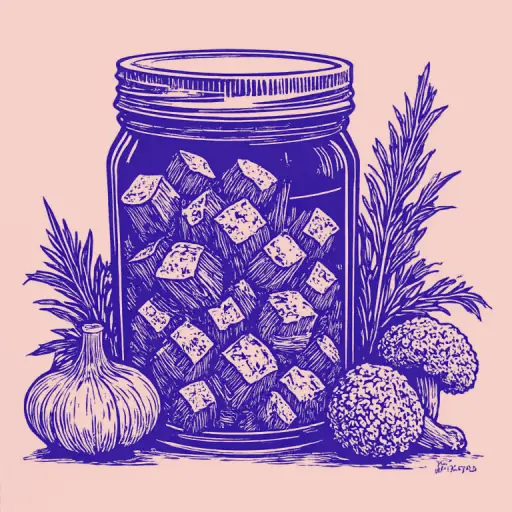
How to Prepare Eggplants as Mushrooms for Winter to Make Them Firm and Aromatic?
- 14 min read
- 66
Eggplants, or "sinen'kiye" in common parlance, possess an amazing culinary property—they can virtuously mimic other products. Due to their striking resemblance to forest bounty, they are often called "false mushrooms." The secret to this phenomenon lies in the vegetable's unique porous structure. Raw, the flesh resembles a sponge, but with proper heat treatment—blanching or frying—it acquires that characteristic elasticity, density, and slight fibrousness so valued in pickled porcini or boletes.
On their own, the eggplants have a neutral taste, but they instantly absorb the aromas of accompanying ingredients. If you add garlic, fresh dill, a little vegetable oil, and the correct proportion of vinegar, an ordinary eggplant salad transforms into a savory appetizer that is difficult to distinguish from real mushrooms.
These winter preserves are a real salvation for lovers of forest delicacies during a poor harvest year and an excellent budget way to surprise guests. Pickled eggplants are prepared much faster and more safely than their forest counterparts, and the result is always predictably magnificent.
Vegetable Preparation: Secrets to Maintaining Firmness and Removing Bitterness
For the "sinen'kiye for mushrooms" to truly deceive the receptors of your guests, their texture must be dense and slightly crunchy, like real pickled porcini. The main mistake beginners make when canning is turning the tender flesh into shapeless mush. The secret to the perfect appetizer lies not so much in the marinade as in the correct preliminary preparation of the fruit.
At this stage, the cook must solve two key tasks: maintain the firmness of each piece during heat treatment and completely rid the vegetables of the characteristic solanine bitterness. Choosing the right preparation technique guarantees that the eggplant mushrooms will retain their shape and surprise everyone at the winter table.
Should the Skin Be Peeled and How to Cut Eggplants into Cubes
Preparing the "sinen'kiye" is a crucial stage that affects not only the appearance but also the texture of the future appetizer. The first question that arises for cooks is: should the skin be peeled?
If your goal is to achieve maximum resemblance to forest mushrooms (for example, pickled porcini), it is best to completely remove the skin. Without the dark skin, the eggplant pieces in the jar look exactly like firm mushroom stems. However, the skin of young fruits is very thin, and it can be left on or peeled in strips ("zebra")—this will help the pieces maintain their shape.
The correct cutting determines the texture:
- Cube Size: The optimal size is 1.5–2 cm. Cutting too small will turn the preserve into mush, and cutting too large will not absorb the marinade well.
- Uniformity: Make the pieces equal so they cook at the same time.
- Technique: Cut the fruit lengthwise into thick slices, then into sticks, and only then into cubes.
This preparation method guarantees that the eggplant "mushrooms" will retain their density.
Proven Methods for Removing Bitterness Using Salt and Soaking
Removing bitterness is not just about eliminating solanine; it is also a key stage in creating that very "mushroomy" firmness. When salt draws out excess juice, the porous structure of the eggplant compacts, which prevents the pieces from falling apart into mush during subsequent cooking or frying.
There are two proven culinary methods for preparing the "sinen'kiye":
- Dry Method (Quick): Generously sprinkle the cut cubes with coarse rock salt (about 1 tablespoon per 1 kg of vegetables) and leave them for 20–30 minutes. As soon as droplets of moisture appear on the surface, thoroughly rinse the eggplants under running cold water and gently squeeze them by hand.
- Wet Method (For Ripe Fruits): Prepare a cold brine using a ratio of 1 tablespoon of salt per 1 liter of water. Submerge the cut pieces in it, pressing down lightly with a light weight (such as a plate) so that the vegetables do not float. Leave them for 30–40 minutes. Afterward, drain the water, rinse the pieces, and gently squeeze them with a paper towel.
This simple trick guarantees that your "false mushrooms" will maintain their ideal shape and dense texture, reminiscent of forest porcini.
Classic Step-by-Step Recipe with Garlic and Herbs
The classic recipe is a culinary standard that allows ordinary eggplants to be transformed into real "forest mushrooms." The secret of this method lies in the harmonious combination of garlic spiciness, fresh dill, and delicate acidity. This eggplant appetizer perfectly imitates the firm texture of pickled porcini, surprising guests at a festive table.
To recreate that very "mushroomy" effect, we need a simple set of ingredients that can be found in any kitchen during the height of the gardening season. The entire process of creating this winter preserve consists of two key stages: delicate cooking in an aromatic brine and subsequent mixing with a spicy dressing. Let's break down step-by-step how to properly prepare the base of our future winter appetizer.
Preparing the Spicy Marinade and Blanching the Eggplants
The secret to the firmness of the "false mushrooms" lies in proper blanching. If the eggplants are overcooked, they will turn into mush, and if they are undercooked, they will remain tough and poorly absorb the marinade.
To prepare the classic spicy marinade for 1 kg of prepared eggplants, you will need:
- Water — 1 liter;
- Rock salt (coarse) — 1.5–2 tbsp (not heaped);
- Sugar — 1 tbsp;
- Bay leaf — 2 pcs;
- Black peppercorns — 5–7 pcs;
- Allspice — 2–3 pcs;
- Cloves — 2 pcs (optional).
Step-by-Step Blanching Process:
- Pour water into a deep pot, add salt, sugar, and all spices. Bring the mixture to a rolling boil.
- Pour 9% vinegar into the boiling marinade—about 60–80 ml.
- Gently lower the eggplant cubes into the boiling liquid.
- Cook the vegetables for exactly 3–5 minutes from the moment it comes back to a boil. They should slightly change color and become translucent while retaining a firm structure.
- Drain the eggplants in a colander, allowing the marinade to drain completely. Do not pour out the remaining spices—they will still be useful for aroma.
Mixing with Garlic, Dill, and the Correct Vinegar Proportion
After the blanched eggplants have slightly cooled and excess moisture has drained off, the most aromatic stage of preparation begins. This is when we transform ordinary "sinen'kiye" into appetizing "forest mushrooms."
To do this, prepare the herbs and garlic:
- Garlic (about 1 medium head per 1.5 kg of eggplants) is best thinly sliced or finely chopped with a knife. Garlic passed through a press can make the marinade cloudy.
- Fresh dill (a large bunch) is thoroughly washed, dried, and finely chopped. Use only the tender sprigs, removing the tough stems.
In a deep container, gently combine the warm eggplants, minced garlic, and dill. Pour in 80–100 ml of odorless vegetable oil.
Correct Vinegar Proportion:
For reliable storage without sterilization and to achieve a balanced flavor, 1.5 kg of prepared eggplants requires exactly 60–70 ml of 9% table vinegar.
Carefully mix the mass with a wide spatula from bottom to top, trying not to damage the integrity of the cubes. Leave the preparation at room temperature for 15–20 minutes. During this time, the porous eggplants will absorb the aroma of garlic and herbs, and the vinegar will fix their dense, elastic texture.
Alternative Options: Preparation with Mayonnaise and a Spicy Recipe
The classic recipe with garlic and herbs is a foolproof base, but culinary experiments do not end there. Eggplants have a unique porous structure that instantly absorbs new flavors and aromas, allowing for the creation of appetizers with completely different characteristics. If you want to surprise your loved ones with an unusual presentation, it is worth going beyond traditional marinating.
In this section, we will examine two alternative approaches to preparing "fake mushrooms." The first is hearty and tender, where secret ingredients give the vegetables a deep creamy hue. The second is bright and warming, created specifically for connoisseurs of spicy heat and rich spices.
Hearty Recipe with Fried Onion, Mayonnaise, and Dry Mushroom Seasoning
This original recipe breaks stereotypes about classic preparations. The combination of tender eggplants, fried onion, and mayonnaise with a forest mushroom aroma creates a complete illusion that what you are looking at is real mushroom caviar or a hearty julienne. Many homemakers doubt whether eggplants with mayonnaise can be stored for winter. Practice shows that such a preserve stores excellently if you use high-fat quality sauce and observe the proportions.
To prepare this hearty appetizer, you will need:
- Eggplants (peeled) — 2 kg;
- Onion — 500 g;
- Mayonnaise (at least 67% fat) — 150 g;
- Dry mushroom seasoning — 1–1.5 tbsp.;
- Vegetable oil (for frying) — 100 ml;
- 9% Vinegar — 1.5 tbsp.
Step-by-step recipe:
- Preparation: Cut the peeled eggplants into cubes with sides of about 2 cm. Boil them in boiling water for 5 minutes, then drain them in a colander to completely remove excess moisture.
- Sautéing: Cut the onion into small cubes and fry in vegetable oil in a deep saucepan until lightly golden.
- Combining: Add the eggplants to the onion and fry everything together over medium heat for about 10 minutes.
- Simmering: Add the mayonnaise and dry mushroom seasoning. Mix the mass thoroughly, reduce the heat to a minimum, and simmer covered for another 10 minutes. 2 minutes before completion, pour in the vinegar and mix.
Distribute the hot eggplant salad into pre-sterilized jars and immediately seal the lids.
Spicy Appetizer Variant with Chili Pepper
For lovers of spicy winter preserves, this hot variant will be a real find. Hot chili pepper combined with garlic gives the marinated eggplants a special piquancy, making them resemble spicy forest boletes. This eggplant appetizer will be wonderfully warming in the cold season and will be a perfect complement to hearty meat dishes.
Ingredients for 1 kg of eggplants:
- Eggplants — 1 kg
- Chili pepper — 1–2 pcs. (adjust spiciness to taste)
- Garlic — 1 bulb
- Vegetable oil — 100 ml
- Water — 1 liter
- 9% Vinegar — 60 ml
- Salt — 1.5 tbsp.
- Sugar — 1 tbsp.
- Bay leaf and allspice — to taste
Step-by-step recipe:
- Prepare the hot pepper. Cut the chili into thin rings. If you want maximum spiciness, leave the seeds; for moderate piquancy, remove them. Finely chop the garlic with a knife.
- Prepare the marinade. Boil the water with salt, sugar, bay leaf, and allspice. Pour in the vinegar, add the cubed eggplants, and blanch them for exactly 5 minutes after boiling. Drain the vegetables in a colander.
- Heat vegetable oil in a saucepan. Quickly fry the chili and garlic for 30 seconds so they release their aroma into the oil.
- Add the blanched eggplants to the aromatic mixture. Gently mix with a spatula, trying not to damage the shape of the pieces, and heat over medium heat for another 5 minutes.
Immediately distribute the hot eggplant salad into prepared dry jars and seal them.
Rules for Preservation Without Sterilization and Storage Conditions
When the appetizing "fake mushrooms" are ready, the most responsible step remains—safely storing them until the winter cold. Preservation without sterilizing filled jars significantly simplifies the process and saves time, but it requires strict adherence to temperature regimes. To prevent the elastic eggplants from losing their texture or spoiling, it is important to properly prepare the containers and ensure the preparation cools down gradually. In this section, we will discuss the key rules for hot sealing and determine the conditions necessary for the safe storage of our culinary masterpieces in an apartment or cellar.
Jar Sealing Technology and "Under a Blanket" Pasteurization
Preserving a finished product without sterilization requires impeccable adherence to hygiene and temperature rules. Since we do not boil the filled jars in a pot, the correct sealing and subsequent slow cooling play a key role.
Step-by-step sealing and pasteurization algorithm:
- Container Preparation. Jars and lids must be sterilized in advance. Pour the hot preparation exclusively into hot, dry containers. This prevents the glass from cracking due to temperature changes.
- Filling Jars. Fill the containers to the very top, trying to minimize the air gap. The marinade must completely cover our "eggplant mushrooms."
- Sealing. Tightly seal the jars with metal lids using a jar-sealing machine or securely twist them with twist-off lids. Before tightening, ensure there are no traces of oil, garlic, or herbs on the jar neck.
- Checking Seal Integrity. Immediately after sealing, turn the jars upside down and place them on a dry towel. If moisture appears under the lid or you hear air escaping, immediately replace the lid.
- "Under a Blanket" Pasteurization. Thoroughly wrap the inverted jars in a warm blanket, an old quilt, or a thick terrycloth towel. In this improvised thermos, the preparation must remain for 24 to 36 hours until completely cool.
This passive pasteurization method allows the heat to be retained for as long as possible. The hot marinade gradually destroys remaining microorganisms, guaranteeing the preservation of the preparation for winter, while the eggplants themselves do not overcook and retain their elastic "mushroom" texture.
Where and How Much to Store Finished Preparations So They Don't Spoil
After the jars of aromatic "fake mushrooms" have completely cooled under warm cover, they must be moved to a permanent location. The correct temperature regime and absence of light are the main guarantees that the appetizer will retain its signature firmness and will not sour until spring.
Optimal Storage Conditions:
- Temperature Regime: The ideal range for storing eggplant jars sealed without prior sterilization is from +2 °C to +15 °C. A dry cellar, a cool basement, or a lower refrigerator shelf is best suited for this.
- Light Protection: The location must be completely dark. Direct sunlight rapidly destroys the vegetable structure, causing them to lose density and the marinade to become cloudy.
- Apartment Storage: If you do not have a cellar, the jars can be kept in a dark pantry or on an insulated balcony (the main thing is to prevent freezing, otherwise the glass will break). Storing the preserves at room temperature (up to +20 °C) is also permissible, but in this case, they should be consumed first.
Shelf Life of Homemade Appetizer:
- In a cool cellar or refrigerator, the purple "mushrooms" last excellently for up to 12 months.
- Under city apartment conditions (in a dark cupboard), the storage period is reduced to 6–8 months.
- An open jar should be stored exclusively in the refrigerator and consumed within 3–5 days.
Helpful Tip: Do not rush to open the preserve immediately. The eggplants need to steep in the marinade for at least 2–3 weeks to fully absorb the aromas of garlic and herbs and acquire that signature "mushroom" taste. Before serving, be sure to check that the lid has not bulged and that the marinade remains clear.
Conclusion: The Secret to the Perfect Winter Appetizer
Making "fake mushrooms" from eggplant is true culinary magic, allowing simple seasonal vegetables to be transformed into an exquisite delicacy that flies off the table first in winter. The main secret to the perfect winter appetizer lies not only in strictly adhering to the proportions of salt and vinegar but also in the ability to preserve that firm, slightly crunchy texture. It is this texture that makes guests genuinely believe they are looking at real wild boletes or chanterelles.
To ensure your eggplant mushrooms are always flawless and bring delight, remember these three golden rules:
- Time Control. Never overcook the vegetables during blanching. The pieces must remain slightly al dente before being placed in jars or on a pan.
- Maturation Time. Immediately after sealing, the marinade's taste may seem sharp. The true, deep, and balanced mushroom aroma will only unfold in the jars after 3–4 weeks of steeping in a dark, cool place.
- Secret to Restaurant Presentation. Before opening the treasured jar, be sure to chill it in the refrigerator. Place the eggplants in a serving bowl, add a little fresh onion or green onion, and drizzle with a few drops of aromatic unrefined oil.
Do not be afraid to experiment with recipes: the classic version with garlic and dill, the zesty spicy eggplant salad, or the hearty variation with mayonnaise—everyone will find their devoted admirer. May these simple yet incredibly delicious winter preserves delight you and your loved ones at every family meal!