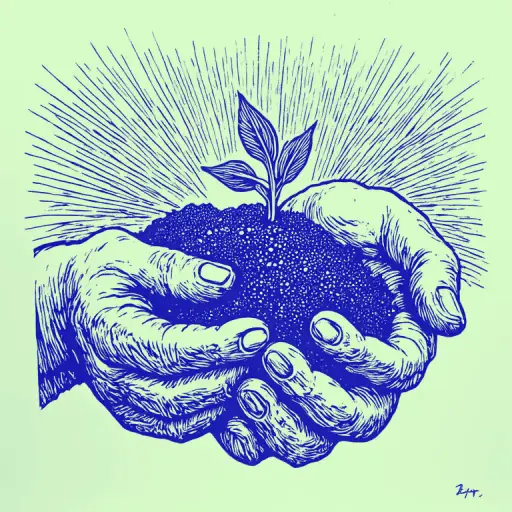
How to Raise a True Person: Fundamentals of Moral Development for New Parents
- 15 min read
- 66
Every parent dreams of raising a worthy person, capable not just of adapting to the world, but of changing it for the better. In an era of rapid technological change and blurring guidelines, moral education of a child becomes a paramount task. How to shape a child's character by instilling strong spiritual values, empathy, and a sense of responsibility?
Modern child psychology often refers to classical heritage. The outstanding educator Vasily Sukhomlinsky asserted that the cultivation of humanity begins with the sensitivity of the soul and the personal example of parents. In this guide, we will examine practical psychological methods that will help young parents navigate this path without overprotection or excessive strictness. We will discuss how to develop empathy in children, teach them to cope with difficulties, and make conscious decisions, laying the foundation for a harmonious and strong personality.
Defining Guidelines: Who is a "Real Person" in the Modern World
Every parent, when thinking about their child's future, inevitably faces the question: what qualities must a person possess to not just adapt to the world, but to retain genuine humanity? In an era of rapid technological change and the blurring of traditional guidelines, the concept of a "real person" goes beyond simple rules of etiquette. Today, it is a viable psychological foundation that allows a personality to remain resilient, constructive, and sensitive to others.
To help a child acquire this inner compass, we need to clearly define the key coordinates. We will turn to timeless values, tested by time, and compare them with the challenges of modernity, creating a reliable support for the harmonious development of the personality.
Core Values: Empathy, Responsibility, and Spirit
The modern world demands not just adaptability from a person, but a strong inner core. The foundation of harmonious personality formation lies in three interconnected pillars that define the moral vector of development:
- Empathy in children — this is the foundation of humanity. It begins with the ability to sympathize, notice others' pain, and treat the feelings of others with care. Without empathy, even the highest intelligence remains a cold and destructive tool.
- Sense of responsibility transforms passive sympathy into active action. Raising a child is built on the realization of a simple truth: "my actions have consequences for others." This is the readiness to be accountable for one's decisions and to keep promises.
- Spirit/Moral Fortitude — this is the inner compass that allows one to remain faithful to spiritual values in times of crisis. It helps cope with failures, resist environmental pressure, and firmly adhere to one's beliefs.
By combining these qualities, we lay a solid foundation for moral education, helping the child grow into a whole and harmonious personality.
Classical Principles of V. A. Sukhomlinsky and Their Relevance Today
By referring to the legacy of the outstanding educator Vasily Sukhomlinsky, we find surprisingly modern answers to questions about personality formation. His concept of "cultivating feelings" asserts that before loading a child with knowledge, one must teach them to feel. In the era of digitalization and the scarcity of real communication, this principle takes on particular urgency.
Sukhomlinsky identified several key guidelines for parents:
- Culture of Desires: the ability to weigh one's "wants" against the possibilities and needs of others. This lays the foundation for true responsibility.
- Need for Humanity: developing empathy in children through sincere interest in the feelings, joys, and sorrows of other people.
- School of Heartiness: raising a child through compassion for the weak, care for nature, and respect for elders.
For Sukhomlinsky, moral education was not a set of dry rules. It was a living process where spiritual values are absorbed through joint labor, sympathy, and the beauty of the surrounding world. Today, his ideas help us shift the focus from external success to internal humanity.
Parents' Personal Example as the Foundation of Morality
We can endlessly discuss high ideals and quote classical pedagogues, but for a child, the main source of knowledge about the world and morality always remains their parents. Child development psychology proves that a child reads not what we declare, but how we live. The family atmosphere, our daily reactions to difficulties, mutual respect, and attitude towards others form the child's inner compass long before they begin to realize abstract ethical categories.
It is in everyday family interaction that the very foundation upon which the future personality is built is laid. To cultivate humanity, it is important for parents to first look at themselves, because our actions always speak louder than any words.
Why Children Learn Actions, Not Lectures and Monologues
Child psychology is structured such that the child perceives the world not through the prism of abstract concepts, but through concrete images and actions. The main tool of this process is mirror neurons. They cause the child to unconsciously copy the facial expressions, gestures, emotional reactions, and, most importantly, the behavioral patterns of adults.
When a parent lectures about honesty but lies on the phone, a cognitive dissonance arises in the child's mind. The psyche protects itself by the simple route: it ignores the words and registers the real action. Lectures are perceived by children as background noise, causing only boredom or protest.
Personality formation occurs in the process of observing daily routine:
- How Dad reacts to his own mistake;
- How Mom speaks to a tired cashier;
- Whether parents help elderly relatives without unnecessary sighs.
It is these living scenarios that lay the foundation of morality. If you want to raise a worthy person, you must start the child's education by reviewing your own habits.
Transmitting Family Values Through Daily Behavior
The transmission of values does not happen during planned "educational conversations," but in routine details. The child constantly scans the parents' reactions and unconsciously copies their behavioral model.
To shape a child's character and instill key spiritual values, pay attention to three everyday spheres:
- Communication Culture in the Family. The way parents talk to each other sets the template for the child's future relationships. A respectful tone, the ability to listen, and peacefully resolving conflicts are the best lessons in diplomacy.
- Attitude Towards the Outside World. Does the child notice how you thank the courier, hold the door, or help an elderly neighbor? These micro-actions develop empathy in children more effectively than any books.
- Keeping One's Word. If you promised to put aside your tasks for a joint game but stayed on your phone, the child learns unreliability.
V. A. Sukhomlinsky emphasized that moral education begins where the child sees the spiritual fellowship of their parents. Daily life is a living textbook of humanity.
Developing Empathy and Emotional Intelligence Step by Step
Recognizing personal example as the foundation of upbringing naturally leads us to the next crucial stage—the development of the child's emotional sphere. It is impossible to raise a responsive person if their inner world is closed off to the feelings of others. Empathy and emotional intelligence are not innate character traits but flexible skills that are instilled in early childhood and require careful shaping by parents. Teaching a child to recognize the spectrum of their own emotions—from joy to sadness—is giving them the key to understanding others. It is through compassion that true humanity, as written by V. A. Sukhomlinsky, is born. Below, we will explore how to systematically develop this sensitivity in daily life, transforming empathy into active care for loved ones.
How to Teach a Child to Understand Others' Feelings and Empathize
Developing empathy begins with the ability to recognize emotions—both one's own and those of others. Child psychology shows that a child is not born with a ready-made skill for empathy; they master it gradually, guided by the reactions of adults.
To help them with this, use three practical steps:
- Name emotions aloud. Verbalize the state of the child and those around them: "You are upset because your toy broke," "Look, the boy on the playground is crying; he must be in pain or sad."
- Discuss characters' feelings. When reading books or watching cartoons, pause. Ask: "What do you think the character is feeling right now? How could we help them?"
- Be an emotional mirror. Share your own feelings sincerely: "I am very tired from work today, so I feel sad. It would make me happy if you hugged me."
Gradually, the child will learn to correlate external manifestations (tears, a smile, posture) with a person's internal state, which will become a solid foundation for sincere sympathy.
Practical Ways to Foster Care for Loved Ones and Others
The transition from sympathy to action is a crucial stage where moral education and true empathy are solidified in children. To make caring for loved ones a natural need, use simple daily practices:
- "Work Participation" (according to V. A. Sukhomlinsky). Involve the child in caring for older family members. For example, brew tea for a tired mother together or help grandfather bring his glasses. It is important that this is not a chore but a shared, warm activity.
- Zone of Living Responsibility. Assign the toddler care for someone more vulnerable: watering a houseplant or feeding a pet. Explain the value of their efforts: "Without your help, the flower will wilt; it is really waiting for you."
- Family "Care Meetings." Regularly ask the child questions: "How can we cheer up Dad today?" or "What will lift up the mood of your sick sister?"
Such regular actions lay down strong spiritual values and help raise a sensitive person capable of noticing the needs of others.
Forming a Sense of Responsibility and Independence
The ability to empathize, which we focused on earlier, only gains true strength when it is supported by a willingness to act and take responsibility for one's actions. Forming responsibility and independence is the transition from passive sympathy to an active life stance. A true person does not just sympathize; they are ready to take on commitments and see things through to the end, even when facing difficulties. For young parents, this stage often presents a serious challenge. How to give a child control over their own life without slipping into overprotection, yet without leaving them alone with insurmountable tasks? Here, it is important to find that fine line where sincere parental support combines with firm boundaries and reasonable expectations.
How to Teach a Child to Be Responsible for Their Actions and Decisions
Forming responsibility begins when the child encounters the natural consequences of their decisions. Instead of authoritarian punishments and lectures, child psychologists recommend using the "cause and effect" method. If the toddler spills water, they wipe the floor themselves; if the student forgets to pack their school bag, they explain to the teacher why the notebook is missing.
Vasily Sukhomlinsky emphasized the importance of the child learning to understand and realize their fault, rather than just fearing punishment. To achieve this, it is important for the parent to:
- Provide choices: offer alternatives within acceptable limits ("Will you wear the blue jacket or the green windbreaker?"). This teaches weighing options.
- Do not take over the initiative: allow the child to make mistakes in a safe environment. A mistake is not a reason for criticism but valuable experience.
- Discuss outcomes: instead of blaming, ask questions: "What do you think happened?" and "What can be done next time?".
This approach develops an internal locus of control, helping to raise a personality capable of being responsible for their own life.
Balancing Parental Love and Reasonable Discipline Without Indulgence
Finding a balance between unconditional acceptance and firm boundaries is one of the most complex tasks of upbringing. As V. A. Sukhomlinsky wrote, the gentler the parental love, the wiser the parental will must be. Love devoid of reasonable demand easily turns into indulgence, which disorients the child and makes them capricious.
Reasonable discipline is not the suppression of freedom but the creation of safe guidelines for personality development. To maintain this balance, adhere to three rules:
- Separate feelings and actions. Any of the child's emotions (anger, resentment, fear) are natural and deserve acceptance. However, destructive behavior and violation of established rules must be firmly stopped.
- Be consistent. Family rules should not depend on your mood or fatigue. If something is forbidden today, it must be forbidden tomorrow.
- Teach the culture of desires. The child must understand that not all their "wants" can be satisfied instantly. The ability to cope with refusals forms psychological resilience.
True parental love lies in preparing the child for real life, where rules and limitations exist, not in shielding them from any discomfort.
Tempering Character Through Overcoming Difficulties
Recognizing boundaries and reasonable discipline lay a solid foundation, but a truly strong character is formed where the child has to face the first life challenges. In a world where parents strive to make their child's path as easy as possible, it is easy to fall into the illusion that happiness is the absence of obstacles. But psychologists agree: by shielding children from all effort, we deprive them of the opportunity to grow into resilient individuals.
Character building is not about creating artificial harsh conditions, but about carefully supporting a child in moments when things are difficult for them. It is through overcoming resistance—whether it's unwillingness to tidy up toys or the first failure in sports—that the inner foundation of a personality is forged. Let's explore how to help a child develop willpower and teach them not to give up in the face of difficulties.
Why the "Need and Difficulty" Concept is Important for Will Formation
The "need and difficulty" concept acts as a natural counterbalance to the modern trend of shielding children from any worries. In child psychology, willpower is understood as the ability to regulate one's behavior and overcome impulsive desires for the sake of long-term goals. If a child is deprived of the opportunity to encounter difficulties, their sphere of willpower simply will not receive the stimulus needed for development.
Vasily Sukhomlinsky placed enormous emphasis on cultivating a sense of duty. He argued that spiritual maturity begins when a child makes an effort in themselves for the good of others. The concept of "need" forms the inner compass of a personality, helping to align one's "wants" with the interests of those around them.
Implementing this concept in daily life is built on three pillars:
- Overcoming Routine: Completing household chores, even when it is boring or requires effort.
- Delayed Gratification: Developing the ability to wait for the sake of achieving a more valuable result.
- Accepting the Challenge: Supporting the child in situations where the task doesn't succeed on the first try, without trying to do everything for them.
Reasonable exertion strengthens character and lays the foundation for future resilience.
How to Teach a Child to Cope with Failures and Learn from Them
Encountering difficulties inevitably leads to mistakes, and how a child reacts to them determines their resilience. The parent's task is not to shield them from falling, but to teach them how to get up. In child psychology, this skill is called resilience, and it is built within the family.
To help a child learn from failures, use the following approaches:
- Change the attitude toward mistakes. Show by personal example that a misstep is not a catastrophe, but a valuable source of information. Instead of reproach, analyze the situation: "What went wrong? How can we fix this next time?"
- Separate the person from the action. Avoid labels like "you are not smart" or "you always fail." The correct formula is: "You are capable, but this task was more difficult this time. Let's try a different approach."
- Support the effort, not just the result. Praise the effort, patience, and courage to try again. V. A. Sukhomlinsky emphasized that overcoming difficulties strengthens the spirit only if the child feels belief in their own abilities from adults.
By teaching a child to see failure not as a dead end, but as a point of growth, you give them the main tool for achieving future victories.
Conclusion
Raising a child is not a set of strict instructions, but a continuous, deep dialogue and shared growth. To raise a worthy person capable of empathy, taking responsibility, and steadfastly overcoming life's adversities, parents must remember: the main tool of pedagogy remains their own personal example. As the great educator Vasily Sukhomlinsky wrote, spiritual values are not transmitted through dry lectures; they are absorbed through an atmosphere of mutual respect, love, and sincerity in the family.
Personality formation is a path that requires patience, sensitivity, and consistency. By developing empathy in children, supporting them in moments of failure, and gradually expanding the boundaries of their independence, we lay a solid foundation for their future. Cultivating humanity begins with small things: with the ability to listen, support, acknowledge one's mistakes, and show that every action matters.
May this path be filled with mutual trust. Remember that perfect parents do not exist, but your sincere love, backed by reasonable discipline and respect for the child's personality, will surely bear fruit, helping to shape the child's character and prepare them for a conscious adult life.