How to Start a Car Engine in Winter: Step-by-Step Guide for Any Frost
- 15 min read
- 3
Winter mornings often don't start with coffee, but with anxious waiting by the hood: will the starter turn over the frozen engine? Severe frosts are a serious test even for a perfectly functional car. When the temperature drops below -20 °C, physical processes begin to work against the driver: engine oil thickens, battery capacity drops, and fuel evaporates much worse.
In this practical guide, we will break down a proven algorithm for safely starting the engine in any cold weather. You will learn how to properly prepare the car for starting, what the difference is between starting a manual and an automatic transmission, and what to do if the battery dies after all. By following these simple rules, you can start the car quickly and without damaging its key components.
Why the Car Won't Start in the Cold: The Physics of Winter Starting
With the onset of cold weather, the usual process of starting a car turns into a real test for its key components and assemblies. To effectively combat the technical whims of winter, it is important to understand the physics of the processes occurring under the hood at negative temperatures. Frost doesn't just cool the metal—it radically changes the properties of working fluids and slows down chemical reactions, turning a standard start into an extreme load.
When the thermometer drops below zero, every element of the starting system begins to operate under increased resistance. Understanding these physical and chemical changes is the first step toward learning how to start the car reliably in any cold weather and avoiding critical errors that could disable the engine.
The Effect of Extreme Cold on the Battery, Engine Oil, and Fuel
Extreme cold delivers a triple blow to the car's key systems, turning a regular engine start into a real ordeal.
- Battery (ACC): As the temperature drops to -20 °C, the speed of chemical reactions inside the battery slows down. As a result, its actual energy output decreases by 50–60%, while the required starting current increases.
- Engine Oil: In the cold, lubricants sharply increase their viscosity. The oil thickens, turning into something like jelly. It becomes critically difficult for the starter to turn the crankshaft in such a viscous medium.
- Fuel: Gasoline evaporates poorly at low temperatures, meaning the optimal air-fuel mixture is not created in the cylinders for ignition. In diesel vehicles, paraffin begins to crystallize in severe frost, leading to fuel solidification and immediate clogging of the fuel filter.
These three factors work synergistically, creating ideal conditions for a starting system failure.
Main Reasons Why the Engine Refuses to Start
When the negative factors of the cold combine, the car owner faces specific technical failures. There are five main reasons why the engine won't start in the cold:
- Critical Battery Discharge. The starter turns the crankshaft too slowly (less than 100–150 rpm) or only emits dry clicks from the solenoid.
- Wet Spark Plugs. During the first failed starting attempts, the injectors continue to supply gasoline. The unevaporated fuel settles on the electrodes, making spark generation impossible.
- Excessive Oil Viscosity. If unsuitable lubricant is used, the starter is simply unable to turn the crankshaft in the thickened medium.
- Fuel Line Clogging. Frozen condensate in the gasoline filter or precipitated paraffin in diesel fuel completely blocks fuel supply.
- Oxidation of Power Contacts. Oxidized battery terminals or ground wires create high resistance, reducing the starting current.
Step-by-Step Guide to Starting the Engine in Severe Frost
When the extreme cold is outside the window, chaotic attempts to crank the starter will only further drain the battery and flood the spark plugs. To avoid this, a strict, technically verified sequence of actions is necessary. A proper cold start is not just turning the key in the ignition; it is a sequential process that reduces mechanical resistance in the engine and helps the battery deliver maximum starting current.
The following step-by-step algorithm will allow you to start the car on the first attempt in any cold weather, preserving the lifespan of the starter and transmission. We will cover key steps from preparing the electrical system to the specifics of working with different transmission types.
Preparation Before Starting: How to Properly Warm Up the Battery and Unload the Starter
Before turning the ignition key fully, it is necessary to prepare the car's electrical system for extreme load. In severe frost, the battery capacity drops by more than half, and the engine oil thickens, so the starter will require maximum energy output.
Perform the following preparatory steps:
- Disconnect all energy consumers. Before turning on the ignition, ensure that the heater, seat and window heaters, mirrors, stereo, and headlights are turned off. All battery energy must be directed exclusively to the starter.
- “Wake up” the battery. Turn on the headlights to high beam for 5–10 seconds. This simple procedure initiates chemical processes in the electrolyte, slightly raises its temperature, and increases the starting current.
- Let the fuel pump run. Turn the key to the ignition position and wait a few seconds. You will hear a characteristic buzzing sound—the fuel pump is creating the necessary pressure in the system. Once the sound stops, you can proceed to starting.
Starting Rules for Different Transmission Types: Clutch Engagement for Manuals and Automatic Transmission Features
The type of transmission directly affects how hard the starter has to turn the crankshaft in severe cold.
For a Manual Transmission (MT):
- Depress the clutch pedal fully before turning the ignition key. This physically disconnects the gearbox from the engine, relieving the starter of the need to rotate gears in frozen, viscous transmission oil.
- Release the pedal smoothly only after 1–2 minutes of successful starting. If the engine RPM starts to drop while slowly releasing the clutch, press the pedal back in and let the engine run for another minute.
For an Automatic Transmission (AT):
- Move the selector to 'P' (Park) and firmly press the brake pedal.
- Use Neutral 'N' if there are failures. If the electronics block starting in Park mode due to frozen lubricant in the gear selector mechanism, move the lever to neutral and try again.
What to Do If the Car Won't Start: Emergency Revival Methods
Even with strict adherence to all cold start rules, winter chilliness can sometimes prevail. If the starter only weakly cranks the crankshaft after two or three attempts, and the engine still won't start, continuing standard attempts is pointless—you will only completely drain the battery and flood the spark plugs with fuel. In this situation, it is important to stop in time and move to the emergency revival plan.
Bringing a frozen car back to life requires composure and strict adherence to technical rules. There is no need to panic: most winter starting issues can be solved with proven methods. The main thing is to act carefully so as not to damage sensitive onboard electronics or disable the ignition system.
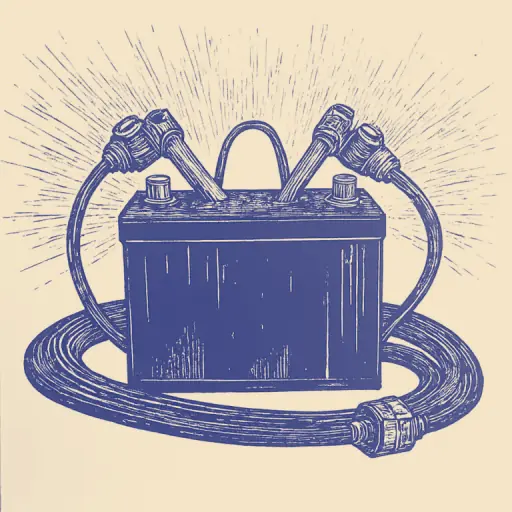
How to Properly Jump-Start a Car from Another Vehicle: A Step-by-Step Safety Guide
"Jump-starting" is the fastest way to revive a discharged battery, but an error in the connection scheme can burn out the sensitive electronics of modern cars. To ensure the procedure is safe, strictly follow this sequence:
- Preparation: Position the vehicles so that the bodies do not touch. Turn off the donor engine, switch off the ignition, and turn off all electrical devices in both cars.
- Positive to Positive: Connect the red cable to the positive (+) terminal of the discharged battery, and then the other end to the positive (+) terminal of the donor battery.
- Negative to Ground: Connect the black cable to the negative (-) terminal of the donor. Secure the other end to an unpainted metal part of the engine (for example, the cylinder block) of the car being revived. Do not connect it directly to the negative of the dead battery to avoid sparking.
- Charging and Starting: Run the donor for 10–15 minutes to charge the dead battery. Then, turn off its engine (this protects the donor's alternator from overload) and try to start the victim car.
After a successful start, remove the cables in the exact reverse order.
Using Jump Starters (Boosters) and Clearing Flooded Spark Plugs
If there is no donor vehicle nearby, a portable jump starter (booster) will come to the rescue. This compact lithium-polymer battery is capable of delivering a high starting current even in severe cold.
Booster Operation Algorithm:
- Turn off the car's ignition and all onboard energy consumers.
- Connect the power clamps ("alligator clips"): first the red one to the positive terminal of the stock battery, then the black one to an unpainted metal part of the engine (ground) or the negative terminal.
- Turn on the booster and wait about a minute for the potentials to equalize.
- Try to start the engine (crank the starter for no more than 5–7 seconds).
- After a successful start, immediately disconnect the device in the reverse order.
If the starter cranks strongly but the engine won't catch, there is a high probability that you have flooded the spark plugs with fuel.
How to Revive Flooded Plugs:
- Cylinder Purge Mode: Depress the accelerator pedal all the way to the floor and crank the starter for 8–10 seconds. The electronic control unit will cut off fuel supply, and the airflow will dry out the electrodes.
- Removal and Drying: If purging does not help, remove the spark plugs with a spark plug wrench. Dry them using a heat gun or carefully heat them over a gas torch until the moisture is removed, clean them of carbon deposits with a soft brush, and reinstall them while warm.
Actions After a Successful Start: Rules for Warming Up the Car in Winter
A successful engine start in severe cold is only half the battle. When the steady hum finally sounds under the hood, the driver often feels the urge to immediately turn the heater to maximum and hit the road. However, haste at this stage can be costly: the solidified engine oil has not yet evenly distributed throughout the system, and the suspension and transmission components remain stiff from the cold. The correct actions in the first minutes after starting determine how long and reliably the key components of your vehicle will last. It is important to maintain a balance between environmental requirements, fuel economy, and technical necessity to prepare the car for a safe journey without excessive strain on the mechanisms.
How Long to Warm Up the Engine Before Driving
The question of whether to warm up the engine in winter often sparks debate. Modern manufacturers, in compliance with environmental standards, recommend starting to drive almost immediately. However, from a technical standpoint, a short warm-up is necessary for any engine to equalize thermal gaps and reduce the viscosity of the engine oil.
The optimal warm-up time depends on the outside temperature:
- Below -10 °C: 1–2 minutes is sufficient. During this time, the engine oil will have time to circulate through the system, and the idle speed will begin to decrease.
- From -10 to -20 °C: Warm up the car for 3–5 minutes. This time is enough for the windshield to start thawing and for the coolant to warm up slightly.
- Below -20 °C: 5–7 minutes will be required. Prolonged idling at low RPM is undesirable, as fuel burns inefficiently in severe cold, which can lead to carbon buildup on the spark plugs.
The main indicator for starting is the tachometer needle dropping to the normal idle speed (usually below 1000 rpm) and the first warm air coming from the heater vents.
How to Start Moving Correctly in the Cold to Protect Vehicle Components
After the engine has warmed up a bit, do not immediately press the accelerator to the floor. The transmission, suspension, and steering system need gentle treatment as well as the engine.
Here is a step-by-step algorithm for a safe start in severe cold:
- Warm Up the Automatic Transmission in Place. If you have an automatic transmission, before starting, press the brake pedal and sequentially move the selector through all modes (from P to D), pausing in each position for 10–15 seconds. This helps circulate the thickened transmission fluid through the system.
- First 1–2 Kilometers – Gentle Mode. Drive at a speed of no more than 40–50 km/h, avoiding sudden accelerations and keeping the engine RPM within 2000 rpm. This allows the shock absorbers, CV joints, and bearings to warm up smoothly and safely.
- Protect the Suspension. Frozen shock absorbers temporarily lose their elasticity. Drive over bumps and speed bumps in the first few hundred meters at a minimum speed to avoid damaging the strut valves and seals.
- Smooth Steering. The fluid in the power steering system (HPS) thickens significantly in the cold. Avoid sudden maneuvers immediately after starting and do not hold the steering wheel in extreme positions.
This gentle start will protect expensive vehicle components from premature wear and save your budget on repairs.
Preventing Winter Problems: Preparing the Car for the Cold in Advance
A successful start in extreme cold is not a lottery, but the predictable result of proactive vehicle preparation. Instead of hoping for luck every morning or having to urgently revive a frozen car, it is much more effective to eliminate weak points in key systems before the first frosts arrive. Winter mercilessly exposes any hidden defects that seemed insignificant during warmer months. Timely maintenance minimizes the load on the starter and ensures the engine starts on the first attempt, even at critical temperatures. Let's review the basic preventative measures that will save you from unpleasant surprises in a snowy parking lot.
Battery Maintenance, Choosing Winter Oil Viscosity, and Spark Plug Inspection
Preventing winter starting problems is much easier than solving them in the cold. Vehicle preparation should begin with three key elements:
- Battery Maintenance. Before the first frosts, check the charge level and electrolyte density. Clean the terminals of oxidation and treat them with protective grease. If the battery is more than 3–4 years old, preventive replacement will save you from a sudden battery discharge at the most inconvenient moment.
- Choosing Winter Oil Viscosity. Thickened engine oil creates enormous resistance for the starter. For regions with harsh winters, choose synthetic oils with a viscosity index of 0W-30, 0W-40, or 5W-30. The first number before the "W" indicates the low-temperature limit: the lower it is, the easier it is for the engine to turn the crankshaft during a cold start.
- Spark Plug Inspection. Worn plugs with weak spark generation are a common cause of failed starts. Check the condition of the electrodes, clean them of carbon deposits, or replace the set with a new one. Iridium plugs are excellent for winter, as they provide a stable spark even with a sagging network voltage.
Useful Winter Habits to Protect the Fuel System from Freezing
Water freezing in the fuel system is one of the most insidious winter problems. Water is heavier than gasoline and diesel fuel, so it collects at the bottom of the tank. In severe cold, this moisture turns into ice, blocking the fuel pump screen or clogging the fuel line.
To avoid this, develop several simple but effective habits:
- Keep the tank as full as possible. Do not drive "on the light." The more free space in the tank, the more moisture condenses on its walls during temperature changes. Try to fill the tank completely as soon as the gauge drops below half.
- Use moisture scavengers. Special preventative additives (water neutralizers) bind the condensate collected at the bottom, mix it with the fuel, after which this mixture burns harmlessly in the engine. It is enough to pour such a agent 1–2 times during the winter before refueling.
- Replace the fuel filter on time. Do this preventively before the start of the winter season. An old filter that has accumulated moisture over the summer and autumn is guaranteed to freeze with the first serious frost.
- For diesel vehicles — strict fuel control. Refuel only at trusted chain gas stations and monitor the switch to winter or arctic diesel. In extreme cold, proactively add high-quality anti-gel to the tank immediately before refueling, while the fuel is still warm.
These measures guarantee that the fuel will enter the combustion chamber without hindrance, even in the harshest frost.
Conclusion
A winter car start is not a lottery, but a test of how responsibly the owner approaches vehicle preparation. As practice shows, even in the harshest frosts, a well-maintained and serviced car starts without major problems. The main thing is not to panic, to act strictly according to the algorithm, and not to force the equipment with excessive starter cranking attempts.
To summarize, let's highlight three golden rules of winter operation:
- Timely Maintenance: A fresh battery with sufficient electrolyte density, high-quality winter engine oil of the correct viscosity, and clean spark plugs account for 90% of the success.
- Gentle Starting: Do not forget to disengage the clutch on a manual transmission, give the electronics a few seconds before starting, and do not crank the starter for more than 10 seconds per attempt.
- Smooth Acceleration: Allow the engine and transmission to warm up a bit, and cover the first few kilometers in a gentle mode, avoiding sudden accelerations.
Caring for the car in cold weather does not require superhuman effort, but it guarantees that the car will not let you down at the most critical moment. May your winter trips always be comfortable and safe!