How to Step-by-Step Understand How Squirrels Raise Their Young
- 8 min read
- 59
Observing nimble squirrels in parks and forests is always a joy. But have you ever wondered how their hidden family life is organized? The process of a new generation of these fluffy rodents coming into the world—from the first mating games and building a cozy nest-drey to caring for the tiny squirrel kits—is full of amazing details. In this step-by-step guide, we will thoroughly examine the entire squirrel breeding cycle so you can better understand the behavior of these forest dwellers.
Step 1: Determining Timelines and Observing the Mating Season
Studying the life cycle of squirrels begins with the most dynamic stage—the spring awakening of nature. To understand how the fluffy inhabitants of forests and parks prepare for procreation, it is important to learn to recognize the first signs of their activity. In this step, we will examine when in the year the forest beauties begin looking for partners and exactly how future parents behave during this busy period.
Seasonality and Frequency of Squirrel Reproduction Throughout the Year
The breeding period for common squirrels directly depends on the climate and the abundance of food. In temperate zones, these rodents have offspring twice a year:
- Spring Cycle: Begins in late January to March. The first kits are born in April-May.
- Summer Cycle: Occurs from June to August.
In favorable, warm years with an abundant harvest of cones and nuts, southern populations can have up to three litters. Conversely, in lean years, squirrel reproduction may cease entirely, regulating the population naturally.
Mating Games and Male Courtship Rituals
Squirrel mating games are a dynamic and noisy spectacle. During the breeding season, one female may be pursued by three to six males. They engage in real acrobatic chases through tree branches, chatter loudly, purr, and fluff their tails to demonstrate their strength.
The males compete actively with each other, staging display chases and skirmishes. Eventually, the female chooses the most resilient and dominant partner for mating. Immediately after this, the mating bond dissolves: the male returns to his usual life, and the female begins preparing the nest.
Step 2: Building and Equipping the Nursery Nest
After successfully completing the mating period, the future mother immediately begins setting up a secure home. Safety and warmth are the main conditions for the survival of defenseless newborn kits. This is why the squirrel approaches the construction of the nursery shelter with special care, creating a unique and complex structure high in the tree crowns.
What is a Drey and How Does It Differ from a Regular Shelter
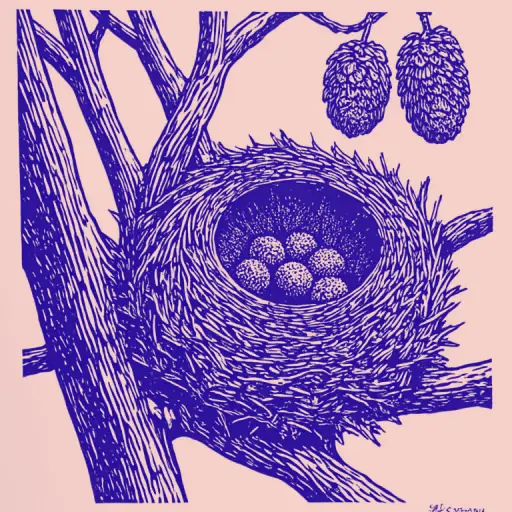
A drey is a spherical nest that a squirrel builds on the branches of coniferous trees or arranges in a tree hollow. Unlike simple temporary shelters for sleeping, the nursery drey is created exclusively for caring for offspring during the breeding period.
Its main differences are:
- Dimensions: The diameter of the nursery nest reaches 50 cm (a regular one is only 25–30 cm).
- Construction: It has a sturdy frame made of branches and must have two exits for emergency evacuation.
- Protection: The walls are made as dense as possible to protect the blind kits from predators and drafts.
Materials for Insulating and Protecting the Nest from Bad Weather
For reliable thermal insulation of the nursery drey, the squirrel uses a multi-layered bedding. It densely lines the inner chamber with soft natural materials:
- Dry moss and lichens—excellent at absorbing moisture and retaining heat.
- Grass and dry leaves—create a soft base.
- Animal fur, feathers, and down—serve as the final insulating layer.
In urban parks, squirrels often use cotton, threads, or pieces of fabric. This airtight "pillow" reliably protects the helpless kits from spring frosts and wind.
Step 3: Waiting for Offspring and Birthing Characteristics
When the secure and warm drey is completely ready, the most responsible and quiet period begins for the female. All her activity is now dedicated to carrying the young. During this time, the future mother becomes especially cautious, avoids unnecessary contact, and carefully guards her shelter, preparing for the imminent arrival of tiny heirs.
Squirrel Pregnancy Duration and Litter Size
Pregnancy in a common squirrel lasts an average of 35 to 40 days (for gray squirrels, this period is slightly longer—about 44 days).
The number of offspring in one litter directly depends on the female's age and the abundance of food in the forest:
- Average litter: from 3 to 10 kits (usually 4–6 babies are born).
- Maximum litter: in rare cases with abundant food, up to 12 kits can be born.
In a year, a healthy female in the wild manages to have up to two litters—a spring and a summer one.
Physiological State of Newborn Kits
Newborn kits are born completely helpless, blind, and deaf. Their tiny pink bodies weigh only 7.5–8.5 grams with a length of about 5–5.6 cm.
They completely lack fur, so they cannot maintain body temperature on their own and can freeze even on warm days. The first hairs begin to appear only after two weeks, and vision and hearing develop much later—eyes only open around 30–35 days of life. During this critical period, the survival of the young depends entirely on the warmth of the mother's body and the security of the nest.
Step 4: Nursing, Protection, and Nest Relocation
After the birth of helpless young, the most energy-intensive and dangerous period begins for the female. Her main task is no longer just to warm, but to feed the young, and to protect them from predators and parasites. The mother squirrel shows astonishing selflessness, vigilantly guarding the drey and taking emergency measures to save her babies at the slightest threat.
Milk Nursing and Maternal Care in the First Weeks
The first weeks of the kits' lives depend entirely on maternal warmth and care. The female provides milk nursing for 5–6 weeks. Since newborn kits are born blind and naked, they cannot regulate their body temperature independently.
When going out to find food, the mother squirrel carefully covers the nest with soft bedding of moss and fur to protect the young from hypothermia. Caring for the young during this period requires enormous energy expenditure from the female, so she leaves the drey only for short periods.
Reasons and Process of Moving Kits to Backup Nests
The mother squirrel builds 2 to 5 backup nests (dreys) not just for show. Moving the kits is a forced safety measure.
The main reasons for "relocation" are:
- Parasites: Fleas and ticks multiply quickly in the nursery nest.
- Predator Threat: If the old shelter is discovered by a marten, cat, or large bird.
- Crowding: Growing kits require more space.
The female carefully moves the kits one by one in her mouth, gently grasping them by the neck or belly. The babies instinctively curl up into a tight ball and become quiet, facilitating transport.
Step 5: Kit Growth and Preparation for Independent Life
As the kits grow, the most responsible stage of their lives begins—preparation for independence. The caring mother gradually acclimates the young to the world outside the safe drey. Ahead of them lies the mastering of first survival skills, getting acquainted with new tastes, and finally, the inevitable separation from the parental nest to find their own home.
First Outings from the Nest and Transition to Solid Food
Around 35–40 days of age, the kits' eyes are fully open, and they begin their first timid excursions from the drey. Initially, the babies do not go far from the original nest, moving only along nearby branches under the strict supervision of the mother.
During this same period, the gradual transition to solid food begins. The kits actively try:
- tender tree buds;
- young needles and bark;
- cone seeds and the first available nuts.
Although mother's milk remains an important part of their diet until about two months, by that time the young squirrels are already capable of finding and cracking hard foods independently.
Dispersal Process of Young Individuals and Search for Own Territory
Autumn dispersal is a critical stage for grown kits. The young individuals leave the mother's territory and set out to find their own territory, sometimes traveling distances of several kilometers to tens of kilometers (especially when food is scarce).
During this period, they may temporarily group together, moving in the same direction. The search for a free area concludes with the first frosts: the young squirrels settle where the cold catches them, hastily building their first individual shelters or occupying empty hollows.
Conclusion
Observing how squirrels raise their young—from building a warm drey to the dispersal of young kits—reveals an amazing world of wildlife right next to us. Understanding these stages helps us treat urban parks and forests more carefully, preserving the natural habitat for these caring mothers and their fluffy offspring.