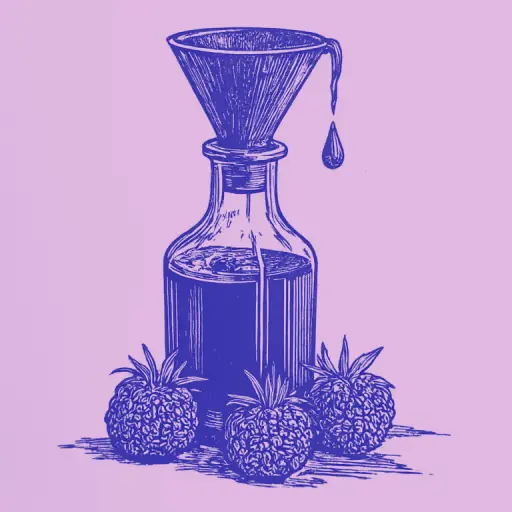
How to Strain Raspberry Liqueur to Make It Perfectly Clear?
- 8 min read
- 60
Homemade raspberry liqueur is valued for its bright ruby color, rich aroma, and smooth taste. However, even the most successful recipe can be ruined by one detail—a bothersome cloudy sediment at the bottom of the bottle. Raspberries are delicate berries; their pulp easily turns into a fine suspension that a regular sieve cannot retain.
How to properly filter raspberry cordial so that it delights the eye with crystal clarity? In this practical guide, we will examine effective methods for filtering homemade alcohol, compare popular materials—from cheesecloth to coffee filters—and explain how to clear raspberry liqueur of cloudiness without losing a drop of its noble flavor.
Preparation for Filtration and Basic Rules
To transform cloudy homemade alcohol into a noble ruby-colored drink, it is important to prepare it correctly for purification. Filtering raspberries is a delicate process: the delicate pulp easily turns into an invisible suspension that clogs any filters. Before reaching for funnels and cotton pads, you must master the basic preparation rules that will protect you from typical mistakes made by novice distillers and save you hours of time.
Why Raspberry Liqueur Becomes Cloudy
Raspberries are berries with a delicate structure, rich in pectin and microscopic fibers. During the infusion process, the alcohol breaks down the cell walls, causing the finest suspension to transfer into the liquid.
The main reasons why homemade alcohol loses clarity:
- Pectins: The natural "glue" that keeps the cloudy sediment in suspension.
- Fine pulp particles: Easily pass through a regular sieve or cheesecloth.
- Improper pressing: If the mash is squeezed too hard, excess pectin and berry puree will enter the raspberry cordial, making it much harder to clear the raspberry liqueur.
Should You Press the Berries After Infusion?
The short answer is categorically no, if your goal is to obtain a crystal-clear drink.
When pressing berries (especially delicate raspberries), a huge amount of fine suspension, pectin, and microscopic seed particles enter the liqueur. This not only creates a thick cloudy sediment but also permanently clogs any filters, turning further purification into an endless process. Furthermore, strong pressing releases tannins from the seeds, which gives the homemade alcohol an unpleasant bitterness.
What to do correctly:
- Self-draining: Simply carefully pour the liquid part of the liqueur through a sieve without crushing the berries.
- Natural draining: Transfer the remaining mash into a cheesecloth bag and hang it over a separate container. Filter the draining juice separately—this way, you will not spoil the clarity of the main batch of raspberry cordial.
Choosing the Filtering Material: From Cheesecloth to Coffee Filters
To turn cloudy berry suspension into a shining ruby nectar, it is important to choose the right "weapon" for filtration. A regular kitchen sieve will not handle this: the finest particles of raspberry pulp easily pass through large mesh openings. We need a two-stage approach. First, we will remove the large berry remnants to prepare the base, and then we will perform the delicate work of eliminating microscopic cloudiness. Let's examine which materials are ideal for each of these stages and how to combine them correctly.
Materials for Coarse Primary Filtration
For the first stage of filtering raspberry liqueur, it is important to separate the large berry particles, seeds, and the main mass of pulp. These are handled perfectly by:
- Metal kitchen sieve with fine mesh—the ideal first barrier for retaining whole berries and large fractions.
- Cheesecloth, folded into 2–4 layers. It effectively catches small pieces of pulp. Important: Do not squeeze the cheesecloth with the mash too hard, otherwise, fine suspension will get into the drink, and clearing it of cloudiness will be much harder.
- Nylon straining bags—a modern alternative to cheesecloth that leaves no fibers and is easy to wash.
This stage prepares the raspberry cordial for final clarification.
Tools for Final Fine Filtration
For final clarification, when the drink needs to have the finest suspension and pectin haze removed, materials with high density are used:
- Cotton pads or sterile cotton. The most popular and effective home method. Cotton is loosely placed in the neck of a funnel. It reliably retains micro-particles of pulp, but the process is slow—literally drop by drop.
- Paper coffee filters. An excellent option for final cleaning. The dense paper membrane retains even the smallest sediment. To prevent the filter from clogging instantly, the liqueur must first be stripped of large fractions before this step.
Pro Tip: Do not pack the cotton in the funnel too tightly, or the filtration will stop completely due to the density of the berry syrup.
Step-by-Step Guide to Straining the Liqueur
Once the appropriate materials are prepared, it is time to get practical. The process of turning cloudy berry suspension into a crystal-clear drink requires patience and strict adherence to the sequence of actions. To prevent clogging the filters in the first few seconds and to preserve the maximum amount of aromatic alcohol, we will divide the procedure into two key stages. By acting step-by-step, you will easily achieve impeccable clarity in homemade raspberry liqueur without unnecessary effort.
Step 1: Decanting and Preliminary Settling
The first and most important step toward drink clarity is the correct separation of the liquid from the dense berry sediment.
- Settling. Before starting filtration, leave the container with the raspberry liqueur undisturbed for 2–3 days in a cool, dark place. During this time, the suspension and fine berry particles will naturally settle at the bottom.
- Decanting. Carefully, trying not to disturb the cloudy sediment, pour the clear top layer of the liqueur into a clean container. It is best to use a thin silicone tube (siphon), lowering it slightly above the sediment level.
Do not pour out the thick residue left at the bottom—we will filter it separately so as not to clog the main volume of the homemade alcohol.
Step 2: Final Clarification Through Cotton or Paper
For the final clarification of homemade liqueur, when the finest cloudy sediment needs to be removed, a cotton filter or a dense coffee filter is ideal.
Fine Filtration Instructions:
- Funnel Preparation: Insert a clean cotton pad (or a tightly folded piece of sterile cotton) or a folded paper coffee filter into a regular funnel.
- Process: Slowly, in a thin stream, pour the decanted raspberry cordial. Do not rush and do not press on the filter to push micro-particles back into the drink.
- Material Change: As soon as the filtration speed drops to a few drops per minute due to clogging by suspensions, replace the cotton or paper with new material.
This careful filtration of the liqueur guarantees impeccable clarity and a beautiful ruby color.
Common Mistakes and Ways to Correct Cloudiness
Even when strictly following the filtration technology, homemade alcohol can present unpleasant surprises. Raspberries are a capricious berry, rich in pectins and fine suspensions, so the slightest incorrect movement can instantly return cloudiness to the drink.
To avoid negating all your efforts, it is important to know the critical taboos of the purification process and to master proven emergency methods for saving already cloudy raspberry liqueur.
What Not to Do When Filtering Raspberries
To keep the raspberry cordial clear, avoid critical mistakes during its purification:
- Do not press the mash. Strong pressing forces out pectin and fine suspension, resulting in a persistent cloudy sediment that is almost impossible to filter.
- Do not shake the container. Before starting the liqueur filtration, carefully decant the liquid. Any sudden movement will lift the cloudiness from the bottom.
- Do not rush the process. Attempts to speed up filtration by squeezing the cotton or coffee filter only clog the pores and ruin the result.
How to Save Already Cloudy Liqueur
If the raspberry liqueur has already become cloudy, you can restore its crystal shine using proven methods:
- Thermal Shock (Cooling). Place the drink in the refrigerator or freezer for 24–48 hours. The cold will cause pectins and fine suspensions to coagulate and settle at the bottom. Carefully pour off the clear part through a straw (decant), and pass the remainder through a dense cotton filter.
- Clarification with Gelatin. For every 1 liter of liqueur, take 0.1–0.2 g of gelatin. Soak it in cold water, dissolve it in warm water, and pour it into the drink. After 5–7 days, flakes will form at the bottom, and the cordial will become perfectly clear. You will only need to carefully filter it.
Conclusion
Achieving perfectly clear raspberry liqueur is an art that requires patience and strict adherence to technology. The main secret to the drink's crystal clarity lies in refraining from rough pressing of the mash and in the sequential use of filters: from a simple sieve to cotton pads or coffee filters.
Do not rush the process; allow the suspensions to settle naturally. In reward for your efforts, you will receive magnificent homemade alcohol of a deep ruby color that will surprise guests not only with its bright taste but also with its impeccable appearance.