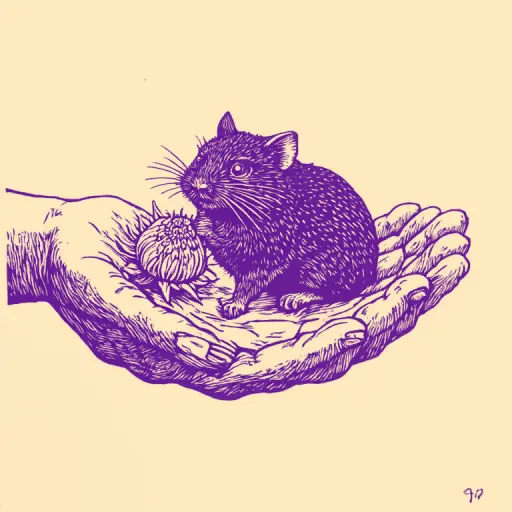
How to tame a Junggar hamster so it stops being afraid and biting
- 15 min read
- 72
The appearance of a tiny Junggar hamster in the house is always a great joy, especially for children. These fluffy little creatures charm with their activity and funny behavior. However, new owners often face an unexpected problem: when trying to pet or pick up the pet, the small rodent starts to panic and run away, squeak loudly, or even bite painfully.
Junggar hamsters are naturally very timid, and a human hand initially seems like a huge threat to them. But don't despair! It is quite possible to make the hamster tame and affectionate. The main thing is to act gently, consistently, and without rushing.
In this guide, we will thoroughly examine how to earn the trust of your little friend from scratch, how to react correctly to its fears and bites, and what steps will help turn a timid creature into a loving household pet.
Stage One: Acclimation and Preparation for Introduction
The arrival of a tiny Junggar hamster in the house is always an emotional whirlwind and an irresistible urge to immediately pick up the fluffy ball. However, for the rodent itself, moving from the pet store is a colossal stress. New smells, unfamiliar sounds, and a strange environment frighten the little one, forcing it to defend itself in the only way available—by running away or biting.
The first stage of taming is not about active actions, but about knowing how to hold back. To gain the trust of the Junggar hamster, you must create a safe haven for it and give it time to adjust. Let's look at how to properly organize this delicate period to lay a solid foundation for future friendship.
How long does the acclimation period last and why shouldn't you touch the hamster immediately
The acclimation period for a Junggar hamster in a new home usually lasts from 2 to 4 days, but for particularly timid individuals, it can stretch to a week. Moving from a pet store is enormous stress for the tiny rodent, whose familiar smells, sounds, and surroundings are completely changing.
Why absolutely should you not touch the hamster immediately after purchase?
- Defensive reaction: A frightened pet perceives an outstretched hand as a threat or an attack from a predator. Trying to grab it at this moment will cause the Junggar hamster to squeak desperately, run away, or bite painfully.
- Increased stress: Obsessive attention in the first few hours can provoke serious health problems in the rodent, including digestive upset.
- Loss of trust: If you frighten the little one on the very first day, the taming process will drag on for many weeks.
Let the new family member calmly settle into its cage, explore the wheel and feeder, and set up its nest. The hamster's natural behavior will recover faster if no one bothers it during this time.
Getting used to the owner's voice and creating a calm environment
Non-contact communication is the first step toward gaining the Junggar's trust. Start by creating a quiet and safe atmosphere around the cage. Place it away from drafts, television, and speakers. Loud noises greatly frighten the tiny rodent, forcing it to constantly hide.
To help the pet get used to your presence, spend 10–15 minutes by the cage every day. During this time, interact with it:
- Speak in a quiet, soft, and monotonous voice.
- Avoid sudden hand movements near the cage bars.
- Read a book aloud or simply calmly tell the hamster about your day.
The Junggar hamster has excellent hearing. Gradually, it will memorize the intonations of your voice and stop associating it with a threat. When the rodent stops freezing in fear or running into its hideaway upon your approach and voice sounds, the acclimation has been successful.
Step-by-Step Habituation to Hands Using Treats
When the Junggar hamster gets used to your voice and stops hiding when you approach, the most exciting stage begins—establishing direct contact. The best helper in this matter will be the rodent's natural curiosity and its love for tasty food. Using treats as positive reinforcement allows you to gently overcome the instinctive fear of humans.
This process requires patience and consistency. We will divide it into two simple steps: first, we will teach the hamster to associate your unique scent with a pleasant treat, and then we will gently encourage it to take the first step toward you and climb onto your palm on its own.
Getting acquainted with the owner's scent through treats
For the Junggar hamster, smell is the main way of knowing the world. To accustom the pet to your scent, start by properly preparing your hands. Wash them thoroughly with unscented soap. If your hands smell like food, the rodent might accidentally bite you, mistaking your finger for a treat. For extra security, you can rub your palms with clean bedding from the cage.
Choose the right treat:
- Sunflower or pumpkin seeds (unsalted and unroasted);
- A small piece of dried apple;
- A piece of carrot.
Hold the treat between your thumb and index finger. Slowly and smoothly lower your hand into the cage, keeping it near the bottom. Do not make sudden movements or try to pet the hamster. Allow the Junggar to approach, sniff your fingers, and take the treat. Repeat this procedure daily for several days. The animal must clearly understand: the appearance of your hand only brings pleasant emotions and safety.
Transitioning to Contact: How to Lure the Junggar onto an Open Palm
When the Junggar hamster stops being afraid of your scent and willingly takes food from your fingers, it is time to move to the next step—getting it to climb onto your hand completely.
To do this, use a simple step-by-step technique:
- Placing the bait. Place a favorite treat (such as a seed or a piece of dried apple) on the tips of your open palm fingers.
- First contact. Gently lower your hand to the bottom of the cage and freeze. Allow the hamster to approach, sniff the fingers, and take the food. At this stage, the pet must remain on the bedding.
- Moving inward. Next time, place the treat in the middle of your palm. To reach it, the Junggar will have to put its front paws on you.
- Full ascent. Place the treat closer to your wrist. The rodent will be forced to climb onto the palm with all four paws.
Keep your hand absolutely still. Do not try to squeeze your fingers or lift the pet immediately. It must understand that your palm is a safe, stable platform where delicious food is always given. If the hamster takes the treat and runs away—do not hold it; this behavior is completely natural in the beginning.
Safety Rules: How to Properly Pick Up a Hamster
When the Junggar hamster starts taking treats from your palm without fear and even climbing onto it, the most responsible moment arrives—the first time lifting the rodent outside its familiar habitat. At this stage, it is extremely important to act with utmost care. The physiology of Junggar hamsters makes them very fragile creatures: they have weak skeletons, and falling even from a small height can end tragically.
Contact safety is built on understanding the animal's psychology and correctly coordinating your movements. To solidify trust and avoid accidentally injuring the pet, it is necessary to master the basic rules of physical interaction and learn how to properly secure the tiny rodent in your hands.
"Palm-Boat" Technique for Safe Lifting
The safest and gentlest way to lift a Junggar hamster is using the "palm-boat" technique. It minimizes stress on the rodent because it does not imitate a predator attacking from above.
Step-by-step technique algorithm:
- Preparation. Slowly lower both hands into the cage with palms facing up. Do not make sudden movements or try to grab the pet with your fingers from above.
- Approaching. Gently bring your palms under the Junggar's belly from both sides, as if carefully scooping him up.
- Securing. Clasp the fingers of both hands together, forming a closed but spacious "boat" or "nest." The hamster should end up inside your palms.
- Lifting. Gently raise your hands. Keep the pet at a small distance from a soft surface (for example, above a sofa or your knees). If the frightened rodent decides to jump out, it will not be injured by the fall.
This method allows you to reliably control the Junggar's movements without compressing its fragile ribs and internal organs.
Main Prohibitions: How Not to Frighten or Injure the Pet
To ensure the process of taming a Junggar hamster does not end in injury or loss of trust, it is important to know what absolutely must not be done. The physiology and psychology of these rodents make them extremely vulnerable.
Observe the following taboos:
- Do not grab the hamster from above. In the wild, this is how predatory birds attack. The sudden appearance of a hand over its head will cause the Junggar to panic; it will start biting or try to escape.
- Do not squeeze the body. Junggar bones are very fragile. Too much pressure can damage internal organs or break ribs.
- Do not wake a sleeping pet. A sudden awakening is extreme stress. A sleepy hamster will instinctively defend itself and may bite hard.
- Do not lift high above the floor. Falling, even from human height, is often fatal for a tiny rodent. Always keep it above a soft surface.
- Do not chase with your hand in the cage. If the hamster runs away and hides, leave it alone. Forced contact will destroy all progress made.
Troubleshooting: What to Do If the Junggar Bites and Squeaks
Even with the most careful handling, adaptation is not always smooth. Sometimes the Junggar stubbornly refuses to make contact, squeaks desperately when a hand approaches, or even uses its sharp teeth. For a novice owner, this behavior can be a real shock, but it is important to understand: this is not inherent malice, but a natural defensive reaction of a tiny creature to a potential threat.
In this section, we will discuss how to react correctly to signs of fear and aggression from the pet. You will learn what hidden reasons cause the hamster to defend itself and how to safely continue the taming process, even if the first introduction ends with a painful bite.
Why the Hamster Shows Aggression and How to React to Bites
Junggar hamsters bite not out of spite—for a tiny rodent, this is the only available means of self-defense. Understanding the pet's motives will help you avoid injuries and establish contact faster.
Main reasons for Junggar aggression:
- Smell of food on fingers. If your hands smell of seeds, fruits, or soap with a sweet scent, the hamster will simply mistake your finger for a treat.
- Territorial instinct. The intrusion of a hand into the cage is often perceived as an attack on its personal territory.
- Fear of sudden movements. A palm hovering above resembles a predatory bird to the hamster.
- Health problems. If a usually calm animal starts biting and squeaking, it may be in pain.
What to do if the hamster bites you:
- Do not pull your hand away sharply. Out of fright, you might accidentally throw the hamster, leading to serious injuries. Try to freeze.
- Do not punish the rodent. Shouting, clicking on its nose, or blowing in its face will only reinforce its belief that you are an enemy.
- Gently return it to the cage. If it hangs onto your finger, carefully lower your hand to the bottom of the cage and wait for it to release its grip.
- Treat the wound. Wash the bite with soap and water and treat it with an antiseptic.
Taming Method for a Timid or Biting Pet Using Gloves
If the Junggar is terrified of hands and uses its sharp teeth at any attempt at contact, the best solution at the initial stage is to use gloves. This method will protect your fingers from painful bites and protect the pet itself: you won't drop it on the floor from unexpected pain.
How to correctly use this method:
- Choosing gloves. Use clean, thick fabric or thin leather gloves (such as gardening or work gloves). Avoid rubber and materials with a strong chemical odor.
- Introducing the treat. Place the Junggar's favorite treat in the center of the palm of the glove and slowly lower your hand into the cage.
- Reaction to a bite. If the hamster bites the glove, remain calm and do not remove your hand. The animal will quickly realize that its attack yields no result, and the "glove" poses no threat.
- Transitional stage. When the pet gets used to taking food from the glove without fear, start acclimating it to bare skin. You can do this by rubbing your hands with clean bedding from the cage to give them a familiar scent.
Common Owner Mistakes When Taming a Rodent
Even knowing the correct techniques and using protective gloves, Junggar owners often make frustrating mistakes that nullify all progress. Taming a tiny rodent is a delicate psychological process where any incorrect action is perceived by the animal as a threat to life. Hamsters have excellent memory for negative events, so one fleeting mistake can set you back to the very first stage of adaptation.
To prevent the taming process from dragging on for months and to prevent the pet from developing a fear of humans, it is important to recognize and eliminate typical behavioral triggers in time. Let's examine the main mistakes that novice owners most often make when trying to quickly bond with their new companion.
Rushing and Imposing Interaction Against the Pet's Will
The most common mistake of novice owners is trying to force the situation. The desire to quickly pet the fluffy little creature is understandable, but for a Junggar, such impatience results in enormous stress. Remember: in the wild, this rodent is prey, so any sudden intrusion into its territory is perceived as an attack by a predator.
If you try to forcibly pull the hamster out of its nest while it is sleeping or resting, you are guaranteed to receive an aggressive reaction. The pet will start squeaking loudly, defending itself with its teeth, or frantically running around the cage in a panic.
What Forcing Interaction Leads To:
- Loss of Trust: One rough grab against the animal's will can erase weeks of successful taming.
- Entrenchment of Defensive Behavior: The hamster will learn that the hand is a source of threat and will begin to preemptively attack it.
- Constant Stress: Chronic fear undermines the rodent's health and shortens its already brief life.
Give the Junggar the opportunity to control the process of closeness himself. If today he took a treat and immediately ran into hiding—do not chase him. Respect the personal boundaries of your little friend, and he will surely return the favor.
Using Improper Treats and Sudden Movements
In addition to rushing, a critical mistake is the improper choice of 'bribe' for the rodent and clumsy gesturing.
Many novice owners try to appease the Junggar with food from their own table: sweet cookies, cheese, sausage, or exotic fruits. This is not only deadly dangerous for the little one's health but also hinders taming. If your hands smell of human food, the pet will not recognize your unique owner scent and will simply taste your fingers, which will lead to a painful bite.
For safe and effective taming, avoid the following mistakes:
- Using Forbidden Foods: Exclude any sweets, salty, or fried products. The best treat is a single sunflower or pumpkin seed, or a tiny piece of carrot.
- Dirty Hands: Always wash your hands with unscented soap before contact with the pet to remove foreign food odors.
- Sudden Movements and Shadows Overhead: Junggars have poor eyesight, but their survival instinct is highly developed. Any quick movement or a hand hovering over the cage is perceived as an attack by a predator.
Move as smoothly as possible, keep your hand at the hamster's eye level, and never make sudden swings over its head to avoid provoking panic and aggression.
Conclusion
Taming a Junggar hamster is an amazing journey that requires boundless patience, sensitivity, and consistency from the owner. Remember that every pet has a unique character: one Junggar may become friendly within a week, while another may require a month to fully trust your hands. The main thing is never to rush things and to respect the personal boundaries of the tiny rodent.
To solidify success and build truly trusting relationships, always remember the three golden rules:
- Consistency: Spend 5–10 minutes interacting with the pet daily, without long breaks.
- Delicacy: Never wake a sleeping hamster or try to pull it out of its home by force.
- Positive Associations: Always reinforce successes with a favorite treat and a gentle, quiet voice.
Over time, fear will surely be replaced by curiosity, and your little fluffy friend will happily climb onto a warm palm on its own. Careful handling and the absence of violence are the only reliable foundation for a strong friendship. We wish you luck on this journey! May interacting with your Junggar bring you only joy and mutual trust.