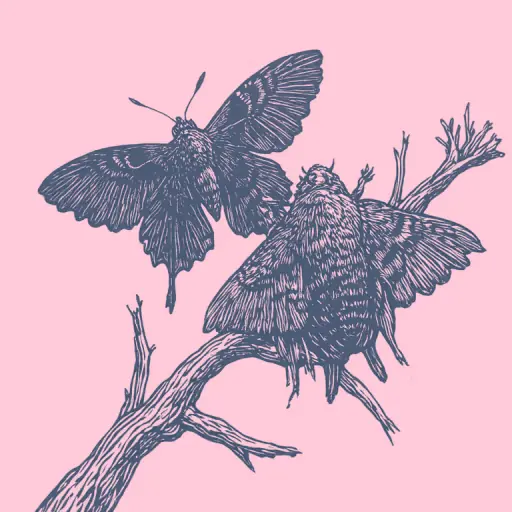
How to tell the difference between a butterfly and a moth by appearance
- 8 min read
- 64
Encounter winged guests in your home or garden, and you are unsure whether it is a delicate butterfly or a nocturnal moth? This is one of the most common and amusing puzzles for nature lovers. At first glance, these insects can appear almost identical because both butterflies and moths belong to the same order—Lepidoptera. Despite this external similarity, however, fundamental biological and behavioral differences hide between them. Understanding these nuances not only expands your horizons as an entomology enthusiast but also helps you better understand the world around you.
In this article, we conduct a detailed "anatomical examination" so that you can confidently distinguish a butterfly from a moth. We examine everything: from the unique structure of the antennae and body shape to their lifestyle and even the cultural metaphors they carry in art. Are you ready to become a true expert on Lepidoptera?
Our guide helps you understand the following key aspects:
Step 1: Examination of the Insect's Antennae and Body Structure
Once we have recognized that external similarity does not guarantee identical biology, it is time for a detailed anatomical examination. To understand how a butterfly differs from a moth, one must become a true entomologist and examine their structure closely. We start with the smallest details: the antennae and the general body shape. These features are the first and most reliable markers that help us draw a clear line between the two types of Lepidoptera.
Antennae Shape: Knob-like Swellings Versus Feathery Bristles
The simplest way to roughly compare Lepidoptera is to look closely at the insects' antennae. In diurnal butterflies, they are thin, long, and invariably end in characteristic knob-like swellings. These "knobs" help them perceive flower scents in bright sunlight.
In moths, the antennal structure is completely different. Their sensory organs resemble miniature feathers or combs covered with numerous small bristles. This feathery structure maximizes the surface area for capturing scents and pheromones in the dark, which is crucial for their survival.
Body Shape Characteristics: Slender Smooth Abdomen or Compact Hairy Body
When observing the body shape of these representatives of the order Lepidoptera, the difference between a butterfly and a moth becomes obvious:
- Butterflies possess a delicate, thin, and relatively smooth abdomen. Their body appears light and slender, which is ideal for active daytime flight.
- Moths (nocturnal Lepidoptera), on the other hand, have a compact, thick, and shortened body. It is densely covered with soft hairs that resemble a fluffy coat. This "fur" serves an important function—it helps retain warmth during cool night flights.
Step 2: Analysis of Wing Shape, Coloration, and Posture
The wings of Lepidoptera are their most important calling card and the most striking marker for species identification. Exactly how the insect holds its wings at rest and what microstructure they possess can immediately reveal its nature. Let's examine the most important visual markers that catch the eye upon first seeing a resting insect, while simultaneously delving into the subtleties of the anatomy of their wing plates.
Resting Posture: How the Insect Holds Its Wings at Rest
One of the easiest ways to notice differences between a butterfly and a moth is by observing them during resting periods. Pay attention to exactly how the insect is sitting:
- Butterflies (diurnal Lepidoptera): When resting on a flower or a branch, they fold their wings vertically behind their back and press them closely together. In this position, usually only the duller, camouflaging underside is visible.
- Moths (nocturnal butterflies): They prefer to spread their wings horizontally alongside the body or fold them "like a house" (a flat cover along the abdomen), completely concealing the back.
Although there are rare exceptions to this rule, this visual clue works flawlessly in most cases.
Wing Structure and Coloration: Presence of a Frenulum and Brightness of Pattern
Upon close examination of the wings of Lepidoptera, the key difference in anatomy is the frenulum (the wing coupling). In moths, this is a special microscopic bristle that connects the forewing and hindwing for synchronized flapping. This structure is completely absent in diurnal butterflies.
A second important marker is the coloration:
- Butterflies: Leading a diurnal lifestyle, their wings shimmer in all rainbow colors. Bright patterns serve to attract mates or warn predators of toxicity.
- Moths: Since they are predominantly nocturnal, they rely on camouflage. Their wings are covered with large scales in inconspicuous colors (gray, brown, pale), which helps them blend in with tree bark.
Step 3: Observation of Lifestyle and Behavior in Nature
External features are only part of the puzzle. To finally understand who is before us, it is enough to observe the behavior of the Lepidoptera in their natural environment. The lifestyle of these insects is subject to strict natural rhythms that determine their daily activity.
Let's pay attention to what time of day our heroes prefer to be active, and we will also analyze their amazing, sometimes fatal, reaction to artificial light sources.
Activity Time: Diurnal Sleep Versus Nocturnal Activity
The most obvious difference between these representatives of the order Lepidoptera lies in their "schedule of work."
- Diurnal Sleep is the calling card of most butterflies. They love the bright sun, which helps warm their wings for flight and allows them to find flowers through their vibrant colors.
- Nocturnal Activity is characteristic of moths. These crepuscular and nocturnal butterflies become active as darkness falls. Their evolutionary mechanisms are set to find mates and food under moonlight, which protects them from many diurnal predators.
Of course, there are exceptions in nature, but daytime activity remains a reliable indicator for field observations.
The phenomenon of nocturnal butterflies flying towards flames or lamps is explained by the peculiarities of their navigation system. Unlike diurnal butterflies, moths orient themselves in the darkness toward distant celestial bodies—the moon and stars.
This mechanism is called angle-holding:
- The insect keeps the light source at a specific constant angle to fly in a straight line.
- Since the moon is infinitely far away, its rays fall parallel.
- An artificial source (e.g., a streetlamp) is close, and its rays spread radially.
When the moth tries to maintain the accustomed angle to the lamp, it inevitably goes off course and begins to move in a narrowing spiral, eventually leading to a dangerous collision with the hot glass or fire.
Step 4: Examining Biological Nuances and Cultural Metaphors
The differences between diurnal and nocturnal butterflies are not limited to activity time and antenna shape. To clarify all points, one must look into the microscopic world of their anatomy and understand how these amazing creatures have become embedded in our culture.
In this final part, we delve into the hidden biological development processes of insects and clarify why the fragile images of the butterfly and the moth so often inspire poets and musicians.
Further Differences: Cocoon Structure, Vision, and Cocoon Type
In addition to external features, these butterflies exhibit profound anatomical differences in the metamorphosis phase and in the structure of their sensory organs:
- Cocoon and Pupa Type: Butterfly caterpillars develop into an open pupa (chrysalis) made of hardened protein, which hangs on plants. Moths, on the other hand, often spin a protective silk cocoon or pupate directly in the soil.
- Vision: The diurnal lifestyle of butterflies has shaped apposition eyes, which provide a clear image in bright light. Nocturnal butterflies (moths) possess superposition eyes that capture even the smallest photons in the dark, sacrificing sharpness for high light sensitivity.
The Image of the Butterfly and Moth in Art: The Significance of Vladimir Presnyakov's Song
In culture and art, the differences between diurnal and nocturnal butterflies have long developed into profound metaphors. The butterfly traditionally symbolizes lightness, daytime life, fleeting beauty, and rebirth. The moth, on the other hand, is a symbol of nocturnal secrets, the blind attraction to deadly light, and fatal passion.
A striking example of this contrast in music is the song "Butterfly and Moth" by Vladimir Presnyakov. In his context, the images of these insects personify the fragility of human emotions and the difference in attitude toward love. While the butterfly is associated with the light summer heat and the slipping beauty of the moment, the moth symbolizes the person who recklessly flies toward the fire of memories ("This love is far away"), risking burning in the flame of past passion. This artistic detail underscores the eternal striving for the unattainable ideal.
Conclusion
Now you know that the difference between a butterfly and a moth lies in the details. When observing these butterflies, pay attention to the insects' antennae, wing structure, and how they rest. The diurnal lifestyle and bright coloration reveal the butterfly, while the fuzzy body, silk cocoon, and nocturnal activity point to the moth. These simple reference points help you easily classify the winged guests.