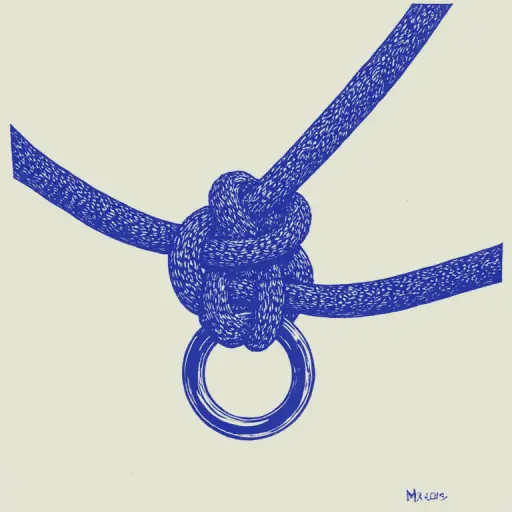
How to Tie an Adjustable Sliding Knot for an ID Tag According to Instructions
- 8 min read
- 60
Losing a pet is a nightmare for any owner. A reliable ID tag leash can prevent tragedy, but ordinary collars often unbuckle or tear. The ideal solution is to make an adjustable collar yourself.
Using a durable material like paracord and the correct sliding knot (such as the grapevine knot) ensures that the ID tag attachment will be durable, comfortable, and safe. In this practical guide, we will detail how to tie a secure and safe knot for a dog or cat that won't fail at the most critical moment.
Choosing Materials: What to Make a Reliable ID Tag Leash From
The reliability of the adjustable knot directly depends on the base you choose. Even the strongest grapevine knot will lose its properties if the cord quickly frays, stretches from moisture, or irritates the pet's skin. Before starting to braid, it is important to select a wear-resistant material capable of withstanding active walks and prepare a simple set of tools. The right choice guarantees that the ID tag will not get lost in the bushes, and the accessory itself will last for many years.
Best Materials for the Leash: Paracord, Nylon, Leather
Three materials are most commonly used to create a durable leash for an ID tag:
- Paracord (especially paracord 550) — the absolute favorite. It is incredibly strong, does not rot from moisture, dries quickly, and holds sliding knots (such as grapevine) excellently.
- Nylon cord — a smooth, wear-resistant, and budget-friendly option. Knots on it slide smoothly, but the ends require mandatory melting.
- Natural leather — looks stylish and noble, but stretches over time from water and can become coarse. Suitable for calm walks.
For active dogs and lovers of water activities, paracord with a diameter of 2–4 mm is the ideal choice.
Necessary Tools and Hardware Preparation
For the work, you will need a minimal set of tools found in every home:
- Sharp scissors — to cut the cord to the required length evenly.
- Lighter or matches — an essential tool for working with paracord and nylon. Melting the ends prevents the fibers from unraveling.
- Measuring tape — for accurately measuring the pet's neck circumference.
From the hardware, prepare a strong metal ring (like a key ring). This is what the ID tag hangs on, and the cord is threaded through the ring. For cats and active dogs, a special plastic quick-release clasp can also be prepared.
Step-by-Step Guide to Tying an Adjustable Sliding Knot
Moving from theory to practice, we will create a convenient and safe accessory for your pet. The adjustable sliding knot is an ideal solution for an ID tag: it allows the leash to be easily put over the dog's or cat's head and precisely adjusted to the neck size.
In this part of the guide, we will cover the classic braiding technique that guarantees the knot will not come undone during active play or walks. For the work, we only need a prepared length of cord, the medallion itself, and a little patience.
Preparing the Cord and Attaching the Medallion
First, prepare a length of cord (for example, from strong paracord) about 70–80 cm for a dog or 40–50 cm for a cat. Be sure to melt the cuts with a lighter so the threads do not fuzz up.
Now attach the medallion. The most reliable way is to thread the cord directly through the ID tag's strong metal ring. Place the medallion evenly in the middle of the cord segment. If you want the ID tag to move freely, simply put it on the cord. For static fixation, small silicone restrictors can be used on both sides, but for an adjustable collar, it is better to leave the ring free to move along the center of the cord.
Tying the Double Fisherman's Knot (Grapevine) Step-by-Step
Place the free ends of the prepared cord facing each other parallelly.
- First Knot: Take the right working end and wrap it twice around the left (main) strand toward the ID tag, forming a neat double loop. Pass this same end back through both loops and tighten firmly.
- Second Knot: Repeat the process symmetrically. With the left working end, make two wraps around the right strand and thread it inside the resulting loops. Tighten.
As a result, you will have two neat grapevine sliding knots that move easily along the cord, changing the collar size.
Adjusting the Cord Length and Checking its Reliability
Once the grapevine sliding knots are successfully tied, your adjustable ID tag leash is almost ready. However, the final step is the correct fit on the pet's neck and checking the reliability of the entire structure. An improperly adjusted accessory can either slip off during an active walk or cause discomfort to the animal.
Let's look at how to precisely fit the cord to your dog's or cat's parameters, as well as how to test the strength of the knots and properly secure the free ends of the paracord for the product's long service life.
How to Properly Adjust the Size for the Pet's Neck
To correctly adjust the ID tag leash, first spread the sliding knots (grapevine) as far apart as possible. This will enlarge the loop, and you can easily put it over the pet's head.
After that, gently pull the knots in opposite directions, reducing the cord's diameter. Refer to the time-tested rule:
- For dogs: two fingers should fit freely between the neck and the leash.
- For cats: a gap of one finger is sufficient.
This adjustment guarantees that the adjustable collar will not constrict the airways but also will not allow the animal to accidentally remove the accessory with its paw or get snagged on foreign objects.
Testing Strength and Securing the Cord Ends
After adjusting the size, be sure to test the reliability of the entire structure. Hold the leash on both sides of the knots and pull them forcefully in opposite directions. The knots should slide with noticeable resistance but should not come undone or slip completely.
For the final fixation of the ends, perform the following steps:
- Trim Excess: Leave the free ends about 5–7 mm long.
- Melt the Cuts: Carefully melt the paracord or nylon ends with a lighter.
- Secure the 'Cap': While the material is hot, press it with the flat metal side of the lighter against the knot. This creates a secure stopper that prevents the cord from slipping out.
Safety Rules When Using an ID Tag Leash
When creating a reliable adjustable leash, it is important to remember: the accessory's strength must not threaten the health of your beloved pet. In daily life, during walks, or during active play in nature, the pet may accidentally snag the leash on a branch, bush, or household furniture.
Therefore, the correct construction and proper use of a homemade collar are the key not only to keeping the ID tag safe but also to the safety of the dog or cat itself. Let's look at the key rules that will help minimize any risks.
Safe Breakaway Leashes for Cats and Active Dogs
For cats and hyperactive dogs that love climbing trees or squeezing through dense bushes, ordinary strong paracord can become a trap. If the animal snags the leash on a branch or fence, it can lead to injury or suffocation.
To avoid this, use breakaway elements:
- Plastic breakaway clasp: such a lock automatically unfastens when tension exceeds 1.5–2 kg.
- Elastic insert: sew a small piece of strong elastic band between the grapevine knots. With a strong tug, the adjustable collar will stretch, and the pet can easily free its head.
- Weakened ring: use a thin metal ring for connecting the ends of the cord that will break under critical load.
Such a safe ID tag leash will protect your beloved pet in an emergency.
Proper Care and Periodic Knot Reliability Checks
Even the most reliable grapevine knot can weaken over time due to the pet's constant activity, exposure to moisture, and dirt. To prevent the ID tag from getting lost, follow simple care rules:
- Weekly inspection. Check the tightness of the knots and the integrity of the cord. Ensure that the sliding loops still move with slight effort but do not slip spontaneously.
- Cleaning from dirt. Sand and dust act as an abrasive, wearing down the paracord or nylon fibers inside the knot. Wash the leash manually in warm soapy water regularly.
- Wear control. If you notice the first signs of abrasion, protruding threads, or knot deformation, replace the cord. Pay special attention to the melted ends—they should not scratch the animal's skin.
Conclusion
Creating a reliable adjustable ID tag leash yourself is a simple and effective way to take care of your pet's safety. By mastering the grapevine sliding knot technique using strong paracord, you will get a durable accessory that will not unravel at the most inconvenient moment.
Remember that regularly checking the integrity of the leash and the tightness of the knots guarantees that the important information on the medallion will always remain on your dog's or cat's neck. May this useful accessory, made with care and attention, become a reliable guardian for your beloved pet on every walk!