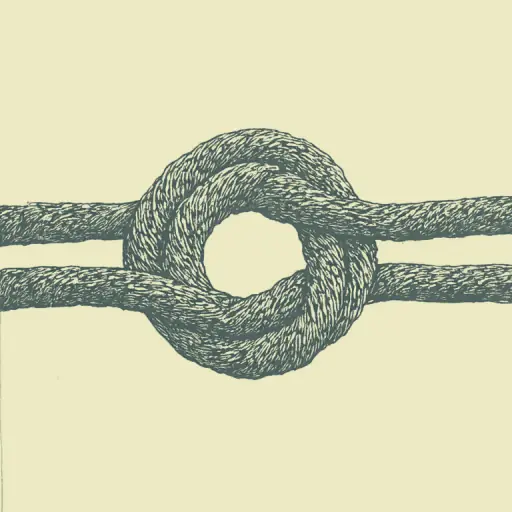
How to Tie a Double Sheet Bend Knot for Securely Joining Ropes of Different Diameters
- 8 min read
- 70
When joining ropes of different thicknesses, ordinary knots often fail: they either slip or tighten rigidly under load. In mountaineering, trekking, and rigging work, the double sheet bend knot is traditionally used to solve this problem. This reliable and time-tested knot ensures a rigid fixation even in extreme conditions. In this article, we will thoroughly examine how to correctly tie a double sheet bend, why the double wrap makes it safer than the classic sheet bend, and how to avoid critical errors when forming it.
What is a Double Sheet Bend Knot and Its Features
The double sheet bend knot (known internationally as double sheet bend) is a time-tested solution created specifically for securely joining ropes of different diameters. Historically originating in the sailing fleet for handling rigging, this knot inherits the simplicity of its predecessor, the sheet bend, but gains significantly greater safety.
Its unique geometry allows it to effectively distribute load, preventing slippage even on slippery synthetic ropes. Let's explore why this construction is considered the gold standard for reliability.
Difference Between Sheet Bend and Double Sheet Bend Knot
The sheet bend and double sheet bend knots have almost identical structures but fundamentally differ in their degree of reliability:
- Sheet Bend Knot: The working end of a thin rope wraps around the loop of a thick rope only once. It is simple but prone to untying itself under variable loads or on slippery synthetic ropes.
- Double Sheet Bend Knot: The working end makes a double wrap around the loop.
This additional turn significantly increases the friction force within the knot. Thanks to the double wrap, the double sheet bend knot securely joins ropes of different diameters and does not 'creep' under tension, unlike its classic predecessor.
Areas of Application: Mountaineering, Trekking, and Rigging
Due to its exceptional reliability when working with ropes of different thicknesses, the double sheet bend knot has found wide application in extreme and professional fields:
- Mountaineering and Mountain Trekking: The knot is indispensable for joining ropes of different diameters, for example, when adding an auxiliary rappel line to a main rope to organize descents or set up temporary railings.
- Rigging Work and Sailing: The knot's historical home. Here, it is used for securely joining ropes under tension, securing rigging (sheet bends), and working with wet or slippery synthetic lines.
- Hiking and Daily Life: It is used for quickly extending tent guy lines, repairing gear, and securely fastening loads.
Preparation and Basic Safety Rules
Moving from theory to practice, it is important to understand that the reliability of the double sheet bend knot depends not only on the correctness of its tying but also on the preliminary preparation of the gear. Working with ropes of different diameters requires special attention to detail, as the difference in thickness and material stiffness directly affects the knot's behavior under load.
Before making the first wrap, several basic safety rules must be considered. They help prevent accidental untying and ensure that the created connection can withstand any test in real conditions.
Specifics of Working with Ropes of Different Thicknesses
When joining ropes of different diameters with a double sheet bend knot, a strict rule applies: the loop must always be formed from the thicker rope. The thinner cord is used as the working end that wraps around this loop.
If this rule is violated and the loop is made from the thin rope, the stiff thick rope simply cannot clamp it down tightly. Under load, such a connection will instantly creep and untie. The double wrap of the thin rope around the thick loop creates the necessary friction force that reliably locks the knot even with a significant difference in thickness (for example, a diameter ratio of 1.5–2 times).
Why and Where to Tie Stopper Knots
The double sheet bend knot, despite its high reliability under constant tension, has a tendency to 'creep' under variable loads. This is especially critical on modern synthetic, slippery ropes of different diameters.
To prevent accidental untying, the use of stopper knots is a mandatory safety rule in mountaineering and trekking.
Where exactly to tie them?
- On the working end of the thin rope: A simple stopper knot is tied around the standing end immediately after exiting the knot.
- On the working end of the thick rope: It is also secured with a stopper knot to prevent the loop from slipping.
The length of the free working end after the stopper knot must be at least 10 times the rope's diameter.
Step-by-Step Guide: How to Correctly Tie a Double Sheet Bend Knot
Moving from safety theory to practice requires extreme attention. To correctly tie a reliable double sheet bend knot, you will need two ropes—preferably of different diameters for maximum clarity. The basis of this knot is simple geometry: forming a loop on the thick rope and sequentially wrapping it with the thinner working end.
Let's break down this classic method step-by-step, which guarantees the strength of the connection even under variable load.
Detailed Algorithm for Forming the Double Wrap
Let's move on to the actual tying of the knot. To securely join ropes of different diameters, strictly follow this instruction:
- Form the loop: Take the thicker rope and bend its working end to form a simple open loop.
- Insert the thin rope: Pass the working end of the thin rope up through the loop of the thick rope from underneath.
- First wrap: Wrap the thin rope around both ends of the thick loop (behind it). Then, pass the working end of the thin rope under its own standing part (over the loop). This forms the classic sheet bend knot.
- Second wrap (double sheet bend): Make one more full turn with the working end of the thin rope around the loop of the thick rope. Again, pass it under its own standing part, parallel to the first wrap.
It is this second wrap that prevents accidental untying and ensures the high reliability of the connection.
Tightening and Visual Check of Knot Correctness
After the double wrap is formed, the knot must be tightened and checked correctly.
Tightening Process:
- Pull evenly on all four ends: the standing and working parts of both ropes.
- Tighten the knot smoothly, arranging the wraps with your hands so they lie parallel and do not twist.
Visual Checklist:
- End Placement: The working ends of both ropes must exit from the same side of the knot.
- Knot Pattern: The two wraps of the thin rope firmly and neatly press against the loop of the thick rope.
- Length Reserve: The free working ends must remain at a length of at least 8–10 rope diameters to ensure safety.
Common Mistakes in Tying and How to Avoid Them
Even knowing the correct algorithm, it is easy to make regrettable mistakes in practice that reduce the connection's reliability. The double sheet bend knot forgives some inaccuracies, but critical errors in its formation can lead to accidental untying under load.
Let's examine the main tying defects encountered by both beginners and experienced trekkers, and find out how to protect yourself from dangerous consequences.
Errors in Working End Direction
The most common and dangerous mistake when tying a double sheet bend knot is the incorrect direction of the thin rope's working end exit.
Remember the golden rule: both working ends (of the thick and thin ropes) must exit from the same side of the knot after tightening.
If the working end of the thin rope exits on the opposite side from the thick loop, the knot loses up to 40% of its strength and begins to creep quickly even under minimal loads. Such crossing turns a reliable double sheet bend into a dangerous, self-untying structure. Always visually check the symmetry of the exits before loading the system.
Preventing Slippage Under Variable Load
The double sheet bend knot holds constant tension excellently, but under variable or jerking loads, it tends to 'creep.' To prevent slippage and guarantee safety, observe these three rules:
- Make a full double wrap. Never reduce the double sheet bend knot to a simple sheet bend when working with slippery synthetic ropes. It is this second wrap that creates the necessary friction force.
- Tie stopper knots. On both free working ends (especially on the thin rope), always tie stopper knots (such as a simple or half-grapevine knot).
- Leave long ends. The length of the free working ends after the knot must be at least 10 times the diameter of the respective rope. This prevents them from being accidentally drawn into the knot structure during sudden jerks.
Conclusion
The double sheet bend knot is an indispensable tool in the arsenal of any trekker, mountaineer, or yachtsman. Its unique ability to reliably join ropes of different diameters makes it one of the most practical and safest connections in rigging.
To ensure the knot always works flawlessly, remember the three golden rules:
- Always make a double wrap of the thin rope's working end around the thick loop.
- Monitor the exit direction: the working ends of both ropes must be located on the same side of the knot.
- Always tie stopper knots on the free ends, especially when using slippery synthetic cords.
Regular practice will allow you to automate the tying skill, guaranteeing gear reliability in any extreme condition.