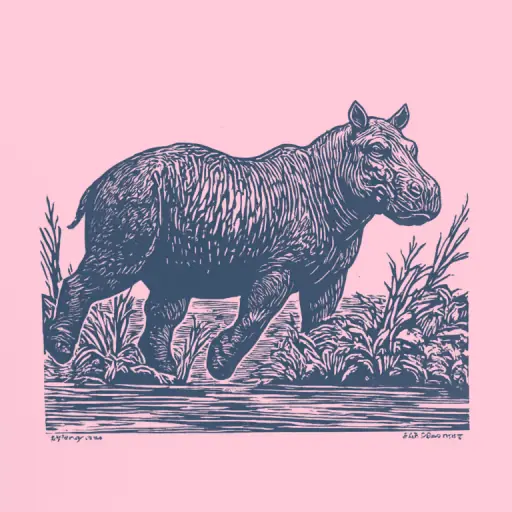
How to Understand Hippo Behavior During Defecation
- 8 min read
- 62
The viral videos showing a huge hippopotamus putting on a show while defecating invariably evoke a mix of laughter and perplexity in viewers. Why does this massive animal spin its tail so fast, turning it into a kind of "tail-propeller"?
To the casual observer, the spray of feces seems like a funny or ridiculous episode, but for wild nature, it is a fundamental evolutionary mechanism. The behavior of hippos hides a deep meaning: from marking territory to maintaining life in rivers, such as the famous Mara River. In this guide, we will analyze how hippo defecation works, why its feces are called the ecosystem's "metacoccus," and how to safely observe this spectacle.
Anatomy of the Process Study: How the "Tail-Propeller" Mechanism Works
To understand how a normal tail transforms into a powerful sprayer, it is necessary to look under the "hood" of this massive mammal. At first glance, the hippo's short, flat tail seems completely useless. However, behind this apparent modesty lies a unique locomotor apparatus. We analyze the anatomical structure that allows the hippo to perform such rapid rotational movements during defecation, transforming a normal physiological process into a real spectacle.
Physiological Characteristics of Hippo Defecation
The physiology of hippo defecation is directly linked to its diet and the structure of its digestive tract. As herbivorous giants, hippos ingest up to 40 kg of grass daily. Their multi-chambered stomach digests the raw fiber, producing a large volume of fibrous feces.
The main anatomical feature of the process is the short, flat, and muscular tail, resembling a shovel. At the moment of defecation, a powerful sphincter expels the feces, while the tail, performing rapid circular movements, instantly collects and fragments this mass, transforming it into a finely dispersed fan.
Why the Hippo Spins Its Tail Fast During Defecation
The rapid rotation of the tail during defecation turns this process into a real spectacle. The hippo's tail, performing up to several dozen oscillations per second, functions like the blades of a blender.
The main goal of this "propeller" is the maximum fragmentation and spraying of feces over a distance of several meters. Thanks to the flat shape and powerful musculature of the tail, the animals' feces do not simply fall to the ground but transform into a finely dispersed suspension. This allows the hippo to effectively cover a vast area with its excrement, leaving a clear odor trail for conspecifics and competitors.
Cause Analysis: Determining Behavioral Reasons
Having understood how this unusual "fan" works, it is logical to ask: why has nature equipped these giants with such a bizarre habit? In the wild, no act is performed without reason, and the spray of feces is not a ridiculous coincidence, but a fundamental communication tool.
For hippos, this process replaces social networks and passports. With rapid tail strikes, the animals transmit crucial signals to conspecifics, claiming their rights and status.
Territory Marking and Boundary Defense
For the male hippo, the spray of feces is not just a physiological act, but the creation of a reliable "boundary system." By rotating the tail-propeller, the dominant hippo scatters its feces on rocks, bushes, and riverbank water.
This odor barrier solves key problems:
- Boundary Signaling: A clear signal to outsiders that the territory is already occupied by a strong owner.
- Navigation: An olfactory beacon that helps the giants orient themselves in the dark when returning from nocturnal grazing to the river.
The wider the spray radius of the feces, the more imposing the status of the area's owner appears to its conspecifics.
Demonstration of Dominance and Signals Within the Herd
Within the herd, hippo defecation transforms into a true language of social status. When a dominant male actively rotates his tail-propeller, spraying feces in all directions, he literally declares to his conspecifics: "I am the boss here, and this is my zone of influence."
For subordinate members of the group, this behavior serves as a clear signal. Young males, in a sign of submission, may back away, lower their heads, or even demonstratively accept these odor sprays. This ritual allows the herd to maintain a rigid internal hierarchy peacefully, avoiding dangerous physical confrontations and trauma.
Ecological Significance Assessment: The "Metacoccus" Phenomenon
When thousands of hippos use the river daily as a communal toilet, their individual habits transform into a large-scale ecological phenomenon. Scientists call these aquatic areas "metacoccus"—a single biosphere where tons of organic matter circulate between the animals and the external environment. What seems like a dirty swamp to us is actually a giant natural reactor, boiling with life and chemical reactions. Let's see how this liquid cocktail changes the face of the African wilderness.
How Hippo Feces Influence the Mara River Ecosystem
The Mara River in East Africa is a classic example of how hippo life modifies the landscape. The herd of thousands of individuals provides tons of organic matter to the water daily. The animals' feces become a powerful source of nitrogen, phosphorus, and carbon.
In moderate quantities, these hippo feces act as fertilizer: they stimulate the growth of algae and nourish the river's microflora, initiating the food chain for fish and insects. However, during drought periods, when the current slows down, the concentration of feces becomes excessive. The water literally transforms into a boiling "metacoccus," where bacteria actively consume oxygen, causing mass death of aquatic inhabitants by suffocation.
Benefits and Dangers of the Probiotic Cocktail for River Dwellers
This "probiotic cocktail" of hippo excrement is a real double-edged sword for the inhabitants of African rivers.
Benefits for the Ecosystem:
- Microbiome Exchange: By swimming in this suspension, hippos actively share beneficial bacteria among themselves, maintaining healthy digestion for the entire herd.
- Food Source: Animal feces constitute a valuable source of nutrients for river crustaceans, insects, and certain fish species.
Dangers and Risks:
- Fish Kills: The excess organic matter causes an explosive growth of algae and bacteria that consume all the dissolved oxygen in the water.
- Toxic Gases: The enormous accumulation of hippo feces releases methane and ammonia, poisoning the water for sensitive river inhabitants.
Safe Observation Practice of Hippos in the Wild
Encountering a hippo in its natural habitat is an unforgettable sight, but it requires extreme caution. These massive animals may seem only gentle and slow; in reality, they rank among the most dangerous mammals in Africa. When it comes to their famous "tail-propeller," a tourist's curiosity can turn not only into ruined clothing but also into a real threat to life.
To ensure your safari leaves only pleasant memories, you must learn to read the body language of these giants. Understanding their warning signs and respecting simple safety rules will protect you from unpleasant surprises and allow you to enjoy the grandeur of nature without health risks.
How to Tell That the Hippo is Preparing to Spray Feces
To avoid ending up in the line of fire of a "fecal shower," it is important to recognize the hippo's behavioral markers in time. Hippos rarely launch a sudden attack; the defecation and territory marking process is always preceded by a brief preparation.
Pay attention to the following warning signs:
- Back Rotation: The animal turns demonstratively with its back toward the river, conspecifics, or the observer.
- Tail Raising: The short, flat tail is raised, exposing the anal area, and rests slightly against the body.
- Squatting: The hippo may slightly lower its hindquarters and begin moving back and forth to maintain balance.
- Test Strokes: The tail begins to make characteristic oscillating movements from side to side even before the feces are expelled.
If you notice the giant stopping in this position, move away immediately. In a second, its tail-propeller will operate at full power, spraying feces over a distance of several meters.
Safety Distance Rules When Encountering a Wild Giant
To avoid ending up under the "fire" and not provoking one of Africa's most dangerous giants, observe strict positioning rules:
- Safety Radius: Maintain a distance of at least 30-50 meters from the animal, both on land and in water.
- Wind Consideration: Always position yourself downwind. Remember that the dispersal radius of feces when the tail-propeller is active can reach 10 meters.
- Escape Route: Never place yourself between the hippo and the water. Sensing the threat, it will rush toward the life-saving water at speeds of up to 30 km/h, sweeping everything in its path.
Respecting these limits will save you from trauma and an extremely unpleasant shower.
Conclusion
The unusual way the hippo defecates is not just a funny spectacle from viral videos, but an extremely complex evolutionary mechanism. The rapid rotation of the tail-propeller and the spraying of feces help the giants mark territory and communicate with conspecifics. Furthermore, this process nourishes entire ecosystems, transforming rivers like the Mara into a single metacoccus. Understanding these nuances of hippo behavior allows one to view wild nature in a new light, where even the most eccentric animal habits play a fundamental role in maintaining life on the planet.