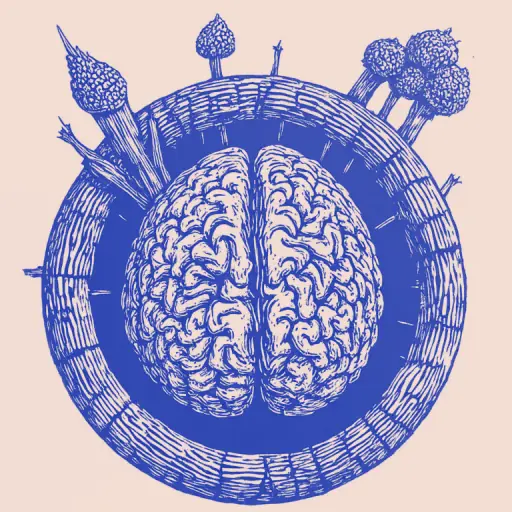
How to Understand the Mechanisms of How Ideas Control People and Society
- 14 min read
- 80
We are accustomed to considering ourselves the authors of our own thoughts, choices, and values. However, throughout human history, it has been abstract concepts—from religious dogmas to political doctrines—that have determined the fates of civilizations. Why are people willing to sacrifice personal interests, and sometimes even their own lives, for intangible constructs?
The influence of beliefs on public consciousness is so vast that modern researchers often compare them to biological agents. Ideas penetrate our cultural code, forming mental viruses and executing subtle mental programming. The concept of the unconscious, mass psychology, and the works of great thinkers of the past prove that we often act under the dictates of external assumptions, sincerely accepting them as our own.
This practical guide will help you understand the mechanisms of mind manipulation. You will learn how to recognize hidden pressure, deconstruct imposed concepts, and use critical thinking to protect your mind and achieve genuine free will.
Step 1: Understand how ideas are born and turn into mental viruses
To understand how abstract concepts subjugate entire nations, it is necessary to look at the very moment of their genesis. Ideas do not arise in a vacuum; they are born in the human mind but quickly gain autonomy, beginning to behave like living organisms. They adapt, mutate, and fight for survival in our mental ecosystem, controlling the behavior of their carriers.
In this section, we will examine how a thought transforms into a viable "mental virus" capable of capturing public consciousness. We will trace the evolution of abstractions from biological analogies of self-replicating information to fundamental philosophical systems that have subtly shaped our modern cultural code.
Richard Dawkins's Theory of Memes and the Evolution of Abstract Concepts
In 1976, biologist Richard Dawkins introduced the concept of the "meme" in his book The Selfish Gene—a basic unit of cultural information capable of replication. Like genes in biology, Dawkins's memes engage in a continuous struggle for survival in the reservoir of the human mind.
Abstract concepts—from religious dogmas to political slogans—evolve according to the laws of natural selection:
- Replication: The idea strives to infect as many carriers as possible through communication, media, and tradition.
- Mutation: During transmission, the concept is altered, adapting to new cultural codes.
- Selection: The most viable and aggressive mental viruses survive, those that best exploit our basic fears and needs.
The main paradox of meme evolution is that they do not care about the welfare of their carrier. An idea-virus can compel a person to sacrifice their life for an abstraction, because its sole purpose is self-copying and dominance in public consciousness.
How Past Philosophers (Marx, Nietzsche, Freud) Shaped the Modern Cultural Code
If Dawkins's memes explain the mechanism of idea survival, the works of Karl Marx, Friedrich Nietzsche, and Sigmund Freud vividly demonstrate how specific concepts reprogram public consciousness and form our cultural code. These thinkers created mental matrices in which humanity still lives today.
- Karl Marx overturned the perception of society by proving that ideas are determined by the economic base. His concept of class struggle divided the world into "oppressors" and "oppressed," laying the foundation for modern social movements.
- Friedrich Nietzsche deconstructed traditional morality by proclaiming the "death of God" and the value of individual will to power. His philosophy anticipated existentialism and the radical individualism of the 21st century.
- Sigmund Freud shattered the illusion of human complete rationality by unveiling the concept of the unconscious. He showed that we are governed by hidden drives, which later formed the basis of mass psychology and mind manipulation technologies.
The influence of these beliefs is so deep that we use their terminology daily without even realizing it.
Step 2: Study the Psychological Triggers and Mechanisms of Idea Subjugation
Understanding how great philosophers of the past shaped our cultural code inevitably leads us to the main question: why is our mind so vulnerable to external concepts? Ideas do not simply exist passively in books—they actively colonize the human psyche by exploiting vulnerabilities genetically embedded within us. To understand the mechanisms of this mental power, we must descend to the level of individual and collective psychology.
At this stage, we explore how abstract theories transform into unquestionable internal directives. We will examine which specific psychological triggers cause us to switch off our critical filter, submit to the pressure of authority and the group, and why human nature paradoxically seeks submission to great ideas, sometimes placing them above its own survival and pragmatic interests.
The Role of the Unconscious and Mass Psychology in Accepting External Assumptions
When an idea penetrates public consciousness, it appeals not to cold reason, but to deep layers of the psyche. The concept of the unconscious, developed by Sigmund Freud, and the classical mass psychology of Gustave Le Bon explain why, in a crowd, the individual personality instantly dissolves. Collective impulses take over, sharply reducing the level of critical thinking and activating archaic mechanisms of obedience to authority.
In a crowd, people experience the effect of emotional contagion. An external assumption is accepted without logical analysis if it resonates with basic archetypes, fears, or the desire to belong to a group. Mind manipulation is built on simple, emotionally charged images that bypass rational filters and take root in the subconscious. As a result, an external concept begins to be perceived as one's own inner voice, completely subjugating the individual's will.
Why People Are Willing to Sacrifice Personal Interests and Life for Abstractions
From the loss of individuality in the crowd—one step to the willingness to give up the most valuable thing for an abstract idea. Why does the basic biological instinct for self-preservation so easily yield to intangible concepts?
The main reason lies in our need to overcome the fear of death through symbolic immortality. Humans are the only creatures aware of the finitude of their existence. Abstractions (homeland, ultimate justice, faith, scientific progress) offer participation in something eternal. By sacrificing the biological "Self," a person gains existential meaning that subjectively becomes more important than physical survival.
In this mechanism, two key factors are involved:
- Filling the existential vacuum: Ideology transforms routine existence into a sacred mission, relieving the unbearable feeling of life's meaninglessness.
- Egoism of the mental virus: As Richard Dawkins noted, the idea does not care about the host's survival. Its goal is self-replication. It rewrites the value system so that death for its sake is perceived by the individual as the ultimate triumph.
By submitting to the abstract, a person paradoxically tries to save their personality from oblivion, even at the cost of destroying their own body.
Step 3: Identify the transmission channels and methods of mental programming
Understanding a person's psychological readiness to submit to abstractions is only half the battle. For an idea to gain real power over society, it needs a well-oiled delivery infrastructure. Mental programming does not happen in a vacuum; it relies on invisible but omnipresent transmission channels that daily shape our tastes, values, and political preferences.
In this section, we will examine exactly how abstract concepts are packaged into attractive cultural products and penetrate our minds under the guise of personal beliefs. We will explore the mechanisms by which external authorities and media structures subtly format public consciousness, and we will learn to recognize the hidden markers of manipulative influence.
How media, culture, and authorities subtly implant ideas into the consciousness
Media, mass culture, and authoritative opinion leaders act as the main distributors of mental viruses. They shape our cultural code not through direct coercion, but through the subtle saturation of the information field, bypassing the rational filters of the mind.
This process is realized through three main mechanisms:
- Narrative implant. Films, series, and pop music transmit ready-made behavioral patterns and ethical norms. We empathize with the characters and unconsciously adopt their values, embedding them into our collective consciousness.
- Authority effect. Our brain is evolutionarily inclined to trust opinion leaders. When a popular blogger or expert makes a statement, the critical filter weakens, and someone else's idea is accepted as one's own conviction.
- Repetition and normalization. The multiple duplication of a thesis in news feeds and social networks transforms a previously radical thought into a commonly accepted norm.
As a result, such manipulation of consciousness is masked as natural choice, making external concepts part of our inner world.
Recognizing techniques of manipulation, suggestion, and hidden pressure
Moving from general broadcasting channels to targeted influence, it is important to learn how to recognize the specific tools by which ideas take root in our minds against our will. Mind manipulation is always based on bypassing the critical filter and exploiting the vulnerabilities of our psyche.
Here are the key techniques of hidden pressure that you need to learn to identify:
- Emotional contagion. Instead of logical arguments, the manipulator appeals to basic emotions: fear, guilt, pride, or the thirst for justice. If an idea provokes a sharp emotional response that blocks rational consideration, it is the first sign of suggestion.
- Framing (interpretive frames). Information is presented from a specific angle where alternative viewpoints are initially discredited. You are given rigid boundaries on how exactly you must think about the problem.
- False dichotomy. Creating the illusion of a choice ("either you are with us, or you are against us"), completely excluding any intermediate or independent options.
- Linguistic programming. The use of "amoeba words" (terms with vague meanings, such as "common good," "stability," "freedom"), which each person fills with their own meaning, unknowingly agreeing with someone else's agenda.
Recognizing these patterns is the first step toward deconstructing external mental programming.
Step 4: Learn to distinguish your authentic desires from imposed concepts
By understanding exactly how media and social institutions implant mental viruses into our consciousness, we inevitably face the existential question: in all this chaos of other people's opinions, where am I myself? The influence of ideologies is so deep that our everyday aspirations—from career ambitions to consumer preferences—are often just echoes of other people's concepts, skillfully disguised as personal choice.
To regain control over one's life, it is necessary to draw a clear line between the authentic "Self" and the imposed cultural code. At this stage, we will turn to practical self-reflection. We will examine how to recognize foreign mental programs and notice in time when an abstract idea begins to destroy your real well-being, demanding unjustified sacrifices.
Methodology for separating the personal 'Self' from external information noise
To separate the authentic "Self" from mental viruses and imposed noise, use the existential filter method. It consists of three sequential steps:
- 'Epoché' practice (phenomenological reduction). Temporarily set aside all external judgments. Conduct a minimum of 24 hours in an information detox mode. Without a constant influx of other people's opinions, your mind will begin to return to basic, natural needs and thoughts.
- Pragmatic egoism test. Ask yourself a hard question: "If I were absolutely pragmatic and cared only about my real well-being, would this idea or goal matter to me at all?" If a concept requires constant sacrifice from you without a clear personal value, you are likely serving someone else's cultural code.
- Genealogy of desire. Ask yourself: "Where did I first learn that this was important?" Try to recall the original source—a film, a blogger's post, a parent's words. If the image of "success" or "duty" was imposed from the outside, deconstruct it to reclaim your subjectivity.
How to notice the destructive influence of an idea on your quality of life in time
An idea becomes destructive when it stops serving as a tool for your development and turns into a parasite that drains resources. To recognize this process in time, pay attention to the following warning signs:
- Systematic damage to basic needs. You regularly sacrifice sleep, physical health, financial stability, or close relationships for an abstract ideal.
- Emotional discomfort. Instead of constructive energy, the concept brings a constant feeling of guilt, anxiety, shame, or silent aggression toward those who do not share it.
- Taboo on doubt. An irrational fear arises of subjecting a belief to critical analysis. Any doubt within yourself is perceived as "betrayal."
- Narrowing of the worldview. All spheres of your life begin to strictly adhere to one dogma, pushing out alternative interests, hobbies, and simple joys of life.
Ask yourself a pragmatic question: “Am I using this idea to improve my life, or is the idea using me for its own survival and propagation?” If the balance is skewed toward self-destruction, you are dealing with a mental virus.
Step 5: Implement Critical Thinking Tools to Protect the Mind
Recognizing how deeply external concepts penetrate our consciousness is only the first step toward liberation. To avoid remaining a passive observer in a world of mental viruses and manipulation, it is necessary to move from passive recognition to active defense. In this context, critical thinking is not merely an academic skill but a vital tool for existential self-defense, allowing one to preserve the autonomy of the mind.
In this final step, we will arm ourselves with practical methods that will help you build a robust intellectual shield. We will examine how to conduct regular reviews of one's own views, ruthlessly cutting out externally imposed dogmas, and how to form daily habits of mental hygiene to protect your consciousness from continuous information noise.
Practical Audit of Personal Beliefs and Deconstruction of External Assumptions
To free the mind from the influence of destructive mental viruses, it is necessary to inventory one's own mental map. A practical audit of beliefs consists of three sequential steps:
- Identification and Documentation. Write down your basic life assumptions on paper (e.g., “I must be successful,” “Self-sacrifice is the highest virtue”). Translating thoughts into text strips them of the status of “obvious truth.”
- Genealogical Inquiry. Ask three critical questions about each belief:
- Where did this idea come from? (Parents, media, school, authorities).
- Who benefits from me believing this?
- When exactly did I accept this as my own?
- Socratic Deconstruction. Separate the belief into facts and interpretations. If the idea rests only on abstractions (“duty,” “correctness,” “standards”), test it for strength: what happens if you reject it right now?
To deconstruct external assumptions imposed from the outside, use the “goal—means” filter. Ask yourself: does this concept call you to build your own life, or does it use you as a resource to achieve someone else's abstract goals? This method allows you to detect foreign mental implants and regain control over your own goal-setting.
Rules of Mental Hygiene and Information Filtering in Daily Life
The transition from a one-time belief audit to constant mind protection requires implementing daily habits. Mental hygiene is not just about limiting screen time; it is the conscious selection of concepts allowed into your consciousness.
Here are four basic rules for filtering information in daily life:
- Epistemic Pause (Information Quarantine). Set strict boundaries for consuming news and social media. Allocate no more than 30–40 minutes per day for this. Allow incoming ideas to “settle” before giving them an emotional evaluation.
- The “Cui bono?” Principle (Who benefits?). When encountering a vivid, emotionally charged thesis, immediately ask: “What reaction or action is this content trying to provoke, and who benefits from it?” This instantly activates the critical filter.
- Slowing Cognitive Response. Do not react to information instantly. Mental viruses parasitize fast emotions (fear, anger, delight). Pause for 10 minutes before reposting or making a decision influenced by a new idea.
- Regular Decompression. Spend at least one day a week without external information streams. This time is necessary for your “Self” to separate from the collective unconscious and restore internal balance.
These simple filters create a strong barrier against mind manipulation and help preserve the autonomy of thought in an era of total information noise.
Conclusion
Understanding how ideas control people and society is not just a theoretical skill; it is a fundamental condition for personal freedom in the 21st century. We have traced the path from the emergence of mental viruses and the influence of great philosophers of the past to subtle psychological triggers and media manipulation. Now that the mechanisms of influence have been deconstructed and mental hygiene tools have been integrated into your daily life, you possess the ultimate weapon—awareness.
Liberating the mind from imposed concepts does not happen instantly. It is a continuous process of self-reflection that requires the courage to question even the most obvious dogmas. Remember that ideas must serve the person, helping them develop and create, not turning them into a blind instrument for achieving others' goals.
By developing critical thinking and carefully guarding the boundaries of your “Self,” you transition from the role of a passive object of manipulation to the status of an active author of your own life. May your mind remain clear, your judgments independent, and your choices genuinely your own.