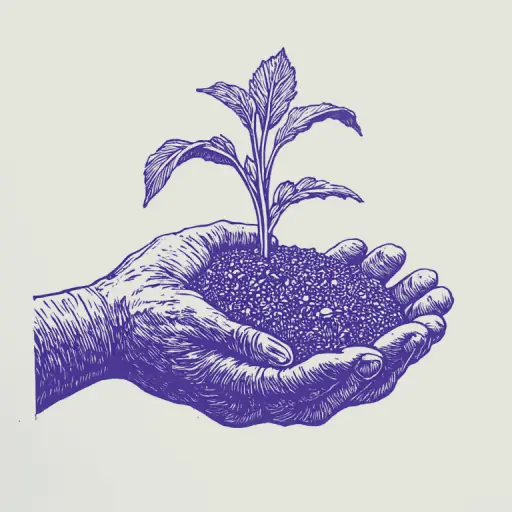
How to Understand the Connection Between Humans and Nature in the Modern World?
- 15 min read
- 81
In an era of rapid urbanization and digital technologies, it often seems to us that humanity has completely separated itself from the natural environment. Megacities of concrete and glass create the illusion of absolute autonomy. However, this is a dangerous misconception. The unity of humanity and nature is not just a romantic metaphor, but a fundamental law of our species' survival.
Today, the interaction between society and nature has reached a deep impasse, giving rise to a global ecological crisis. We are accustomed to perceiving the planet merely as a source from which natural resources are drawn without compensation, forgetting that our physical and mental health is inextricably linked to the state of the biosphere.
How to overcome this dangerous rift and restore harmony with nature? This practical guide will help you rethink ingrained views, study the fundamentals of ecological culture, and take the first conscious steps toward ecological balance in daily life.
Recognizing the Biological and Evolutionary Connection Between Humans and Nature
To overcome the looming rift with the surrounding world, it is necessary to return to the origins and realize: humans have never left the boundaries of the global ecosystem. Our connection with nature is not merely a romantic attachment, but a fundamental biological and evolutionary constant. We are woven from the same chemical elements, are subject to the same physical laws, and share a common genetic code with millions of other living organisms.
Understanding this inseparable connection requires us to look through the prism of millennia. Throughout history, humanity has balanced between two poles: complete dissolution into the biosphere and attempts to subject it to its will. Recognizing this path helps us see how our place in the world has changed and why restoring the lost balance is so important today.
Humans as an Inseparable Part of the Earth's Biosphere
Biologically, humans have never left the boundaries of the Earth's biosphere. Our existence is entirely subject to the fundamental laws of nature: we breathe oxygen produced by green plants, consume water and organic matter, acting as a link in numerous food chains. Physiologically, the human body is an open system that continuously exchanges substances and energy with the environment.
The unity of humanity and nature is clearly evident at the genetic and cellular levels. We share common evolutionary roots with all life on the planet. Any attempt to technologically isolate humanity from the biosphere is illusory: our basic biological needs, including a healthy microbiome and a stable climate, directly depend on biodiversity. Understanding this dependence dismantles the anthropocentric myth of dominance and lays the foundation for a new ecological culture, where humans are not conquerors, but co-participants in terrestrial life.
The Historical Path from Nature Worship to the Age of Conquest
The evolution of the relationship between society and nature has progressed from sacred awe to utilitarian pragmatism. In archaic times, mythological consciousness prevailed: humans felt their absolute unity with nature, personified its elements, and worshipped them. The surrounding world was perceived as a formidable yet life-giving force.
With the development of agrarian civilization, and later with the advent of the Enlightenment and the Modern Era, the vector changed radically. The philosophy of Francis Bacon and René Descartes proclaimed humans as the "master and owner of nature." The living cosmos in the minds of people transformed into a giant, soulless mechanism, and the biosphere into an inexhaustible reservoir supplying natural resources.
This transition from reverence to conquest laid the foundation for scientific and technological progress, but simultaneously deprived humanity of ethical guidelines in interacting with the environment, predetermining the inevitable ecological crisis.
Analyzing the Causes of the Modern Disconnection from the Environment
Having recognized the historical path from reverence for nature to its conquest, we inevitably confront the main paradox of modernity. Today's rift between humanity and the biosphere is not merely a consequence of technological progress, but a deep mental and structural crisis. The comfort of civilization has created an unprecedented distance between human daily life and natural ecosystems.
This rift is fueled by two key factors:
- Ideological: the ingrained belief in human exceptionalism and the right to unlimited resource exploitation.
- Spatial: total urbanization, which isolates us in an artificial habitat, creating a false sense of security.
Let's examine exactly how these factors have shaped the modern illusion of independence from living nature.
Anthropocentrism and the Price of Technological Civilization's Benefits
Anthropocentrism is a philosophical stance that has established the status of "creature of creation" and sole master of the planet for humans. In this framework, the environment is stripped of its intrinsic value and reduced to the role of a giant warehouse from which natural resources are drawn without compensation. In striving to subject the biosphere to itself, humanity created a powerful technological civilization that provided an unprecedented level of comfort, security, and consumption.
However, these benefits come at a high price. The price for technological triumph has been:
- Global ecological crisis: depletion of non-renewable reserves, pollution of oceans, and critical ecosystem destruction.
- Loss of identity: the rupture of the natural connection between humans and the biosphere generates a feeling of existential loneliness and chronic stress.
- Illusion of omnipotence: the blind belief that any environmental problems can be solved solely with new technologies.
By trying to completely isolate ourselves from wild nature using concrete and digital screens, we only drive ourselves deeper into a trap of dependence on fragile technological systems. The interaction between society and nature has turned into a one-sided extraction, disrupting the balance of power on the planet.
The Illusion of Independence: Why Cities Do Not Protect Against Natural Forces
Modern urbanization has created a powerful technological dome that generates the dangerous illusion of complete autonomy from the biosphere. We feel that high-rise buildings, asphalt, and climate control systems reliably isolate us from the outside world. However, this independence is a dangerous self-deception. Any large-scale natural catastrophe—be it a hurricane, abnormal heat, or flood—instantly paralyzes megacities, exposing humanity's deep dependence on nature.
Cities do not protect against natural forces; they only concentrate risks. Disruptions in food supply chains, power outages, and flooding of transport arteries clearly demonstrate that the interaction between society and nature cannot be severed by artificial barriers. By trying to conquer nature, we have only weakened our adaptability. Recognizing the vulnerability of our "concrete jungles" forces us to rethink the technocratic approach and admit that true security lies not in isolation, but in restoring harmony with nature.
Step by Step: Forming an Ecocentric Mindset
We have established that historically formed anthropocentrism and technological civilization have created the illusion of human separation from natural cycles. However, this illusion does not withstand the test of reality: we depend on the climate, resources, and natural rhythms. At this stage, we need to shift our mindset—to move from the paradigm of "conquest" to the model of "interaction." This requires a deep philosophical shift in our consciousness.
This transitional stage is the essence of an ecocentric worldview. We must master the tools that allow us not just to know about the connection between humanity and nature, but to live in accordance with the principles of this interdependence.
Transitioning from Domination to Partnership: Vernadsky's Noosphere Concept
The transition to an ecocentric consciousness requires a solid scientific and philosophical foundation. The basis for this is Vladimir Ivanovich Vernadsky's theory of the noosphere—the sphere of reason. According to this concept, the Earth's biosphere, under the influence of scientific thought and human labor, inevitably transitions into a new qualitative state.
The interaction between society and nature can no longer be based on the principles of blind conquest. Vernadsky proved that humanity has become a powerful geological force capable of changing the planet's appearance. This realization gives rise to a deep understanding of responsibility and dictates new rules:
- Unity of humanity and nature: we are not external conquerors, but a thinking part of the single living organism of Earth.
- Rational co-creation: technological development must be consistent with natural biosphere cycles.
- Ecological culture: the transition to the noosphere requires restructuring thinking from egoistic resource consumption to partnership.
The concept of the noosphere proves that harmony with nature is not a utopian call, but an objective evolutionary necessity for the survival of humanity.
Methodology for Changing One's View of the Environment
The transition from the theory of the noosphere to personal practice requires deep internal restructuring. To overcome anthropocentric attitudes and feel the true unity of humanity and nature, one can use a step-by-step decentralization methodology:
- Practice of subjectivity (decentralization). Try to mentally endow surrounding living organisms—a tree in the yard, a bird, a houseplant—with their own value and subjectivity. Ask yourself: "What are the needs of this creature independent of its benefit to me?" This destroys the utilitarian view of natural resources.
- Ecological reflection. Daily analyze your consumption choices. Recognize how buying plastic packaging or excessive energy use affects the biosphere. This transforms an abstract ecological crisis into a personal responsibility.
- Sensory attunement. Spend at least 15 minutes a day in active contemplation of nature without gadgets. Focus on sounds, smells, and textures. This restores the emotional connection between humans and the biosphere, reducing stress levels.
This approach lays the foundation for ecological culture, turning care for environmental protection from an external obligation into an internal need.
Practical Guide to Restoring Connection with Nature in Daily Life
Recognizing our unity with the biosphere inevitably requires moving from reflection to action. The philosophy of ecocentrism gains true strength only when it takes root in our daily choices and habits. Restoring the lost connection with nature in the context of a modern metropolis is not about abandoning the benefits of civilization, but about consciously integrating natural rhythms into the routine of city life. For this process to be harmonious, it is important to act in two directions: external—by restructuring one's lifestyle and reducing anthropogenic load, and internal—by restoring psycho-emotional balance through direct contact with the living world. Below, we examine specific steps that will help turn ecological care into a natural part of your day.
Implementing Ecological Culture and Eco-Habits in Daily Life
Ecological culture begins with the realization that every domestic choice we make is a direct interaction between society and nature. To overcome the global ecological crisis, it is necessary to bring harmony with nature into the space of one's own home. This is not merely a mechanical refusal of plastic, but a deep understanding of how local action affects the biosphere as a whole.
Eco-habits can be divided into three practical steps:
- Conscious resource consumption. Saving water and electricity is preserving non-renewable natural resources. Installing aerators on taps and using energy-efficient appliances reduces the load on ecosystems.
- Waste minimization (Zero Waste). Switching to reusable alternatives (tote bags, thermal mugs) and sorting waste prevents environmental pollution.
- Ecologizing household chemicals. Using phosphate-free products and natural alternatives protects water resources from toxic contamination.
This approach transforms routine into a daily manifesto of the unity of humanity and nature, laying the foundation for a sustainable future.
Psychological and Health Practices for Contact with Living Nature
Moving from domestic eco-habits to deep internal unity requires changing the focus of attention. Psychological and health practices help overcome the "nature deficit disorder" and restore mental health.
- Shinrin-yoku (forest bathing): A Japanese therapeutic practice of consciously immersing oneself in the forest atmosphere. It involves engaging all the senses: listen to the rustling of leaves, inhale phytoncides, feel the bark of the trees. This reduces cortisol levels and strengthens the immune system.
- Grounding: Physical contact of the body with the earth (walking barefoot on grass or sand). From a physiological perspective, this stabilizes biological rhythms; philosophically, it restores a sense of stability and connection to the planet.
- Eco-meditation: The practice of contemplating natural fractals (clouds, water currents, swaying branches). Such contemplation switches the brain into a "attention restoration" mode, reducing mental fatigue from urban noise.
Regular bodily and sensory contact with the living environment transforms the abstract idea of "the unity of humanity and nature" into a deeply personal, experienced reality that heals the psyche from urban stress.
Assessing Personal Impact and Preventing Common Mistakes
The transition from internal contemplation and psychological unity with nature to practical action demands utmost honesty and objectivity from us. True ecological culture is not limited to walks in the forest and meditations; it inevitably manifests in the material consequences of our daily choices. The interaction between society and nature today is measured by specific figures: consumption volumes and the carbon footprint left by each of us.
For our efforts to harmonize our relationship with the biosphere not to turn into an illusion, we must learn to soberly assess our real impact on the environment. On this path, modern individuals are confronted by two extremes: underestimating their negative impact and indulging in superficial, purely declarative ecological practices. We must learn to translate abstract care for the planet into the realm of precise calculations and recognize false ecological initiatives.
How to Calculate and Optimize Your Ecological Footprint
The ecological footprint is the physical embodiment of our connection to the biosphere. It shows how much biologically productive land and water area is required to produce the resources we consume and absorb our waste. When the interaction between society and nature is disrupted, this footprint begins to exceed the planet's capacity, exacerbating the global ecological crisis.
To calculate your ecological footprint, you can use international online calculators (such as the Global Footprint Network). They analyze three key areas of your life:
- Energy and water consumption: how many resources are used for heating, lighting, and domestic needs.
- Transportation habits: the frequency of using private cars, public transport, and air travel.
- Diet and purchases: the proportion of animal products in the diet, the amount of food wasted, and the frequency of acquiring new items.
Optimizing the footprint is not just about restriction; it is about moving to a new level of ecological culture. Start small:
- Reduce the consumption of single-use plastic and switch to local, seasonal produce.
- Optimize home energy consumption (unplug appliances, use energy-saving lamps).
- Choose alternative modes of transport (walking, cycling, public transport).
Consciously calculating one's footprint brings us back to understanding the unity of humanity and nature, transforming abstract environmental care into daily personal responsibility.
Traps of False Eco-Activism and Greenwashing
The striving to restore harmony with nature often runs into the industry of pseudo-ecology. Greenwashing is a marketing tactic where a brand positions itself as environmentally friendly without having real grounds for it. This distorts the true interaction between society and nature, turning care for the biosphere into a tool for profit extraction.
To avoid becoming a victim of false eco-activism, it is important to recognize its key traps:
- The 'Magic' of Labels: Using prefixes like "bio-", "eco-", "natural", and green coloring on packaging without passing independent certification (such as "Leaf of Life," "MSC," or "EU Ecolabel").
- Shifting Focus: Loud declarations about abandoning plastic straws while simultaneously ignoring the enormous carbon footprint of the production itself.
- The Cult of 'Eco-Consumption': Imposing the purchase of new reusable alternatives (shopping bags, thermal mugs) instead of using items already owned. Remember: the most ecological product is the one that was never produced.
False activism is often limited to showy gestures that do not address the deep foundations of ecological culture. True unity between humanity and nature requires not the purchase of "green" brands, but conscious reduction of consumption and critical analysis of information.
Conclusion
Summarizing our research, it becomes clear that the interaction between society and nature has reached a critical stage where old patterns of unlimited consumption lead to a civilizational dead end. The modern ecological crisis is not merely a technological or economic failure, but a deep crisis of the anthropocentric worldview. We have lived too long in the illusion of independence, forgetting that the unity of humanity and nature is fundamental and inseparable. Our dependence on nature remains absolute: no virtual worlds, artificial intelligence, or megacities can replace clean air, fresh water, and the stability of global ecosystems.
The path to overcoming this rift lies in a qualitative change in our consciousness. The evolutionary vector transition of "biosphere and noosphere," proposed by Vladimir Vernadsky, requires that environmental protection transforms from a forced external measure into a conscious internal need of every person. True ecological culture begins with the small things: understanding one's personal ecological footprint, having a critical attitude toward consumption, exposing false eco-activism, and implementing simple but regular eco-habits in daily life.
Harmony with nature in the 21st century is not a call to abandon progress and return to caves, but a concept of rational co-creation and co-evolution. Caring for such wealth as natural resources and recognizing the inherent value of all living things will help us restore the lost balance. The future of humanity directly depends on our ability to outgrow the role of the selfish consumer and accept responsibility for preserving our common and only home.