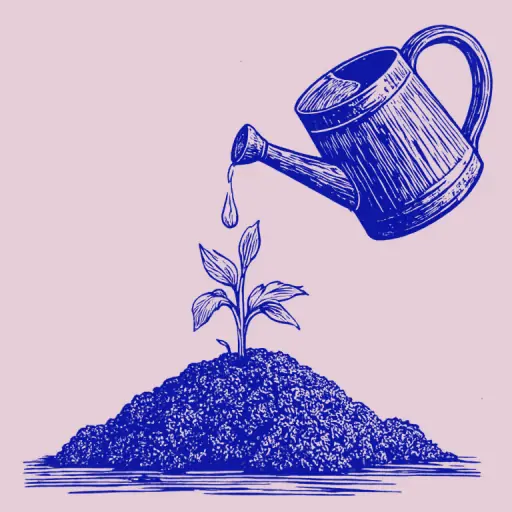
How to water seedlings transplanted to open ground: care rules and water consumption norms for the garden
- 14 min read
- 59
Transplanting young seedlings from comfortable home conditions to open ground is a serious stress for the plants. At this critical juncture, proper post-planting care, and especially the correct watering of the seedlings after transplanting, determines their future. Watering mistakes can negate months of work: excess moisture leads to the rotting of the fragile root system, while drying out leads to rapid wilting.
To ensure 100% establishment of the seedlings, the gardener must strictly control soil moisture and take into account numerous factors: from water temperature to the specific needs of the crop. In this practical guide, we will detail how to perform the first watering correctly, set up an optimal irrigation schedule for the first few weeks, master gentle root watering, and implement effective moisture retention methods such as mulching and drip irrigation.
First Watering When Transplanting Seedlings: Step-by-Step Instructions
Moving seedlings from cozy home conditions to open ground is a severe stress for the delicate root system. It is at this critical moment that proper watering determines how quickly and painlessly the plants adapt to the new location. The first watering during transplanting serves not just to saturate with moisture, but acts as a vital technological procedure: it helps the soil tightly envelop the roots, eliminating dangerous air pockets in their growth zone.
To minimize risks and ensure high seedling establishment, it is necessary to strictly follow the sequence of actions. Proper post-planting care begins even before the stem is in the ground and continues in the first minutes after it is placed in the bed. Let's break down this delicate process step by step.
Preparing Planting Holes and Moisture-Saturating Watering
Proper preparation of planting holes is the foundation for successful seedling establishment in open ground. The dug-out holes must be transformed into a moist micro-oasis for the fragile root system.
The moisture-saturating watering process for the holes includes the following steps:
- Forming and Filling: Dig a hole to the size of the soil ball, add organic matter or ash to the bottom, and mix it with the soil.
- Initial Pour: Pour plenty of warm water (about +20...22 °C) into the hole. The required consumption is 1–3 liters per planting spot to ensure high soil moisture at depth.
- Creating Nutrient Slurry: Wait until the water has partially absorbed, forming a soft muddy paste. This is where the root ball will be placed.
This first watering guarantees that the roots immediately come into contact with a moist environment, which is critically important for quick post-planting recovery.
Watering Technique During and After Planting
At the moment of planting, the plant is lowered into the prepared hole, which is half-filled with water (the so-called "mud slurry"). This ensures maximum contact between the roots and the moist soil without creating dangerous air pockets.
After the roots are spread out and covered with soil, a final root drenching is performed. Approximately 1–1.5 liters of warm water (at +20...+22 °C) is used per plant. The water is poured gently, in a weak stream from a watering can without a sprinkler head, so as not to wash away the fragile root system or expose the stem.
As soon as the moisture is completely absorbed, the moist soil around the stem must be covered with a thin layer of dry soil or immediately mulched with peat, humus, or grass clippings. This simple technique prevents rapid moisture evaporation and eliminates the formation of a dense soil crust that hinders root respiration. This gentle post-planting care guarantees quick seedling establishment in open ground.
Watering Regime in the First Weeks: How Often and How Much Water is Needed
After successful transplanting to a permanent location, the most critical period begins—the plant's adaptation and rooting. In the first 10–14 days, the fragile root system of the plants is not yet capable of fully extracting moisture from deep soil layers, so the correct water balance in the beds becomes a matter of the entire plantation's survival.
Organizing irrigation during this period requires jeweler's precision from the gardener. Excess moisture can easily lead to the rotting of fragile roots and the development of fungal diseases, while soil drying instantly halts growth and destroys young seedlings. To help the plants survive the transplant stress painlessly, it is necessary to clearly balance the frequency of irrigation and the volume of water used, taking into account current weather conditions.
Watering Schedule: Should Beds Be Watered Every Day?
One of the main questions that worries novice gardeners after moving plants to open ground is: should the beds be watered every day? The answer from experienced gardeners is unequivocal—daily surface watering brings more harm than good.
With frequent and shallow watering, water quickly evaporates from the soil surface, and the seedling roots develop lazily in the upper layer, not striving to go deeper for moisture. As a result, these plants begin to wilt during the first hot days.
Proper post-planting care is based on the following principle:
- Adaptation Period (First 7–10 days): If the holes were heavily watered during transplanting, it is best not to disturb the seedlings with additional watering. This stimulates the roots to spread in search of moisture in the deep soil layers, which is critical for seedling establishment.
- Subsequent Period: Switch to a regime of moderate but deep irrigation—usually 1–2 times a week depending on the weather.
- Soil Moisture Control: Before the next watering, check the soil at a depth of 5–8 cm. If it is dry, it is time to water.
Exceptions are only made for extremely hot, windy days and light sandy soils, where moisture is barely retained. But even in this case, it is better to use mulching rather than flooding the beds daily.
Water Consumption Norms for High Establishment
To ensure high seedling establishment, it is critically important to supply water in a volume sufficient to completely saturate the root-occupied soil layer to a depth of 15–20 cm. Surface watering is not beneficial because the moisture evaporates quickly before reaching the roots.
Approximate single-dose norms of warm water per plant in the first 10–14 days after transplanting:
- Tomatoes, peppers, and eggplants: 1.5–2 liters directly at the root.
- Cucumbers and zucchini: 2–3 liters per plant (due to the superficial and moisture-loving root system).
- Cabbage (white, colored): 1.5–2 liters per plant.
Adjust these figures according to the soil type in your garden. In light sandy soils, water is added in smaller portions but more frequently. In heavy loams, adhere to the standard norm, but be sure to loosen the soil after watering to prevent crusting and the rotting of fragile roots.
Water Quality and Temperature for Open Ground Watering
Even the most precise schedule and strict adherence to water consumption norms will not yield the desired result if unsuitable water is used for irrigation. After transplanting into open ground, the seedling's root system is under severe stress. During this critical period, the physicochemical properties of the moisture, its purity, and most importantly, the temperature regime play a decisive role in how quickly and successfully the plants establish themselves in the new location.
Many gardeners make the fatal mistake of watering beds directly from a well or deep borehole. To avoid thermal shock in young seedlings and prevent the development of dangerous pathogens, it is necessary to thoroughly understand the requirements for irrigation water quality and methods for its preliminary preparation.
Optimal Water Temperature for Young Roots
Water temperature is a critical factor for the establishment of seedlings in open ground. Young, undeveloped roots after transplanting are under significant stress and are extremely sensitive to any external irritants.
Optimal temperature parameters for watering young plants:
- Ideal Range: +20 to +25 °C. This temperature stimulates the growth of root hairs and activates beneficial soil microflora.
- Minimum Acceptable Threshold: +18 °C. Watering with cooler water slows down the metabolism of the seedlings and prolongs the adaptation period.
- Soil Reference: The water should be 2–4 °C warmer than the temperature of the topsoil layer at the depth of the roots.
If the irrigation water temperature drops below +15 °C, the uptake of phosphorus and nitrogen is blocked in heat-loving crops (tomatoes, peppers, eggplants). The roots temporarily paralyze and stop absorbing moisture. This leads to physiological drought: the soil around is moist, but the above-ground part wilts. Maintaining the correct thermal balance during the first two weeks is the key to successful rooting.
Consequences of Cold Water Irrigation and Methods for Warming It
Watering young plants with cold water (below +15 °C) directly from a well or borehole is a critical mistake that can negate all post-planting care. When cold water enters the warmed open soil, it causes severe thermal shock to heat-loving crops. The roots temporarily paralyze and lose the ability to absorb moisture. A dangerous paradox arises: the soil moisture is high, but the plant wilts from thirst. Furthermore, chilling sharply reduces seedling establishment and provokes the development of root rots.
To avoid these problems, use simple methods to warm water on the garden plot:
- Storage Containers: Place dark-colored barrels (black or dark blue) in a sunny spot. During the day, the water in them will naturally warm up to the optimal +20 to +23 °C.
- Dilution Method: If warm water runs out, add a little boiling water to a bucket of cold water to bring the temperature up to room temperature.
- Drip Irrigation from a Tank: With this irrigation method, the water moves slowly through hoses laid over mulch and has time to heat up further from the soil heat before watering the roots.
Specifics of Watering Different Vegetable Crops After Planting
After we have covered the quality and optimal temperature of the water, it is important to understand that there is no single template for watering the entire garden. Each vegetable crop has unique requirements for soil moisture level, determined by the structure of its root system and its physiological characteristics. For example, nightshades and cruciferous plants react completely differently to the method and volume of water application.
To prevent the loss of young seedlings and lay the foundation for a abundant harvest, it is necessary to adapt the irrigation schedule and technique to specific botanical families. The correct approach to post-transplant watering will help the plants adapt more quickly to the new location and develop deep roots.
Root Watering Rules for Tomatoes, Peppers, and Eggplants
Nightshade crops—tomatoes, peppers, and eggplants—share one crucial rule: they must be watered exclusively at the root. Applying moisture to the leaves and stems promotes the development of dangerous fungal infections, especially late blight.
However, the requirements for volume and frequency differ among these crops:
- Tomatoes: Prefer abundant but infrequent watering. After initial establishment, they are watered every 5–7 days (2–3 liters per plant) to stimulate deep root growth.
- Peppers: Have a more shallow root system. They require frequent but moderate watering (every 2–3 days with 1–1.5 liters per plant), as even brief soil drying leads to flower drop.
- Eggplants: Are the most water-loving and heat-loving among nightshades. The soil under them must remain constantly moderately moist. They are watered every 3 days, using up to 3 liters of warm water per plant.
For convenience, make a circular hole around each plant 10–15 cm from the stem. This will protect the root collar from rot and direct the water precisely to the roots.
Watering Specifics for Cabbage and Cucumbers in Beds
Unlike nightshade crops, cabbage and cucumbers have increased requirements for soil and air moisture, so their watering has important nuances.
Cabbage is an extremely moisture-loving crop. In the first two weeks after transplanting into open ground, it must be watered every 2–3 days, using 2–3 liters of water per plant. The soil must be saturated to a depth of at least 20 cm. To improve seedling establishment, after each watering, gently loosen and lightly mound the soil around the stem—this stimulates the growth of additional roots.
Cucumbers have a shallow root system, so they cannot tolerate even brief drying of the topsoil. Seedlings in the garden are irrigated with warm water (the water temperature must be no lower than +22 °C) every 1–2 days. The consumption rate is 3–5 liters per square meter. Unlike tomatoes, cucumbers respond well to overhead watering, but this should only be done in the morning or evening to avoid scorching. To retain moisture, the beds should be mulched immediately.
Effective Moisture Retention Methods and Common Care Mistakes
After ensuring the correct watering of cabbage, cucumbers, and other crops in the first few weeks, it is important to maintain this success. Without additional measures to retain moisture in open ground, water evaporates quickly, forcing the gardener to spend all free time in the beds. To ease the labor and create a stable microclimate for young roots, experienced gardeners use proven agrotechnical techniques.
However, even the most advanced technologies will not save the harvest if gross care mistakes are made. Incorrect timing or excessive diligence during watering can negate all previous efforts. Let's examine how to effectively retain precious moisture in the soil and what dangerous oversights to avoid when caring for seedlings.
Mulching, Drip Irrigation, and Hydrogel Application
To minimize evaporation and ease post-planting care, experienced gardeners use three proven moisture retention methods:
- Mulching. Covering garden beds with straw, grass clippings, or peat in a layer of 5–7 cm effectively retains soil moisture and prevents the formation of a hard crust. Mulch protects tender roots from overheating, reducing the frequency of watering by several times.
- Drip Irrigation. Automated water delivery ensures ideal root-zone watering. Water enters the root zone in micro-doses, having time to warm up in the sun, which naturally maintains the optimal water temperature. This eliminates plant stress and saves you effort.
- Hydrogel Application. Incorporating swollen hydrogel granules into holes in the open soil is an excellent backup measure. The granules accumulate excess moisture during the first watering and then gradually release it to the roots. This guarantees high seedling survival even during droughts.
Watering Mistakes: Soil Overwatering and Overhead Watering in the Sun
Even when using mulching and drip systems, incorrect watering techniques can kill tender plants. Let's look at two of the most dangerous mistakes often made by gardeners in the open ground.
1. Systematic Soil Overwatering
In an effort to help seedlings establish faster, gardeners often flood the beds. Excess soil moisture displaces the oxygen necessary for root respiration. As a result, the roots begin to rot, seedling survival drops sharply, and dangerous fungal diseases develop (such as black leg).
- How to avoid: Before each watering, check the soil at a depth of 5–8 cm. If the soil there is moist and clumps tightly, postpone watering.
2. Overhead Watering in the Midday Sun
Watering by sprinkling onto the leaves at noon is a sure way to destroy your plantings. Water droplets in the sun act like tiny lenses, causing serious burns to delicate foliage. Furthermore, a warm, moist environment on the leaves is an ideal condition for late blight.
- How to avoid: Water the roots early in the morning (before 8:00) or in the evening (after 18:00) when the sun is inactive.
Conclusion
Proper watering of seedlings after transplanting into the open ground is the foundation upon which plant health and abundant future harvests are built. The first few weeks in the garden are the most critical for young seedlings undergoing a difficult adaptation period.
To summarize, let's highlight the main rules for successful irrigation:
- Resource Quality: Optimal water temperature and careful root-zone watering protect the tender root system from thermal shock and dangerous fungal pathogens.
- Reasonable Balance: The initial watering during planting ensures firm contact between the roots and the soil, while subsequent care after planting must maintain moderate soil moisture without dangerous overwatering.
- Technological Solutions: Mulching beds and automated drip irrigation significantly ease the gardener's work, prevent the formation of a hard soil crust, and minimize the evaporation of valuable moisture.
Paying close attention to the individual needs of each vegetable crop guarantees excellent seedling establishment. Timely and competent hydration will help plants quickly overcome transplant shock, actively begin growing, and ultimately reward you with a generous and healthy harvest.