What Does It Mean to Be a Russian Person in the 21st Century?
- 27 min read
- 71
Today, the question of "what it means to be a Russian person" has ceased to be an academic abstraction. For millions of people around the world, it has transformed into a profound internal challenge touching upon the foundations of personal existence. In an era of global change, geopolitical rifts, and digital transparency, familiar markers of identity—geographical borders, citizenship, or even language—are undergoing severe re-evaluation.
Many of us are experiencing an acute identity crisis today. Confronted with external pressure, contradictory information streams, and internal division, we ask ourselves complex existential questions: how to preserve Russian culture and one's own dignity without retreating into isolation? How to find one's place in life amid change when old bearings are collapsing?
Russian identity in the 21st century is not a static set of stereotypes or blind adherence to dogma. It is a dynamic, sometimes painful process of self-determination. The true Russian mentality has always been inclined toward the search for higher meaning and reflection. Today, this search demands not external confrontation, but deep internal work: turning to the cultural heritage of the Russian people, re-evaluating personal ethics, and consciously choosing one's path.
Stage 1. Deconstructing Identity: What Constitutes "Russianness"
To understand the phenomenon of "Russianness" in the 21st century, it is first necessary to break down this complex concept into its components. We often confuse imposed stereotypes, political slogans, and genuine inner self-perception. Identity deconstruction is not destruction, but a careful inventory of our inner world, allowing us to separate the superficial from the authentic.
At this stage, we will shed layers of external expectations and look deep within ourselves. We must find solid ground beneath our feet, learn to distinguish imposed markers from personal values, and understand that doubt on this path is not a weakness, but a sign of deep and honest internal work.
The Distinction Between Ethnic, State, and Cultural Belonging
To untangle the knot of the existential crisis, it is important to separate three dimensions that are often mistakenly merged into one:
- Ethnic belonging (blood): This is a biological given, the genetic heritage of ancestors. It is immutable, but by itself, it does not define personality, values, or moral choice.
- State belonging (passport): Citizenship is a legal and political contract between a person and the state. It is regulated by laws, borders, and the political climate, which can change.
- Cultural belonging (spirit and language): This is a sphere of free choice. It is determined by the language you think in, the ethical guidelines you choose, and how you perceive the world through the prism of cultural heritage.
The identity crisis in the modern world often arises from the attempt to equate these concepts. However, Russian identity is primarily a cultural and ethical phenomenon. One can choose not to align with current state policy or live outside the country, yet remain a bearer of Russian culture, maintaining an internal connection to its humanistic values. Separating these layers restores subjectivity to the individual: you yourself decide what part of this heritage constitutes your essence.
The Crisis of Self-Determination: Why It Is Important to Allow Yourself to Doubt and Seek Answers
The crisis of self-determination is often perceived as a personal catastrophe or a loss of footing. However, in the context of modern Russian identity, doubt is not a weakness, but a manifestation of intellectual honesty. When familiar markers of "Russianness" are re-evaluated, and external pressure forces one to withdraw, a natural question arises: what does it mean to be a Russian person today when the old formulas no longer work?
Allowing oneself to doubt means rejecting ready-made, externally imposed templates. True identity in the modern world cannot be passive inheritance; it requires conscious choice. The existential questions we ask ourselves in moments of crisis help separate fleeting slogans from the deep cultural heritage of the Russian people.
To overcome the crisis of Russian identity and find one's place in life amid change, it is important to go through three steps of self-reflection:
- Accepting ambivalence. Recognize that experiencing contradictory feelings toward one's culture and history during turning points is normal.
- Rejecting dogmas. Allow yourself not to conform to stereotypes of the "Russian mentality" transmitted both internally and externally.
- Active search. Ask questions, read, debate, and seek out those cultural elements that resonate with you personally.
Doubt purifies our perception. Only by passing through this internal division do we gain the ability not just to passively preserve Russian culture, but to create it anew, making it alive, flexible, and resilient to any historical storms.
Psychological Aspects: How External Pressure Affects Inner Self-Perception
Doubt and internal searching inevitably encounter powerful external pressure. In an era of global polarization, Russian identity is subjected to serious external tests. Information noise, stereotypes, and the phenomenon of "collective guilt" create immense psychological tension, making an individual feel vulnerable simply by virtue of their origin.
This pressure often triggers one of three destructive psychological reactions:
- Defensive aggression: The urge to blindly deny any accusations, retreating into a deep psychological defense.
- Toxic shame: Accepting guilt for historical and political processes that the individual cannot control, leading to self-destruction.
- Rejection of roots: The attempt to fully assimilate and erase one's cultural belonging, which gives rise to deep internal conflict.
The existential questions that arise at this moment demand psychological hygiene. It is important to understand: external pressure projects a simplified construct onto you, not your real personality. To maintain a healthy self-perception, it is necessary to draw a clear line between political narratives and your personal ethical choice. Identity in the modern world is not what is imposed on you from the outside, but what you consciously create within yourself, based on enduring values.
Stage 2. Turning to the Cultural Code and Language as a Foundation
When external bearings collapse and geopolitical storms wash away familiar social markers, the only reliable support becomes that which cannot be taken away or canceled from the outside. Our identity is rooted not in passports or changing political slogans, but in the deep layers of culture and language. It is these elements that serve as the invisible framework holding the individual together during moments of existential crisis.
Turning to the cultural code is not a retreat into archaism or blind nostalgia. It is a conscious search for meaningful constants that help structure the chaos of modernity. The language we use to think and the great heritage left by generations of thinkers and artists offer ready-made tools for self-knowledge and ethical choice.
The Russian Language as a Mental Map and a Way to Order the World
Language is not merely a tool for transmitting information; it is the living operating system of our consciousness. When we ask existential questions about what it means to be a Russian person in the 21st century, the answer often lies within the very structure of our speech. The Russian language forms a unique mental map through which we perceive and order the chaos of the surrounding world.
Unlike strictly structured analytical languages, Russian possesses incredible flexibility, a wealth of semantic nuances, and emotional depth. Its structure contains concepts that are difficult to translate without losing existential depth:
- Pravda and Istina: the distinction between objective fact and higher, moral justice.
- Volya and Svoboda: where will is not just the absence of restrictions, but an inner space of the spirit and personal responsibility.
- Toska and Sostradanie: the ability to empathize with another's pain and strive for an unattainable ideal.
In the context of the crisis of Russian identity, language becomes that unshakeable home that always remains with us, regardless of geographical borders. Preserving Russian culture begins with a careful attitude toward the word. By speaking and thinking in Russian, we preserve the capacity for deep reflection, the search for meaning, and empathy, which helps overcome any external storms and maintain an internal ethical compass.
Mastering the Classical Heritage: How Literature and Art Help Find Answers Today
Classical heritage is not a frozen canon, but a living dialogue with those who have already gone through tectonic shifts in history. When external bearings collapse, Russian literature and art offer a unique optic for understanding reality. They do not provide ready-made answers, but they teach us how to ask the right existential questions and help overcome the crisis of Russian identity.
By looking into the classics today, we find support for self-definition:
- Fyodor Dostoevsky and the acceptance of complexity. His texts help legitimize internal contradiction. To be Russian in the 21st century means being able to endure the tragedy of existence without descending into cynicism, and to seek light even in moments of the deepest spiritual crisis.
- Leo Tolstoy and the ethical compass. In an era of disorientation, his philosophy of personal responsibility and the search for sincerity returns us to the basics—the understanding that large-scale changes begin with a personal moral choice.
- Anton Chekhov and quiet humanism. His characters teach us to maintain dignity, compassion, and to continue doing our work even when external circumstances seem insurmountable.
The cultural heritage of the Russian people is a therapeutic tool. By turning to it, we understand that our current fears and searches are not unique, which allows us to transform bewilderment into creative strength.
Practical Ways to Integrate Traditional Culture into Modern Life
Integrating traditional culture into modern life is not an attempt to reconstruct past centuries or surround oneself with souvenir lubok. It is the search for living, utilitarian meanings that help maintain internal support and overcome the identity crisis in an era of global change.
Here are several practical ways to make the cultural heritage of the Russian people part of your daily life:
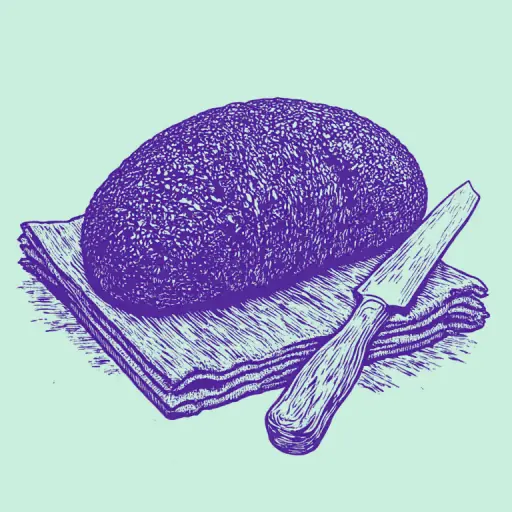
- Conscious Gastronomy. Traditional cuisine was built on processes of simmering, pickling, and fermentation. Making rye bread with sourdough or homemade preserves is not just cooking; it is a meditative ritual of slowing down, reconnecting with the earth and family history.
- Aesthetics of the Material World. Instead of faceless mass-market goods, bring natural materials into your home. Linen textiles, pottery made from local clay, or minimalist wooden items create a tangible connection to tradition through tactility and warmth.
- Rhythms of Nature and Calendar. Traditional culture is deeply attuned to natural cycles. Try marking the change of seasons by paying attention to changes in nature, organizing small family rituals consonant with folk traditions.
Such simple actions translate the preservation of Russian culture from the plane of theory to the plane of daily action, transforming abstract values into tangible personal experience.
Stage 3. Forming Personal Ethics and an Ethical Compass
The realization of one's cultural belonging inevitably leads us to a deeper, existential level. To be a Russian person today is not just to speak a certain language or know classical literature. In an era of global change and a sharp identity crisis, personal ethical choice comes to the forefront. External bearings may collapse, and social institutions may become distorted, but it is the internal moral law that determines who we remain in moments of highest tension.
Forming one's own ethical compass allows one to overcome bewilderment and find solid ground beneath one's feet. By turning to the heritage of Russian thought, we seek not ready-made dogmas, but living guidelines capable of strengthening the spirit, developing empathy, and helping to build a personal code of honor based on personal responsibility for one's actions.
Searching for Universal Humanistic Values in Russian Philosophy
Russian philosophical thought has never been purely academic; it has always sought answers to acute existential questions and tried to grasp the ethical absolute. In an era when identity in the modern world is severely tested, turning to this heritage helps find a firm internal support.
Instead of looking in the works of thinkers for justification of isolationism, it is worth turning to the concept of "all-humanity", formulated by Fyodor Dostoevsky and developed by Vladimir Solovyov. This is the capacity of Russian culture to open up to the world, empathize with the pain of others, and integrate global experience while preserving its own distinctiveness. To be Russian today means developing this empathy within oneself, striving for dialogue rather than confrontation.
Another important guide is the philosophy of freedom of Nikolai Berdyaev. He asserted that the individual is higher than the state and any external system. Your identity is not predetermined externally; it is created by your free creative act and personal responsibility.
How to integrate these ideas into your ethical compass:
- Practice 'All-Humanity': Study other cultures through the prism of shared experience, not opposition. This helps overcome the crisis of Russian identity.
- Choose Personal Responsibility: Remember that ethical choice is always individual. No external circumstances absolve a person of the duty to remain human.
- Seek 'Truth-Justice': In the Russian tradition, truth is inseparable from justice. Let your daily actions align with this inner sense.
Cultural heritage of the Russian people offers us not ready-made dogmas, but a deep humanistic toolkit for conscious self-determination.
Developing Psychological Resilience and Empathy in Conditions of Uncertainty
The transition from abstract philosophical categories to everyday reality requires us to develop specific psychological skills. In an era when Russian identity is undergoing a deep crisis and external pressure breeds anxiety, psychological resilience and empathy become not just virtues, but tools for survival.
To preserve oneself and find one's place in life amid change, it is important to rely on two internal pillars:
- Conscious Acceptance of Uncertainty. Instead of trying to find quick and definitive answers to complex existential questions, allow yourself to be in a state of searching. Resilience is born where we acknowledge our fears and vulnerability, but do not allow them to dictate our ethical actions. This helps overcome the crisis of Russian identity without self-destruction.
- Empathy as an Antidote to Isolation. Historically, the Russian mentality has been associated with compassion and a heightened sense of justice. Today, empathy is the ability to sympathize with another's pain without losing one's own bearings. It protects against hardening and helps see the human in everyone, regardless of political or geographical barriers.
Practice the 'ethics of small deeds': focus your attention on what you can truly influence—supporting loved ones, professional duty, and maintaining inner purity. This restores a sense of control and strengthens the personal ethical compass in any time.
Creating a Personal Code of Honor: Responsibility for One's Actions and Choices
When we speak of personal ethics, we are not talking about a set of externally imposed rules, but about the internal architecture of the personality. A code of honor is not a museum exhibit, but a living, breathing document that you write yourself, based on your deepest convictions. It is your personal moral compass, which should help you make decisions when external guides (social expectations, political slogans) fail or contradict each other.
Creating such a code is an act of profound self-reflection. It requires answering the question: 'When I am left alone with my choices, what will I consider my principle?'
Three Pillars of Personal Ethics:
The Principle of Truth (Honesty with Oneself): This is not just about telling others the truth, but first and foremost about acknowledging one's own blind spots, fears, and unwillingness. True honesty begins with the readiness to admit: 'I do not know the answer, and that is normal.' This frees one from the burden of always having to appear 'right' or 'ideal' representative of anything.
The Principle of Responsibility (Responsibility for the Trace): This is the understanding that every action, even the most insignificant, leaves a trace. A code of honor requires not only doing good deeds but also being prepared to admit a mistake, learn from it, and repair the damage. This is a shift from passive 'being' to active 'doing and answering.'
The Principle of Empathy (The Horizon of the Other): In times of crisis and polarization, it is easy to forget about humanity. Ethics demands the conscious expansion of one's 'Self' to 'Us.' This is the ability to put oneself in another's place, even if that other person seems ideologically alien to you. This is the universal humanistic value that connects all people, regardless of their nationality or political views.
Your personal code of honor is your personal contract with yourself. It allows you not to dissolve into the chaos of external demands, but to remain the master of your inner life, preserving dignity and integrity, no matter what is happening around you.
Stage 4. Maintaining Connections and Building a Healthy Community
Acquiring a personal ethical compass inevitably takes us beyond the confines of the 'self.' Being a Russian person today is not only an individual spiritual endeavor but also the art of building connections with those who share our common cultural soil. In an era of tectonic shifts and forced separation, preserving humanity becomes an act of conscious life-creation.
A healthy community is born where personal values evolve into a careful regard for one's neighbor. We must move from internal reflection to the practice of co-creation: learning to preserve the living memory of generations, maintaining a connection with native culture despite any borders, and building horizontal connections based on mutual respect and creation, rather than on the search for enemies.
The Role of Family and Preserving Generational Historical Memory
Family is the first and most stable microcosm in which Russian identity is born and transmitted. In an era of global transformations and identity crises, family ties become the anchor that prevents a person from losing their roots. Preserving the historical memory of generations in the 21st century is not blindly following official historical narratives, but a living, deeply personal dialogue with the past of one's own lineage.
To prevent the cultural heritage of the Russian people from becoming an abstract museum exhibit, it must become part of family daily life. Practical steps for preserving this connection include:
- Creating an Oral Archive: Record the memories of older relatives on a voice recorder. Their personal stories about hardships, joys, love, and daily life provide a much deeper understanding of the Russian mentality than any academic textbook.
- Careful Handling of Artifacts: Letters, old photographs, diaries, and even simple household items are material conduits of memory. Preserving and discussing them around the dinner table strengthens the connection across time.
- Analyzing Family Scenarios: Analyzing how your ancestors coped with historical crises helps develop personal psychological resilience today.
Through the prism of family history, the grand history of the country ceases to be foreign and frightening. It takes on a human face, helping us understand who we are, where we come from, and what values we are ready to transmit to future generations.
How to Stay Connected to Culture While in Exile or Isolation
When one finds themselves outside their familiar geographical and social environment, a person often encounters the phenomenon of "cultural weightlessness." When external institutions and the familiar landscape disappear, preserving identity ceases to be an automatic process. It transforms into a conscious choice and daily labor. Culture is not territory demarcated by state borders, but a portable ethical and aesthetic baggage that resides within us.
To avoid losing this connection during emigration or isolation, it is important to rely on specific practices:
- Linguistic hygiene and reflection. Language is a living organism. Without practice, it simplifies. Reading complex fiction, keeping personal notes in Russian, and discussing what has been read help maintain the depth of thought and the precision of expression.
- Creating domestic rituals. Cooking traditional dishes, celebrating significant dates, or listening to specific music acts as psychological anchors. They restore a sense of stability and continuity of personal history.
- Intellectual co-creation. Studying philosophy, history, and art through lectures, podcasts, and virtual exhibitions allows one to perceive culture not as a static museum exhibit, but as a dynamic process of which one remains a part.
Distance offers a unique advantage: it allows one to clear perception of immediate political noise and focus on the enduring values of Russian culture—its humanism, compassion, and search for truth.
Building Horizontal Connections and Supporting Like-Minded Individuals Without Aggression
The transition from personal reflection to community is a natural, yet often the most difficult stage. We have learned to strengthen our inner core, but what about the external world? Identity, like a person, does not exist in a vacuum; it is formed in dialogue. Here, the key skill is the ability to build connections that nourish, rather than deplete. Horizontal connections are relationships based on mutual respect, shared interests, and support, rather than hierarchy or emotional dependence. In the context of seeking "Russianness," this means abandoning the search for a single "correct" definition and accepting diversity.
How to build connections without aggression?
The Principle of "Shared Interest, Not Shared Origin": Instead of uniting solely on the basis of "Russianness" (which can become a source of exceptionalism or conflict), seek people united by a common passion—literature, philosophy, history, art. This allows you to be part of a community without sacrificing your individuality. Discussing Dostoevsky with someone who loves Japanese poetry is far more productive than discussing only Dostoevsky with "like-minded" people.
The Practice of "Active Listening": In times of crisis, people tend toward monologues: "This is how it should be," "This is what we have lost." Your task is to learn to listen not only to the words but also to the interlocutor's emotional background. Ask open-ended questions that require a detailed answer, not just simple agreement. This transforms the conversation from a "loyalty check" into a joint exploration.
Respect for "Rights to Difference": This is the most difficult, but most important skill. Remember that "being Russian" is not a monolith. A community must include people with different views on history, culture, and the future. Your task is not to convince them of your rightness, but to respect the right to their different point of view. This does not mean agreeing, but it means acknowledging their humanity and the right of their thought to exist. This is the highest form of intellectual and emotional maturity.
Practical Exercise: "Dialogue Circle"
Instead of looking for "your own" (those who think like you), intentionally engage in dialogue with people whose views on culture or history seem most opposite to yours. The goal is not debate, but understanding the logic of their position. This trains your "ethical muscle" and makes your own identity more resilient, as it ceases to depend on the consensus of those around you.
Stage 5. Overcoming Crisis and Accepting a New Reality
We have traveled a long way: from deconstructing the concept of "Russianness" to forming a personal ethical compass. We have learned to distinguish cultural code from imposed ideology, and we have realized that true strength lies not in geography, but in the depth of personal responsibility. However, life in the 21st century is not just internal dialogue, but constant interaction with the external world, which often seems chaotic and demanding. At this stage, we must move from theory to practice, learning to live with the awareness that identity crisis is not a point, but a process. This requires not only self-analysis but also the ability to balance one's unique "Self" with the demands of the global world. Our task is not to choose between "Russian" and "global," but to create something new, synthetic, and sustainable.
This stage is dedicated to accepting a new, complex reality. This means learning to live with the sense of guilt that often accompanies existential searching, and learning to see oneself not through the prism of external stereotypes. We will examine specific self-reflection tools that will help you order internal chaos, and we will develop a strategy for how to maintain deep national roots while remaining a full and active participant in global humanity.
Coping with Toxic Guilt and External Stereotypes
Encountering external pressure and prejudice often generates a deep internal conflict—a toxic sense of guilt for events that an individual cannot influence. To maintain psychological resilience, it is important to draw a clear line between collective responsibility and personal guilt.
German philosopher Karl Jaspers, in his work "The Question of Guilt," distinguished four types of guilt: criminal, political, moral, and metaphysical. All citizens of a state bear political responsibility for the actions of the state, but moral guilt is always strictly individual. Toxic guilt is destructive: it paralyzes the will and destroys the personality from within.
To overcome this crisis, use the following guidelines:
- Separation of Spheres of Control: Ask yourself: "Could I personally prevent this event?" Direct your mental energy toward what you can actually influence—your work, helping loved ones, creation, and preserving humanity.
- Deconstruction of Stereotypes: Remember that any generalization is a cognitive distortion. Respond to prejudice not with justifications or aggression, but with personal dignity, professionalism, and actions.
- Ethics of Small Deeds: Convert fruitless remorse into a constructive channel. Supporting those nearby and honest labor are the best responses to external pressure.
Your identity should not be defined by the projections of others. Being Russian today means bearing personal responsibility for one's actions while preserving inner freedom despite any circumstances.
Self-Reflection Practices: Identity Journaling and Experience Analysis
Identity crisis is not a breakdown, but rather a point of maximum turbulence from which a new understanding of oneself is born. Instead of trying to find a ready-made, "correct" answer to what it means to be Russian, we must learn to ask questions and, most importantly, to accept the answers we formulate for ourselves. This is where self-reflection comes in—it is not just a trendy word, but a vital skill that allows us to become observers of our own lives, rather than just their victims.
Identity Journal: Your Personal Archive of Self-Knowledge
Keeping such a journal is not just about recording events. It is a structured dialogue with oneself. We suggest using it as a tool for analyzing experiences, not as a chronicle. To make it as effective as possible, use the following techniques:
- The "Three Circles" Method: Divide each entry into three parts: Fact (what objectively happened), Emotion (what I felt and why), Interpretation (what significance this event has for my personal value system). This helps separate raw experiences from their emotional coloring and begin to see cause-and-effect relationships.
- Trigger Analysis: Note situations that evoke a strong emotional response in you (anger, guilt, nostalgia). Instead of reacting automatically, ask yourself: "What exactly in this situation touched my personal boundary or my core belief?" This is the key to understanding your vulnerabilities.
- "Letter to Future Self": Regularly write letters to yourself, addressed a year in advance. In them, describe your current fears, hopes, and questions. When you open this letter a year later, you will be able to conduct an objective analysis of your emotional and intellectual growth.
Experiential Analysis Techniques: From Passive Observation to Active Action
Self-reflection requires not only recording but also systematic analysis. When you feel lost in the flow of external expectations, use the following "filters" to process your experiences:
- The "Control" Filter: Divide all your experiences and problems into two columns: "What I can control" (my reactions, my knowledge, my actions) and "What is beyond my control" (geopolitics, other people's opinions, the past). Focusing energy only on the first column is an act of psychological freedom.
- The "Values" Filter: When you face a moral choice or a feeling of guilt, ask yourself: "Which of my core beliefs (honesty, justice, family, freedom) was violated in this situation?" The answer to this question restores your internal ethical compass, which is the core of your personal identity.
Remember: the goal of self-reflection is not to find a final answer, but to learn to live with the question. Identity is not a static portrait, but a continuous, conscious verb of action.
Balance Between Global Integration and Preserving National Roots
The balance between global integration and preserving national roots is not a binary choice of "either/or," but rather the art of constant tuning, similar to a musician who must simultaneously listen to harmony and individual notes. It is an acknowledgment that a person is a being living at the intersection of multiple cultural and historical streams.
Globalization as Expansion, Not Replacement:
Integration into the global space (studying world trends, mastering foreign languages, understanding the international economy) does not mean abandoning oneself. On the contrary, it enriches one's personal "cultural baggage," making it more resilient and multifaceted. A global perspective gives us the tools and perspectives to understand that "Russianness" is not a geographical attachment, but a set of values, meanings, and ways of thinking that we choose to carry.
The "Roots and Wings" Principle:
Imagine your identity is a tree. National roots (history, language, traditions) are the deep, nourishing soil that provides stability. Global integration is the wings that allow you to fly, to see the world from a height, and to exchange experiences. A healthy balance is achieved when you use your wings to explore the world, but always remember that your strength and your point of reference are your roots.
Practical Balance Strategies:
- Cultural Translator: Learn to be a "translator" between cultures. This means you can understand and speak the language of global trends (e.g., ESG, Web3, global ethics), but you can also translate these concepts into the language of your cultural code, explaining them through the prism of Russian philosophy or history. This is your unique value.
- Active Consumption: Do not limit yourself only to national content. Read philosophers, historians, and writers from different peoples. This will not dissolve your identity, but rather make it more "transparent" and profound, allowing you to see your traits against the backdrop of the world context.
- Accepting Ambivalence: The most difficult, but most important, step is to accept that you can be simultaneously a "global citizen" and a "Russian person." These roles do not exclude each other; they complement each other. Your identity is your personal, unique synthesis, which does not require external approval or perfect conformity to any template.
Conclusion: Identity as a Daily Conscious Choice
Ultimately, the attempt to give a definitive answer to the question "What does it mean to be a Russian person in the 21st century?" is a task doomed to failure. Identity is not a geographical point on a map, not a set of political dogmas, and not a fixed cultural artifact. It is, above all, a dynamic, daily act of will and conscious choice.
If we have traced the path from deconstruction (Stage 1) to the ethical compass (Stage 3) and learned to build a community (Stage 4), we understand that "being Russian" is not passive inheritance, but active creation. It is a constant process of self-definition that requires courage and intellectual honesty.
Key Takeaway: Your identity is not something that was given to you, but something you create every day. It is a synthesis: it is deep respect for the cultural code (language, literature), readiness for dialogue with the global world, and, most importantly, your personal ethical responsibility to yourself and others.
Accept the fact that you are in a process of becoming. The crisis you are experiencing is not a sign of weakness, but a testament to your living, developing soul. Do not be afraid of contradictions; do not be afraid to doubt. It is in this tension between roots and the wind of change that the authentic, resilient, and deeply personal "Russian soul" of the 21st century is born.
Your task is to become a "cultural translator": to be able to speak the language of your roots, understand world trends, and at the same time formulate your own unique ethical position. Identity is not a destination, but the path itself that you choose by making a conscious choice in favor of your inner core, regardless of external noise.