How to Bake Sweet Potatoes in the Oven and How Long It Takes
- 8 min read
- 25
Sweet potatoes, or sweet yams, have gained enormous popularity among health-conscious individuals, vegetarians, and gourmets. This vibrant root vegetable is appreciated for its tender, slightly sweet flavor and its rich vitamin content. However, to unlock its full culinary potential, it is important to know how to bake sweet potatoes correctly in the oven.
The cooking time and final texture depend directly on the cutting method and the temperature range. Whether you bake them whole in aluminum foil for tender flesh or prepare crispy slices with olive oil and spices on a baking sheet—each method requires a different approach. In this practical guide, we go through all the subtleties of preparing a perfect sweet potato dish.
Preparing the Sweet Potatoes: Peeling and Cutting Before Cooking
The path to the perfect baked sweet potato begins long before the tray goes into the hot oven. The correct pre-treatment of this sweet potato directly influences how evenly the pieces cook and whether you achieve that desired crispy crust. Let's go through the basic steps for preparing the tubers, which will help you save time and achieve a flawless texture.
Do I have to peel sweet potatoes before baking in the oven?
It is not necessary at all to peel sweet potatoes before baking in the oven. The thin skin of this sweet potato is completely edible, rich in fiber and vitamins. Furthermore, it helps the slices maintain their shape during thermal treatment and contributes to the formation of an appetizing crispy crust.
You should only peel the root in a few cases:
- If you want to prepare a tender puree or bake sweet potatoes in sauce in slices.
- If the skin has severe damage or is too rough.
If you decide to leave the skin on, wash the tubers thoroughly under running water with a stiff vegetable brush and then dry them with a paper towel.
How to cut sweet potatoes correctly into sticks and cubes
For the sweet potatoes to cook evenly, it is crucial to cut them into uniform segments. The dense texture of the raw tuber requires the use of a sharp and heavy kitchen knife.
- Sticks (French fries): First, cut the sweet potato lengthwise into slices 1–1.5 cm thick. Then, cut each slice into sticks of similar width. Slices that are too thin burn quickly in the oven, while slices that are too thick do not soften inside.
- Cubes: Cut the tuber into slices of about 2 cm thickness, divide these into strips, and then cut them crosswise into 2x2 cm cubes. This cut is ideal for baking in sauce or for warm salads.
The same size of pieces guarantees that they cook simultaneously, thus achieving a balance between soft texture and caramelized crust.
Baking Whole Sweet Potatoes: Time and Temperature Ranges
Baking whole sweet potatoes is perhaps the laziest yet most elegant preparation method. Unlike cutting, whole tubers retain maximum moisture, causing the flesh inside the skin to become an incredibly tender, almost creamy puree. This method is perfect for creating culinary "boats" or as a base for satisfying, healthy meals.
However, to achieve a flawless texture and prevent the root from drying out, it is important to choose the correct temperature range. Let's examine how the size of the tubers affects the time in the oven and which cooking techniques help achieve the perfect result.
How long does a whole sweet potato bake in foil and without?
The cooking time for whole sweet potatoes depends directly on the chosen method and the size of the tubers. The optimal oven baking temperature for both variations is 200 °C.
- Without foil (on an open tray): The process takes 45–60 minutes. The hot air dries out the skin, making it crispy and caramelizing the natural sugars.
- Completely in aluminum foil: The sweet potato bakes for 40–50 minutes. The dense wrapping traps the steam inside, making the flesh incredibly tender, juicy, and creamy.
Very large tubers (more than 400 g) may take 10–15 minutes longer.
How to determine the doneness of sweet potatoes with a fork
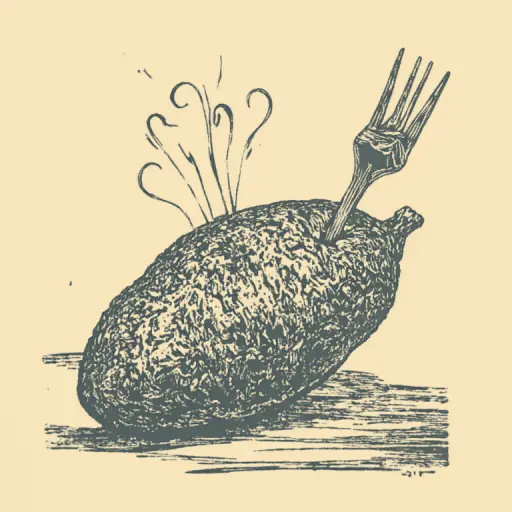
The most reliable method to check if a whole sweet potato is cooked is by using a regular dinner fork.
Gently insert it into the thickest part of the tuber. The tines should penetrate the flesh absolutely gently and without any resistance, as if into soft butter. If you feel a hard center, give the sweet potato another 5–10 minutes in the oven.
Another sign of doneness is the slight shrinking of the skin and the oozing of drops of caramelized juice from the holes made before baking.
Secrets for Crispy Slices on the Tray
Baking whole tubers yields a tender, creamy texture, but the real culinary hit is still the golden slices with a crispy crust. Preparing the perfect crispy sweet potato in the oven is a challenge: due to the high content of natural sugars and moisture, the pieces often become mushy and turn into a paste. To avoid this, it is important to maintain the temperature balance and prepare the surface correctly. Let's go through the most important subtleties that turn ordinary sweet potatoes into a restaurant snack.
Optimal baking temperature and rules for single-layer placement
For the sweet potato slices to have a crispy crust and not become mushy, two factors are crucial: a high baking temperature and the correct spacing on the tray.
- Temperature Range: Preheat the oven to 200–220 °C. At a lower temperature, the sweet potato will stew slowly rather than bake.
- Single-Layer Rule: Place the sticks strictly in a single layer on a baking paper-lined tray, with a distance of at least 1 cm between them. If you pile them up, the escaping steam will soften the crust.
Adhering to these simple conditions guarantees the perfect texture.
To achieve this legendary crispy crust, you must absolutely pat the cut sweet potatoes dry with a paper towel before baking. The secret of the chefs is a thin layer of cornstarch (about 1 tablespoon per 500 g). Roll the slices in it and then drizzle them generously with olive oil. The oil seals in the moisture inside and helps the spices release their aroma.
The ideal spice mix for sweet potatoes:
- Smoked paprika and dried garlic (a classic);
- Hot cayenne pepper (for a contrast to the sweetness);
- Rosemary or thyme.
Important: Only salt the sweet potatoes at the end of cooking, as salt draws out moisture and makes the crust soft.
Alternative Methods for Baking Sweet Potatoes
If you have already mastered classic baking on a open tray, it is time to expand your culinary arsenal. Alternative methods not only allow you to shorten the active cooking time but also fundamentally change the texture of the sweet potato.
Using cooking accessories and sauces helps to retain the maximum juiciness of the root and makes it tender and melt-in-your-mouth. Let's explore two popular and simple methods that completely reinvent the flavor of the sweet potato.
Special Features of Baking Sweet Potatoes in a Baking Pouch
Baking in a baking pouch is an ideal method for achieving incredibly tender and juicy sweet potatoes. A steam bath is created inside the pouch: the pieces cook in their own juices, thus retaining maximum vitamins and natural sweetness. This method completely prevents the root from drying out.
Process Details:
- Preparation: Cut the sweet potatoes into large cubes or sticks, mix them with one tablespoon of olive oil and spices (garlic, thyme, paprika).
- Temperature Range: Bake at 190–200 °C.
- Cooking Time: The process only takes 25–30 minutes.
Don't forget to prick 2–3 holes on the top of the pouch so that excess steam can escape. If you desire a light golden crust at the end, carefully cut the top of the pouch 7 minutes before the end of the baking process.
Recipe for Baking Slices Under Aluminum Foil with Sour Cream
This method transforms sweet potatoes into a tender casserole with a pleasant creamy acidity. The sour cream sauce perfectly balances the natural sweetness of the sweet potato and makes its texture silky.
Ingredients:
- Sweet potato — 1 piece (large)
- Sour cream (15–20 %) — 3 tbsp
- Garlic — 1 clove (pressed through a press)
- Salt, black pepper, dried thyme — to taste
Instructions:
- Peel the sweet potato and cut it into slices of about 8–10 mm thickness.
- Mix the sour cream with garlic, salt, and spices.
- Arrange the slices in a baking dish in overlapping rows and brush them evenly with the sour cream mixture.
- Cover the dish tightly with aluminum foil and place it in the preheated oven at 190 °C for 25 minutes.
- Remove the foil and bake the dish for another 7–10 minutes until golden brown.
These sweet potatoes become incredibly juicy and literally melt in your mouth.
Conclusion
Baking sweet potatoes in the oven is a simple way to get a healthy and incredibly delicious side dish. To ensure the dish always succeeds, remember three main rules:
- Temperature: Stick to the 200 °C setting.
- Time: Plan for 20–30 minutes for pieces and 45–60 minutes for whole tubers.
- Check: Always test the doneness with a regular fork.
Experiment with spices and cutting methods to discover new facets of sweet potato flavor every time!