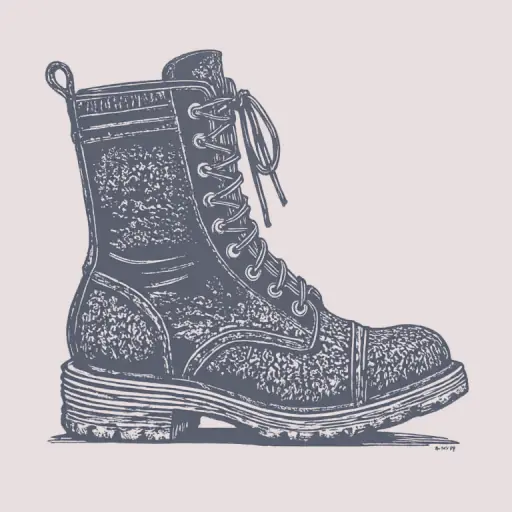
How to Choose Combat Boots Size and Adjust Fit
- 11 min read
- 59
Military boots, or 'bertsy,' have long gone beyond military gear. Today, they are chosen by tourists, hunters, airsoft players, and fans of the military style. The main advantage of this footwear is reliable ankle support while maintaining foot mobility. However, even the highest quality tactical boots can become instruments of torture if the size is wrong or if they are laced incorrectly. Blisters, rapid fatigue, and the risk of injury are common companions of a poor choice.
In this guide, we will cover how to choose the correct size considering physiological features, how to adjust the fit using lacing, and how to quickly break in stiff footwear without pain.
Determining the Correct Size and Fitting Rules
The correct size selection is the foundation upon which the safety and comfort of wearing military boots are built. Unlike everyday sneakers, stiff tactical boots do not forgive mistakes: a pair that is too tight will guarantee skin abrasion to the point of bleeding, while one that is excessively loose will lead to dangerous joint instability. To understand how the boots should fit on the foot, it is important to consider not only the standard insole length but also the dynamic changes of the foot under load, as well as preparing correctly for the fitting itself.
How to Calculate the Necessary Length Allowance Considering Foot Swelling
When choosing military boots, it is critically important to avoid a 'snug' fit. During long marches, forced marches, or hours of standing, the feet inevitably swell, increasing in volume. Furthermore, when moving downhill, the foot always shifts slightly forward.
The optimal insole length allowance should be 10 mm (a range of 8–12 mm is acceptable) relative to the length of your foot. To calculate this parameter correctly, follow these simple rules:
- Measure your foot only at the end of the day when natural foot swelling is at its maximum.
- Take measurements while wearing the socks you plan to use.
- Add 1 cm to the measured length of your longest foot—this will be your correct size.
This allowance guarantees that your toes will not press against the rigid toe box, preventing blisters and nail injuries.
Choosing the Right Socks and Using Orthopedic Insoles for a Perfect Fit
The correct choice of socks and insoles is a key step toward ensuring that stiff military boots fit perfectly on the foot.
- Sock Selection. Forget thin cotton, which wears out quickly and bunches up. For boots, a dense trekking sock or a specialized thick sock with reinforced heel and toe areas is necessary. It effectively wicks away moisture, cushions the step, and prevents blisters. If the boots are slightly large, a dense sock will help compensate for the extra volume.
- Orthopedic Insoles. The factory insole often does not provide adequate support. A high-quality orthopedic insole with a metatarsal support reduces joint strain, decreases fatigue during long marches, and securely fixes the foot inside the boot, preventing slippage.
This combination guarantees maximum comfort in the boots and protects your feet from injuries in any condition.
Assessing the Fit: How to Tell if the Boots Fit You
After we have ensured the correct choice of socks and insoles, the next step is an objective assessment: do the boots truly fit perfectly on the foot? It is not enough to just know the theory—you must learn to feel the difference between ideal support and discomfort. In this section, we will examine the key signs that will help you understand that ankle support has been achieved correctly, and we will learn how to accurately determine at what point the footwear has become too large or, conversely, too small. This is critically important for preventing injuries and blisters.
Understanding these nuances is the basis for further correct lacing adjustment and boot adaptation.
Signs of Correct Ankle Support and Foot Comfort
For the boots to provide maximum support and comfort, you must assess not only the size but also the quality of the fixation in key areas. The ideal fit should feel confident, but not constricting. Pay attention to the following signs:
- Ankle Support: The boots must tightly wrap the ankle, preventing lateral movement and strains. This is critically important when walking on rough terrain. At the same time, the feeling should be one of support, not a suffocating ring. If you feel your ankle is 'loose' or, conversely, 'tightened,' the fit requires correction.
- Foot Comfort: The foot should be in a stable position, not slipping inside the boot. While walking, there should be no sensation that the foot is 'wandering' or that the boot is 'eating' the heel. If you feel constant pressure on the arch or toes, this is a sign of incorrect sizing or improper lacing.
- Heel: The heel must be securely fixed, but it must not cause excessive friction or chafing. With the correct fit, you should not feel your heel 'lifting out' of the boot with every step.
Remember that the ideal fit is a balance between secure fixation and freedom of movement. If you feel discomfort, it is a signal to reconsider the lacing or perhaps to choose a more suitable model.
How to Determine if the Boots are Too Big or Too Small
Assessing the fit of boots is not just a matter of length, but also of comfort in key areas. The ideal pair should provide reliable support without causing excessive pressure. Here is what you need to look at to understand if the boots fit you:
- Length Check (Toes): Try to press your toes as far as possible into the toe box of the boot. There should remain a small but noticeable space (about 1 cm) so that your toes do not press against the front part. If your toes hit the toe box, the boots are too small.
- Heel and Instep Check: Insert your index finger between the back collar and the heel. If your finger slides in too easily, the boots may be too large, leading to wobbling and friction. If, however, you feel strong compression or pain in the instep, the boots may be too narrow or too small in volume.
- Movement Test: Walk around the store or on a flat surface. While walking, there should be no sensation that the foot is 'wobbling' inside the boot, but there should also be no constant pressure that hinders the natural movement of the foot.
- Fixation Sensation: The boots should feel like an extension of your calf, providing support but not restricting blood circulation. If you feel numbness or tingling, this is a sign of excessive pressure or incorrect sizing.
Adjusting the Fit Using Proper Lacing
Even perfectly sized boots will not provide adequate safety without proper fixation. Lacing is the main tool for individually adjusting the footwear to the anatomical features of your foot. It allows you to compensate for excess volume or, conversely, to selectively relieve pressure in sensitive areas.
Military Lacing Techniques for Secure Joint Fixation
To ensure reliable ankle support and prevent injuries, use proven military lacing techniques:
- Classic Military Method: The shoelace crosses over, passing through the eyelets from the inside out. This ensures quick tightening, ankle shaft flexibility, and even pressure distribution.
- "Ladder" (Parachute) Method: The laces run vertically along the sides and then cross horizontally. This locks the foot firmly, eliminating heel slippage during intense running.
What to Do If Your Foot Slips in the Boots or the Lacing Squeezes Your Foot
If your foot is slipping, do not overtighten the laces—this will disrupt blood circulation. It is better to wear a thicker sock or insert an extra orthopedic insole.
If the top of your foot is being squeezed, use the loosening zone: pass the laces vertically through one pair of eyelets without crossing at the point of greatest pressure, and then continue with the classic ankle fixation.
Methods for Adapting and Breaking In New Footwear
Even if you have perfectly chosen the size and mastered the lacing techniques, new, stiff combat boots will not become comfortable instantly. They require time and special effort to adapt to the shape of your foot and go through the break-in process. An incorrect approach can lead to severe chafing and even calluses.
In this section, we will examine the most effective and safest methods to help you quickly and painlessly prepare a new pair of military boots for long-term use.
Effective Methods for Quickly Breaking In Stiff Boots
New boots, even if you have carefully chosen the size, always require an adaptation period. The stiff material and high construction initially create discomfort, but the right approach to breaking them in minimizes the risk of blisters and injuries.
Safe and Effective Breaking-In Methods:
- Wet Sock Method: Instead of fully submerging the boots in water or alcohol, use the "wet sock" method. Put on thick, cotton socks slightly dampened with water. This will create extra volume and help the skin gradually get used to the boot's volume. Walk around carefully in these socks for an hour.
- Using Gels and Creams: To soften stiff areas (heel, instep), you can use special leather creams or moisturizing gels. Apply the product to the skin around the boot and gently massage the area to improve elasticity.
- Gradual Load Increase: The safest way is not to wear the boots every day. Alternate them with other, softer footwear. In the first few days, use them only for short walks on flat surfaces, gradually increasing the distance.
What to Avoid:
- Extreme Methods: Do not use boiling water or freeze the boots. These methods can damage the skin structure, adhesive joints, or the sole, reducing the boots' durability.
- Ignoring Discomfort: If you feel severe chafing or pain, do not ignore it. Take a break and try again later, possibly using a thicker sock.
Preventing Blisters During Initial Use
Remember that breaking in is not just about stretching the material, but also about the skin getting used to the shape of your foot. Therefore, even if you used methods to quickly expand the boots, it is crucial to exercise caution.
- Use the Right Socks: During the break-in phase, do not wear socks that are too thick or, conversely, too thin. The ideal option is dense, breathable socks that will provide extra protection against friction but will not constrict the foot.
- Maintain a Load Regime: Do not immediately undertake long marches or hikes. Start with short walks on flat surfaces (1-2 km). Gradually increase the distance and terrain difficulty. This gives the skin and muscles time to adapt to the load.
- Skin Care: Regularly inspect your feet and the areas of contact with the boots. If you notice the first signs of redness, chafing, or increased friction, take a break immediately. If blisters have already appeared, use special plasters or ointments recommended by a podiatrist to prevent their development.
- Lacing Control: Even after breaking them in, do not forget proper lacing. It must ensure secure ankle fixation but must not squeeze the foot. If you feel numbness or tingling, loosen the ties.
Remember: the perfect fit is the one that provides maximum protection and comfort without causing injury or discomfort during the adaptation process.
Conclusion
Selecting and properly using combat boots is not just about buying footwear; it is an investment in your safety and comfort. Remember that boots are designed for extreme conditions and active movement, so the approach to wearing them must be systematic.
Key Rules That Cannot Be Ignored:
- Fixation Above All: The primary task of the boots is not just to cover the foot, but to ensure reliable ankle fixation. Proper lacing and correct sizing must work together to prevent sprains and twists. Never neglect this step.
- Care and Adaptation: Even the highest quality boots require attention. Regularly inspect your skin and feet for chafing. Do not try to run a marathon in them right away—give your feet time to adjust. Gradual load increase is the key to success.
- Individual Approach: Remember that feet change depending on activity, weather, and time of day (swelling). Therefore, always carry spare socks and be prepared to adjust the fit throughout the day.
By following these simple but important rules, you can maximize the potential of your boots, minimizing the risk of injury and enjoying comfort even in the most difficult conditions.