How to Conceal a Protruding Stomach with Clothing: A Style Guide
- 14 min read
- 78
A protruding stomach is not a sentence for a stylish look, but rather an interesting geometric challenge for the silhouette. The art of visual body correction is built not on rigid restrictions or attempts to "hide" in shapeless robes, but on skillfully managing attention and proportions.
Professional wardrobe selection allows you to shift the focus from problem areas to your assets—delicate ankles, a beautiful décolletage, or a sharp shoulder line. To mask a protruding stomach, it is important to master three main rules:
- Managing optical illusions: using the right lines, prints, and color blocks.
- Working with tailoring architecture: choosing garments that hold their shape rather than clinging to folds.
- Volume balance: harmoniously combining fitted and loose clothing elements.
In this guide, we will explore how to turn clothing into a tool of confidence by using proven stylistic techniques—from the correct fit of trousers to the secrets of layering.
Part 1: Fundamentals of Visual Camouflage: Principles of Silhouette Work
We have touched upon the philosophy of visual correction, but how do we translate these principles into practical actions? The secret lies in understanding how our gaze works and how clothing can manage that attention. Our goal is not just to "hide" the stomach, but to create the illusion of perfect proportions using time-tested stylistic techniques. In this part, we will examine the fundamental rules of silhouette work that will form the basis for choosing any wardrobe item. Understanding lines—vertical, horizontal, and diagonal—will allow you to become a true expert in visual correction, regardless of the cut you choose later.
Here, we will learn how lines created by the cut, print, or accessories can "trick" the eye, making the waist appear visually smaller and the silhouette more elongated and harmonious. This is a basic set of tools that must be mastered before moving on to choosing specific trousers or dresses.
1.1. Strategy of Vertical and Diagonal Lines: How
Using vertical and diagonal lines is a fundamental tool of optical illusion in styling. Our main task is to divert the observer's gaze away from the horizontal area of the waist and make it move up and down or diagonally.
Slimming Verticals:
- Open Second Layer: A long jacket, cardigan, or vest worn open creates two distinct vertical boundaries. They visually "cut" the sides, narrowing the silhouette.
- Vertical Details: A row of buttons, a contrasting shirt placket, or trouser creases elongate the figure.
Diagonals for Dynamics:
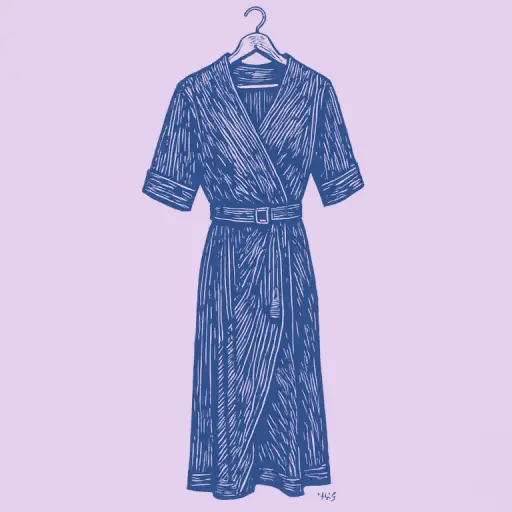
- Wrap and Asymmetry: A wrap cut (such as a wrap dress) creates a diagonal line that crosses the torso, breaking up volume and masking the stomach.
- Diagonal Accessories: A cross-body bag worn over the shoulder creates a perfect diagonal, distracting attention from the problem area.
Part 2: Shapes and Cuts Designed for Correction: Best Wardrobe Solutions
Having mastered the basic principles of optical illusions and vertical lines, it is time to move on to specific wardrobe items. The right cut is not just camouflage; it is a true architectural redistribution of your body's volume. Instead of hiding the figure under shapeless robes, we will use the constructive features of clothing: darts, draping, fabric density, and seam geometry.
In this section, we will examine exactly which bottom and top shapes can work wonders. We will study in detail the anatomical cut of waist items that gently cinch the problem area, and we will look at dress and outerwear silhouettes that create impeccable proportion balance without compromising comfort.
2.1. Effective Bottoms: High-Waisted Trousers, Skirts, and Jeans
Choosing the right bottoms is half the battle in visual silhouette correction. The main principle here is to create a smooth transition from the waist to the hips, without drawing attention to the stomach area. The ideal solution is a high waist, as it not only visually lengthens the legs but also helps to "lift" and keep attention on the waist itself, rather than the protruding stomach.
What to look for in bottoms:
- Trousers and Jeans: Prefer straight, slightly tapered, or palazzo styles. They should be made of dense, matte fabrics (such as thick cotton, wool, or viscose) that will not cling to the body's contours. Dark, deep tones (black, dark blue, graphite) always work best, as they visually slim. Avoid jeans with decorative elements, hip pockets, or overly bright, textured detailing, as these will draw attention specifically to the problem area.
- Skirts: A high waist is also critical here. A-line skirts or pencil skirts made from sufficiently dense fabric work well. The A-line is ideal because it flares gently from the waist, masking the stomach, but without looking baggy. Wrap skirts are also an excellent solution, as they draw attention to the waist rather than the volume of the stomach.
Important Nuances:
- Material: The fabric must be dense enough not to "outline" every curve, but it must not be so stiff as to create extra volume. Avoid overly thin, stretchy materials that fit like a second skin.
- Waistband: If you wear a belt, choose it not at the narrowest part of the waist, but slightly higher, to visually lift the waistline and distract the eye from the stomach. Ideally, use a wide belt or scarf that adds a decorative accent but is not too rigid.
2.2. Outerwear and Dresses: How to Choose Wrap, A-Line, and Oversized Models
When choosing outerwear and dresses, the key task is not just to hide the stomach, but to create an overall illusion of slenderness and vertical descent of the silhouette. Several time-tested styles work here to visually correct proportions.
1. A-Line Dresses and Skirts:
This is perhaps the most universal and safest choice. The A-line of a dress or skirt flares from the waist down, gently covering the problem area. This avoids the "box" effect while not drawing attention to the stomach. Choose models made from dense, well-draping fabrics that will not hang like a sack, but also will not cling to the body.
2. Wrap Style Dresses and Blouses:
Wrap is a classic and incredibly effective technique. It not only emphasizes the waist but also creates an effect of visually "cinching" the silhouette. Due to the crisscross cut and the tied belt, you not only mask the stomach but also draw attention to the narrowest part of the waist, diverting the eye from the wider area.
3. Oversized Styles: How to Wear Them Correctly?
Oversized is not a sentence; it is a tool. The main rule: do not wear it "on yourself." To prevent an oversized top (such as a long shirt or cardigan) from turning you into a sack, use contrast. Pair a voluminous top with narrow, structured bottoms (such as straight palazzo pants or high-waisted jeans). Additionally, you can use the "tuck-in" technique—tucking the front of an oversized shirt or blouse into the waist, creating an intentional emphasis on the waist and giving the look a polished finish.
4. Outerwear (Coats and Cardigans):
Instead of fitted models, choose straight-cut or belted styles. Cardigans and blazers should be long enough to visually lengthen the torso, but they must not be too wide, which would create a "boxy" effect around the waist. A blazer that can be tied at the waist, mimicking a wrap effect, is ideal.
Part 3: Correction Tools: Underwear and Accessories as Effect Enhancers
Properly chosen clothing cut is the foundation of a harmonious silhouette, but maximum masking effect cannot be achieved without invisible aids and targeted accents. It is the details that transform a simply good outfit into a flawless look that instantly shapes the figure and distracts attention from any imperfections. In this chapter, we will examine how to use hidden correction tools and the right accessories as powerful enhancers of the visual effect. You will learn how to create the perfect "base" under your clothes and where to direct the gaze of others so that the stomach area completely leaves the focus of attention.
3.1. Choosing the Right Shapewear and Corrective Underwear
Corrective underwear is a secret weapon that instantly transforms the silhouette, creating a smooth base for any clothing. The biggest mistake when choosing it is buying a size smaller in the hope of stronger compression. This leads to the opposite effect: the garment digs into the skin, forming new folds, and disrupts blood circulation.
When choosing, focus on three degrees of correction:
- Light (Smoothing): Suitable for daily wear, it gently shapes the figure and conceals minor irregularities.
- Medium: Optimal for knit dresses and trousers, it holds its shape well thanks to dense inserts.
- Strong: Used for special occasions under evening wear, it firmly fixes problem areas.
For masking the stomach, high-waisted panties or shorts (up to the bra line) and seamless bodysuits are ideal. Prefer models with silicone bands along the edge, which prevent the fabric from slipping or twisting during wear.
3.2. Accessories and Accents: Distracting the Eye from Problem Areas
Corrective underwear creates a flawless base, but properly chosen accessories help complete the look and finally shift the focus away from problem areas. The main rule is to draw the observer's gaze upward or to create optical illusions that "fragment" the silhouette.
- Cross-body bags. A strap running diagonally across the body visually slices the torso. This creates a dynamic diagonal line that excellently masks volume in the abdominal area.
- Focus on the portrait area. Large earrings, delicate necklaces, brooches, or a bright neck scarf draw attention to the face, neck, and décolletage, distracting from the waist.
- Long scarves and verticals. A loosely hanging scarf or shawl creates two parallel vertical lines that visually elongate the figure and make it appear slimmer.
- Proper belts. Avoid tight belts at the waist level. It is better to use a medium-width belt over a loose blazer or cardigan, securing it slightly above the natural waistline.
This simple arsenal of techniques allows you to easily manage the attention of others, highlighting your main assets.
Part 4: Wardrobe for All Figures and Occasions: Differences in Approach
Successful masking of waist volume cannot be universal, as male and female silhouettes require fundamentally different structural solutions. While in women's wardrobes we often work with smooth lines, draping, and shifting emphasis to the figure's strengths, men's styling relies on the rigidity of the cut, the correct geometry of the shoulder line, and the density of the materials.
Furthermore, individual characteristics—from body type to color preferences—dictate their own rules. In this section, we will discuss how to adapt general correction principles to specific tasks: from masking a pronounced stomach in men to fine-tuning monochrome and textures for different female body types.
4.1. Solutions for Men: How to Visually Conceal a Beer Belly
A male silhouette with a pronounced "beer belly" requires a special cut that does not cling to the problem area but also does not turn the figure into a shapeless sack.
Key rules for male masking:
- The right jacket: Choose single-breasted models made of matte fabrics in dark shades (navy, graphite). Double-breasted jackets and shiny materials visually widen the torso.
- V-neck knitwear: Sweaters and cardigans with this neckline visually elongate the neck and shift the focus upward.
- Trouser fit: Avoid low-rise waists, which cause the stomach to "hang" over the belt. Trousers should sit at the natural waistline. A great alternative to a belt, which visually divides the figure in half, is suspenders worn under a loose jacket or vest.
- Details: Vertical striped shirts visually slim, and a tie should reach strictly to the buckle of the belt—a tie that is too short will only emphasize the volume.
4.2. Considering Body Type and Color: Universal Rules (Monochrome, Texture, Dark Tones)
A universal approach to masking the stomach is based on the optical illusions of color and texture. This is especially relevant for the "apple" body type, where the main volume is concentrated in the waist area.
- Color vertical (Monochrome): An outfit in a single color palette visually elongates the silhouette, creating a continuous line. You do not have to limit yourself to black—deep blue, graphite, emerald, or chocolate work just as effectively. The main thing is to avoid sharp color contrasts between the top and bottom at the waist level.
- Correct textures: Choose dense matte fabrics (suit wool, heavy cotton, quality knitwear). Shiny materials (satin, silk, lurex) reflect light and visually increase volume, revealing any irregularities.
- Moderate asymmetry and prints: Small geometric or abstract patterns excellently camouflage volume. Avoid large prints and horizontal stripes in the problem area.
Part 5: A Deeper Level: When the Problem is Not Just Clothing
Even the most thought-out wardrobe and flawless clothing cut have limits in effectiveness if the peculiarities of one's own body are ignored. Often, an aesthetic imperfection in the waist area is not just excess weight that can be draped with fabric, but a signal from the body about internal changes or habits that require attention.
Moving to this deeper level, it is important to understand: visual correction works in synergy with physiology. Our posture, the tone of the deep abdominal muscles, and digestive characteristics directly affect how any garment sits. Let's examine the hidden factors that prevent achieving an ideal silhouette and when it is better to focus on health and daily habits instead of changing a dress's cut.
5.1. Dietary and Physiological Aspects: Diastasis and Bloating (When to See a Doctor)
Sometimes even the most refined styling techniques, such as oversized or high-waisted fits, do not yield the desired silhouette. The reason may lie deeper—in physiological characteristics of the body that cannot be corrected by clothing alone.
Two main hidden causes of a protruding stomach:
- Diastasis. This is the separation of the rectus abdominis muscles, often occurring after pregnancy, childbirth, or rapid weight change. With diastasis, regular ab exercises are ineffective and even dangerous, and the stomach continues to bulge even in people with a low body fat percentage. In this case, consultation with a surgeon or rehabilitation specialist is necessary.
- Chronic Bloating. If your stomach looks flat in the morning but noticeably increases by evening or after eating, the issue lies with the digestive tract. This could be a reaction to certain foods, a symptom of food intolerance, or irritable bowel syndrome.
If you regularly experience discomfort, heaviness, or notice that the volume around your waist resists standard correction, consult a general practitioner or a gastroenterologist. Health is the foundation upon which any stylish wardrobe perfectly rests.
5.2. Positioning and Care: The Role of Posture and Proper Undergarment Selection (Self-Correction Tips)
A beautiful posture is the fastest and freest way to visually reduce the stomach. When you slouch, the spine deforms, and internal organs shift forward, causing a noticeable 'roll' even in slender people. Straightening your back, squaring your shoulders, and slightly lifting your chin—the abdominal muscles naturally tone up, instantly tightening the stomach.
The second crucial element of self-correction is choosing the right everyday underwear:
- The Correct Bra. A properly sized and well-supported bra lifts the bust. This increases the distance between the bust and the waist, visually elongating the silhouette and making the stomach less noticeable.
- Seamless panties with a medium or high rise. Avoid models with tight, thin elastic bands that dig into the body and create artificial folds (the 'worm' effect) where there are none. Opt for soft, elastic materials.
Regularly monitoring body positioning and avoiding tight underwear works wonders, cementing the effect of properly chosen clothing.
Stylist's Quick Checklist: 5 Key Rules for Choosing Clothes So Your Stomach Isn't a Problem
This concise checklist will help you quickly navigate the store and in front of the mirror, avoiding frustrating mistakes when putting together outfits.
- Choose dense, shape-retaining fabrics. Thin knitwear will emphasize every fold. Prefer dense cotton, linen, wool, or suit fabrics that create a distinct silhouette on top of the body.
- Adhere to the rule of semi-fittedness. Clothing should not cling to the problem area, but overly baggy oversized items will make the figure look heavy. The ideal choice is garments that glide softly over the figure, leaving air between the body and the fabric.
- Utilize the high-rise effect. Trousers, jeans, and skirts with a medium or high waistline act like a natural corset. Avoid low-rise fits, which literally 'push' the stomach outward.
- Create vertical lines. An unbuttoned jacket, cardigan, long scarf, or a row of buttons visually elongates the silhouette and 'cuts' excess volume on the sides.
- Shift the focus. Draw attention away from the waist upward (to the décolletage, face, shoulders using necklines and jewelry) or downward (by showcasing slender ankles and elegant footwear).
This simple algorithm guarantees that your wardrobe will work for you, highlighting only the best features of your figure.