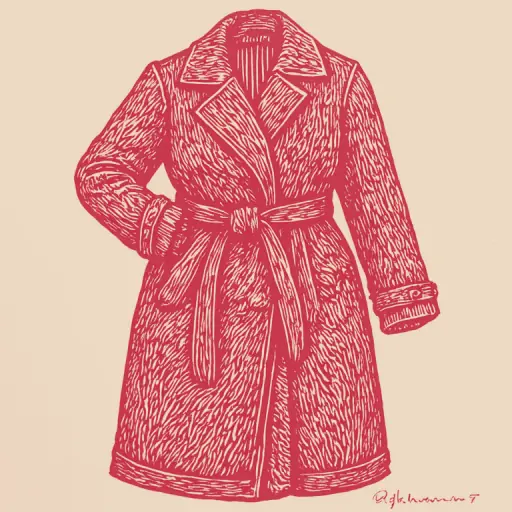
How to Tie a Belt on a Coat Beautifully and Uniquely in Different Ways
- 15 min read
- 65
A coat is the foundation of a demi-season and winter wardrobe, but the details determine how relevant and stylish your look appears. A simple coat belt or a sleek leather strap can instantly transform your silhouette, create the right waist accent, and turn a familiar piece into a ultra-fashionable outfit.
Most people are used to tying a belt with a simple knot, but modern fashion trends offer much more interesting solutions. An elegant half-bow, a strict tie knot, or a casual back fastening—each of these techniques conveys a different mood: from refined classicism to relaxed street style.
In this practical guide, we will analyze the most aesthetic techniques in detail. You will learn how to beautifully style a textile belt, how to stylishly use a buckle belt, and how to securely fasten slippery fabric so that the knot doesn't come undone during the day.
Preparation and Basic Rules: How to Choose a Method Based on Coat Type
Before moving on to complex knots and experiments in front of the mirror, it is important to lay a proper foundation. A beautifully tied belt is not just a random loop, but a harmonious extension of your coat's silhouette. For the knot to hold all day, not deform the fabric, and beautifully emphasize the figure's assets, several key factors must be considered: from the material texture to the correct placement of belt loops.
Every outerwear model—whether it is a heavy wool oversized coat, a light flowing trench, or a classic cashmere coat—dictates its own rules. Understanding these basic patterns will save you from constantly untying knots and looking messy, turning a simple belt into a powerful tool of personal style.
How Material and Belt Length Affect Knot Selection
The choice of the perfect knot directly depends on the physical parameters of the belt. Trying to tie a complex bow on a short or too stiff belt will result in a bulky knot that quickly comes undone.
Here are the main guidelines when choosing a technique:
- Accessory Length. A short belt (where the free ends after one wrap are less than 20 cm) dictates simplicity: only a classic single knot or a neat half-overlap is appropriate here. A long belt gives complete freedom for creativity—from a voluminous bow to an elegant tie knot.
- Material Density and Texture. Heavy wool, drap, and cashmere do not tolerate multi-layered constructions. Simple knots with soft draping are ideal for them. Slippery blended fabrics and gabardine require secure fastening (e.g., a double knot), otherwise, the belt will constantly loosen. Leather belts hold their shape well, so sharp geometric knots look great on them.
Preparing the Coat: Belt Loops, Waist Accent, and Wearing Comfort
The correct fit of the belt begins with assessing the belt loops. Factory loops are often placed without considering individual body features. If they are too high or too low, the belt will gather the coat fabric into unsightly folds. In this case, it is better to ignore the loops and tie the belt where your anatomical waist is, or slightly above it—this visually lengthens the legs and creates a harmonious silhouette.
To create the perfect waist accent and ensure comfort, follow three simple rules:
- Two-Finger Rule: When tying the knot, place two fingers under the belt. This creates the necessary slack so that the coat does not restrict movement while walking or sitting, especially if a thick sweater is worn underneath.
- Smoothing Folds: Before tightening the knot, gently smooth the coat fabric under the belt in the front and back to avoid excess volume on the hips.
- Loop Freedom: If you are wearing an oversized coat, try threading the belt through the loops only from the back, leaving the front flaps free to create an effect of light carelessness.
Classic and Elegant Front Knots: Step-by-Step Instructions
Classic ways to tie a belt in the front are the foundation of a basic wardrobe, instantly transforming the silhouette and making the look polished and refined. Front knots are the first things that catch the eye, so they require careful execution and the right balance between strict symmetry and light, natural carelessness. These options are ideal for medium-density wool, cashmere, and blended coats where the fabric obediently holds its shape without creating excess volume at the waist.
In this section, we will cover time-tested techniques that will highlight your individuality. We will start with soft, romantic lines and then move on to stricter, graphic structures suitable for business style.
Elegant Half-Bow and Classic Bow Step by Step
Classic front knots are a foolproof way to accentuate the waist and add sophistication to the look. Let's look at two basic techniques for medium-length textile belts.
How to tie an elegant half-bow:
- Cross the belt ends, placing one end over the other.
- Thread the top end under the bottom from bottom to top to form a simple knot.
- Form a neat loop ("ear") from the lower free end.
- Wrap this loop with the top end and thread it through the formed opening, but not all the way—pull out only the second loop.
- Tighten the knot and smooth out the resulting half-bow.
How to tie a classic bow:
- Make a simple single knot, adjusting the ends so they are of equal length.
- Fold both ends in half, forming two identical "ears."
- Cross these loops and tie them into a knot, like shoelaces.
- Smooth out the resulting bow wings and gently tighten the knot in the center.
Strict Tie Knot and Bidermeyer Knot
For a more put-together, business look, strict knots that do not come undone during the day and hold their shape well are ideal.
Classic Tie Knot
This method lends a light masculinity and structure to the coat:
- Drape the belt so that one end is about 20 cm longer than the other.
- Cross the ends, placing the longer one over the shorter one.
- Wrap the long end around the short one, bringing it up from underneath through the loop formed at the waist.
- Thread this same working end down through the loop formed in the front and gently tighten.
Bidermeyer Knot
This flat yet textured knot looks magnificent on thick wool belts:
- Make a simple half-knot.
- Take the lower hanging end and wrap it around the upper one, creating a neat horizontal loop.
- Pass this same end inside the loop and tighten.
- Smooth the knot so that it lies flat like a strict "box" right in the center of the waist.
How to Stylishly Tie a Leather Belt with a Buckle
The transition from soft textile to dense leather instantly changes the character of the entire look. A leather belt with a buckle is not just a functional detail, but a powerful style accent that structures the silhouette and adds noble polish to a coat. Today, the trend is moving away from the banal fastening into classic holes: designers and street style icons suggest playing with shape by tying belts into knots or artfully hiding the free edges.
Working with leather requires a special approach, as this material is less pliable than wool or silk, but it is precisely its stiffness that allows for the creation of graphic and durable knots. Let's explore how to transform a standard leather accessory into a ultra-fashionable element of your transitional wardrobe.
Ways to Tie a Belt Around the Buckle (Casual Chic)
Ignoring the classic fastening of a belt to a buckle is a favorite trick of street style icons. It lends the look that certain air of effortless chic and visually lightens the coat's silhouette, making the waist accent softer.
Here are two simple ways to achieve the effortless chic effect:
- Loop Under the Buckle. Thread the free end of the belt through the buckle, but do not secure the tongue in a hole. Let the tip drop down, wrap it around the belt from bottom to top, creating a vertical loop, and thread the end through it. The buckle remains a stylish decorative element.
- Asymmetrical Half-Knot. Completely ignore the buckle. Cross the belt ends so that the part with the buckle ends up underneath. Wrap the long free end around the base of the buckle, bring it up, and drop it into the resulting loop. The buckle will hang beautifully, creating dynamism.
For these knots, choose belts made of soft, pliable leather of medium width (3–4 cm). Stiff belts may crease and quickly lose their appearance.
Double Knot and Hidden End Knot for Thin Belts
Thin leather straps are an elegant tool that allows you to create a neat waist accent and emphasize the coat's silhouette. Graphic knots that do not overload the look and securely fasten the accessory are ideal for them.
Double Knot for Long Belts
This method is a real lifesaver if the strap is too long and its free edge hangs unattractively:
- Fasten the belt to the buckle in the usual manner.
- Direct the free end downwards, threading it under the belt from bottom to top, creating a vertical loop.
- Again, direct the tip downwards and wrap it around the belt one more time, forming a second loop parallel to the first.
- Thread the tip into the resulting double loop and gently tighten.
Hidden End Knot
If you are aiming for minimalism and want to remove unnecessary details, use this trick:
- Fasten the belt to the buckle.
- Thread the free end under the belt from bottom to top.
- Instead of letting it hang, neatly tuck the remaining tip horizontally inside—under the belt itself or into the coat's waistband.
These ways of tying the belt look incredibly aesthetic and fully align with modern fashion trends.
Aesthetic Ways to Tie a Belt in the Back (For Wearing a Coat Open)
Wearing a coat open is a favorite trick of stylists, which instantly makes the look more dynamic, light, and relaxed. However, freely hanging belt ends often interfere with walking, look messy, or try to slip out of the waistband. The solution to this problem is the aesthetic fastening of the belt at the back. This trick not only eliminates practical inconveniences but also beautifully gathers the fabric at the waist, creating an elegant fitted silhouette from the back while maintaining a relaxed effect in the front.
Styling the belt at the back transforms a utilitarian detail into a full decorative element. There are several elegant techniques that allow you to securely fasten the belt so that it does not come undone during the day, while still looking impeccable from the back. Let's break down the most popular and stylish options for this draping step-by-step.
Traditional Back Tie Knot in One Wrap
The traditional back tie knot is the perfect balance between classic formality and casualness. It securely fastens the belt, preventing it from slipping out of the waistband, and beautifully gathers the fabric at the back, creating an elegant silhouette when wearing a coat open.
Step-by-Step Instructions:
- Preparation: Thread the belt through the waistband loops. Level it so that one end is about 15–20 centimeters longer than the other.
- Crossing: Lay the long working end over the short one.
- Wrap: Thread the long end under the short one from bottom to top, wrapping it once to form a neat base loop.
- Securing: Pass this same long end through the resulting loop from top to bottom.
- Adjustment: Tighten the knot while holding the short end. Smooth out the fabric folds on the back so that the coat sits freely and comfortably.
This concise knot is excellent for thick wool and cashmere coats, as it does not create unnecessary volume at the waist.
Bow with Multiple Loops and Waistband Fastening Features
To create a more flirtatious and voluminous look, a decorative bow with multiple loops (double bow) is perfect. This method turns an ordinary belt into a standalone art object on your back.
Step-by-Step Tying Technique:
- Base Knot: Thread the belt through the waistband loops, level the ends, and tie a simple half-knot at the back.
- Forming First Loops: Fold both ends of the belt in half so that you have two loops ("ears") in your hands.
- Second Level: Cross these loops over each other and tie them in a classic knot, but do not tighten completely.
- Creating Additional Loops: Thread the remaining free tips back through the central knot, forming a second pair of smaller loops. Gently smooth out all four "ears."
Waistband Fastening Features:
To prevent a heavy or voluminous bow from pulling the fabric back and deforming the open coat silhouette, secure the belt. Before tying, wrap one of the ends around the side waistband loop from the inside. This creates an additional point of support, and the structure will not slip or twist while walking.
Practical Life Hacks: How to Secure a Slippery or Long Belt
A beautiful knot on a coat is only half the battle. In practice, many people encounter annoying difficulties: the silky fabric of a trench coat slips and unties while walking, and an overly long belt hangs forlornly almost to the knees, disrupting the figure's proportions. To keep your look impeccable throughout the day, it is important to know several professional tricks.
In this section, we will cover practical techniques that will help tame unruly materials and elegantly manage excess length. These simple but effective life hacks will save you from constantly adjusting your clothes and allow you to maintain a flawless silhouette in any situation.
Secrets to Securing Slippery Fabrics So the Knot Doesn't Untie
Silky blend fabrics, polished nylon, and smooth satin look luxurious, but they have one drawback—knots on them loosen instantly. To secure a slippery belt for good throughout the day, use professional stylist hacks:
- Double Wrap (Surgical Half-Knot). When forming the first basic knot, wrap one end around the other not once, but twice. This creates extra friction, and the knot won't slip before you even start forming a bow or loop.
- Invisible Silicone Hair Tie. The main secret of street style bloggers. Put a small, clear silicone hair tie on the belt. Tie the knot (for example, a half-bow), and thread the loose end under the tie close to the knot. It will securely hold the fabric and remain completely invisible.
- Double-Sided Clothing Tape. If the fabric is extremely slippery, stick a small piece of special double-sided tape for body and clothing inside the knot itself. It leaves no marks on the coat and firmly fixes the drape.
These simple tricks will allow you to forget about constantly adjusting your outerwear on the go.
How to Style a Very Long Belt: The "Infinity" Knot and Loops
Excessive belt length often disrupts body proportions, causing the free end to hang unattractively almost to the hem of the coat. To turn this excess fabric or leather into a trendy accent, use professional styling techniques.
"Infinity" Knot for Fabric Belts
This method allows you to elegantly "shorten" the length by creating a beautiful textural spiral at the waist:
- Tie the belt in one simple knot, leaving one end significantly longer than the other.
- Take the long tail and begin to wrap it sequentially around the horizontal part of the belt, pressed tightly against the waist.
- Make wraps one after another toward the side seam of the coat.
- Carefully tuck the tip under the last wrap from the inside. The resulting neat spiral will securely fix the length.
French Loop for Long Leather Belts
If you are using a long leather strap with a buckle, standard belt loops won't prevent the end from sagging. Try this technique:
- Fasten the belt with the buckle as usual.
- Direct the long, free end downwards, passing it under the belt from bottom to top to form a free vertical loop.
- Thread the belt tip from top to bottom into this loop and tighten slightly.
These simple techniques not only solve the problem of excess length but also add a relaxed chic to your look.
Conclusion
The ability to tie a belt on a coat beautifully and originally is a simple yet incredibly effective way to instantly transform your everyday look without extra expense. As we have seen, the same piece of outerwear can look completely different: strict and put-together with a tie knot, romantic with an elegant half-bow, or ultra-stylish with a casually tied leather strap over wool fabric.
The main rule of modern fashion is to avoid excessive effort. Light, natural carelessness is valued much more today than perfect, rigid symmetry. Don't be afraid to experiment: switch your standard fabric belts for contrasting leather belts, try tying them at the back to create a beautiful silhouette when worn open, or use original loops to secure slippery materials.
Practice in front of the mirror, choose two or three methods that are most comfortable for you for different coat styles, and change them depending on your mood and the occasion. Let this concise yet expressive accent at the waist become your personal style signature, highlighting impeccable taste and individuality in any weather!