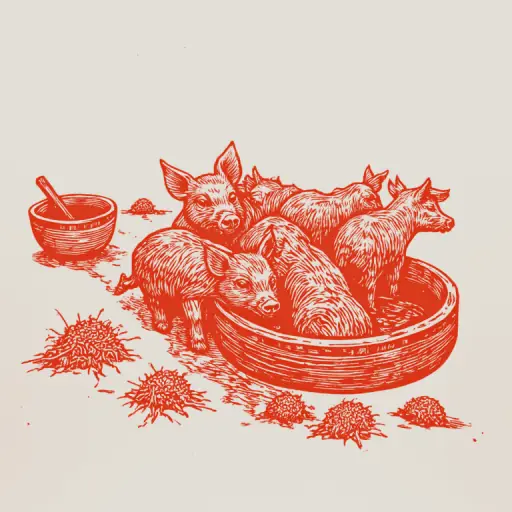
How to treat diarrhea in pigs with effective drugs and natural remedies
- 15 min read
- 82
Diarrhea in pigs is one of the most common and dangerous problems faced by both small farm owners and large-scale breeders. Due to the physiological peculiarities of young animals, a gastrointestinal disorder immediately leads to dangerous dehydration, weight loss, and, without timely intervention, the death of entire herds. Particularly vulnerable are nursing piglets and weaned piglets, whose immune and digestive systems are still developing.
The causes of the disease can be very diverse: from simple management errors and sudden dietary changes to serious infectious diseases. To save the animals, it is necessary to act quickly and competently.
In this practical guide, we will analyze in detail how to stop diarrhea in pigs at home. You will learn which veterinary drugs (including Brovaseptol and Biovit) are most effective, how to correctly apply natural remedies (such as rice decoction), and how to organize the care of sick animals for a rapid recovery.
First Aid and Diagnosis of Diarrhea in Pigs
Success in treating diarrhea in pigs depends directly on the speed of the pig farmer's reaction. Since the digestive system of young animals is extremely vulnerable, even a delay of a few hours can lead to irreversible dehydration and the death of the herd. Before resorting to strong antibiotics, it is necessary to quickly assess the situation: determine the age group of the affected animals and contain the first critical symptoms.
The owner's priority is not simply to stop liquid feces, but to locate the epicenter of a possible infection and stabilize the conditions of the weakened piglets. For this, it is essential to clearly distinguish the diagnostic approaches for different age groups and immediately adopt emergency first aid measures that help save the pigs' lives until systemic therapy begins.
Identifying Causes of Diarrhea in Nursing and Weaned Piglets
To choose the correct treatment regimen, it is necessary to precisely differentiate the causes of the disorder, which depend directly on the age of the young animals.
Nursing Piglets (nursing period):
- Colibacillary (E. coli): Appears within the first 24 hours of life. Feces are watery, abundant, and yellowish-white.
- Clostridial: Develops on the 2nd–3rd day. It is characterized by dark, bloody liquid feces and high mortality.
- Rotavirus and coccidiosis: Affect the litter between the 3rd and 10th day of life. Feces become pasty, gray or yellow.
- Problems with the sow: An unbalanced diet of the sow or mastitis alters the composition of the milk, causing dyspepsia in the piglets.
Weaned Piglets (after separation from the sow):
- Weaning stress: The sudden change in diet in the presence of hydrochloric acid deficiency in the stomach leads to the alkalization of the environment and the proliferation of pathogens.
- Infectious gastroenteritis: Salmonellosis or dysentery causes foul-smelling diarrhea with traces of mucus and blood, accompanied by refusal of food.
Emergency Measures: Isolating Sick Animals and Combating Dehydration
One must not delay when the first signs of diarrhea appear: dehydration in pigs, especially in nursing piglets, develops rapidly and can lead to the death of the animal in just 12-24 hours.
Step 1. Immediate Isolation
Sick piglets must be immediately moved to a clean, separate pen, with a thick, dry substrate and an air temperature not lower than +28…+30 °C. This prevents the spread of pathogens (such as Escherichia coli or rotavirus) between the healthy herd and protects the weakened piglets from chilling.
Step 2. Combating Dehydration (Rehydration)
The loss of fluids and salts is the main cause of mortality. For emergency aid, the following remedies are used:
- Electrolyte solutions: oral administration of ready-made pharmaceutical preparations (e.g., Reidron) or veterinary rehydration mixtures.
- Ringer's or Ringer-Lactate solution: this is the most effective in severe conditions. It is administered subcutaneously in the popliteal fold, dosing 15-20 ml per animal 2-3 times a day.
- Physiological saline with glucose: a warm drink prepared with 1 liter of boiled water, 20 g of glucose, and 5 g of table salt.
Access to clean, warm water must be constant for the isolated piglets. Only after containing the risk of dehydration can targeted therapy proceed.
Pharmacological Treatment: Veterinary Drugs and Antibiotics
Once emergency first aid measures have been adopted and the threat of severe dehydration has been temporarily contained, it is necessary to move on to etiological and recovery therapy. In cases where diarrhea is caused by bacterial infections or severe digestive disorders, it is impossible to do without specialized veterinary drugs. The timely and targeted use of drugs not only stops the symptoms but also eliminates the primary cause of the disease, preserving the herd and preventing growth delays in the young animals.
An effective treatment regimen is always based on two pillars: the suppression of pathogenic microflora and the restoration of water-salt balance together with beneficial intestinal microbiota. Below, we will analyze in detail which groups of drugs form the pig farmer's toolbox and how to use them correctly.
Selection and Dosage of Antibiotics (Brovaseptol, Biovit, Ditrim)
When moving to pharmacological treatment, it is essential to correctly choose an antibacterial drug capable of rapidly stopping the proliferation of pathogenic microflora in the piglet's intestine. The most effective and proven remedies in practice are as follows:
- Brovaseptol. Broad-spectrum complex preparation. The powder is administered orally at a dose of 1-1.5 g per 10 kg of the animal's body weight twice a day, mixed with a small amount of feed or lukewarm water. The treatment cycle lasts 3-5 days.
- Biovit (Biovit-80). Contains chlorotetracycline and vitamin B12, which not only suppresses the infection but also stimulates growth. The drug is added to the feed once a day at a dose of 0.15-0.2 g per 1 kg of the piglet's body weight. It is used for 5-7 days until the complete disappearance of symptoms.
- Ditrim. High-efficacy injectable preparation based on sulfadimethoxine and trimethoprim. It is injected intramuscularly at a dose of 1 ml per 10 kg of body weight once a day. In cases of severe diarrhea, in the first few days, the dose can be divided into two administrations 12 hours apart. The treatment cycle lasts 3 days.
Before starting therapy, it is recommended to consult a veterinarian to precisely determine the etiology of the disease.
Use of Probiotics and Electrolyte Solutions for Recovery
After suppressing the pathogenic microflora with antibiotics, it is essential to eliminate dehydration and restore the water-salt balance of the piglets. For this reason, electrolyte solutions are immediately administered:
- Regidron or Electrovit: the powder is dissolved in lukewarm boiled water and administered to the animals via a teat feeder or syringe without a needle, in doses of 20–100 ml every 2–4 hours.
- Ringer's Solution: in cases of severe enteritis (dehydration), the preparation is injected subcutaneously or intraperitoneally at a dose of 10–15 ml per kg of body weight, 2–3 times a day.
In parallel, to colonize the intestine with beneficial microflora, veterinary probiotics are prescribed. The preparations Lactobifadol, Bifidumbacterin, or Subtilis normalize the pH of the digestive tract and expel pathogen residues. They are added to lukewarm drinking water or a moist mixture for 5–7 days until complete digestive recovery.
Popular Remedies Against Gastric Upset in Pigs
The pharmacological therapy and the restoration of water-salt balance are the foundation for saving piglets suffering from severe diarrhea. However, in home settings, proven popular methods provide excellent support to veterinary drugs, and sometimes a safe alternative in cases of mild digestive upset. They act gently, help solidify feces, and protect the inflamed intestinal mucosa from irritants.
The use of natural remedies allows for the rapid alleviation of animal conditions without an excessive pharmacological load on the still-weak body. Among the repertoire of experienced farmers are always accessible components that effectively combat toxins and normalize gastrointestinal motility. Below are presented the most effective and safe recipes, easy to prepare independently.
Astringent Decoctions (Rice, Oats) and Conifer Infusions
For mild digestive upset and dyspepsia in nursing and weaned piglets, proven popular remedies show high efficacy. They gently coat the intestinal mucosa, reduce irritation, and stop fluid loss.
- Rice Decoction. Possesses a marked astringent effect. For preparation, 100 g of rice are covered with 1 liter of water and boiled over low heat for about 40 minutes. The resulting gelatinous liquid is filtered and administered to the piglets in lukewarm form in doses of 50–100 ml every 3–4 hours.
- Oat Decoction (gelatin). Nourishes and restores strength excellently. 100 g of oat flakes are covered with 1 liter of boiling water, left to infuse for 3 hours, then brought to a boil and filtered. 100–150 ml is administered 3 times a day.
- Conifer Infusion. Functions as a natural antiseptic and source of vitamins. 100 g of fresh pine or fir needles are covered with 1 liter of very hot boiling water, left to infuse in a thermos for 2–3 hours. The infusion is given to the piglets in doses of 5–10 ml per head before feeding.
These remedies help to quickly stabilize feces in the early symptoms of the disorder.
Use of Vegetable Charcoal and Straw for Digestive Normalization
In addition to liquid decoctions, in the popular practice of pig farming, dry natural absorbents and roughages are actively used to help bind toxins and restore intestinal motility.
Vegetable charcoal (or birch ash) is a powerful natural adsorbent. It effectively absorbs gases, toxins, and decomposition products in the piglet's gastrointestinal tract.
- Application method: Crush pure vegetable charcoal (without chemical additives for ignition) into a fine powder.
- Dosage: Add the powder to the feed in doses of 1–1.5 g per kilogram of the animal's body weight once a day until diarrhea completely ceases. For prevention, the charcoal powder can be sprinkled in a separate tray for free access.
Quality straw and straw bran are essential for normalizing peristalsis in larger and weaned pigs.
- Straw Infusion: Cover 0.5 kg of dried mixed herbs with 5 liters of boiling water, let it infuse covered for 3–4 hours. Administer the filtered lukewarm infusion to the piglets instead of drinking water. It is rich in vitamins and gently astringes the intestine.
- Straw Bran: Offer the piglets small dry pieces of straw (bran). Chewing this feed stimulates the production of saliva containing enzymes, accelerating digestive recovery.
Care Rules and Diet Therapy During Treatment
Success in controlling diarrhea symptoms with drugs and natural remedies is only half the battle. For the complete recovery of the weak piglets' bodies, it is essential to create conditions where the digestive system is not subjected to additional stress and the body's defense forces are directed toward fighting the disease. Proper care and diet therapy during this period play a decisive role in preventing relapses and accelerating rehabilitation.
In this phase, two factors are crucial: the temporary restriction of feeding to lighten the gastrointestinal tract and ensuring a comfortable living environment. Below, we will examine in detail how to correctly organize the therapeutic fasting without harming young animals, and what microclimate parameters to maintain in the pen to prevent chilling and worsening of the disease.
Organization of Fasting Diet and Gentle Exit From It
In the first signs of acute diarrhea in weaned piglets and older young livestock, it is necessary to immediately organize a 12–24 hour fasting diet. This will lighten the inflamed gastrointestinal tract and stop fermentation processes. It is important to remember: for suckling piglets, a complete fasting diet is not permissible; they are kept near the mother but are temporarily excluded from any supplementary feeding.
During the fast, the animals must have unlimited access to clean lukewarm water (about 35–37 °C) or electrolyte solutions to prevent dehydration.
The exit from the diet must be as gentle as possible:
- First few days after fasting: introduce easily digestible liquid feeds – warm rice or oat decoction, a liquid mash of oat or barley flour. Portions must not exceed 30–50% of the usual amount, divided into 5–6 small meals.
- Second and third day: gradually add crushed quality straw, boiled potatoes, and specialized pre-starter feeds.
- Fourth day: provided the piglets' feces have normalized, transition to a complete diet.
Creating Optimal Microclimate and Temperature in the Pen
After stabilizing the diet of the sick young animal, it is necessary to immediately normalize the maintenance conditions. The body weakened by diarrhea loses heat rapidly, so chilling often becomes a cause of complications and animal death.
To create an optimal microclimate, observe the following parameters:
- Thermal regime. For nursing piglets in the resting area, maintain a temperature of +30…+32 °C using infrared lamps. For weaned piglets, the temperature must not drop below +22…+24 °C.
- Air current prevention. The speed of air movement in the environment must not exceed 0.15 m/s. Close all gaps in windows and doors, as an air current on damp ground is lethal to sick piglets.
- Dryness and bedding. Change contaminated bedding daily. Use a thick layer of dry straw or sawdust. Humidity in the housing is unacceptable.
- Ventilation. Ensure a gentle supply of fresh air to eliminate ammonia vapors, without causing a sudden cooling of the environment.
Diarrhea Prevention in Piglets of Different Ages
Treating diarrhea always means fighting the consequences, a process that requires time, energy, and financial costs. It is much more effective and economically advantageous to establish a reliable prevention system that excludes the possibility of gastrointestinal diseases developing in the first place. Since the digestive system of piglets undergoes colossal changes with growth, preventive measures must strictly correspond to their age group. Timely prevention of gastric disorders allows the herd to be maintained, avoids growth delays, and minimizes the use of antibiotics. Below, we will examine in detail the key preventive steps for the two most critical periods in the young animals' lives.
Hygiene of Managing Lactating Sows and Born Piglets
The prevention of diarrhea in born piglets begins even before their birth and depends directly on the hygiene of sow management. The neonate's intestine is sterile and its immune system is undeveloped, so any pathogen from the environment immediately causes a severe gastrointestinal disturbance.
Main hygiene rules to prevent diarrhea during the lactation period:
- Preparation of the farrowing crate. 5–7 days before the sow is transferred, the environment is thoroughly cleaned of manure, washed with hot pressurized water, and disinfected. The crate must dry completely before the animal enters.
- Sow hygiene. Before being transferred to the clean crate, the sow is washed. Immediately before birth, the teats are treated with a warm, diluted solution of potassium permanganate or chlorhexidine to exclude the entry of bacteria (especially E. coli) into the piglets' bodies during lactation.
- Early colostrum feeding. Piglets must receive the first portion of colostrum within the first 30–40 minutes after birth. This is fundamental for the formation of passive immunity.
- Dryness and warmth. In the piglets' resting area, the temperature must be maintained at +32...+34 °C with the help of infrared lamps. Humidity and air currents are the main triggers for hypothermia and subsequent dyspepsia.
Prevention of Stress During Weaning and Control of Feed Quality in Growing Young Animals
Weaning from the sow is the most critical phase that causes gastric disorders in pigs. To prevent post-weaning diarrhea, minimize stress, and strictly control feed quality:
- Gradual transition: Start acclimating the piglets to pre-starter feed from the 5th–7th day of life. At the time of weaning, their digestive system will have already adapted to dry feeds.
- Nursery retention: After weaning from the mother, keep the piglets in the same housing for another 7–10 days. The familiar environment reduces stress levels.
- Fractionated feeding: In the first few days after weaning, limit single feed portions, administering them 5–6 times a day. Excess food leads to indigestion and the proliferation of pathogenic microflora.
- Quality control and acidification: Exclude moldy, damp, and expired feeds. To prevent diarrhea, add organic acids (citric, lactic) to the water or dry feed: these lower the pH in the stomach, replacing missing hydrochloric acid, and block bacterial development.
Conclusion
A successful treatment of diarrhea in piglets is always the result of a complex and timely approach. For both born piglets and weaned piglets, the key to survival lies in the quick reaction of the pig farmer. Timely resolution of dehydration with electrolyte solutions, isolation of sick animals, and targeted application of effective antibacterial drugs (such as "Brovaseptol" or "Biovit") allow the development of the disease to be stopped in the initial stages.
The integration of popular methods, such as rice decoction or activated charcoal, serves as an excellent supportive factor, helping to more rapidly restore the intestinal mucosa. However, pharmacological therapy must always be supported by rigorous control of rearing conditions: optimal temperature, absence of drafts, and quality feed.
In pig farming, there is a golden rule: prevention costs less than cure. Maintaining cleanliness during farrowing, properly preparing sows for birth, and minimizing stress factors during weaning are basic investments in the health of the future herd. Having a first-aid kit readily available and following proven algorithms also allows a beginner farmer to reliably protect their herd from dangerous digestive disorders and maintain high farm productivity.