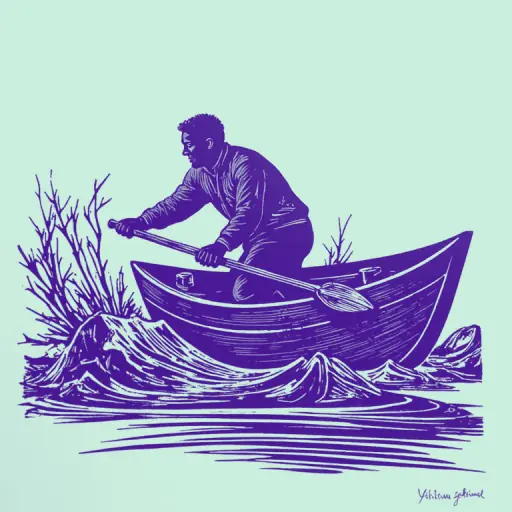
How to Understand the Concept of Death as the Soul's Transition to the Ancient Realm of Shadows?
- 15 min read
- 35
Death throughout the ages remained the chief mystery of human existence. For our distant ancestors, it was never an absolute end or a simple disappearance. On the contrary, ancient cultures perceived the departure from life as a great transition—a mysterious journey of the soul into another dimension.
In mythology and early philosophy, the concept of post-mortem existence is closely intertwined with the image of the underworld. Whether it was the dim realm of Hades in ancient Greek mythology, the silent Sheol of the ancient Hebrews, or the gloomy Mesopotamian Kur—everywhere the soul after death was stripped of earthly flesh, transforming into a formless, wandering shadow. This transition required adherence to strict rituals: from proper burial to paying a guide (psychopomp) for passage across sacred rivers, such as the Styx.
Understanding this ancient thanatology is not merely an academic interest. It is the key to unraveling how humanity has coped with the fear of non-being for centuries, transforming the terror of death into a majestic metaphysical drama.
Step 1: Understanding the Nature of the "Shadow" — Why the Soul Was Deprived of Flesh and Light
The transition from earthly existence to the afterlife, in the ancient view, required a radical change in the very nature of a human being. By losing its physical shell, the soul did not just lose weight—it lost warmth, color, and the fullness of sensation, turning into a pale, translucent silhouette.
The concept of the "shadow" (Greek skia, Latin umbra) became a universal metaphor for describing this intermediate state. It was not complete non-existence, nor was it a full life, but merely a faint echo of humanity's former greatness. To understand how this realm of lightless beings functioned, one must delve into the very ontology of post-mortem fading.
The Metaphysics of Dim Existence: Why the Dead Became Shadows
The transition to the abode of the dead was conceived by the ancients not as an instantaneous attainment of spiritual greatness, but as a tragic thinning of being. Why did the dead become specifically "shadows" (skia for the Greeks, itlu for the Babylonians)? The answer lies in the metaphysical deprivation of two fundamental aspects of earthly existence: blood and light.
- Deprivation of Density and Warmth. The physical body held the soul, giving it weight and warmth. Without blood—the sacred carrier of life force—the soul lost the ability to feel and act. It turned into an intangible contour, incapable of physically affecting the material world.
- Loss of Luminous Nature. Light in ancient cosmology was associated with reason, truth, and divine order. Being outside the reach of sunlight, the soul lost clear consciousness. The shadow is merely a passive optical imprint of the person, devoid of will.
In this coordinate system, the shadow is not a complete "self." It is merely a melancholic echo of a life passed, capable only of a weak, whimpering existence until a ritual offering of blood temporarily restores a semblance of memory.
The Distinction Between Shadow, Soul (Psyche), and Living Consciousness in Ancient Cultures
To understand ancient thanatology, it is necessary to strictly differentiate three key concepts that defined human existence in the view of our ancestors:
- Living Consciousness (thymos and noos): For the ancient Greeks, this was the active principle—the center of emotion, will, and reason. It was inseparably linked to the physical body, warm blood, and breath. With the death of the flesh, living consciousness completely faded.
- Soul (psyche): In the archaic era, it was perceived not as the carrier of individuality, but as a faceless life force. Leaving the body with the last breath, the psyche carried away only a spark of life, but not reason.
- Shadow (eidolon / skia): This is the ghostly "double" of the deceased, inhabiting the underworld. The shadow retains only the external outline of the person but is devoid of will and memory.
In Homeric Hades, the shadows exist in a state of eternal semi-forgetfulness. To restore them a semblance of living consciousness and the ability to speak, Odysseus must feed them sacrificial blood—the physical equivalent of life force, temporarily returning reason to the empty shell.
Step 2: Reconstructing the Route — Rituals of Transition and the Role of Guides
Understanding the nature of the shadow as a bloodless double of a human being inevitably raises the question: how exactly does this fragile phantom cross the boundary between worlds? The transition to the realm of the dead was never conceived in ancient traditions as an instantaneous teleportation or automatic disappearance. It was a complex, perilous route, demanding adherence to strict ritual rules.
For the formless soul not to get lost in cosmic chaos and to wander eternally on the border, it required external support—a sacred geography defining the milestones of the journey, and a guide capable of pointing the correct direction. In this coordinate system, the burial ritual became not just an act of respect, but a vital technology of salvation, ensuring the legitimate status of the newcomer in the abode of shadows.
The Geography of the Underworld: The Rivers Styx, Lethe, and the Sacred Toll to Charon
Upon entering the afterlife, the disoriented soul encounters its strict topography, where water barriers serve as insurmountable boundaries between being and non-being. The main landmarks of this landscape are the sacred rivers:
- Styx (the river of oaths and primal terror) — symbolizes the absolute inviolability of the transition. The waters of the Styx bound even the Olympian gods with a sacred oath, and for mortals, crossing this boundary meant a final severance from earthly embodiment.
- Lethe (the river of oblivion) — a sip from its source erased personal memory. This liminal act freed the soul from the burden of past attachments, passions, and suffering, turning it into a pure, yet unindividualized "shadow."
The central figure at this border is the ferryman Charon. He transports souls across the poisonous waters of Acheron or the Styx, demanding a symbolic payment—a copper coin. The ritual of burial with a coin in the mouth held deep existential meaning: the coin served not merely as payment for a "service," but as proof that the person had been buried according to community law and accepted by the dead community. Those left without a coin—unburied or forgotten—were doomed to wander the misty shores in eternal sorrow.
The Figure of the Psychopomp: How Hermes and Ancient Rituals Helped the Soul Not Get Lost
The transition to the abode of shadows is not merely an instantaneous movement, but a convoluted and frightening journey in which the newly arrived soul could easily lose its way. To prevent this, the Hermes Psychopomp (Guide of Souls) played a key role in Greek tradition. Possessing the unique status of a messenger, capable of crossing boundaries between the world of the living, Olympus, and the underworld unimpeded, Hermes gently took the fleshless psyche by the hand and led it through the twilight to the banks of the Styx. In Egyptian tradition, Anubis performed a similar role, preparing the soul for the judgment of Osiris.
Earthly rituals served as a sacred map for this journey. Funeral rites performed crucial functions:
- Prothesis (mourning) and exorasis (body removal) helped the soul realize the fact of its demise and finally separate from the physical carrier.
- Ritual purification and libations (choe) appeased chthonic deities.
- Proper burial guaranteed that the soul would receive the right to passage, rather than wandering eternally on misty shores.
Without these rituals and the guidance of the Psychopomp, the soul was doomed to eternal wandering in the border zone, deprived of peace and the ability to complete its transition.
Step 3: Comparative Mapping — Comparing Ancient Realms of the Dead
Having crossed the sacred boundaries under the guidance of guides, the soul, freed from earthly bonds, finds itself at the threshold of eternity. But what did this final destination look like in the ancient imagination? Different civilizations, separated by seas and centuries, described the initial landscape of the afterlife with striking uniformity. It was not a place of punishment or reward in the modern sense, but rather a faceless, gray reservoir for extinguished consciousness.
A comparative analysis of the oldest realms of the dead allows us to see how humanity gradually transitioned from the concept of total equality in non-being to complex ethical systems of posthumous judgment. Let us compare the geography and laws of these grim kingdoms to trace the evolution of thanatological thought.
Hades, Sheol, and Mesopotamian Kur: The Common Joyless Space Before the Idea of Hell
Before the emergence of concepts of heaven and hell based on ethical retribution, ancient civilizations shared a strikingly similar, deeply pessimistic view of post-mortem existence. The afterlife was conceived not as a place of punishment for sins, but as a single, joyless abode for all who had passed away, regardless of their earthly merits.
Let us compare three key spaces in ancient thanatology:
- Mesopotamian Kur (Irkalla): In Sumerian-Akkadian mythology, this is the "land of no return," where the dead "are clothed like birds with wings," feed on clay, and drink murky water. Eternal dust reigns here, and kings are equal to slaves in their poverty.
- Biblical Sheol: In early Jewish tradition, Sheol is a silent, dark abyss, the "land of oblivion." Here, souls remain in a state of semi-sleep after death, cut off from God and the living. It is not a hell of torment, but a common grave of humanity.
- Homeric Realm of Hades: In early Greek tradition, the underworld is the dim Asphodel Meadows, where aimless shadows wander. Achilles' famous lament in the "Odyssey" emphasizes this tragedy: it is better to be the last laborer for a living pauper than the lord over all the dead.
These concepts are united by the absence of moral dualism. Death here is not judgment, but merely the fading of life force, the transformation of a bright flame of consciousness into a pale, eternal shadow.
Evolution of Concepts: Transition from Grim Equality to Judgment, Elysium, and Retribution
Gradually, the concept of faceless and equal fading in the abode of shadows began to transform. The human mind demanded cosmic justice, which was not always found in earthly life. Thus, the idea of posthumous judgment and the ethical division of souls was born, forever changing the thanatology of the ancient world.
In Greek tradition, this transition is clearly traced by comparing Homer's "Odyssey," where even the great Achilles longs for earthly life, with later Orphic teachings or Plato's dialogues. The grim equality of early Hades gives way to the concept of judgment, presided over by three wise kings: Minos, Rhadamanthus, and Aeacus. They weighed a person's earthly deeds, determining their future path.
The afterlife geography became more complex and divided into three key zones:
- Tartarus — the deepest abyss, which became the place of eternal punishment for sinners, oath-breakers, and tyrants.
- Asphodel Meadows — a neutral zone for "ordinary" people whose lives were marked by neither great virtue nor heavy sin. Here, souls continued a semi-unconscious existence.
- Elysium (Elysian Fields) — the blessed abode of eternal spring and joy, which eventually began to accept not only heroes and demigods but also all the righteous initiated into the mysteries.
This evolution of concepts reflected a profound shift in human self-awareness: death ceased to be merely a tragic finale and transformed into an ethical outcome, laying the foundation for future monotheistic concepts of heaven and hell.
Step 4: Philosophical and Psychological Integration of the Ancient Concept
Leaving behind the geographical maps of the underworlds and the evolution of posthumous judgment, we inevitably return to ourselves. The ancient myths of wandering shadows are not merely naive pre-scientific fantasies, but deep metaphors reflecting the internal architecture of the human psyche. Shifting the focus from external mythology to the inner world allows us to see in the image of dim Hades a mirror of our own existential anxieties.
In this concluding chapter, we integrate ancient thanatology into a modern context. We explore how the image of the barren shadow relates to deep psychological archetypes and the fear of losing personal identity. Furthermore, we turn to practical philosophy to understand how accepting this ancient concept of "withering" helps us reconcile with the finitude of earthly existence and achieve true presence in the present moment.
The Shadow as Archetype: The Psychological Fear of Mental Decay and Loss of Identity
Transferring ancient notions of the abode of shadows into the field of modern psychology allows us to see the "shadow" not merely as a mythological construct, but as a deep existential fear. Carl Gustav Jung defined the Shadow as an archetype containing hidden, unconscious, or rejected aspects of the personality. However, in the context of ancient thanatology, the image of the shadow (Greek eidolon) acquires an even deeper psychological dimension—it is a symbol of the decay of reason and the complete loss of identity.
For the ancient person, dwelling in the realm of Hades or Sheol was frightening not because of physical torment, but because of mental disintegration. Devoid of flesh and earthly memory, the soul after death turned into a faceless echo of itself. This image reflects the fundamental human fear of depersonalization. We fear not so much the cessation of biological existence as the loss of our "Self"—the fading of cognitive functions, memory, and the ability to think.
In psychological analysis, this fear is expressed through three key aspects:
- Loss of subjectivity: the transformation from an active agent to a passive observer (the wandering shadow).
- Dissolution of individuality: in the underworld, all shadows are equally gray and faceless, symbolizing the fear of losing uniqueness.
- Amnesia as the death of the spirit: the myth of the River Lethe shows that oblivion is equivalent to the final departure from life, where all personal achievements and attachments are erased.
Thus, the ancient dwelling of shadows serves as a metaphor for the gradual fading of consciousness. Understanding this archetypal fear helps us realize that our attachment to ego-consciousness is the main source of thanatophobia, paving the way for the integration of this experience.
Practical Application: How Understanding Ancient Thanatology Helps Accept the Finitude of Existence
Studying ancient thanatology is not merely an academic interest but a powerful therapeutic tool that allows us to reframe existential anxiety. Ancient concepts offer us three practical guidelines for integration into modern life:
- Demystifying the End Through the Geography of Transition. Ancient Greek mythology and Near Eastern traditions did not taboo death. The idea that the soul travels to the underworld after death (be it the realm of Hades or Sheol) transformed absolute non-existence into a comprehensible, albeit grim, route. For modern individuals, this is a way to replace the irrational terror of the "void" with the concept of a natural completion of the journey.
- The Practice of "Mental Baggage" (The Psychopomp's Lesson). The image of the guide (psychopomp) and the necessity of paying for passage across the River Styx carry deep psychological meaning. This is a call for regular review of one's life. To ease the future transition, a person must free themselves from "heavy burdens"—unresolved conflicts, resentments, and regrets. Being ready to "pay the coin" to Charon is a metaphor for the completion of earthly affairs.
- Reclaiming the Value of the Present Moment. Since the early afterlife was viewed by ancient peoples as a dim dwelling of shadows (unlike later conceptions that promised Elysium to the chosen), this compelled them to cherish every moment of physical existence. Understanding that post-mortem existence lacks earthly colors urges us to feel the taste of life here and now more acutely, to develop a cult of ancestors through the preservation of memory, and to value the simple joys of being.
Thus, ancient thanatology teaches us not passive fear, but active affirmation of life. By accepting the inevitability of fading and contemplating ancient myths, we gain the courage to live fully and consciously, transforming the fear of death into a source of vital energy.
Conclusion: The Immortality of Memory Through the Lens of Ancient Shadows
Having traveled from the grim shores of the Styx and the silent depths of Sheol to the archetypes of the human psyche, we return to the main question: what remains when the flesh disappears and the soul turns into a weightless shadow? Ancient thanatology gives us a surprisingly poetic and profound answer. Immortality is not necessarily infinite physical existence or triumphant dwelling in radiant halls. The true immortality of the ancients is the immortality of memory.
Let us recall a key mythological narrative: shadows in the realm of Hades gained voice and reason only when they drank the blood of sacrificial animals brought by the living. A deep existential truth is hidden in this metaphor. "Blood" for the departed is our attention, our memory, and our respect for their legacy. As long as the living remember the departed, their "shadows" do not dissolve into the final oblivion of Lethe.
The cult of ancestors and memorial rituals in ancient traditions performed a vital psychotherapeutic function:
- Intergenerational Connection: They transformed the frightening abyss of non-being into a habitable space of memory.
- Overcoming Finitude: The person knew that their earthly departure was not an absolute end, but a transition to the status of a revered ancestor.
- Meaningfulness of Life: The awareness that we will be remembered compels us to treat our actions here and now with greater care.
Understanding the concept of the realm of shadows allows us to reconcile the mind with the inevitable. We do not simply vanish; we transition into another quality—becoming part of the cultural and familial landscape, silent guardians of history for those who follow us. By gazing into the twilight of ancient Hades, we learn to value every moment of earthly light and realize our responsibility to the past and the future. After all, it is the memory of the living that ultimately transforms the cold shadows of the departed into eternally shining beacons of the human spirit.