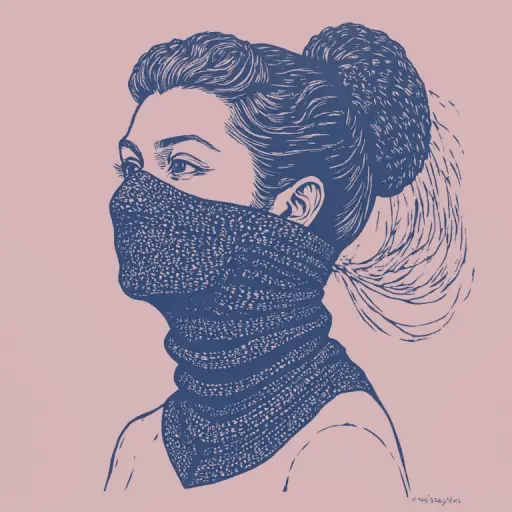
How to use a tube bandana in different ways on head and neck
- 15 min read
- 22
The tube bandana, also known as a buff or transformable bandana, is a genius accessory in its simplicity that has revolutionized the world of sports and everyday gear. Originally created by Spanish cyclist Juan Rojas to protect against road wind and dust, this seamless elastic cylinder quickly gained popularity among skiers, runners, cyclists, and lovers of practical urban style.
The main secret of this multifunctional item is its incredible versatility. Thanks to the absence of seams and the material's high elasticity, a simple fabric cylinder easily transforms into dozens of clothing items:
- Tube scarf (gaiter) for secure neck protection;
- A comfortable headband or elastic wristband;
- A protective face mask or a full balaclava;
- A lightweight sports cap, a pirate bandana, or a helmet liner.
This technological accessory is essential for outdoor activities in any season. It effectively wicks away moisture, protects from scorching sun in summer, and retains heat in the extreme cold of winter.
Section 1. Practical Guide: More Than 10 Ways to Transform the Tube Bandana (How-To Guide)
Moving from theory to practice opens up an amazing world of transformations for this simple accessory at first glance. Thanks to its elasticity and seamless shape, the transformable bandana easily adapts to any anatomical feature and climatic condition. You won't need complicated knots or pins; just mastering a few basic hand movements is enough to turn a simple fabric cylinder into a piece of technological gear or an elegant urban accent.
In this practical guide, we will analyze the step-by-step techniques that will allow you to use the potential of the scarf tube in the most effective way. We will start with the fundamental methods for face and neck protection, and then move on to more complex headwear options, suitable for both intense training and creating relaxed casual looks.
1.1. Fundamental Base: Technique for Tying the Neck and Face Band (Must-Know Basics)
Mastering the transformable bandana (buff) begins with three basic techniques that will firmly protect the neck and face from wind, dust, and cold during outdoor activities or city walks.
- Classic Scarf (Gaiter): Fold the seamless bandana into an accordion shape and simply put it around your neck over your head. This is the base, replacing the bulky tube scarf. It fits snugly to the body, doesn't come undone with movement, and wicks moisture very well.
- Protective Mask: From the "scarf" position, gently pull the top edge of the buff up, securing it across the bridge of the nose and covering the ears. This method is essential for cyclists and runners to protect against dust, insects, and headwind.
- Balaclava: Put the buff around your neck. Take the back edge of the fabric and stretch it over your head like a hood. Then, pull the front edge up to the nose. Only the eyes will be exposed, an ideal option under a helmet for winter sports.
1.2. 'Headwear' Option: From Sports Cap to Modern Turban
Transforming the tube bandana into headwear takes seconds, which will save you whether you are racing or taking a fashionable stroll. Let's look at three popular options:
Sports Cap (Double Layer): Flip the buff inside out and put it on your head. Twist the loose end in half once, and then pull the resulting top part back over your head with your face facing out. You will get a warm, double-layer cap.
Classic Pirate Bandana: Put the scarf tube around your neck. Stretch the front edge over your forehead and pass the back part over your hair, letting the loose edge hang down the nape of your neck.
Modern Turban: Fold the transformable bandana into a wide band. Put it on your head, turning it over your forehead, and carefully fold the edges behind under the pleats. This option complements the urban look very well in a bohemian or casual style.
Section 2. Functional Focus: Protection in Extreme Conditions (Sports Aspect)
When moving from aesthetics and basic knots to harsh realities, it is important to remember: the tube bandana (or buff) was originally created as a protective piece of gear. In extreme conditions, whether icy wind on the ski slope or scorching sun in the desert, this seamless accessory becomes an indispensable barrier between you and the elements. The sports aspect of using the gaiter goes far beyond simple comfort. A correctly chosen multifunctional item effectively regulates heat exchange, wicks moisture from the skin, and protects the respiratory tract. Let's analyze how this technological piece of apparel handles climatic challenges in different seasons.
2.1. Against Wind and Cold: Using the Buff in Winter Sports (Skiing, Snowboarding)
When it comes to winter sports, the tube bandana (or buff) ceases to be a mere fashion accessory and becomes a critical piece of equipment. In conditions of low temperatures, strong wind, and snow, the correct use of the buff not only ensures comfort but also safety. The main task here is to create a multi-layer barrier that minimizes heat loss and protects delicate skin areas.
How to use the buff in skiing and snowboarding:
- Neck and Lower Face Protection (Balaclava Effect): This is the most basic and important method. Stretch the buff completely around the neck, adjusting it up to the chin. If the buff is long enough, it can form a half-mask covering the nose and mouth area. This is fundamental, as these areas are the first to suffer from frostbite and cooling.
- Helmet Liner (Headband/Balaclava): If the buff is made of material suitable for low temperatures (such as fleece or merino), it can be used as an extra liner under the main hat. It provides extra insulation for the head and neck, preventing cold air from entering the collar area of the jacket.
- Wind Barrier: The wind barrier function of the buff is indispensable. With strong wind, simply stretch it around the neck to create a hermetic barrier. This prevents cold air from entering the breathing zone, which is especially important with high levels of movement.
Expert Material Tip: For winter activities, choose buffs made from moisture-wicking and wind-resistant materials (e.g., polyester with Windstopper membrane or fleece). They must wick sweat away from the body so you don't freeze from your own perspiration, while simultaneously blocking the entry of cold air. Remember: the buff is not the only source of heat, but it is an ideal complement that "reinforces" your protection.
2.2. UV Protection: How the Bandana Protects Against Sun and Dust During Physical Activity
If in winter the buff saves you from freezing, in warm climates the seamless transforming bandana becomes the main shield against scorching sun, dry wind, and dust during outdoor activities.
The technological summer models possess unique protective properties:
- Ultraviolet Ray Blocking (UPF 50+): Specialized polyester gaiters (e.g., with Coolmax fibers) reflect up to 95–98% of harmful UV radiation. This protects vulnerable areas—neck, ears, and face—from sunburn during long bike rides, mountain hikes, or kayak excursions.
- Respiratory Protection: By pulling the tubular scarf over the face above the nose, you obtain a reliable barrier against road dust, sand, and small insects. This is especially relevant for runners, cyclists, and off-road vehicle enthusiasts.
- Cooling Effect: Unlike cotton, the multi-use sports scarf does not absorb sweat; instead, it evaporates it instantly, cooling the skin and preventing heatstroke.
Section 3. Style Integration: The Bandana in the Urban Wardrobe (Fashion & Style)
When leaving sports tracks and tourist routes, the tubular bandana confidently conquers the streets of megacities. This utilitarian accessory has ceased to be exclusively extreme sports gear. Today, the multi-use scarf integrates easily into everyday outfits, adding dynamism, textural depth, and a light nonchalance that is highly valued in modern urban fashion.
The secret to the popularity of the transforming bandana in the city lies in its plasticity. It is capable of instantly adapting to different styles, from bold grunge to relaxed casual. A well-chosen gaiter not only protects against city smog and drafts but also ties together elements of outerwear, becoming the focal point of your look.
3.1. Creating a Capsule Look: 5 Styles with the Transforming Bandana (Hippie, Rock, Casual)
The transforming bandana easily adapts to different fashion trends, becoming a key element of the urban capsule. Here are 5 formulas ready for stylish looks:
- Casual: Use a seamless, neutral-toned bandana (gray, beige, or khaki) as a discreet tubular scarf. Pair it with a classic trench coat, straight-leg jeans, and white sneakers.
- Rock: A black buff with a graphic print, folded as a headband or casually tied to the wrist, will perfectly complement a leather jacket, a band logo t-shirt, and sturdy boots.
- Hippie-chic: A paisley or tie-dye patterned model, worn as a wide headband over loose hair. Add a flowy midi dress, a suede vest, and cowboy-style boots.
- Sport-chic: A bright neon or branded buff worn as a turtleneck. Use it with a voluminous sweatshirt, joggers, and chunky athletic shoes.
- Grunge: A dark-toned multi-use scarf, pulled down over the neck, combined with an oversized plaid flannel shirt, distressed jeans, and heavy military boots.
3.2. Correct Pairing Rules: How to Choose the Buff's Color and Texture for Outerwear
Creating a stylish look is not just about choosing the most eye-catching accessory, but also knowing how to "calm" it within the overall wardrobe. The tubular bandana, being such a versatile and visible element, requires a special approach when pairing it with outerwear. The main principle here is balance: if the outerwear is already very saturated or has a complex print, the buff should act as a neutral accent. But if the look is as monochromatic and minimalist as possible, the buff can become the main pop of color.
Color Pairing Rules:
- Neutral Base for the Accent: If your jacket, coat, or windbreaker is a sober, solid color (black, dark blue, khaki, gray), don't hesitate to use a bright, contrasting colored buff. This will allow the accessory to "stand out" and be the center of attention without overwhelming the look.
- Monochromatic Harmony: To create an elegant and mysterious silhouette, choose a buff whose color is as close as possible to the color of your outerwear. This will visually "unify" the look, making it seem more considered and sophisticated. It is ideal for a business casual or minimalist style.
- Color Contrast (60/30/10 Rule): If you want to add color but don't want it to be jarring, use the 60/30/10 rule. The main color (60%) is the clothing, the second color (30%) is the accessory (e.g., shoes or bag), and the third color (10%) is the buff. The buff should be a pure accent or, conversely, repeat one of the two main colors to avoid visual chaos.
Texture Pairing Rules:
- Texture Contrast: Don't be afraid to mix different materials. For example, the smooth, technical polyester of the buff will look incredibly elegant over the rough wool of a coat or thick denim. This contrast adds depth and modernity to the look.
- Texture Unity: If you have chosen a look made of a single material (e.g., a soft wool set), it is better to choose a buff with a complementary texture rather than repeating the main material. This preserves elegance and prevents the look from seeming "too" uniform.
Section 4. Accessory Selection: Material and Choice for a Specific Task (Buying Guide)
We have seen how the tubular bandana transforms your look in the city and how indispensable it is in extreme conditions. But for the accessory to be not just pretty, but also functional, it is necessary to pay attention to its "internal components": the material. The choice of buff directly determines its durability, comfort, and degree of protection. Therefore, before buying or replacing the accessory, it is important to understand which materials are suitable for different tasks and what functionality you truly need.
Understanding the fabric composition will allow you to move from simply "buying a bandana" to consciously choosing the ideal "transformer" for your wardrobe and active lifestyle.
4.1. Choosing by Season: Breathable Polyester vs. Fleece Lining (Winter vs. Summer)
The correct choice of material for the transformable bandana directly determines your comfort during the activity. For different seasons, fundamentally distinct technical fabrics have been developed:
| Feature | Breathable Polyester (Summer/Spring-Autumn) | Fleece Lining / Polar Fleece (Winter) |
|---|---|---|
| Main Function | Moisture wicking, cooling, UV protection | Thermal insulation, protection against wind and cold |
| Material | Fine seamless microfiber (Coolmax) | Dense polyester fleece (Polartec) |
| Temperature Range | From +15°C to +30°C and above | From +5°C to -25°C |
| Application Areas | Running, cycling, trekking, dust protection | |
| Skiing, snowboarding, winter running, motorcycle riding |
- Summer Polyester: Functions like a "smart" capillary: the seamless bandana instantly absorbs moisture from the skin and evaporates it, cooling the body.
- Winter Fleece: Retains a layer of warm air. Often, the winter buff is combined: the fleece lining part warms the neck, and the thin polyester top allows for easy breathing when the tubular scarf is used as a mask or balaclava.
4.2. Expanding Functionality: Corner, Reflective, or Seamless Bandana (What is this element for?)
When it comes to functionality, it is important to understand that the tubular bandana is not just a fashion accessory, but a piece of high-tech equipment. The variety of construction elements allows it to perform functions that go far beyond being a simple scarf.
1. Seamless Cut (Seamless):
This is a key feature of modern buffs. The absence of seams not only makes the garment more aesthetic but is also fundamental for comfort. Seams can irritate the skin, especially in high humidity conditions or with prolonged skin contact. The seamless material guarantees maximum breathability and elasticity, allowing the buff to adapt perfectly to the contours of the body without creating pressure points.
2. Reflective Elements (Reflective):
These elements are essential in low-light conditions: during evening runs, bike rides, or in the mountains with fog. The reflective materials integrated into the fabric passively reflect the light from car headlights or flashlights, making you more visible to other road users. This is a matter not only of style but of safety.
3. Corner/Triangle Models (Corner/Triangle):
Although the tubular buff itself is very versatile, some manufacturers release models with an angular or triangular cut. These elements can be useful for creating more voluminous and structured knots, as well as for a tighter and more hermetic facial seal than the standard tube allows. However, for maximum versatility and minimum volume, the seamless cylinder remains the gold standard.
Section 5. Expert Tips: Common Mistakes and Tricks
We have covered the journey from basic knots to integrating the bandana into the sporty and urban wardrobe, studying how the buff can become a true multifunctional element. But even the most versatile accessory requires knowing the rules and tricks to look impeccable and last as long as possible. In this section, we will summarize so you can avoid common mistakes and learn not only how to use, but also how to properly care for your tubular bandana. This is your personal expert checklist, ensuring your look is complete and your accessory is perfect.
Remember: the bandana is not just a garment; it is a statement of your style and your readiness for adventure. By following our advice, you can take your look to the next level, turning the buff into a true symbol of your individuality.
5.1. Completing the Look: Additional Elements (Clips, Pins, Hats)
To turn a sports buff into an urban style element, use the power of details. Some simple tricks will help you harmoniously integrate the accessory into your daily wardrobe:
- Decorative Clips: If you wrap the tubular bandana around your neck or tie it like a turban, secure the folds with an elegant clip. This will not only maintain the shape but also add elegance to the look.
- Clips and Pins: When using the buff as a headband, secure it with pins on the sides of the ears. This will prevent the fabric from slipping off straight or silky hair.
- Pairing with Hats: Don't be afraid to wear a thin seamless bandana under a baseball cap, a classic hat, or a winter beanie. This layered combination looks ultra-modern and offers excellent wind protection.
5.2. What NOT to Do: Mistakes When Using and Caring for the Tubular Bandana
As an expert, I must warn you: the tubular bandana is an incredibly versatile accessory, but incorrect use can ruin both the look and the accessory itself. For your fashion experiment to be successful, remember some "red lines."
❌ Usage Mistakes (Style and Functionality):
- Ignoring the Context: The most common mistake is trying to use the buff in a style it doesn't suit. For example, one that is too flashy,
Conclusion: Your Individuality is an Infinite Line
To conclude, we want to emphasize: the tubular bandana is not just an accessory, but a true element of your personal style and functionality. Its versatility allows it to be part of any look, whether a grunge rock outfit, a sports set for a marathon, or an elegant urban look. The main secret to success lies in your confidence and your ability to experiment.
Remember that the buff will always reflect your individuality. Don't be afraid to mix styles and combine textures. If you are unsure which option to choose, start with the simplest: tie it as a basic scarf around the neck. It always looks appropriate and stylish. And if you want to add boldness, use it as an accent headpiece that will instantly transform your look.
Your individuality is an infinite line that you draw every day. Let the tubular bandana be your tool for self-expression, highlighting your energy and your unique vision of the world. Use it with pleasure and without fear!
*Remember that the tubular bandana is not just a fashion trend, but a practical companion in any situation. It is always ready to complement your look, whether to protect you from the wind on a mountaintop or as a vibrant touch in the urban wardrobe. The main thing is not to be afraid to experiment and use it as a reflection of your unique and infinite style line.